Why you should join the Global Business Journalism Program at Tsinghua — or recommend it to a friend
Posted: December 29, 2014 Filed under: Global Business Journalism, Journalism Training | Tags: Beijing, Bloomberg News, China, Data Journalism, Global Business Journalism, Hang Min, International Center for Journalists, multimedia journalism, Olivia Zhou, Tsinghua University 1 Comment
Our 2014 graduating class
To all of my journalism friends around the world: I invite you to spread the good word about the good work we are doing here at Tsinghua. We’re looking to recruit an exceptional class of graduate students for the upcoming school year and to prove to any skeptics that you can have a world-class journalism program in China. Here’s the pitch. Feel free to share. Comments and questions are welcome.
Are you interested in becoming an expert on the world’s fastest-growing economy?
Do you want to study Asia Pacific business development and report that to the world?
Do you want to have an amazing educational and personal experience in a dynamic country?
Do you want to learn how to share your stories with audiences via print, audio, video and digital media?
Please join in us in the Global Business Journalism Master’s Degree Program at Tsinghua University in China!
2015 Enrollment Instructions
for M.A. in Global Business Journalism
at the School of Journalism and Communication, Tsinghua University, Beijing, China
- Introduction
With China playing a central role in the global economy, there is a soaring demand for trained professionals who can understand the exciting, complicated development of the world’s fastest-growing economy – and can explain it – clearly and in depth — to audiences in China and around the world.

Co-Director Dr. Hang Min with GBJ student
Tsinghua University Master of Arts degree in Global Business Journalism is designed to meet that growing need. The program offers international students the opportunity to master the fine points of business, finance and economics in China. All courses are taught in English — the international language of business — by internationally renowned scholars and accomplished journalists with extensive global experience. The program’s facilities rival those of other leading journalism schools worldwide. The news lab has the largest number of Bloomberg terminals of any college in the world.
Business journalism is one of the fastest growing areas of employment opportunities in the industry today. News audiences are eager to learn about the world of business, while media departments expect PR professionals to understand and analyze the complexities of business issues.
Tsinghua’s Master of Global Business Journalism Program is designed to offer you the opportunity to meet these growing needs and, at the same time, master the fine points of economics, finance and business in China and the world. We welcome you to join in us!
The first English-language graduate business journalism program on the Chinese mainland, created in partnership with the International Center for Journalists, it has sent 171 graduates to news outlets in China and globally over its first seven years.
Launched in 2007, the GBJ program has already been recognized by students and recruiters alike as a world-class program. Academe, the world’s leading journal on higher education, featured a cluster of articles on the program in February 2008. Only the most talented applicants from around the world are accepted, and the student body is culturally and professionally diverse. The full-time program spans two years of intense, fast-paced, rewarding study. Those who complete it successfully emerge with valuable connections, a rich array of opportunities and the business and journalism skills to capitalize on them. It is a two-year experience that will last a lifetime.
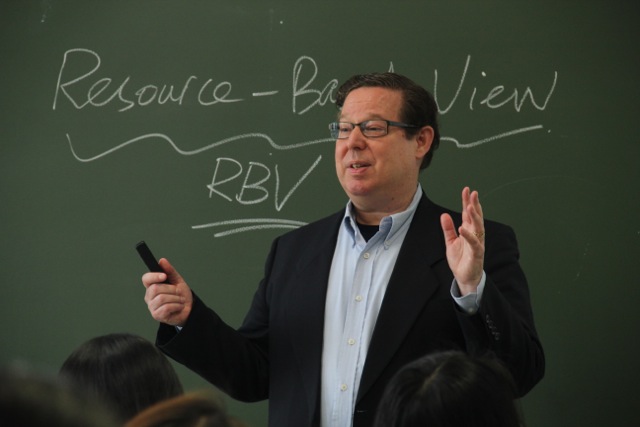
Professor Dunham in the classroom at Tsinghua. (Photo by Zhang Sihan)
The program aims to bring business journalism in China in line with top international reporting standards. The Tsinghua School of Journalism and Communication has a long history of cooperation with major international media and financial-information organizations, and visiting scholars have come from outlets such as Bloomberg, Reuters, Business Week, The New York Times, Financial Times, The Washington Post and CNN.
GBJ offers an array of specialized courses that are at the forefront of global business journalism. Students can learn about international accounting standards, multimedia journalism, data mining, complex financial derivatives, journalism ethics, advanced feature writing techniques and the management of media organizations – knowledge that is transferable to other economies and other professions. At the same time, they gain a deeper knowledge of the Chinese language and economy.
The GBJ program benefits from other academic resources on the Tsinghua campus, including its prestigious School of Economics and Management, as well many Chinese and global media and technology companies in Beijing. Internships, field trips and recruiter visits are integral parts of the program.
GBJ students have opportunities to attend conferences on new media, economic development and other business topics. They benefit from meetings and discussions with guest speakers, including top editors and reporters from leading Chinese and Western news outlets and international business executives. The GBJ has a growing network of smart, sophisticated reporters, editors and public relations professionals who can enhance the world’s understanding of economic and corporate developments in China and globally.
- Program Courses
| Basic Courses | |
| Introduction to Mass Communications and Society in Contemporary China | |
| Chinese Language | |
| Intercultural communication | |
| Media Research Methods | |
| Core Courses | |
| English Financial News Reporting and Writing | |
| Multimedia Business Reporting | |
| Global Business Journalism (advanced) | |
| Economics and Accounting Basics for Journalists | |
| Business Data Mining and Analysis | |
| Elective Courses | |
| Corporate Communication | |
| Opinion and News Commentary | |
| Hot topics in the Global Economy | |
| Feature Writing | |
| Corporate Strategies, Case Studies of Chinese and Global Companies | |
| Personal Finance Reporting | |
| Media Management | |
| Workshop on Film and TV Production | |
| Theory and Practice of Public Diplomacy | |
| Data Journalism | |
| Public Relations: An Introduction | |
| Public Speaking | |
| Other Requirements | |
| Pro-Seminar for Master Candidates in Global Business Journalism | |
| Literature Review and Thesis Proposal | |
| Academic Activities | |
| Internship | |
- Qualification of Applicants
Applicants should have a Bachelor’s degree in related fields and certificate for English proficiency.
- Application Documents
1) The completed Foreigner’s Application Form for Admission to Graduate Programs of Tsinghua University with a 2-inch recent photo, signed by the applicant;
2) Statement of Purpose and resume;
3) The original or the notarial degree certificate or proof of education at an academic institution (you need to submit an original or notarial degree certificate after it was awarded) and an academic transcript. The degree certificate and academic transcript must be officially sealed.
4) Two academic recommendation letters from scholars of associate professorship or higher. They must show referee’s phone number and email address on the letter.
5) For non-English speaking students, please provide English level certificates. e.g. TOEFL, IELTS, etc.
6) A copy of your passport page with personal information (personal and ordinary passport);
7) The completed Application Form for Tsinghua University Scholarship (if applicable, original);
8) A non-refundable application fee of RMB600.
The certificates provided should be the original documents in Chinese or in English, otherwise notarial translations in Chinese or English are required. None of the above application documents will be returned.

Some of the best students from China and around the world.
- Application Procedure
Step 1: Online Application
Complete Online Application on the website of the Foreign Student Affairs Office, Tsinghua University
(http://www.is.tsinghua.edu.cn/EN/online-application/instruction.html). Print and sign the Application Form produced by the system after the application status changes to “verified.”
Step 2: Documents Submission
Submit the application documents listed above to the address indicated below by post mail or in person.
Step 3:Application Fee Payment
There are two ways to pay application fee:
1 . Pay online using a credit card;
After your online application form is verified or the materials are received by Tsinghua University, the staff will make you the online payment draft, and at the same time, an email will be automatically sent out to remind you to pay the application fee via the online application system.
2 . Pay in cash at the Foreign Student Affairs Office (Room 120, Zijing Building 22) on the campus of Tsinghua University.
- Application Deadline
November 1, 2014 — March 20, 2015
Both the Online Application and a complete set of Application documents should be completed and the package should be received by March 20, 2015.
- Tuition and Scholarship
Tuition:Program tuition fee is RMB39000/year.
Accidental Injury and Hospitalization Insurance: RMB 600/year.
Please visit http://is.tsinghua.edu.cn for more information about scholarships.
- Program Website:
For more information about the program, please visit the GBJ website at:
http://gbj.tsjc.tsinghua.edu.cn/publish/jcgbj/index.html
- Application Website:
For an application, please visit the Application Website at:
http://www.is.tsinghua.edu.cn/EN/online-application/instruction.html
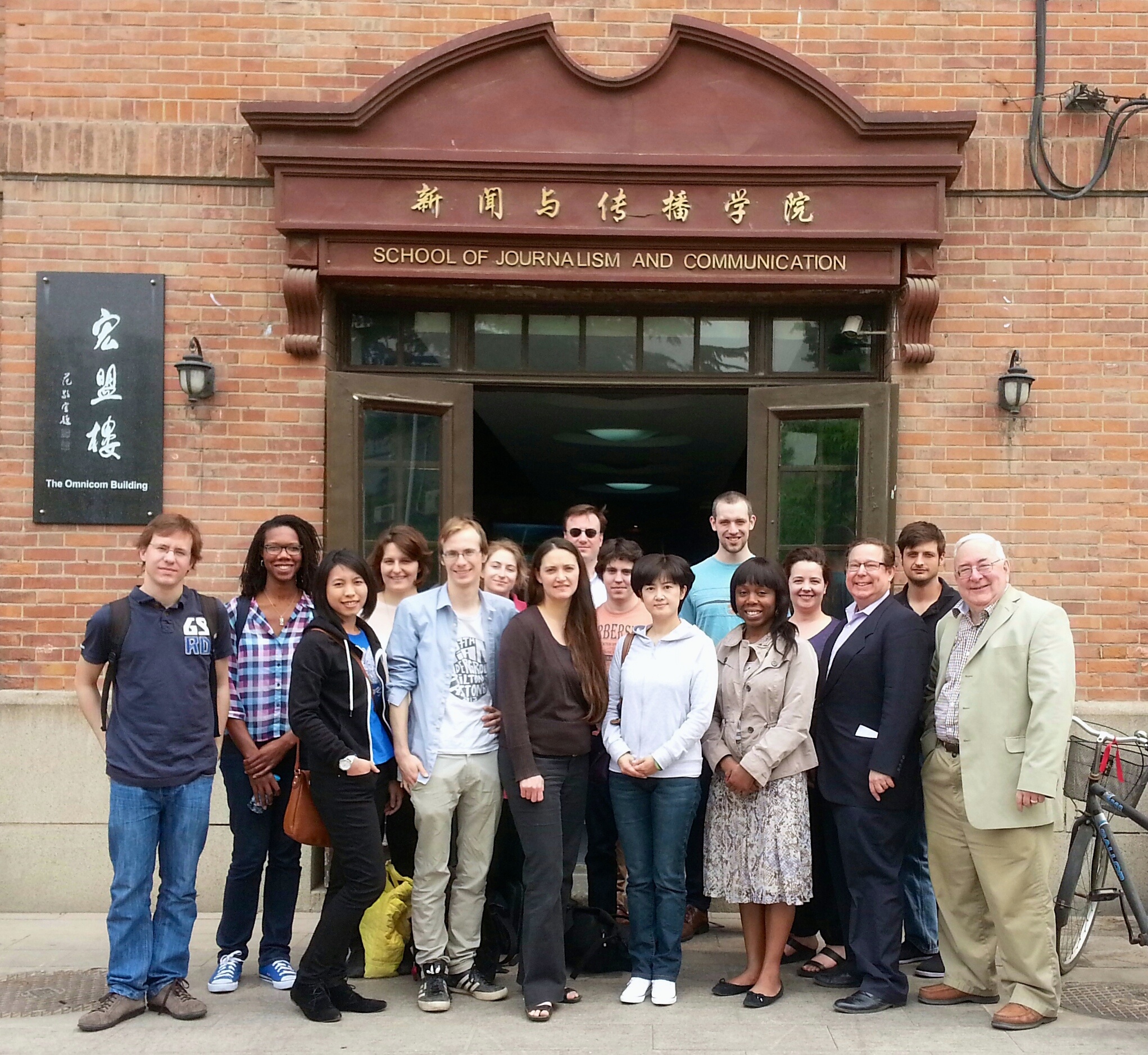
We regularly host international scholars, lecturers from global businesses and exchange students.
10.Contact Information:
Ms. Olivia Xiaoyu Zhou
Room 302, Omnicom Building,
School of Journalism and Communication
Tsinghua University,
Beijing 100084, P. R. China
Tel: +86 10 6279 6842
Fax: +86 10 6277 1410
E-mail: tsjcws@tsinghua.edu.cn
Viewing the American media through fresh eyes
Posted: January 17, 2014 Filed under: Dunham's Discourses | Tags: cable news, CNN, Fox News, MSNBC, multimedia journalism, New York Times, Tsinghua University, Wall Street Journal, Washington Post 2 CommentsFor at least a decade, I was a 24/7 news addict.
Then I went to China and went cold turkey. Surprisingly, there were no withdrawal pains. Indeed, I actually enjoyed life more and had a lot more time for useful pursuits without the pain of my addiction to CNN, MSNBC, Fox and Twitter.
So what happens when I return from Tsinghua University for winter break?
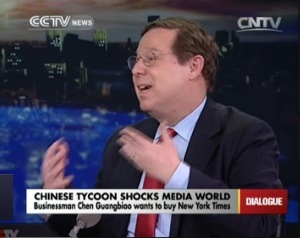
A short relapse.
One day of CNN was enough to cure me permanently. Here are a few thoughts on the disastrous state of U.S. cable news and the rays of hope for the rest of the U.S. media:
Back to vacation. With the TV turned off.


Recent Comments