Business journalism’s 5 pillars of purpose: My take on economic reporting’s core principles
Posted: September 28, 2026 Filed under: AI, Dunham's Discourses, Global Business Journalism, Journalism Training, Media, Rick's Rules | Tags: AI, Artificial Intelligence, business journalism, ESG, Global Business Journalism, International Center for Journalists, Journalism Training, Linda Lew, Lise Olsen, Mark Hamrick, Media, News business, Sharon Moshavi, watchdogs, writing Leave a commentBy RICK DUNHAM
In a media world transformed by digital disruption, economic volatility and the never-ending news cycle, high-quality business journalism has never been more essential for citizens around the world — or more challenged by a convergence of economic and political forces. Amid social media misinformation, corporate spin, government pressure and declining trust in institutions, the mission of business news organizations has evolved to serve a public increasingly hungry for clarity, accountability and context.

While styles of business news coverage vary across platforms and countries, five core goals remain central to economic reporting in the modern era.
These five fundamental missions — informing the public, interpreting economic trends, holding power accountable, guiding decision-making and spotlighting broader economic shifts such as innovation and inequality — are the cornerstones of meaningful, responsible business journalism. Let’s take a look at each of them.
1. Informing the public: Gleaning clarity from complexity
At its heart, business journalism exists to inform. It demystifies complex economic developments, financial markets, and corporate affairs for a broad audience. From interest rate hikes to stock market volatility, from GDP reports to global supply chain disruptions, the goal is to translate jargon into accessible language without sacrificing nuance.
“Business journalism has always been important but never has it been more important than right now,” Mark Hamrick, founder of the Hamrick Brief, told Global Business Journalism students. “This obviously is a remarkable time in human history — the rate of change is remarkable. The ability to tell a story well is one of the most important skill sets we have.”
Good business coverage doesn’t just report the what — it explains the why and the how, helping readers understand how distant decisions by central banks, tech CEOs, or energy producers can affect household budgets or career prospects.
2. Interpreting trends: Context beyond the headlines
Modern business journalists are not merely stenographers of the day’s earnings calls or labor reports. They are interpreters — placing economic and corporate events in a broader context. Why does a stronger dollar matter? What does a jobs report signal about inflation? How does a tech company’s quarterly performance hint at shifting consumer habits?
“Every news story needs a paragraph on the significance or context of the news and business news is no different,” noted Jeffrey Timmermans, a longtime Wall Street Journal reporter now working at the Reynolds Center for Business Journalism. “Each business story should explain why the news matters to the reader.”
Interpretation has become even more critical in an era where data is abundant but understanding is scarce. Long-form explainers, data journalism, podcasts, and interactive graphics have become key tools for business reporters helping audiences grasp long-term trends — from climate finance to the future of AI.

3. Holding power to account: Watchdogs in the boardrooms and beyond
Perhaps the most vital and difficult of business journalism’s missions is accountability reporting. This includes exposing fraud, investigating regulatory failures, scrutinizing executive behavior and tracing the flow of money and influence in both the public and private sectors.
Whether covering the fall of FTX and Sam Bankman-Fried, probing the causes of the 2008 financial crisis or revealing how fossil fuel corporations shaped perceptions of climate change in much of the world, investigative business reporting plays a key role in serving the public interest.
“Customers, investors, pensioners, employees and taxpayers all have been harmed in recent years by a reckless disregard at the highest levels of companies,” Gretchen Morgenson, a Pulitzer Prize-winning financial journalist, told a Wharton School leadership conference. “If the people who have created these disasters and profited from them are allowed to slink off into the night, then I think we will be confirming the suspicion that the paths of the powerful are protected, and that the little guy is left to fend for himself.”
In the wake of growing public anger over wealth inequality and the power of transnational global corporations, the watchdog role of business journalism is ethically important — and it is increasingly expected by audiences, even in countries with some limits on press freedom.
4. Guiding decisions: Practical tools for spending, work and wealth
Another core mission of business journalism is helping individuals and institutions make informed choices — whether about investments, careers, consumption or business strategies.
This service-oriented aspect has grown in popularity and sophistication, with media brands like Bloomberg, CNBC, Morning Brew, and The Wall Street Journal offering targeted newsletters, personal finance columns, real-time market updates, and deep industry analysis.
In short, business news has become more personal. Increasingly, it’s not just about what Apple or Tesla did — but about what you should do next. That could be consumer decisions, investment choices or retirement options.
“People read our words, based on which they shape their own opinions and make decisions,” Colin Pope, editor of Austin Business Journal, told students in the Global Business Journalism program’s Business News Reporting and Editing course.
Not every economic journalist is up to the challenge of simplifying the numbers and explaining complex data. The 2025 Barnum Financial Group “Study of Americans in the Workplace“ found that 39% of respondents felt intimidated by financial complexities, contributing to “a population struggling to access and understand the financial resources they need” to make economic decisions.
The clearer business journalists can be in their data analysis and reporting, the more confident their audience can be in decision-making.
Morgenson, now a senior reporter for NBC News Investigations, says her aim as a reporter is to “simplify complex financial dealings so all readers can understand them. Although I am thrilled to have received an array of journalism awards over my career, the most rewarding aspect of my work is helping readers cut through financial fog and protect themselves and their families.”
5. Telling the broader economic story: Innovation and inequality
Today’s business journalism must also capture the complex forces shaping the 21st-century economy: rapid innovation, increasing inequality, and the battles over globalism and global economic dominance.
From covering the rise of artificial intelligence and green energy startups to exploring the gig economy, inconsistencies in labor rights from nation to nation, and the gender pay chasm in some countries, business journalists are storytellers of transformations and of stubborn traditions.
More often than not, those stories are not simply “bottom line” business stories but are societal narratives that often touch on local and national politics, social justice concerns, minority rights, women’s rights and environmental policy.
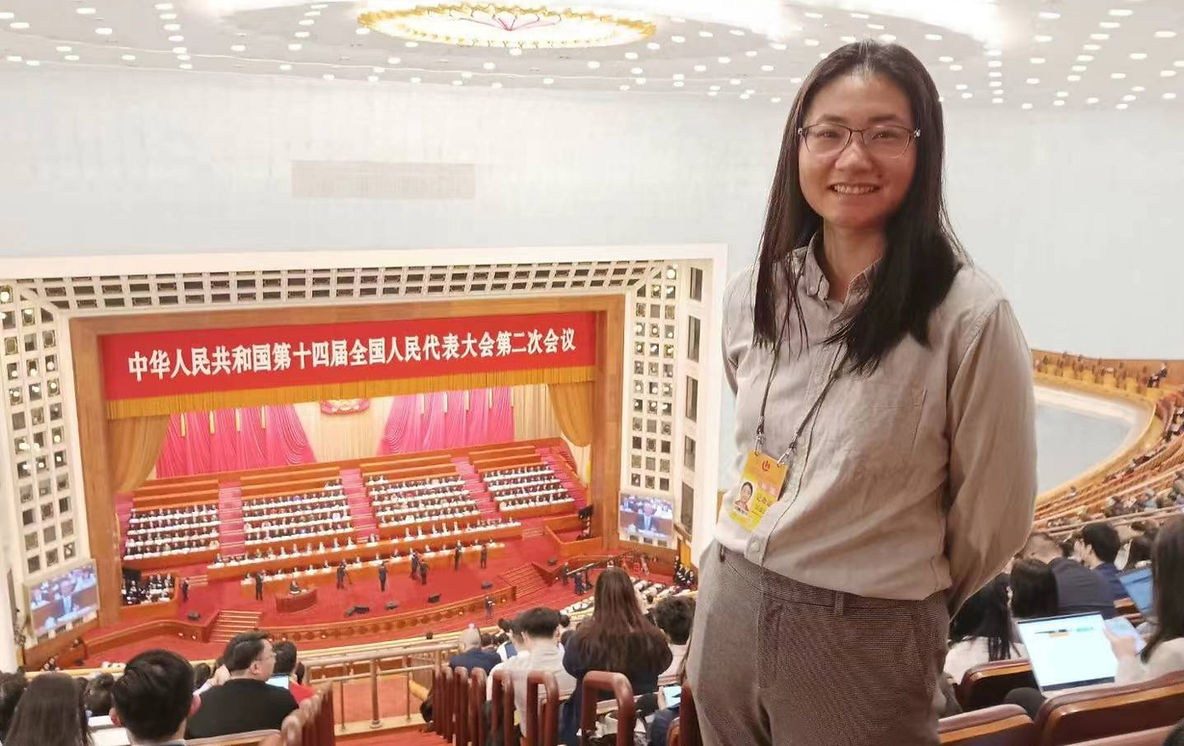
“Journalists are needed more than ever to bear witness to history,” Linda Lew, a reporter for Bloomberg News in Hong Kong, told Global Business Journalism program students.
This increased coverage of economic justice issues means that ESG (an acronym for Environmental, Social and Governance) investing issues, and diversity in corporate leadership, are no longer niche coverage areas. They are central to understanding the modern economy — and to building trust with younger, values-driven audiences. Coverage of the rise of far-right populism from the Americas to Europe requires skill in both economic and political analysis.
What’s more, in the midst of today’s rapid innovation, business reporters must be prepared to cover the industries of the future, from green technologies to artificial intelligence. Beat coverage can range from profiles to narratives, corporate profit deep dives to investigative pieces about venture capital fundraising attempts.
Reporters covering these emerging industries (and markets) must be able to explain — in simple language — what the technology is and what its impact will be on the lives of people around the world. They also will be called on to cover the business end of companies in a boom-and-bust world that sees spectacular successes, meteoric flameouts and a few criminal prosecutions. All of which are exciting — and challenging — for the reporters covering the story.

The future: Business journalism in the digital age
As the digital economy has expanded, so too has the media ecosystem covering it. Traditional print and television outlets now compete with newsletters, TikTok explainers, YouTube analysts, Substack authors, and especially influencers with strong opinions about crypto or real estate. To demonstrate the power of the influencer culture: More Americans got news about the 2024 presidential election on TikTok from influencers and celebrities than from traditional news organizations’ video feeds, according to Pew Research Center findings.

Yet even amid information overload and the cacophony of facts, opinions and rumors, professional business journalism remains distinct. It is evidence-based, ethically grounded, and committed to transparency.
“There may not be a single truth, but a fact is still a fact,” said Sharon Moshavi, president of the International Center for Journalists. “Everyone is entitled to their opinion, and there is no such thing as absolute and ultimate truth. But a phone is a phone. My AirPods are AirPods … And I think only then are we going to get to that world I like where facts reign.”
Truth is not journalism’s only challenge. Revenue models are shifting. Audiences for traditional media are rapidly shrinking. Misinformation spreads quickly. Reporters face pressure to produce more with fewer resources. And AI tools are transforming how news is gathered and delivered.
Still, the mission endures.
“I’m always looking for something that is hidden, something people don’t want other people to know,” said Lise Olsen, Houston-based investigative reporter focusing on crime, corruption, workers’ safety and human rights, during a lecture to Global Business Journalism students.
This report first appeared on the Global Business Journalism program website.
How to write an easy-to-understand business or economic news story
Posted: September 27, 2026 Filed under: Dunham's Discourses, Global Business Journalism, Journalism Training | Tags: analytical skills, audience, business journalism, economics, personal finance, writing 2 Comments
By RICK DUNHAM
Despite a plunge in newspaper jobs of more than half since 2000, business news is a growth industry that has created new opportunities for journalists in print, digital and newsletter formats.
And for some very good reasons. Business news is not the latest journalism fad; it never goes out of style. Economic news explains our world. Business and personal finance are central to our lives. Our world is more interconnected economically than ever before, as we saw in April with the global stock gyrations following U.S. President Donald Trump’s tariff announcements. In tough times — as business leaders such as BlackRock CEO Larry Fink are predicting for 2025 — economic news is more important to us than ever.
So even if you aren’t applying for a job at a business news outlet, you need to improve your skill set to effectively cover economic issues. Every journalist should be able to write about business or economic topics with comfort and ease.
Here are 11 tips to help you write easy-to-understand and impactful business reports:
(1) Know your audience
Are your readers well versed on business topics in general? Do you write for a general audience? Are you looking for specialty stories for your region, or regional stories about a national (or global) topic? Your approach to today’s big news story is likely to vary so you can engage your audience.
Example: If you’re covering trade wars, are you writing for a national, international or local audience? Does your audience skew toward highly educated businesspeople or investors who understand the economics of tariffs and are familiar with concepts such as the World Trade Organization (WTO), the Doha Round, Section 201 and export controls? Do your readers want to know how higher tariffs will affect local consumers, small businesses or hometown jobs? Do you serve a specialty audience interested in a sector of the economy such as agriculture, an industry like soybeans, or demographic groups ranging from investors to the elderly? The major facts don’t change, but your reporting angle and writing style do.
(2) Be an expert
If it’s your beat, you already are. If you’ve been assigned a story on an unfamiliar topic, do your homework. Research, research, research! Talk to experts in the field. Talk to academics, trade groups, labor leaders, public officials. Hear what “real people” really think.
You need to master the subject before you can communicate with clarity. Economic journalists must heed Albert Einstein’s famous words, “If you can’t explain it simply, you don’t understand it well enough.” If you can’t explain it simply, do more research.
(3) Hone your analytical skills
To add value to your coverage, you must go far beyond the “what” of what has happened. You have to be able to explain why the story is important. Offer historical context or present your story in the broader context of the national or global situation.
Here’s a good guide to smart analytical story structure. What happened + what comes next? What happened + why it happened. What happened + how it happened. What happened + its impact.
In addition to your personal expertise, you should take advantage of specialists in the field. Bloomberg News recommends interviewing neutral experts. Industry, corporate or labor representatives can add insight to business stories from their particular perspectives. (Just avoid spin and propaganda.) Public officials, NGOs, citizen watchdog groups, academics and think tanks all can offer quotations, data and other information that reinforce your analytical framework.
[Read more: 10 tips for covering legislative bodies]
(4) De-mystify business
Despite hundreds of acronyms and business terms bandied about by MBAs and investment counselors, economics is not an academic pursuit or a complicated science beyond the reach of mere mortals. It is real life. And the stories can be told using simple English.
Avoid acronyms. Define technical terms in succinct, simple-to-understand phrases. (Example: If the president invokes “Section 301 powers,” explain that it is a section of a 1974 trade law that empowers the U.S. to penalize unfair trade practices of foreign countries that harm American commerce.)
Don’t make business pieces more complicated than they have to be. Just tell the story like you are describing it to a friend. Or your mother.
(5) Think of both the small picture and the big picture
When you are conceptualizing your story, ask yourself some key questions: How does today’s news fit in the bigger picture of the topic? Who wins and who loses? What is the impact on your audience and on “real people”?
Here are a few ways you can zoom in and out when writing about the latest economic developments. Ask, what is the impact:
- For this industry and the entire economy
- For my city, state or province, the region and the country
- For the country and the world
- For this business and all businesses in its sector
- For this business and all businesses in my city, region or country
- For affected workers in my city and beyond
(6) Put people first
Business and economic stories are people stories, too. Don’t get lost in the numbers. Economic coverage tells the tales of people: lost jobs and new jobs, jobs moving from one place to another, devastated communities and communities celebrating economic expansion, high-paying jobs and declining standards of living, inflation eating away at living standards, small businesses squeezed by rising costs, tariffs and government regulation.
As Bill Dorman, news director of Hawai’i Public Radio, told Global Business Journalism students at Tsinghua University: “Put faces on the numbers and tell the stories behind the statistics.”
Think of the people who make the decisions. Think of the people who are affected by corporate decisions: employees, shareholders, consumers, citizens in the community. People-oriented business journalism is more compelling and easier for news consumers to digest.
(7) Rely on insightful quotations
Quotations are more important in business stories than in most news reports. Why? Readers want to know what experts think of major economic developments — particularly independent experts without a financial interest in the issue at hand. They also care about the reactions of business executives and public officials. Quotations from consumers or workers can add depth and a human touch to a story driven by economic data.
Concise and thoughtful quotations (not public relations mumbo jumbo) add authority and depth to your story. They underscore the theme of your story. They help convince the reader that you are not just offering your opinion.
(8) Consider the biases of sources
In economic reporting, many of the sources you deal with — both human and statistical — have biases. Your job is to present factual information and provide context so your audience can assess the information and reach its own conclusions.
When dealing with sources, always be aware of people’s agendas, from ideology to politics to profits. Rely on consistently reliable sources. If a source has a bias that would not be obvious to an average reader, note that in the story.
Make sure to put data sets into context. If necessary, note that a data set has a questionable track record (or is considered the most authoritative). For example, the Chinese government puts out its official manufacturing index (the PMI), and the independent Caixin business news outlet produces its own manufacturing index (the CMI). Some economists and journalists have expressed skepticism over official Chinese government data. (Chinese state media calls this criticism “a fallacy” and “cognitive warfare against China.”) You must reach your own conclusions. You may want to present the data side by side and let readers decide what to trust. Or point out the fact that one is government-produced and the other is not.
You often have competing data sets measuring the same, or similar, topics. Consumer confidence in the U.S. is measured monthly by the Conference Board, a nonpartisan business think tank, and by the University of Michigan. Global consumer confidence is tracked monthly by the Organisation for Economic Co-operation and Development (OECD), an international policymaking forum and data hub. The Conference Board also releases a monthly CEO confidence barometer. All of these measures are highly respected by business journalists. But you must be careful not to “mix apples and oranges.” Compare the same data set over time rather than mixing your surveys.
[Read more: To write better features, think like a child]
(9) Sweat the small stuff
Legendary BusinessWeek editor-in-chief Stephen Shepard told his staff to make sure their numbers are correct because people in the business community will always notice errors — and complain.
Small mistakes harm your credibility, and your publication’s. Don’t confuse millions, billions and trillions. Don’t mix up percentage increase and percentage points. Spell names correctly and double-check people’s job titles. It’s easy. There’s no room for error, and no excuse for errors.
(10) Remember: You are not a cheerleader
Journalists are neutral observers and analysts. We don’t cheer for good news and write “unfortunately” about bad news. We are not rooting for the businesses we cover to do well or for the economy to boom or for unemployment to go down. We are not sad about workers who lose jobs or factories that close. We show the human side of the news through description, details and quotations, not through loaded adverbs and personal asides.
It’s important to maintain independence from the players we cover. You must decide the news angle — not the people you are covering.
“We write about what’s happening, not necessarily what is announced,” Colin Pope, editor of the Austin Business Journal, reminded Global Business Journalism students.
(11) Make your writing accessible
Structure your story carefully to make it easily accessible to your audience. As veteran business journalist and professor Chris Roush writes: “You can be the greatest business reporter of all time and find all kinds of amazing facts about companies or the economy. But unless you know how to put those facts together in a compelling series of words and sentences, your work will have gone to waste.”
Get to the point immediately. What’s new? What’s the most important information? Why is it important? It may seem counterintuitive, but try to avoid numbers in the lead of an economics story. It’s better to write that “Ukraine’s economy will shrink by almost half this year, according to a report released by the World Bank” than to use the specific number, 45%. Numbers, particularly large numbers, can confuse readers and obscure the impact of the news. It’s better to use vivid descriptions that offer context and then circle back with specific data.
That’s exactly what Bloomberg News did in this October 2024 report. “Chinese stocks listed onshore headed for their first decline in 11 days as traders grew impatient with the pace of Beijing’s stimulus measures, with sentiment also hurt by weak holiday-spending data,” the story by Charlotte Yang began. Only in the second paragraph did Bloomberg start unspooling numbers: “The benchmark CSI Index slid as much as 7.4%, wiping out the gain of 5.9% it made Tuesday…”
When citing economic data, it is best to put the new number first, followed by either the previous data point or the change from the previous data point. This provides instant context. Don’t overwhelm your audience with numbers. As a general rule, limit yourself to two numbers in a sentence. Try to avoid numbers in back-to-back sentences.
You can find yourself drowning in numbers. You’re the expert: decide what is most important and leave the rest out. You are the gate-keeper for your readers. Your judgment is important. Don’t overwhelm them with information of diminishing value.
Your information should be easily understood. Avoid most acronyms (YOY, ROI, YTD), but a few — like CEO and GDP — are widely understood and always acceptable. Avoid business jargon such as synergy, robust, core competency, low-hanging fruit or mission-critical. Your story should sound like a conversation with a knowledgeable friend, not a corporate press release or a government report.
That kind of writing will allow you to convey to your audience your analytical skill and indomitable spirit of inquiry. Those traits are essential to success in economic reporting, Mark Hamrick, senior economic analyst for Bankrate.com, told Global Business Journalism students.
“People in business journalism should have a native curiosity that never sleeps.”
This story was earlier published on GlobalBusinessJournalism.com and IJNet.org.
The role of a journalist in a time of pandemic and disinformation is to tell the hard truths
Posted: June 24, 2020 Filed under: Breaking news, Dunham's Discourses, Global Business Journalism | Tags: Africa, Asia, Barrows Dunham, Beijing, best practices, China, Chinese economy, commencement, coronavirus, COVID-19, disinformation, George Floyd, Global Business Journalism, global economy, Jemele Hill, Lincoln Steffens, misinformation, pandemic, truth, Tsinghua School of Journalism and Communication, Tsinghua University, United States 1 Comment
REMARKS BY RICK DUNHAM
GLOBAL BUSINESS JOURNALISM COMMENCEMENT
JUNE 21, 2020
大家好。Добрый день. خوش. Assalaam-o-Alaikum.
Congratulations to the graduating Class of 2020 for enduring the most unusual path to graduation since the global disruptions of the Second World War, or, for Chinese students, since the Cultural Revolution.
I have always been proud of your intelligence and hard work. But, over these past six months, I also have been awed by your grit, your determination and your adaptability.
The coronavirus pandemic has challenged our global institutions: healthcare, economic, governmental, and media. As journalists, we are not only witnesses to history but citizens living through dangerous times. At this perplexing and dangerous time for the world at large – and our media world in particular – it is important for you, the graduating class of 2020, to consider the role of a journalist in a confusing world.
During the pandemic, we’ve had to sort through misinformation, disinformation, stonewalling and cover-ups from people in power. Some governments have become increasingly resistant to transparency and, all too often, to truth itself. We’ve seen social media being used to sow chaos, confusion, hate and civil discord. Reporters in Africa and Asia have been imprisoned for pursuing the truth in defiance of official government lies. My fellow journalists in America have been deemed “enemies of the people” by an ahistorical president who says some of us should be executed for treason.
We are living in a world of parallel media worlds where indisputable truth is in dispute. “What happened?” during massive protests in Hong Kong? Your worldview varies depending on whether you watched Chinese state TV or the BBC. “What happened?” during massive protests in American cities after Minneapolis police killed George Floyd? Your worldview is completely different depending on whether you watched Fox News or almost any other news outlet in the world.
All this leads back to my question: What is the role of journalists in this world? Many people in power, from corporate executives to government officials, believe it is our job to write positive stories about them and to unquestioningly pass along whatever information they present to us.
But Jemele Hill, a prominent African American journalist and writer for the Atlantic, recently suggested a different role for the media. “Journalism is not a profession of being friends,” she said. “Journalism is a profession of agitation. That is what we’re charged to do: to hold everybody accountable, even the people who sign our checks.”
Global best practices are clear. We journalists don’t represent any particular political ideology, political party or nation – although each of us may have ideals, party membership and citizenships. We represent the people, the public, our readers, viewers and listeners. We represent the truth. We are the united nations of truth.
You are the best of global journalism. The Global Business Journalism program is uniquely positioned to improve journalism around the world and to continue improving global understanding of China’s economic role in the world.
At GBJ, we bridge cultural, economic and journalistic divides. We respect others, and their beliefs. We learn from others. We think globally and act locally. We speak truth always. We make the world of journalism and communication a better place.
Since its creation in 2007, the Global Business Journalism program has been the world leader in cross-cultural journalism education. Amid economic growth and economic tumult, China’s role in the global economy is deepening, and our Global Business Journalism graduates are uniquely situated to explain it – factually – to the world.
Every year, I like to conclude my commencement remarks with some words of wisdom from my favorite philosopher, my grandfather, Barrows Dunham. In 1961 he wrote an introduction to “The World of Lincoln Steffens,” a book of articles by America’s leading “muckraking” journalist of the 20th century.
Great journalism, as practiced by Steffens, provides “a hard ground lit by a cool, clear light: the seeing of things as things in fact are,” my grandfather wrote. “The seen reality may indeed be dangerous,” he continued, because so many people cling to “all the comforts of illusion.”
Journalists must shatter those comfortable illusions. “What we need,” Barrows Dunham wrote, “is integrity, intellectual honesty, the clear seeing of the real world.”
For you, the next generation of journalism leaders and global leaders, I wish you clear vision. It is up to you to use your intellectual honesty to make the world a better place after all the missteps of my generation.
谢谢, 大家。 Большое спасибо. Thank you.








Ten tips for online teaching during the coronavirus pandemic
Posted: March 12, 2020 Filed under: Breaking news, Dunham's Discourses, Global Business Journalism, Journalism Training, Top Ten | Tags: Adobe Captivate Prime, Amherst College, Articulate Storyline, Biddy Martin, China, Docebo, ezTalks Webinar, Fastmeeting, GBJ, Global Business Journalism, ICFJ, IJNet, International Center for Journalists, Internet, Lisa Waananen Jones, Moodle, Multimedia Reporting, online education, PowerPoint, remote learning, SAP Litmos, Skillshare, Springer, techradar.com, Tsinghua School of Journalism and Communication, Tsinghua University, Udemy, United States, WizIQ, Zoom 2 Comments
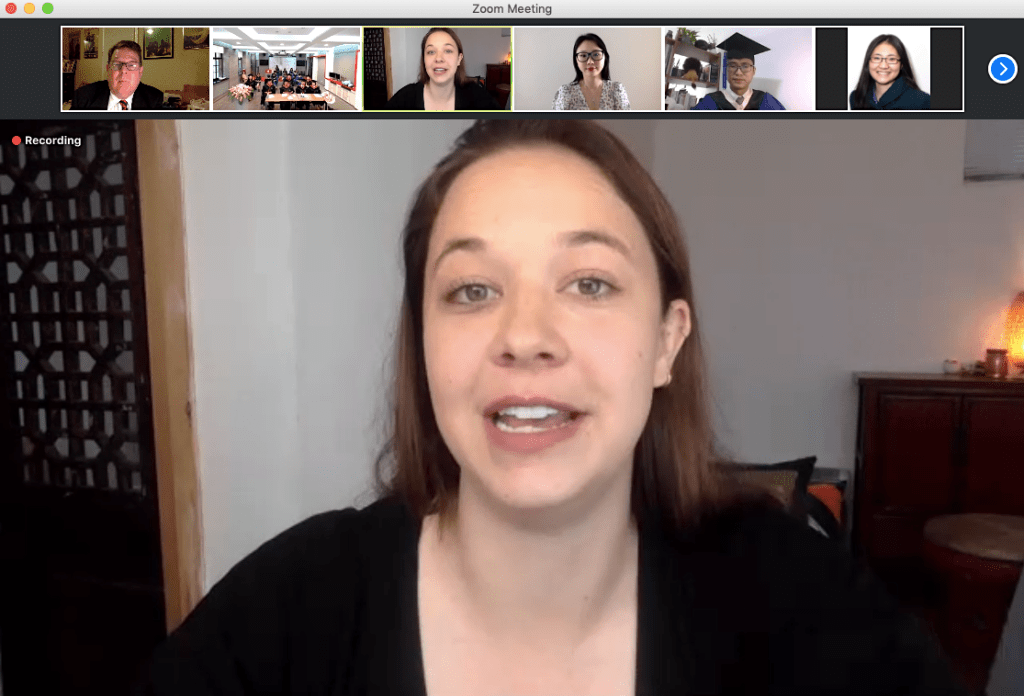
My first online class. Out of a crisis came an opportunity to experiment and innovate.
In late January, when most people around the world viewed the coronavirus as a remote medical crisis afflicting residents of China, I knew better. As a veteran journalist now teaching at China’s top university, I could see that the epidemic was likely, slowly but surely, to become a global pandemic. With no cure, rapid spread in new “hot zones,” and limited information available to the public, I realized that my professional and personal life was going to be changed significantly.
As co-director of Global Business Journalism, a master’s degree program created by the International Center for Journalists and Tsinghua University in Beijing, I knew that we would need to plan to conduct our spring semester “virtually” through an online platform rather than in the classroom in China. Like almost all of our international students, I was outside of China and unable to return to the locked-down campus.
For my program, this crisis became an opportunity, and Global Business Journalism began its spring semester on schedule and with all students in attendance via the Zoom online platform. Now that the coronavirus is understood to be a global threat, more than 100 American universities and hundreds of others around the world switched from in-person to online classes in the first two weeks of March alone.
This unanticipated disruption need not be a burden, if you are adaptable and innovative. “Online education is an opportunity to make coursework more customized and flexible,” writes journalist and educator Lisa Waananen Jones.
Here are 10 tips to make an online learning experience more rewarding:
- Pick the right learning platform
Your online learning site must be able to handle the number of people in your classes or meetings. You need to consider whether your budget can afford a “premium” plan or whether you are willing to accept the limitations of free sites (usually capping the number or participants or limiting the time of your sessions). Different sites offer various features, including images of each participant, chat capabilities (for the full group or individual members), and group meetings taking place at the same time inside of the class session. In addition to Zoom, other platforms recommended by techradar.com include Docebo, Udemy, Skillshare, WizIQ, Adobe Captivate Prime and SAP Litmos. Other choices with free options include Moodle, ezTalks Webinar, Fastmeeting and Articulate Storyline. Some platforms are offering discounts to schools and nonprofit organizations.
- Beta test your platform
As I was working with my Tsinghua School of Journalism and Communication colleagues to set up our virtual classrooms, the Iowa Democratic caucuses demonstrated to the world the risks of adopting new technologies without sufficient beta testing. The failure of the Iowa vote-counting app, which was not rigorously tested, was a massive embarrassment. I realized that failure was not an option for me. We moved quickly with small-scale beta testing of several platforms and chose Zoom. We followed up with a beta test of five staff members and then our first-year graduate students. Each was successful. We were ready for our official launch – all within a week.
- Focus on your community
If you don’t already have a social media chat group for your class, create one. (My Tsinghua class uses WeChat, but WhatsApp, Facebook and other platforms can work for you.) I interact with my students far more often than when we were on campus together, answering quick questions and offering tips and suggestions. As you focus on your community, it also is important to tailor your lecture content the new communication medium you are using. Don’t just transfer your lecture notes or PowerPoint presentations to an online format. You need to communicate differently than in class. There is no natural interaction of professors and students. Students online don’t raise their hands or give you a non-verbal clue that they’d like to participate in a discussion. You will need to invite people into the classroom give-and-take and make them feel welcome. You can build student feedback into your lectures through simultaneous social media chats or online surveys.
- Think visually
Yes, I advise journalists to “think visually” in my new Multimedia Reporting textbook (Springer, 2019). But it is important to think visually as an online professor, too. The most boring way to teach is to be a talking head. I started with my virtual classroom set. As the son of a scenic designer for Broadway and opera, I created a backdrop for my lectures. A pair of life-sized terra-cotta warriors that I shipped home from Xi’an frames the shot of me in my makeshift home studio. On a more substantive note, I try to vary the images on the screen at any one time, whether still shots or videos. I have scrolled through best-practices examples on my screen and even conducted live searches of online databases to illustrate points I am trying to make. Of course, there’s always a risk that one of your visual exercises could go awry, but that’s part of the excitement of live TV.
- Lower expectations
Inevitably, something will go wrong in real time: The streaming video, someone’s audio, someone’s internet connection, the live chats, the advanced functions on your platform. Patience is important. As long as your students understand that this virtual classroom might not be perfect, everyone will be a bit less anxious if they experience an “oops” moment.
- Get plenty of rest
Teaching online takes more energy than teaching in the classroom. It’s like being on live television. Try to get a good night’s sleep before each performance. (And always have a cup of water, tea or coffee nearby.)
- Be forgiving of your students’ complications
My remote-teaching experience is unusual. My students span 22 time zones. My class begins at 9 a.m. on the east coast of the United States. For my students, that means 10 p.m. in Japan and Korea, 9 p.m. in China, 5 p.m. in Oman, 3 p.m. in South Africa, 2 p.m. in Europe, and 6 a.m. in Vancouver and Los Angeles. Some students, cloistered in their parents’ homes, have to whisper so they don’t awaken slumbering relatives. I have allowed some students to present “oral” reports through the group chat function. Remember: It’s not the students’ fault that our spring semester has become so complicated.
- Give your students individual attention
It’s important to build or maintain relationships with everyone in your class. That becomes particularly important when you cannot engage in the basic social interactions of a classroom setting. Instead of having my regular weekly office hours, I feature “virtual office hours” at times arranged with each student. Because some students are shy, I have reached out to schedule meetings in advance of major assignments. I leave a few minutes after every lecture for students who want to hang around in the virtual classroom and ask me any questions on their minds. I also respond to social media messages or email from my students within the day (or sooner, if practical). I believe it’s important to show students that you care about their learning experience and their progress.
- Remain physically active
Over the first few weeks of my online teaching experience, I found that I sometimes felt lonely or irritable. I was accustomed to the give-and-take with students, and the social camaraderie of my office. To overcome a sense of isolation, I make sure to exercise regularly. My colleagues and students in China have developed much more creative coping mechanisms during their weeks in quarantine. Those of us free to move around in our hometowns must act responsibly, but we don’t want to cloister ourselves and live in a world of irrational fear.
- Rely on your teaching assistant or office staff
Teaching remotely requires more work than teaching in the classroom. It requires more coordination, communication and logistical planning than normal courses. It is vital that you empower your teaching assistant or office staff to remind students of upcoming assignments, guest lectures and schedule changes. And remember to say “thank you” to the staff that helps you.
None of us is in this alone. Amherst College President Biddy Martin was speaking for me when she informed her students and staff on March 9 of a temporary shift to online education.
“It will be hard to give up, even temporarily, the close colloquy and individual attention that defines Amherst College,” she wrote, “but our faculty and staff will make this change rewarding in its own way, and we will have acted in one another’s best interests.”
This article was written for cross-posting on the International Journalists’ Network (IJNet).
The coronavirus can’t stop the Global Business Journalism program from its mission to train reporters worldwide
Posted: February 26, 2020 Filed under: Breaking news, Dunham's Discourses, Global Business Journalism, Journalism Training, Rick in the news | Tags: China, coronavirus, GBJ, Global Business Journalism Program, Hai Lin Wang, Iowa caucuses, journalism education, Li Chengzhang, quarantine, Ralph Martin, Skype, terracotta warriors, Tsinghua School of Journalism and Communication, Tsinghua University, University of Cardiff, Wan Zhixin, WeChat, Wuhan, Xi'an, Zoom Leave a comment
Preparing for a “virtual class” in the new home office. (Photo by Svetlana Fenichel)
I was at home during Tsinghua University’s winter break when news of the coronavirus outbreak made its way into Chinese and international media in January.
As soon as I read about the deadly epidemic, I knew that my life, and my students’ lives, would be significantly disrupted. Little did I know that it also would turn into an opportunity for me and my Tsinghua School of Journalism and Communication colleagues to experiment with innovative distance-learning tools, offering our students the chance to continue their education in new and exciting ways.
Despite some initial optimism in Chinese media, it was clear that the epidemic that started in Wuhan was out of control. With 35 years of experience as a journalist in the United States, I had experience in separating facts from rumors, and calmly carrying on in times of upheaval and panic. As international co-director of the Global Business Journalism program, a prestigious English language masters program at Tsinghua University, I immediately focused on my students.
Half of our Global Business Journalism students are Chinese, and they were home with their families. Our international students live in more than 20 countries around the world. Our office found out where they were and how they were doing. (They were all healthy and surprisingly calm.) Most were home with their families overseas, though a few students remained in China during the winter break, either on campus or with relatives in China.
My next priority was to prevent panic while honestly sharing the facts available to GBJ’s leaders. I realized it was important for our program’s global website, GlobalBusinessJournalism.com, to provide reliable, timely, accurate information about the coronavirus and its impact on Tsinghua students.
Early optimism, fueled by upbeat coverage in some Chinese media, led some people in our GBJ community to believe that spring semester classes would resume on campus with minor delays. As someone who has coped with emergencies as a reporter and manager, I strongly believed that there was more than a 90 percent likelihood that we would not be able to return to Beijing any time soon.
Well, unfortunately, I was right. Chinese government officials instituted quarantines around the country, and intercity travel was severely restricted. Almost every other country canceled all flights to and from China. Our students, even if they wanted to, could not return to Beijing.

First class of the semester (Photo by Chengzhang Li)
Out of necessity came opportunity. Through conversations on Skype and WeChat, my colleagues and I discussed ways to create virtual classes so we could resume classes as scheduled on Feb. 17 and give students a valuable educational experience. The university’s visionary leadership had the same idea, and aggressively pursued solutions.
Tsinghua tried to create a proprietary online learning platform, but the beta tests showed that it wasn’t ready for widespread use. We needed to find a stable, reliable platform for online classes.
We also had a logistical problem. Global Business Journalism students are spread out over 22 time zones. It was almost impossible to find a time that would work for everyone. For my advanced news writing class, we settled on 8 a.m. in Washington, which is 2 p.m. for my students in France and Spain, 3 p.m. in South Africa, 5 p.m. in Oman, 9 p.m. in China, and 10 p.m. in Japan and Korea. Thank goodness Global Business Journalism students are flexible and adventurous.
Then came the Iowa caucuses in the United States on Feb. 3. As odd as it sounds, the massive technology failure in Iowa played a key role in our Chinese academic experience. The Iowa Democratic Party didn’t properly beta test its new app, and the result was disaster. It was a PR disaster, but, more importantly, it was a failure that did not serve their customers: Iowa voters, the media and the American public.
I realized it was vitally important to carefully test platforms in advance so we could provide a positive experience for the students. Our international journalism staffer, Li Chengzhang, and my teaching assistant, Wan Zhixin, tried a few and concluded that a conference app called “Zoom” was our best prospect. The university and Zoom’s Chinese subsidiary reached an agreement to let students use the platform for free until June. We beta tested the app repeatedly: once with just four of us, then a “dry run” with the entire first-year Global Business Journalism class. Then we were ready for classes, or so we thought.
Of course, there were a few glitches caused mostly by the varying qualities of internet connections around the world. But our class was an educational triumph. Students could see me, hear me, see my PowerPoint presentations, and see articles that I had called up on my computer screen for analysis. All of the other Global Business Journalism program’s classes proceeded without incident, and the student reaction was overwhelmingly favorable.
“Even though the virus has resulted in the [journalism] school having to use a virtual classroom, it’s still brought so many good stories to the front page,” said Hai Lin (Helen) Wang, a GBJ master’s student from Canada who has been staying with her grandparents in Tianjin. “I hope we can all take advantage of this time.”
I conducted the first class from my dining room table in Arlington, Virginia. For the second class, I created a China-themed classroom in my basement, with two life-sized terracotta warriors from Xi’an in the background.
I feel heartened by the outpouring of support from around the world. A typical message came from said Ralph Martin, an emeritus professor of computer science at Cardiff University in Wales and a former guest professor at Tsinghua. “I hope your online courses go well and things will soon be back to normal,” he wrote in a note shared on university social media accounts.
I’m taking this one week at a time. We could have a technological meltdown any week. But I am cautiously optimistic. And I am looking for the silver linings in this dark cloud. For one thing, I can now ask prominent journalists, academics or policymakers in Washington, Europe or Africa to join our class in real time.
I have great sympathy for everyone who has gotten sick, and mourn those who have died in the coronavirus epidemic. I feel a sense of empathy for the billion-plus people whose lives have been upended. While my academic routine has changed significantly, I can’t say that I have suffered, like so many of my friends and students in China. I think of them (and talk to them) every day.
In good times and in these challenging times, Tsinghua University has inspired me to become a better person and a better teacher. As a professor who loves teaching the brightest aspiring journalists from around the world, I owe it to my students to give them an educational experience that they will always remember … in a good way.
The world gave us lemons, and we are trying to make something sweet out of it. As one of my Texas friends said to me: “Lemonade, Rick. Lemonade.”
>>> Are you interested in applying to join Global Business Journalism or do you know a college senior or young journalist who would be interested in pursuing a master’s degree in the program? Here’s a link for admissions information.
7 reasons why you should apply to join the Global Business Journalism program at Tsinghua University
Posted: January 10, 2020 Filed under: Global Business Journalism, Journalism Training | Tags: Agence France-Presse, Bloomberg News, China, Chinese language, GBJ, Global Business Journalism, ICFJ, International Center for Journalists, New York Times, Tsinghua School of Journalism and Communication, Tsinghua University, Wall Street Journal, Washington Post Leave a comment Guest Blog by TARIF HASNAIN
Admission season is underway, and college seniors and young professionals across the world are looking for the best graduate school opportunities. The Global Business Journalism master’s program at Tsinghua University offers challenging, practical courses taught by veteran international journalists and journalism educators on one of the world’s most beautiful campuses.
Here are seven reasons why you should consider this internationally renowned English language journalism program based at China’s top university:
1. Advanced Journalism Learning
GBJ offers technologically advanced, timely and practical journalism training to the students. It’s an ideal mix for people who envision themselves becoming successful journalists in the next few years. Global Business Journalism alumni have landed jobs at international news outlets including Bloomberg News, CGTN, CNBC and more. GBJ students have interned at publications such as The New York Times, The Wall Street Journal and Agence France-Presse. The program is supported by two respected global news organizations: Bloomberg News and the International Center for Journalists.
2. A Distinguished Faculty
Few journalism schools in Asia have as many international professors, and none boast this kind of high-level journalism experience. In Global Business Journalism you’ll be blessed by the presence and support of three American professors each semester who give individual attention to each GBJ student. They are joined by a cadre of distinguished Chinese professors with strong academic qualifications and experience. This multicultural learning environment is certain to broaden your horizons.
3. A Wide Variety of Courses
In Global Business Journalism, you will learn about business news reporting, multimedia storytelling, advanced news writing, data analysis, basic economics and accounting, contemporary society in China, Chinese language skills, and even film and television production. All these courses make this program challenging, fascinating and exceptional. Global Business Journalism offers practical experience in an inspiring academic environment.
4. A Diverse Group of Students
GBJ has hosted students from more than 65 countries. This diversity makes the program unique and rewarding. You can also be one of the 20 international students, who get admitted to the program every year.
5. Professors Who Care About Each Student
One thing that amazes everyone is the learning partnerships that develop between the teachers and students in our program. The professors go out of their way to help the students learn and blossom as journalists. Professors give students quality time, not just regular office hours. There are regular informal lunches for students and professors. It creates a family atmosphere.
6. Access to Bloomberg Terminals and Other Advanced Learning Tools
The GBJ students are among the luckiest groups of journalism (or business) students in the world, because Bloomberg News has donated 10 Bloomberg terminals to the program. They are available, free of charge, to any Global Business Journalism student at any time. It is the largest such collection of all-donated terminals at any university in the world. GBJ students also have access to the Tsinghua “Future Media Lab,” a state-of-the-art multimedia learning facility. The Tsinghua School of Journalism and Communication also has television studios and equipment that can be reserved by our students.
7. All These Benefits – and You Might Get it for FREE!!!
You can be a part of a remarkable family, you can learn to be a better journalist, and you might be able to get your graduate education for free. No promises, of course. But Tsinghua University and the Chinese government offer significant scholarships to exceptional students and young media professionals. Apply early to secure the best chance for scholarship aid.
So don’t think twice. Know your worth, show your potential, apply for the program, and become a global member of Global Business Journalism family. We welcome you.

For the latest updates from GBJ, check out our news feed: https://www.globalbusinessjournalism.com/blog-1
Check out the website created by GBJ faculty and students: https://www.globalbusinessjournalism.com/
View the Tsinghua GBJ website: http://gbj.tsjc.tsinghua.edu.cn/
Application instructions: https://www.globalbusinessjournalism.com/apply
Follow us on:
-
Facebook: facebook.com/GlobalBusinessJournalism
-
Twitter: twitter.com/gbjprogram
-
Linked In: https://www.linkedin.com/in/gbj-global-business-journalism-tsinghua-%E6%B8%85%E5%8D%8E-11133657/
GBJ hosts workshop on global climate change coverage
Posted: November 26, 2018 Filed under: Global Business Journalism, Journalism Training, Rick in the news | Tags: Anthony Kuhn, BBC, British Broadcasting Corporation, climate change, deforestation, Doug Harbrecht, GBJ, Global Business Journalism Program, global challenges, global warming, Hang Min, Indonesia, journalism education, Madagascar, McDonnell Symposium, Mongolia, Morocco, National Geographic, National Public Radio, New York Times, NPR, People's Daily, Pulitzer Center, Sean Gallagher, South China Morning Post, The Paper, Tsinghua Future Media Lab, Tsinghua School of Journalism and Communication, Tsinghua University, Washington University in St. Louis Leave a commentJournalism coverage of issues related to climate change can educate the public and shed light on one of the most important global policy issues of the 21st century, a group of international journalists and educators said during a workshop hosted by the Global Business Journalism Program.
.
The workshop, called “Taking the Heat – Using Journalism for Educational Engagement on China,” was organized by the Tsinghua School of Journalism and Communication in partnership with Washington University in St. Louis, the Pulitzer Center and the Global Business Journalism Program.
The event took place Oct. 14 as part of the 7th International McDonnell Symposium. The symposium, which examined “Global Challenges for Today’s Research Universities,” was held for the first time in China. It was the first workshop held at the new Tsinghua Future Media Lab, which will be used by GBJ for New Media classes.
A recently released United Nations report cautioned that world leaders had just 12 years to avoid catastrophic climate change. Rather than debating the problem, the time has come to discuss solutions, Doug Harbrecht, a visiting professor at Tsinghua School of Journalism and Communication, told the audience of global scholars.
Professor Harbrecht described a trend toward “solutions journalism,” where media outlets around the world not only educate the public about the problems related to climate change but offer constructive solutions.
“They want to know how we can fix it,” he said. “They focus on what works, and why. It’s excellent journalism.”
Professor Rick Dunham, co-director of the Global Business Journalism Program at Tsinghua, highlighted international best practices in climate coverage. He cited extensive reporting in the South China Morning Post, The New York Times and the British Broadcasting Corporation. All of these news organizations used multimedia storytelling to explain the depth of the climate change crisis and focused public attention on innovative attempts to reverse its damaging effects.
Professor Dunham also looked at diverse coverage of the issue on the Chinese mainland. These included an in-depth series of reports in People’s Daily focusing on the government response and a series of documentary videos produced by Shanghai-based The Paper illustrating the effects of climate change in different countries including Mongolia, Madagascar and Morocco and explaining how each nation is adapting to the changing environment. He also highlighted how China’s meteorological administration has produced a series of multimedia reports on climate change in 11 areas of China and has discussed possible solutions.
Speakers at the workshop focused on the need for creative storytelling to make stories of climate change compelling to news consumers. Sean Gallagher, a Beijing-based photographer and filmmaker affiliated with the Pulitzer Center and National Geographic, said that focusing on individuals helps to tell broader stories about climate change.
“Most people do not connect to a story unless you show the people affected by the issue,” he said. “The best way to do it is put a face to that issue.”
Anthony Kuhn, a reporter for U.S. National Public Radio, reported extensively on deforestation in the Asia Pacific region. Deforestation is the second-leading cause of global warming after the burning of fossil fuels, he noted. In his presentation, Kuhn recommended that journalists and educators “go to the scene and explain” what is going on and its impact on society. He explained how he had reported from Indonesia, explaining that the deforested trees eventually were used in everyday consumer products from cookies to lipstick.
“One of my jobs is to connect this to people’s lives,” he said.
Professor Hang Min, TSJC Associate Dean for International Affairs, welcomed the participants and underscored Tsinghua’s role as a global leader in education and journalism innovation.
You’re invited: Here’s why (and how) you should apply to join the Global Business Journalism Program at Tsinghua
Posted: November 12, 2018 Filed under: Global Business Journalism | Tags: Academe, application, Asia Pacific, Beijing, Bloomberg News, business journalism, Business Week, China, CNN, Data Journalism, Facebook, Financial Times, GBJ, Global Business Journalism Program, graduate journalism programs, ICFJ, Instagram, International Center for Journalists, LinkedIn, multimedia journalism, New York Times, Reuters, Sarah Ma, Schartzman Scholars, scholarships, top business journalism programs, top journalism programs, top universities, Tsinghua School of Journalism and Communication, Tsinghua University, Twitter, Washington Post Leave a commentAre you interested in becoming an expert on the world’s fastest-growing economy?
Do you want to study Asia Pacific business development and report that to the world?
Do you want to have an amazing educational and personal experience in a dynamic country?
Do you want to learn how to share your stories with audiences via print, audio, video and digital media?
Please join us in the Global Business Journalism master’s degree program at Tsinghua University in China!
Here are instructions for application for the 2019-2020 academic year. Applications will be accepted after November 1, 2018.
1. Introduction
With China playing a key role in the global economy, there is a soaring demand for trained professionals who can understand the exciting, complicated development of the world’s fastest-growing economy and can explain it clearly and in depth to audiences in China and around the world.
Tsinghua University’s Master of Arts degree in Global Business Journalism is designed to meet that growing need. The program offers international students the opportunity to master the fine points of business, finance and economics in China. All courses are taught in English – the international language of business – by internationally renowned scholars and accomplished journalists with extensive global experience. The program’s facilities rival those of other leading journalism schools worldwide. The news lab has the largest number of Bloomberg terminals sponsored by the company of any college in the world.
Business journalism is one of the fastest growing areas of employment opportunities in the industry today. News audiences are eager to learn about the world of business, while media departments expect PR professionals to understand and analyze the complexities of business issues. Tsinghua’s Master of Global Business Journalism Program is designed to offer you the opportunity to meet these growing needs. We welcome you to join us!

The first English-language graduate business journalism program on the Chinese mainland, created in partnership with the International Center for Journalists, it has sent more than 200 graduates to news outlets in China and globally over its first decade.
Launched in 2007, GBJ has already been recognized by students and recruiters alike as a world-class program. Academe, the world’s leading journal on higher education, has featured a series of articles on the program. The student body is culturally and professionally diverse. The full-time program spans two years of intense, fast-paced, rewarding study. Those who complete it successfully emerge with valuable connections, a rich array of opportunities and the business and journalism skills to capitalize on them. It is a two-year experience that will last a lifetime.
The program aims to bring business journalism in China in line with top international reporting standards. The Tsinghua School of Journalism and Communication has a long history of cooperation with major international media and financial-information organizations, and visiting scholars have come from outlets such as Bloomberg, Reuters, Business Week, The New York Times, Financial Times, The Washington Post and CNN.
GBJ offers an array of specialized courses that are at the forefront of global business journalism. Students can learn about international accounting standards, multimedia journalism, data mining, complex financial derivatives, journalism ethics, advanced feature writing techniques and the management of media organizations – knowledge that is transferable to other economies and other professions. At the same time, they gain a deeper knowledge of the Chinese language and economy.
The GBJ program benefits from other academic resources on the Tsinghua campus, including its prestigious School of Economics and Management, the Schwarzman Scholars Program, as well as many Chinese and global media and technology companies in Beijing. Internships, field trips and recruiter visits are integral parts of the program.
GBJ students have opportunities to attend conferences on new media, economic development, global economics and other business topics. They benefit from meetings and discussions with guest speakers, including top editors and reporters from leading Chinese and Western news outlets and international business executives. The GBJ has a growing network of smart, sophisticated reporters, editors and public relations professionals who can enhance the world’s understanding of economic and corporate developments in China and globally.
2. Program Courses
Basic Courses
Mass Communications and Society in Contemporary China
Chinese Language
Intercultural Communication
Media Research Methods
Workshop for Academic Training and Ethics
Core Courses
Business News Writing and Editing
Multimedia Business Reporting
Economics and Accounting Basics for Journalists
Business News Data Mining and Analysis
Elective Courses
Corporate Communication
Opinion and News Commentary
Hot Topics in the Global Economy
Basic News Writing
Advanced News Writing: Enterprise Journalism
Feature Writing
Corporate Strategies, Case Studies of Chinese and Global Companies
Personal Finance Reporting
Media Management
Workshop on Film and TV Production
Theory and Practice of Public Diplomacy
Data Journalism
Public Relations: An Introduction
Public Speaking
Other Requirements
Professional Seminar for Master’s Candidates in Global Business Journalism
Literature Review and Thesis Proposal
Academic Activities
Internship

3. Qualification Requirements for Applicants
Applicants should have a bachelor’s degree in related fields and a certificate proving English proficiency.
4. Application Documents
1) The completed Foreigner’s Application Form for Admission to Graduate Programs of Tsinghua University with a 2-inch recent photo, signed by the applicant;
2) Statement of Purpose and resume;
3) The original or the notarial degree certificate or proof of education at an academic institution (you need to submit an original or notarial degree certificate after it was awarded) and an academic transcript. The degree certificate and academic transcript must be officially sealed.
4) Two academic recommendation letters from scholars of associate professorship or higher. They must show referee’s phone number and email address on the letter.
5) For non-English speaking students, please provide English level certificates. e.g. TOEFL, IELTS, etc.
6) A copy of your passport page with personal information (personal and ordinary passport);
7) The completed Application Form for Tsinghua University Scholarship (if applicable, original);
8) A non-refundable application fee of RMB800.
The certificates provided should be the original documents in Chinese or in English, otherwise notarial translations in Chinese or English are required. None of the above application documents will be returned.
5. Application Procedure
Step 1: Online Application
Complete Online Application on the Application for Graduate Admission website at http://gradadmission.tsinghua.edu.cn
Step 2: Documents Submission
Submit the application documents listed above to the address indicated below by post mail or in person.
Step 3:Application Fee Payment
There are two ways to pay application fee:
1 . Pay online using a credit card;
After your online application form is verified or the materials are received by Tsinghua University, the staff will make you the online payment draft, and at the same time, an email will be automatically sent out to remind you to pay the application fee via the online application system.
2 . Pay in cash at the Foreign Student Affairs Office (Room 120, Zijing Building 22) on the campus of Tsinghua University.
6. Application Deadline
March 20, 2019
Both the Online Application and a complete set of Application documents should be completed and the package should be received by March 20, 2019.
7. Tuition and Scholarship
Tuition:Program tuition fee for the year 2018-19 is RMB39000/year.
Accidental Injury and Hospitalization Insurance: RMB 600/year for 2018-19.
Please visit Tsinghua International Students and Scholars Center for more details about scholarships: https://is.tsinghua.edu.cn/publish/isscen/index.html
8. Program Website
For more information about the program, please visit the GBJ website at:
http://gbj.tsjc.tsinghua.edu.cn/
Follow us on:
Facebook: https: //www.facebook.com/GlobalBusinessJournalism/
Twitter: https://twitter.com/GBJprogram
Linkedin: https://www.linkedin.com/in/gbj-global-business-journalism-tsinghua-清华-11133657/
Instagram: https://www.instagram.com/gbjprogram/
Read more about the program:
International Center for Journalists website: https://www.icfj.org/our-work/tsinghua-global-business-journalism-program-gbj
Rick Dunham Blog: https://rickdunhamblog.com/category/global-business-journalism/
10.Contact Information:
Ms. Ma Chengcheng (Sarah Ma)
The GBJ Office Room 302, Omnicom Building,
School of Journalism and Communication
Tsinghua University,
Beijing 100084, P. R. China
Tel: +86 10 6279 6842
Fax: +86 10 6277 1410
E-mail: tsjcws@tsinghua.edu.cn
Bloomberg Editor John Liu tells GBJ commencement that quality journalism, technological advances offer optimism to battered media industry
Posted: July 9, 2018 Filed under: Global Business Journalism, Journalism Training | Tags: AI, Artificial Intelligence, Bloomberg News, Burundi, CCTV, CGTN, Chen Changfeng, China, Chinese economy, civil rights, Columbia University, discrimination, GBJ, Global Business Journalism, Global Business Journalism Program, global economy, global vision, Grace Shao, Hang Min, Icigumije Brice, John Liu, Korea, Li Chengzhang, Linda Lew, New York Times, Quan Yue, Sarah Taylor Talaat, sex discrimination, sexism, Shi Anbin, Shi Lin, Tsinghua School of Journalism and Communication, TSJC, Zeng Fanxu, Zhu Yuxuan Leave a comment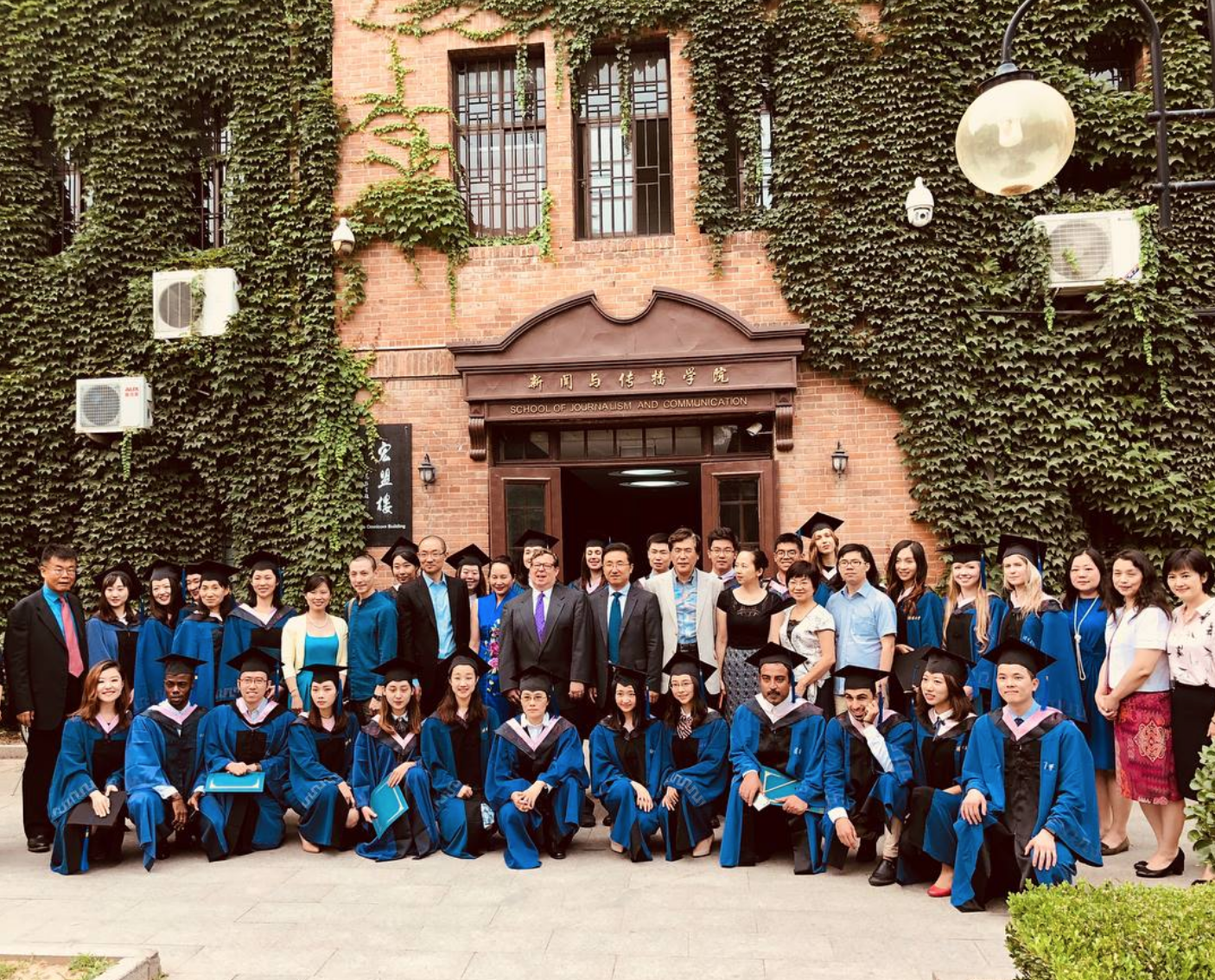
GBJ graduates pose outside of the School of Journalism and Communication
Rapid advances in Artificial Intelligence technology give journalists “great reason to be optimistic about the future” of an industry that has struggled with declining audiences and revenues for the past decade, John Liu, Bloomberg News Executive Editor for Greater China, told 2018 Global Business Journalism Program graduates at the annual commencement ceremony on June 5.

John Liu addresses the 2018 GBJ commencement
Innovative media outlets such as Bloomberg News and The New York Times have harnessed the power of AI to improve the quality of their data analysis and to increase audience engagement by offering digital news stories of particular interest to each news consumer.
“Things are starting to get better know, because people are discovering that consumers are willing to pay for good content,” Liu said in an address at the Tsinghua School of Journalism and Communication. “The next big step, we believe, is AI telling you what you want to read, what you want to watch, before you know it’s there, even translating it into the language you want to read,” he said.
Sixteen international students were awarded master’s degrees in Global Business Journalism in a 90-minute ceremony, while 19 Chinese students received master’s certificates in addition to their master’s degrees from the Tsinghua School of Journalism and Communication.
Students from 65 nations and regions have participated in the Global Business Journalism Program since its creation in 2007. This year, Icigumije Brice became the first GBJ graduate from the African nation of Burundi.
Dr. Hang Min, GBJ Co-Director and TSJC Associate Dean for International Affairs, said that at a time of “dramatic change in China and beyond” that it is important for young journalists to have “multiple perspectives” and to offer “constructive solutions and not just destructive criticisms.”
“Stay open,” she urged the graduates. “Never close any window of opportunity and never say no to something because it’s not your planned path.”
GBJ Co-Director Rick Dunham told the students and their families that the media industry needs to do more to boost the careers of women.
“In the GBJ program, about three-fourths of our students are women, and with rare exceptions, women are the top performers in our program. Yet many of these high achievers may face obstacles in the job market. Women suffer discrimination, overt and hidden, in hiring, promotion and pay,” he said. “We must overcome these insidious forms of male discrimination. In the words of the American civil rights anthem of the 1960s, ‘we shall overcome, some day.’”
Professor Dunham noted that TSJC “is leading the way in empowering women,” and Liu noted that five of the six GBJ grads hired by Bloomberg have been women.
“Not only is advancing women in the workplace the right thing to do, it is also good business,” he said.

Yuki Nakajima wrote the top thesis among international students.
Top GBJ students also offered their perspectives on the program. Speaking for the Chinese graduates, Zhu Yuxuan, hailed GBJ as “a great program for us to develop a global vision … while we are gaining professional knowledge.” International student Zhu Yuxuan, of Japan said GBJ “has allowed me to broaden my horizons and meet friends from all over the world.”
“Every day, we met talented and outstanding students from all over the world, and had the chance to interact with local Chinese students,” she said. “All of us played together, learned together, and progressed together over these two years, and I’m sure every one of us emerged as a better person than we were two years ago.”
Sarah Talaat of the United States, chosen as the GBJ speaker at the TSJC ceremony later in the day, said GBJ students were not only taught practical journalism skills, but also “how to pursue a career grounded in truth and patience, brought about by hard work and dedication, and held to the highest standards of our chosen fields.” She predicted that the program’s sponsors “will see a return on your investments in the shape of better journalism and communication for the benefit of the world.”
Speaking for GBJ graduates was Grace Shao of Canada from the Class of 2015, who worked at CGTN for two years and is returning to academia this fall to study data journalism at Columbia University in New York. Shao, who covered top global economic issues and developments in Korea during her time at CGTN, urged graduates to “undersell yourself” and take care of their health.
“This industry isn’t for the meek,” she said. We have to be on our toes at all times; you have to have writing skills, multimedia skills, analytical skills, people skills, presentation skills, and so on, I can’t think of a job that demands a more well-rounded candidate. Believe in your talents and all that you’ve learned here from your Tsinghua professors!”
Top TSJC officials taking part in the ceremony included Executive Dean Chen Changfeng, Administrative Dean Hu Yu and Administrative Dean of Research Shi Anbin. Professor Zeng Fanxu was honored as top academic supervisor. Graduating students Li Chengzhang, Shi Lin, Quan Yue, Yuki Nakajima and Linda Lew received special awards for their contribution to the GBJ program.
GBJ Commencement Address: It’s time to end sexism in journalism. Now.
Posted: July 5, 2018 Filed under: Global Business Journalism, Journalism Training, Rick in the news | Tags: academic freedom, Australia, Azerbaijan, Barrows Dunham, Betty Millard, Burundi, Chen Changfeng, China, civil rights, Confucius, cross-cultural, cross-cultural experiences, Dai Jia, discrimination, Fan Hong, feminism, GBJ, Global Business Journalism, Global Business Journalism Program, Hang Min, hiring, ICFJ, International Center for Journalists, Japan, Journalism, Joyce Barnathan, Korea, Malaysia, Man Against Myth, New Zealand, Pakistan, Rose Li, Russia, sex discrimination, sexism, Singapore, Thailand, Tsinghua University, TSJC, Twitter, United States, We shall overcome, Woman Against Myth 1 Comment
GBJ co-directors Hang Min and Rick Dunham on graduation day, 2018.
Here is the complete text of my commencement address to the Global Business Journalism graduation ceremony at Tsinghua University on July 5, 2018.
大家好。Добрый день. Welcome.
I am honored, on behalf of the International Center for Journalists and the international faculty of the Global Business Journalism Program, to congratulate all of you on your successful completion of your studies.
This special group includes some of the best young journalists in China, along with a diverse mixture of nations: Japan, Russia, Australia, Malaysia, Singapore, Thailand, Korea, Pakistan, Burundi, Azerbaijan, New Zealand, and the United States. Some of you already have made a mark on the world of business journalism during your Tsinghua years. I have great confidence that even more of you will have an impact in the years to come.
Since 2007, the Global Business Journalism program has improved the quality of journalism – and public understanding of business and economic issues – in China and around the world. You have benefited from cross-cultural learning, practical journalism training, and a varied curriculum featuring both Chinese and international professors at one of the world’s great universities.
In the GBJ program, about three-fourths of our students are women, and with rare exceptions, women are the top performers in our program. Yet many of these high achievers may face obstacles in the job market. Women suffer discrimination, overt and hidden, in hiring, promotion and pay. In many countries, it is acceptable to deny jobs or promotions to women because the employer fears they will become wives and mothers, and will not be as committed to their day jobs as men.
Subtle forms of discrimination continue to subvert women’s empowerment even in so-called progressive countries. A recent study of Twitter use by American political reporters found that of the 25 reporters who received the most social media replies from male political reporters in the United States, zero were women. And whose posts did male reporters share? Only three of the 25 most frequently shared reporters were women. It’s no surprise that the vast majority of “experts” quoted by male reporters tend to be male. It’s time for change.
Joyce Barnathan, president of the International Center for Journalists, was one of 10 prominent media leaders who last month proposed 14 steps to combat industry sexism. “It’s time to stop talking about the need for equality and start actively reforming the industry,” Joyce and the other leaders wrote.
We must overcome these insidious forms of male discrimination. In the words of the American civil rights anthem of the 1960s, “we shall overcome, some day.”

Barrows Dunham
My grandfather, Barrows Dunham, a philosopher, author and professor, wrote a book in 1947 entitled “Man Against Myth.” It analyzed social myths that powerful forces employ to maintain their power.
But a feminist author, Betty Millard, was unimpressed by the title, “Man Against Myth,” and produced her own tract in response: “Woman Against Myth.” She decried the cultural and religious customs cited to subjugate women around the world.
As Millard noted, Confucius wrote many centuries ago: “It is a law of nature that women should be kept under the control of men and not allowed any will of their own.” Confucius, without doubt, was a great man. But he was not always right.
Sadly, Millard’s analysis is still relevant today. A GBJ student, in his thesis this year, argued that Islamic feminists believe that “women’s struggle for equality with men is doomed to fail, as women are placed in ‘unnatural settings’ where they are denigrated and burdened with paid work on top of domestic labor.”
I believe in academic freedom, but I do not agree with the sentiments expressed in this quotation.
Fortunately, the Tsinghua School of Journalism and Communication is leading the way in empowering women. Our executive dean, Dr. Chen Changfeng, is a brilliant scholar and inspirational leader. Our associate dean for international affairs, my friend and GBJ co-director Dr. Hang Min, has earned a global reputation for media management and cross-cultural partnerships. Doctors Fan Hong and Dai Jia are popular GBJ professors, and Li Laoshi, Rose Li, is our indispensable international administrator. And more than half of the keynote speakers at our annual Tsinghua Business Journalism Forums have been women.
You see, women can achieve, if given the opportunity and freed of institutional and societal constraints. I hope that all of you in the graduating class of 2018 take inspiration from the accomplishments of your professors and your peers. It is sometimes harder for women to succeed in journalism. That’s the reality. Men still run most news organizations, and men make most of the hiring decisions. But through persistence and sheer excellence, women are gaining ground. I hope to live long enough to see some of you lead the journalistic, economic and even political worlds of the 21st century.
I close by quoting my favorite philosopher, my grandfather, Barrows Dunham. During a lecture in Massachusetts, he expressed optimism about the battle for social progress. “Even now,” he said, “we ourselves are determining the future, not by knowing what it will be, but by conceiving of what it can be.”
I look forward to you determining the future and changing our world. I will cherish your future achievements, unfettered by ancient superstitions and prejudices. Please stay in touch.
谢谢, 大家。Большое спасибо. Thank you.


Recent Comments