16 bold predictions for 2016 (including ‘Cruz schlongs Trump’)
Posted: December 26, 2015 Filed under: Breaking news, Top Ten, U.S. politics | Tags: 2016 presidential race, American politics, Austin, Beijing pollution, Bernie Sanders, Bibi Netanyahu, China, Chris Matthews, clickbait, CNN, Dan Snyder, Democratic Party, Hillary Clinton, Huffington Post, international trade, Iowa caucuses, Israel, Jerusalem, Joe Scarborough, Julian Castro, Larry David, Las Vegas Review-Journal, Mike Huckabee, Mo Udall, Morning Joe, MSNBC, National Football League, New York Daily News, New York Times, Newt Gingrich, NFL, Philadelphia, Philadelphia Eagles, Pollution, protectionism, Pyonyang, Pyonyang Marathon, Republican Party, Rick Perry, Rick Santorum, Saturday Night Live, schlong, schlonged, Sears, Sheldon Adelson, Tea Party, Ted Cruz, trade, Washington Post, Washington Redskins, William Randolph Hearst 2 Comments
The bromance is headed for a rocky break-up in 2016.
The pundits were soooooo wrong in 2015 that it seems silly for anyone to pull out the crystal ball again. Especially in the midst of the most unpredictable Republican presidential nominating process in … what, four years? (President Gingrich, President Santorum, President Perry, we hardly knew ye.)
But since so many pundits make good salaries predicting things that don’t come true, I’m going to let you in on some things that are as solid as Sears. (OK, if you’re under 50 years old, you probably don’t understand that line.)
Here are my 16 bold predictions for 2016:
- The New York Daily News headline on Feb. 2, 2016 (the day after the Iowa caucuses): CRUZ SCHLONGS TRUMP
- Former Arkansas Gov. Mike Huckabee, the winner of the 2008 Iowa Republican caucuses, drops out of the 2016 race on Feb. 3 after finishing eighth in the previous evening’s Iowa caucuses. Nobody outside of the Huckabee family notices.
- Donald Trump continues his slide from frontrunner status on Feb. 23 with a stinging defeat in the Nevada caucuses when fellow gambling mogul Sheldon Adelson pulls out all the stops in support of [Editor’s note: He hasn’t yet decided which non-Trump candidate he will support]. Front page editorials in the Adelson family’s Las Vegas Review-Journal strongly support [candidate to be decided upon later]. Adelson tells close friends that Trump eliminated himself from contention when he didn’t know he was supposed to say that Jerusalem is and always will be the indivisible capital of Israel — and then canceled his meeting with Israeli Prime Minister Bibi Netanyahu in a fit of pique after Adelson buddy Bibi bashed Trump for saying he’d bar all non-citizen Muslims from the U.S. — and then used “schlong” as a verb.

Larry David got more attention from the mainstream media when he played Bernie Sanders on Saturday Night Live than the real candidate got when playing himself on the campaign trail.
- Bernie Sanders will be the Mo Udall of 2016. Without the wicked sense of humor. Favorite of the liberal liberals. String of second-place finishes. His last stand will be in the Vermont primary on March 1. But while Bernie battles for his home state’s 15 delegates chosen in the primary, Hillary Clinton will take something like 207 of the 208 Texas delegates up for grabs that day.
- The Republican Party in the United States will remain the only conservative party in the entire world to dispute the fact that humans contribute to climate change. Not a good strategy to win the support of young Americans, who wonder why so many old fogies can’t accept global scientific consensus.

Just saying no.
- The Democratic Party in the United States will continue to argue for protectionism and managed trade. The Tea Party will continue to argue for protectionism and managed trade. The rest of the world will wonder why America continues to have such a robust, resilient economy when its politicians seem to be trying so hard to destroy its competitiveness.
- America will make history again — by electing the first female president ever, the first candidate with a Spanish surname and/or the first U.S. president ever born in Canada.
- The next vice president’s last name will end in an “o.” Leading possibilities are Castro, Rubio or uh-oh.
- Ratings on MSNBC will continue to slip-slide toward oblivion. Morning Joe’s audience will be limited to the DC Beltway, Manhattan and Joe Scarborough’s family’s homes. More than 95 percent of Chris Matthews’ audience will be aged 65 and above.
- The Washington Post website, having passed the New York Times in online audience in 2015, will rocket ahead of CNN through a combination of good, solid, old-fashioned reporting and analysis and an understanding of viral-news marketing.
- The Huffington Post, having reached the limits of page views through click-bait, rewrites and journalistic trolling, reassesses its business strategy amid general stagnation.
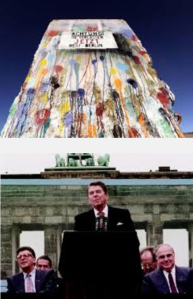
“Mister Hearst, tear down that wall.”
12. American newspapers continue to reassess the ill-fated paywall fad amid mounting evidence that they are destroying any potential for long-term community-building in a misguided attempt to increase short-term revenues.
13. No pro team from Philadelphia or Austin will make the playoffs in any sport.
14. Dan Snyder will continue to top the lists of “worst sports team owner,” despite his mediocre team’s miraculous 2015 run in the NFC Least division.
15. The Pyongyang Marathon will continue to be the least popular marathon in any nation’s capital. It’s on April 10, if you’re interested in signing up.

Have you signed up yet? One-way airfare not included.
16. American newspapers and news networks will feature stories about the poisonous air in Beijing with frightening regularity, causing the Chinese government to (a) condemn the negative news coverage and (b) develop a new and improved strategy for dealing with a problem that’s not going away, despite the occasional blasts of fresh air from Siberia.
Happy New Year to all!

Red Alert in Beijing
Top ten U.S. political winners and losers of 2015
Posted: December 22, 2015 Filed under: Top Ten, U.S. politics | Tags: 2016 presidential contest, Aaron Schock, Afghanistan, Afghanistan war, American politics, Anthony Kennedy, Barack Obama, Barry Goldwater, Beau Biden, Bernie Sanders, Big Oil, Bloomberg News, Charles C.W. Cooke, Chris Matthews, CNBC, ConocoPhillips, Darth Vader, Dick Cheney, Donald Trump, energy, George W. Bush, gun control, Harold Stassen, Hillary Clinton, Hugh Hewitt, Iraq, Iraq war, Jeb Bush, Jennifer Dlouhy, Joe Biden, John Boehner, John Cornyn, John Kasich, Lindsey Graham, marriage equality, Megyn Kelly, Mexico, National Press Club, National Review, National Rifle Association, neoconservatives, NRA, Paul Ryan, Pew Research Center, Pope Francis, President Barack Obama, presidential debates, Rand Paul, Republican establishment, Republican Party, Ronald Reagan, Rupert Murdoch, Ryan Lance, same-sex marriage, Saturday Night Live, Scott Walker, Supreme Court, Tea Party, terrorism, Time Magazine, US News, Walter Mondale, Washington Cartel, Will Ferrell 1 Comment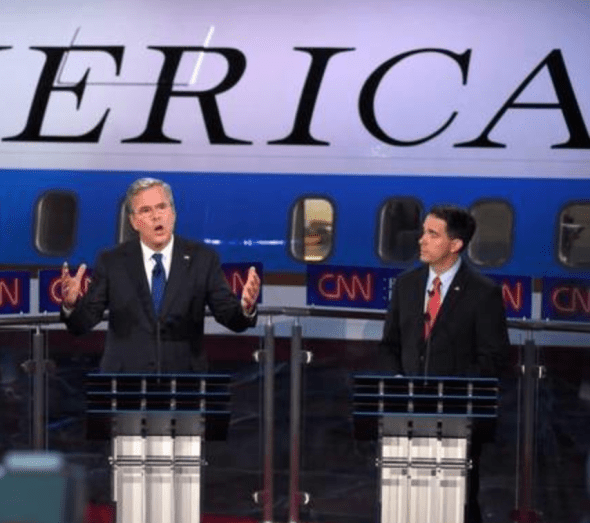
Long ago, in a galaxy far, far away, these were the GOP presidential frontrunners.
I promise that this list of 2015 American political winners and losers — one of dozens of such exercises being published this week — will not mention Donald Trump. (After that one.)
It’s been a long, long year in U.S. politics. It seems like decades ago that John Boehner was House Speaker, Jeb Bush was GOP-nominee-presumptive, Ted Cruz was a marginalized junior senator, Joe Biden was a GOP campaign trail laugh line and Barack Obama was a terrorist-loving, Kenyan-born, Muslim jihadist. (Well, four out of five ain’t bad.)
The list of political losers this year is loooooooooong. The list of political winners is short and subject to change without notice in 2016. (Will the honeymoon end, Speaker Ryan, or will we be talking about President-elect Paul Ryan one leap year from today?)
For what it’s worth, here’s my take, starting with losers:
Scott Walker
Nobody went from rising national star to minor-league dud faster than the in-over-his-head Wisconsin governor. He gave one good campaign speech in Iowa and was hailed as the GOP presidential frontrunner by the out-of-touch political media elite. His campaign was a free-spending disaster that was destroyed by one simple thing — a terrible candidate.
Rick Perry
Rick Perry, the Scott Walker of 2011, was the Harold Stassen of 2015. Nobody took the former Texas governor seriously as a presidential candidate. He couldn’t get traction, even though he gave the best speech of the Republican campaign — on the sensitive subject of race — at the National Press Club and articulately warned the GOP electorate about the candidate who shall not be named.

A tearful final act for House Speaker John Boehner
John Boehner
In his view: The inmates took over the asylum on Capitol Hill, and the keeper of the keys decided to flee the funny farm. A slightly more jaundiced view: The veteran House speaker and former fire-breathing Republican revolutionary was burned out and unable to reconcile the new generation of irreconcilable nihilists and the establishment majority in his very conservative caucus. After praying with Pope Francis, he chose a quiet glass of chardonnay on the balcony instead of a brass-knuckles brawl in the men’s room.
Jeb Bush
Remember when Walter Mondale decided not to run for president back in the 1970s because he doubted he had the fire in his belly for a presidential candidate. (You don’t? Well, trust me.) I get the feeling that Jeb Bush is the Walter Mondale of 2016. He acts like he really didn’t want to run for president, but everybody — except his mother — told him it was his duty (to the nation, to the party, to the Bush family) to run. So he ran. Badly, thus far. How bad is it? The incomparable Will Ferrell returned to Saturday Night Live to reprise his famous role as George W. Bush. His big laugh line: Bet you didn’t know I was the smart son.
The Republican political establishment
The GOP establishment — that amorphous, pan-ideological political group that shares a wariness of outsiders — is accustomed to getting its way. Over the past seven decades, only two insurgents (Barry Goldwater and Ronald Reagan) have defeated the candidate favored by a majority of GOP “wise men” and Daddy Warbuckses. Indeed, from 1976 through 2008, there was always someone named Bush or Dole on the Republican ticket. This year, the so-called establishment candidates (Jeb Bush, Chris Christie, John Kasich, Lindsey Graham, Scott Walker, Rick Perry) received less combined support than the first-term firebrand from Texas, Ted Cruz, is polling now. The purported savior of the Republican establishment may end up being Marco Rubio, a Tea Party champion who vanquished the GOP establishment in 2010 when he seized the Florida Senate nomination from a sitting Republican governor. Or Chris Christie, a.k.a. He Who Hugged Obama in 2012.
The Republican party
The GOP now has a presidential frontrunner who cannot win in the general election and could hand the House and Senate back to the Democrats in a Goldwater-style replay. (Goodbye, Illinois, Wisconsin, Ohio, Pennsylvania, New Hampshire Senate seats.) The GOP now has a second-running candidate who would be a very tough sell to general election swing voters. The “establishment” candidates who are running ahead of Hillary Clinton in general election match-ups seem to be long shots and getting longer by the week. (One of them, Marco Rubio, has been in a holiday slump and has compensated for his declining poll numbers by taking more time off of the campaign trail.)

The hits keep on coming: CNBC’s panel was roundly criticized by Republicans after a contentious presidential debate … and by some non-Republicans, too.
The establishment media
The Pundit Elite told you that a certain billionaire real estate and gambling tycoon was not a serious candidate for president. The Huffington Post relegated him to the entertainment section. They said he would fade when he questioned John McCain’s patriotism. They said he would fade when he said Mexico was sending rapists across the border to violate American … sovereignty. They said he would fade when he announced a plan to prohibit Muslim visitors from entering the United States. The big “they” have been wrong, wrong, wrong. They were wrong about Rick Perry. Time Magazine once asked. “Can Anyone Stop Rick Perry in 2016?” Duh, yes. They were wrong about Scott Walker. US News declared, “Walker Launches 2016 Campaign as GOP Frontrunner.” Chris Matthews was wrong when he declared that Rand Paul would be the 2016 nominee. (“You watch. This is what I do for a living.”) And the pundits were most definitely wrong about Jeb Bush, the one-time “Mister Inevitable” of the 2016 campaign. So what were they right about? The inevitable Hillary Clinton victory? OK, that seems likely, although the first vote has still not been counted. Here’s my final warning about pundit predictions: Beware all pundits who predict the general election with absolute certainty before Labor Day 2016.
Fox News
Having lit the match of the Tea Party revolution in 2009, Fox News saw the wildfire scorch the Republican Party in 2015. Populism trumped past favorite “isms” of Fox News: compassionate conservatism, neo-conservatism, Bush-Cheney-ism and O’Reilly-ism. A former Democrat who gave money to oodles of Democrats and praised both Clintons to the high heavens is now the favorite of the populist right. Rupert Murdoch despises the candidate who shall not be named. He’s shared his opinion with the world — repeatedly — through social media. But there’s seemingly nothing he or his TV network can do about it.
Dick “Darth Vader” Cheney
“I think this whole notion that somehow we can just say no more Muslims, just ban a whole religion, goes against everything we stand for and believe in. I mean, religious freedom has been a very important part of our history and where we came from. A lot of people, my ancestors got here, because they were Puritans.” This was not some lefty civil libertarian talking. This was Mister Waterboarding himself, Richard Cheney, talking to conservative radio host Hugh Hewitt. The former vice president, who embraces his “Darth Vader” image with Dickensian good cheer, thinks that the candidate who shall not be named has gone beyond the bounds of decency. But that certain candidate doesn’t care what Dick Cheney or George W. Bush or any of their neocon friends think. He says they screwed up Iraq and Afghanistan and the entirety of Southwest Asia with ill-considered invasions. When he talks like that, the billionaire tycoon sounds a lot like Bernie Sanders.
Aaron Schock

Schock and Awful
With all the big losers in 2015, I’d like to end my list with the year’s most insignificant loser. Aaron Schock. Once the youngest member of Congress, he showed off his “six-pack abs” on the cover of Men’s Health magazine. Turns out that the emperor had no clothes at all. The fourth-term congressman was snared in a series of scandals involving his accumulation of personal wealth through the aid of political donors and his alleged use of taxpayer money to fund a celebrity lifestyle. “Politics shouldn’t be a ticket to a celebrity lifestyle on the public’s dime,” Charles C.W. Cooke wrote in National Review. “For a man who has enjoyed such a short and undistinguished career, Illinois’s Representative Aaron Schock (R) has sure packed in a lot of corruption.” With no friends and no sympathy, the era of Shock and Awe ended abruptly on March 17 when he quit his day job.
And now the winners …

Total victory at the Supreme Court
Marriage equality
In 2004, when George W. Bush made same-sex marriage one of the key wedge issues in his re-election bid against Democrat John Kerry, 60 percent of Americans opposed gay marriage and just 31 percent supported it. The past decade has seem a seismic shift in public opinion. Not only did the U.S. Supreme Court legalize what is now known as “marriage equality” this year, but the public overwhelmingly supports it, 55 percent to 39 percent, according to the most recent Pew Research Center survey.
As Justice Anthony Kennedy wrote in his landmark majority opinion:
“No union is more profound than marriage, for it embodies the highest ideals of love, fidelity, devotion, sacrifice, and family. In forming a marital union, two people become something greater than once they were. As some of the petitioners in these cases demonstrate, marriage embodies a love that may endure even past death. It would misunderstand these men and women to say they disrespect the idea of marriage. Their plea is that they do respect it, respect it so deeply that they seek to find its fulfillment for themselves. Their hope is not to be condemned to live in loneliness, excluded from one of civilization’s oldest institutions. They ask for equal dignity in the eyes of the law. The Constitution grants them that right.”
The NRA
There have been 353 documented mass shootings in the United States this year, almost one per day. Gun and ammo sales have spiked with each of the largest mass murders. In Washington, all attempts to pass gun-control measures have been resoundingly rejected on Capitol Hill. Score two for the National Rifle Association.
Big Oil
Yes, I know, gasoline pump prices are down. That makes American consumers a winner but Big Oil companies a loser. But Big Oil is still having a very Merry Christmas after getting a very nice holiday gift from Congress and President Obama: an end to the four-decade-old domestic oil export ban. As recounted by my former colleague Jennifer Dlouhy, now with Bloomberg News:
Sensing they had momentum, oil industry lobbyists stepped up a social media campaign targeting possible supporters by placing ads on Facebook and elsewhere. Companies printed anti-ban messages on royalty checks. And in the end, supporters of retaining the ban were outmatched on the Hill, where at least 34 groups and companies were lobbying to allow exports compared to seven lobbying against.
“It moved quickly,” ConocoPhillips CEO Ryan Lance told Jennifer. “A lot quicker than industry thought it would.”

Tough questions
Megyn Kelly and Hugh Hewitt
Two conservative media personalities gained wide respect across the political spectrum by their tough but fair questioning of presidential candidates in nationally televised debates. For her professionalism, Kelly has faced sexist and misogynistic barbs from the candidate who shall not be named. Hewitt, one of the American media’s leading experts on foreign policy, asks specific and significant questions that cannot be dismissed as liberal propaganda.
Paul Ryan
Après Boehner, le déluge? Pas de tout.
Paul Ryan, the 2012 GOP VP nominee, maneuvered flawlessly into the position that Republicans from center, right and far right were all begging him to accept the job that Boehner suddenly vacated. The bizarre courtship process has given Ryan a lot of political capital, and he has used it wisely, cutting a conservative deal to keep the U.S. government operating that won the approval of a majority of Republicans and Democrats alike. It’s always hard to predict when the honeymoon might end, but Paul Ryan has led a charmed political life in 2015.
Ted Cruz
John McCain dismissed him as one of the wacko birds. His Texas colleague, John Cornyn, called him out after he accused Senate Republican Leader Mitch McConnell of telling a “flat-out lie.” His Senate colleagues have ridiculed and repudiated him repeatedly. To most officeholders, this would be a political kiss of death. But to Texas Sen. Ted Cruz, it is a kiss of life. Running for president as the sworn enemy of the “Washington Cartel,” Cruz has risen from low single digits in early polling to challenging for first place in national polls. He is a darling of right-wing radio, and he has rolled out dozens of endorsements from famous names in the conservative movement. His presidential campaign has been as disciplined as it has been cold-blooded in his attacks on President Obama and Democratic frontrunner Hillary Clinton. The Texas Tornado capped off the year by releasing a light-hearted Christmas video poking fun at himself and people who take themselves too seriously.
Mitch McConnell
Well, Mitch McConnell isn’t happy that Ted Cruz might become his party’s presidential nominee. But that’s 2016. In 2015, he pretty much outmaneuvered both the Cruz wing of the Senate GOP and Harry Reid’s Democratic minority. While the Senate Majority Leader is not a particularly big fan of Barack Obama, he has proven time and again that he can work with him to cut a deal. Cruz calls him a card-carrying “cartel” member. In the olden days, he would have been called a “legislator.”
Joe Biden
Through his grief at the loss of his son Beau, Joe Biden’s humanity shined. He embodied a word that has almost ceased to exist in American politics: “authentic.” As 2015 dawned, Republican presidential candidates regularly made Biden the butt of jokes. As the year is coming to a close, those jokes have been discarded.
Fear
If Joe Biden showed grace under pressure, most of the political world showed that America has lots to fear from fear itself. A fear of Muslim terrorists and Latino immigrants has convinced a majority of Republicans that it’s time to seal America’s borders. Presidential candidates have called for internet censorship and routine government surveillance power to peruse our private emails in search of potential terrorists. Ratings-challenged cable news networks have nurtured the nation’s paranoia with sensationalistic coverage.
Analysis: Confrontation inevitable as Republicans test a ‘weak’ Obama
Posted: November 7, 2014 Filed under: Rick in the news, U.S. politics | Tags: American politics, Barack Obama, Bill Clinton, CCTV, CNN, Democratic National Committee, Dialogue, Elections, Fox News, Francis Fukuyama, government shutdown, Hillary Clinton, Jade Ladal, National Public Radio, Newt Gingrich, Obamacare, President Barack Obama, Republican Party, The End of History, U.S. Congress, United States, White House, Yang Rui Leave a comment
Live on CCTV as a Beijing-based expert on U.S. politics.
Yang Rui: How do these midterm elections damage what President Obama wants to do in the remaining two years?
Rick Dunham: Well, I think right now we’re in for a period of tension, we’re in for a period of confrontation between Congress and the President. The Republicans in Congress think President Obama is weak and they’re going to push very hard for their agenda. They’re going to see how far they can push him. I think the White House will want to reach out a bit more, but I think it’s going to be much harder for the White House to reach out because Republicans think he is weak.
Yang Rui: I believe you must have followed the midterm elections very closely. Anything that surprised you despite the results themselves that are not so surprising?
Rick Dunham: No, I actually was not surprised at the Republicans’ sweep of the Senate. Historically, you look back at almost every big wave election year and you have one party winning almost all the close elections, and Republicans only lost one of them –in New Hampshire. What I was surprised at in this election was the incompetent campaign run by the Democratic National Committee and the White House. There were never on the offensive and they let the Republicans attack President Obama. They almost had no positive message during the campaign. That really surprised me. I haven’t seen a campaign this bad since 1980.
Yang Rui: Exactly 20 years ago, President Clinton was facing the majority that Republicans enjoyed in the two chambers of the Congress. What happened was the shutdown of the federal government and the standoff between Newt Gingrich, Speaker of the House, and the president himself. Now, last year we saw the partial shut down of the federal government, do you think we are likely to see it another repeat of the shutdown?
Rick Dunham: I think it’s highly likely. We saw a short shutdown last year but I think the Republicans are going to push the president to the brink and see if he capitulates. I think it’s almost certain that we’re going to see a shutdown. President Obama is going to have to veto Republican legislation and then force a compromise.
Yang Rui: What are the major obstacles or issues that may be a test of the bipartisan wrangling?
Rick Dunham: I think that number one will be government spending. The Republicans will try to cut the amount of government spending and particularly programs the president likes. The second big one is health care — the president’s health reform law of 2010. House Republicans voted 40 times already to repeal it. I think that the Senate Republicans will try now to push the president and force him to veto.
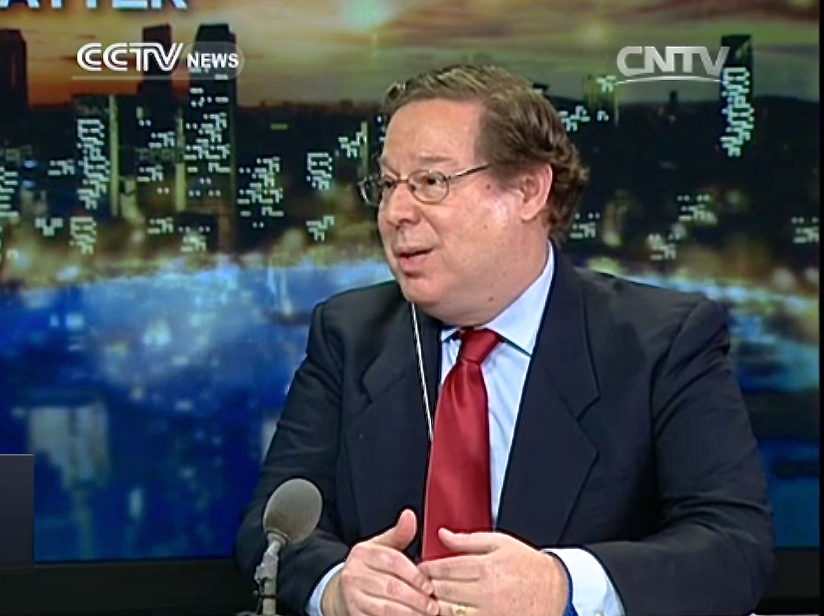
A government shutdown is likely.
Yang Rui: Well that’s very bad. Now I start thinking about what I read from Francis Fukuyama, the guy who is the author of The End of History. Now, ironically he wrote in another book, it’s about political decay in U.S. domestic politics, meaning the architect of American constitution was able to restrict powers but they have not been able to create powers, and that has delivered a lot of friction and frustrations between the two parties. And the efficiency of the government, all at different levels, has been seriously compromised.
Rick Dunham: Well, I agree with the conclusion, but not necessarily his reasoning to get to the conclusion. I think that we see this kind of gridlock in the United States and dysfunctional democracy largely for two reasons. One is the amount out of money in politics that is making it difficult to pass anything. And the second issue is that you have partisan media in the United States. You have a fracture of the traditional media and you have people who get information that’s based on their own preconceived notions. So the country is deeply divided now and it’s very hard to have commonality because you have people on one side going to Fox News and on the other side going to CNN or National Public Radio, and you don’t really have a common area where they can reach agreement.
Yang Rui: And there are very serious disagreements between couples under the same roof.
Rick Dunham: Huge gender gap. Men overwhelmingly voted for Republican this election, women voted just about evenly, Democrat and Republican.
Yang Rui: Then there is the situation with the low turnout.
Rick Dunham: There has been a problem with turnout in America starting in 1990s. There was a spike up when Barack Obama ran in 2008. Turnout was the highest in 20 years but it has gone back down to its pre-2008 levels, and the biggest drop of was minority voters, black Americans and Hispanic voters, both of them heavily Democratic.
Black voters voted nine to one for Democrats but the turnout was far down from where it was, which cost the Democrats the governorship of Florida, it cost them the Senate seat in North Carolina. Those very narrow losses in those states were result of very low minority turnout.

A durable Democratic majority after 2008? Nope.
Yang Rui: What do you think of the impact of the midterm upheavals on the presidential election two years from now?
Rick Dunham: Well, I think it’s a mixed blessing for Hillary Clinton, the presumptive Democratic nominee. Now there’s no guarantee that she will be the nominee but if she is, the good news for her is that now people are going to be looking at the Republicans, and probably if there’s a backlash in two years it could be against the Republican Congress as opposed to focusing all about President Obama.
The bad news for Democrats is that this election proves that the Democratic electoral majority that elected Barak Obama twice is not strong and is not permanent. The Democrats have to go back and convince minority voters to turn out and they have to go back and convince more women to vote Democratic.
Yang Rui: Thank you very much for joining us.
Here’s a link to the video of the full interview: http://english.cntv.cn/2014/11/06/VIDE1415219400635230.shtml
Thanks to Jade Ladal for her work on the transcript.
My take on the dysfunction in DC
Posted: October 7, 2013 Filed under: Dunham's Discourses, Rick in the news, U.S. politics | Tags: American politics, Barry Goldwater, Bill Clinton, Democrats, Global Business Journalism, Houston Chronicle, John McCain, Katie Perkowski, Lindsey Graham, Mitt Romney, Rand Paul, Republican Party, Ronald Reagan, Tea Party, Ted Cruz, Texas on the Potomac, Tsinghua University, U.S. Congress, Washington, WBP Online Leave a commentI’m still getting used to be the interviewee and not the interviewer. Here’s a recent Q&A with me conducted by Katie Perkowski, a super-talented former Texas on the Potomac intern who now works and lives in Bratislava.
Katie’s piece first appeared in WBP Online.
—–
Behind Capitol Hill: Q&A with long-time Washington watchdog
Rick Dunham has had eyes and ears on Capitol Hill and in the White House for three decades, giving him a unique view into US politics. In an interview with WBP Online, the former Washington bureau chief for the Houston Chronicle explains how dramatic political party transformations have led to the dysfunction in Congress we are seeing today.

Ted Cruz (Texas Tribune photo)
By Katie Perkowski
WBP Online
Few people understand the inner workings of US politics quite as well as Rick Dunham, who covered the White House and Capitol Hill for three decades, during which time he served as Washington bureau chief for the Houston Chronicle, White House correspondent for BusinessWeek and board president of the National Press Club.
In a Q&A with WBP Online, Dunham explained the dramatic transformations of the two main political parties, Republicans and Democrats, that he saw during his time in Washington, and why those shifts have led to an ever-dived Congress seemingly incapable of getting anything done. The latest evidence of that now all-too-familiar phenomenon? The federal government’s shutdown, now on day four with no sign of stopping.
Here’s what Dunham had to say:
Q: Can you describe the shift in dynamic you noticed in both the Republican and Democrat parties during your time in Washington? What do you think brought about this change in the way things get done (or don’t)?
There has been a tremendous shift, both culturally and politically, over my three decades in Washington.
One is ideological. Both parties’ representatives were far more diverse in the past. Democrats ranged from far left to far right. Republicans ranged from liberal to very conservative. Now there are no liberals and very few moderates left among Republican lawmakers. And there are very few Democrats remaining who are right of the political center. The party is pretty well split between far left, left and center. Republicans are pretty well divided between right and far right, with a tiny group of centrists. The key Republican division is establishment and insurgent. The establishment Republicans still are in the majority but the radical right Republicans control the agenda through mastery of tactics and willingness to “do the unthinkable.”
Culturally, there has been an even bigger shift. When I arrived in Washington in 1984, Congress was controlled by “doers” and not “talkers.” The goal of lawmakers was to make laws. Legislators used to legislate. Now, the vast majority on both sides of the aisle want to posture and play to their ideological core rather than to get things done.
The great lawmakers I have covered were often very liberal or conservative – Ted Kennedy was hard left and Bob Dole was very conservative – but they believed in moving things forward for their country in the end. There are almost none of those left now, and certainly not enough to get things done.
Q: Covering Texas, you followed Ted Cruz in his rise from solicitor general to senator. What kind of change within the Republican party does Cruz represent? There have been numerous reports out about how senior members of his party, like McCain and Graham are not happy with the way he’s doing things. Do you think there could be a party split among Republicans in the near future? What is the Tea Party’s role in all of this?
The key figures representing the three strands of the Republican future are Ted Cruz, Marco Rubio and Rand Paul. All are ultraconservative but only Rubio among them is pragmatic and willing to cut deals. The other two are ideological purists who would rather lose than compromise. Rand Paul is the leader of the libertarian wing of the Republican Party. He is anti-government. Period. Ted Cruz is an ultraconservative in the mold of the 1964 version of Barry Goldwater, who believed that extremism in the defense of liberty (as he saw it) is no vice. Cruz is against government unless government will help him accomplish his ideological ends. He also is against (almost) anything Barack Obama is for. I call him the leader of the nihilist strain of the modern Republican Party.
That’s why old-fashioned conservatives like John McCain and Lindsey Graham don’t like him. They are very conservative – I don’t buy into the revisionist view of McCain and Graham as moderate because they are willing to cut deals and occasionally act like mavericks.
McCain took an instant dislike to Cruz because Cruz has such an authentic dislike for the institution. McCain respects the institution. Cruz despises it. They are both strong personalities, so it is natural that they will clash. Neither of them is phony. They genuinely dislike each other.
McCain and other Republican leaders believe that Cruz is leading the party on a political suicide mission. They believe he is hoping to burn down the village and then claim to be king of the ashes.
Cruz represents the socially conservative strand of Tea Party Republicanism. Rand Paul represents the pure libertarian strand of Tea Party Republicanism. Both are ideologically pure and strongly “pro-liberty” but both philosophies are distinct and different. They have a slightly different definition of what liberty means.
Q: What kind of precedent do you think it would set if Republicans hold to their current stance and hold the debt ceiling “hostage” as some are calling it in an effort to repeal or delay a law that’s already been passed? Could that lead to similar actions by Congress in the future, or even “revenge” acts of a similar manner by Democrats?
I don’t think it will lead to a “tit for tat” reaction from Democrats in the future. Democrats never held the government or the country hostage during George W. Bush’s administration. I’ve always said that the Democrats’ big problem is that they are too “responsible.” I’m not talking about being ideologically moderate. I mean that they won’t take extreme measures in order to prevail.
Filibusters are another matter. Both sides are irresponsible and hypocritical when it comes to filibusters. That’s another big change in the Washington culture. But that’s another story.
In some ways, Democrats are to blame for all of this. It started with the defeat of Robert Bork, who was very qualified for the Supreme Court (in terms of legal qualifications) but was defeated for ideological reasons, because he was out of the judicial mainstream. That has led to the political equivalent of an arms race where each side is willing to become more and more virulent in order to make political points. It’s gotten to the point that Republicans will block Democratic nominations just because the nominees exist, not even for reasons of ideology or the nominee’s personal issues. That is utterly irresponsible and, I am sorry to say, bipartisan.
Q: Do you think the current party structure in Washington can survive, or should it be changed to prevent the type of mess we’re seeing now?
I see the party structure surviving because that is the history of American representative democracy. We have always had two main parties. The two parties have not always been Republican and Democrat. Since we entered the R/D era, the two parties have changed radically. Now, just about anyone who would have been a Republican at the time of slavery and the Civil War is a Democrat, and anybody who would have been a Democrat at that time is a Republican. The two parties have reversed regional bases. One of the only common threads is that immigrants still tend to be Democrats.
I see the Democratic Party becoming more “moderate” in coming years as more disgruntled former Republicans and moderate young people join the party. I see the Republican Party finally having a showdown between the establishment right and the hard right. It probably will take the nomination of a far-right Republican for president and an overwhelming defeat for the party to move back toward the center. The last two nominees, John McCain and Mitt Romney, were not purists. Indeed, Ronald Reagan is the last hard-core conservative to be a presidential nominee. And Reagan would be considered a pragmatic moderate by today’s standards.
One last thought: If the Republicans are to have a future at the presidential level, they cannot afford to continue to lose immigrants, minorities and young voters. Those three blocs are the future. Republicans not only need to maintain their current levels of support, they need to increase them. A similar fate befell Democrats during the 1980s as Ronald Reagan cut into the blue-collar Democratic base, young voters went Republican and old New Deal Democrats died off rapidly. Democrats won just once in 24 years before Bill Clinton started to redefine the Democratic Party with his “New Democrat” movement. We’re at a similar point in reverse now. But I suspect we’ll need a disaster like the Democrats faced in 1980-1984-1988 to convince Republicans to rethink Cruz-ism.
Dunham is now based in Beijing, where he is a professor of multimedia journalism and co-director of the Global Business Journalism program at Tsinghua University. You can follow him at https://rickdunhamblog.com/.
To contact the author of this story, e-mail katherine.perkowski@wbponline.com.

 Rick Dunham Blog
Recent Comments