How cropping photos can change the editorial content of a photograph
Posted: December 20, 2015 Filed under: Journalism Training, Rick's Rules, U.S. politics | Tags: 2016 presidential race, cropping, Donald Trump, Journalism Training, media bias, multimedia journalism, Nancy Pelosi, photo composition, photo cropping, photo editing, photography, presidential election, White House 1 Comment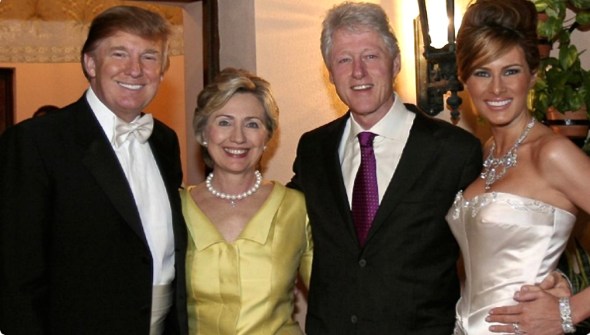
Marital bliss: This photograph from Donald Trump’s latest wedding is fraught with political overtones.
Photography captures reality.
Or does it?
Yes, a high-quality photograph that follows my 25 rules of photo composition can be a major asset for your multimedia journalism report.
But a photograph is not necessarily objective reality. Why?
Cropping.
As you edit the photograph, you are making editorial decisions: What part of the photo is most important or newsworthy? (That is different than editing decisions based on attractiveness.)
Here are two examples: One benign, one politically charged.
I took the first photo in my final day on the White House beat, Sept. 2, 2013. It shows House Democratic leader Nancy Pelosi speaking to a group of reporters outside the West Wing entrance (also known as “the Stakeout”). The second photo is a wedding snapshot featuring Bill and Hillary Clinton at Donald Trump’s most recent wedding.
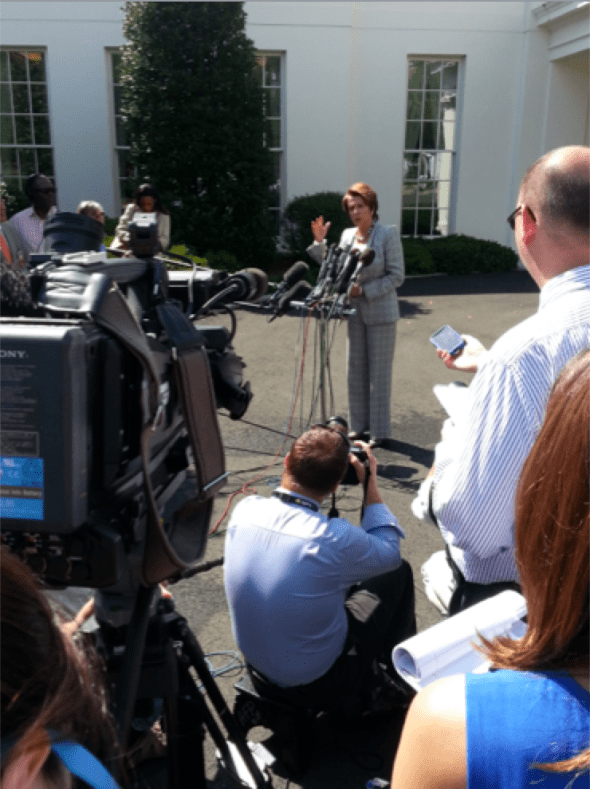
Nancy Pelosi at the Stakeout. The viewer’s eye focuses on the media scrum.
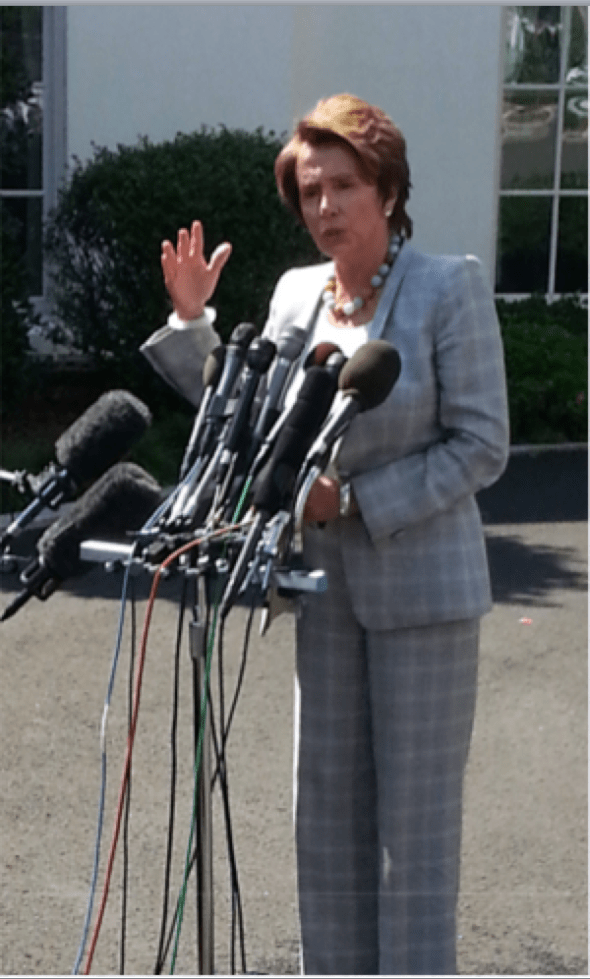
The edited photo focuses on Nancy Pelosi.
The original image: The Trumps and Clintons are all smiles at Donald Trump’s latest wedding.

Edited photo #1: That was then, this is war: Hillary and Donald look happy together. That’s not the way they’re acting in the heat of the presidential race.

Edited photo #2: Editing out the Trumps, this could be any of the tens of thousands of Clinton family photos taken over the decades.

Edited photo #3: Editing out the spouses, this version looks like Bill Clinton is enjoying his time with Mrs. Trump. It emphasizes their left hands meeting along her waist.
The Trump-Clinton wedding photo is fraught with political overtones. Some of Trump’s 2016 Republican presidential campaign rivals would like to remind voters of his bipartisan past and his longtime coziness with the Clintons. The unedited photo is incontrovertible evidence that the two families were close enough that they were all smiles together in the not-so-distant past.
By focusing on Donald and Hillary, the photo editor chooses to highlight the 2016 rivalry, without the spouses. It’s Hillary vs. Donald. All smiles then. All insults now.
By editing out the Trumps, this is an unexceptional photo of Bill and Hillary Clinton smiling for the cameras. Little news value.
By editing out Donald and Hillary, the photo focuses on Bill Clinton with his arm around an attractive woman. Her left hand touches his, prompting the viewer to reach her/his own conclusion about the body chemistry.
The takeaway lesson: When you are editing photos for content, think about how your cropping decisions change the meaning of the image in the eyes of your audience. Are you sending the message you want to send? Are you fairly reflecting reality? Are you being fair to the subjects in the photo?
If you are a professional photo editor, the answer to all of the questions should be yes.
Who said it? Xi Jinping or … George Bush, Donald Trump, Ted Cruz, Nancy Pelosi or Henry Kissinger?
Posted: September 21, 2015 Filed under: Breaking news, Discovering China, U.S. politics | Tags: Barack Obama, Bernie Sanders, Binyamin Netanyahu, China, Chinese economy, Chris Christie, Communist Party, Dan Quayle, Deng Xiaoping, Donald Rumsfeld, Donald Trump, Franklin D. Roosevelt, George H.W. Bush, George W. Bush, Hassan Rohani, Henry Kissinger, Japan, Jeb Bush, Jim Mann, John Kerry, Mao Zedong, Margaret Thatcher, Michael Keaton, Mr. Mom, Nancy Pelosi, Pat Buchanan, Paul Prudhomme, peace, Philadelphia Inquirer, Pope Francis, Raul Castro, Rick Perry, Ronald Reagan, Shinzo Abe, Ted Cruz, terrorism, The China Fantasy, United States, Vladimir Putin, Wang Jiarui, Washington Post, world peace, Xi Jinping Leave a comment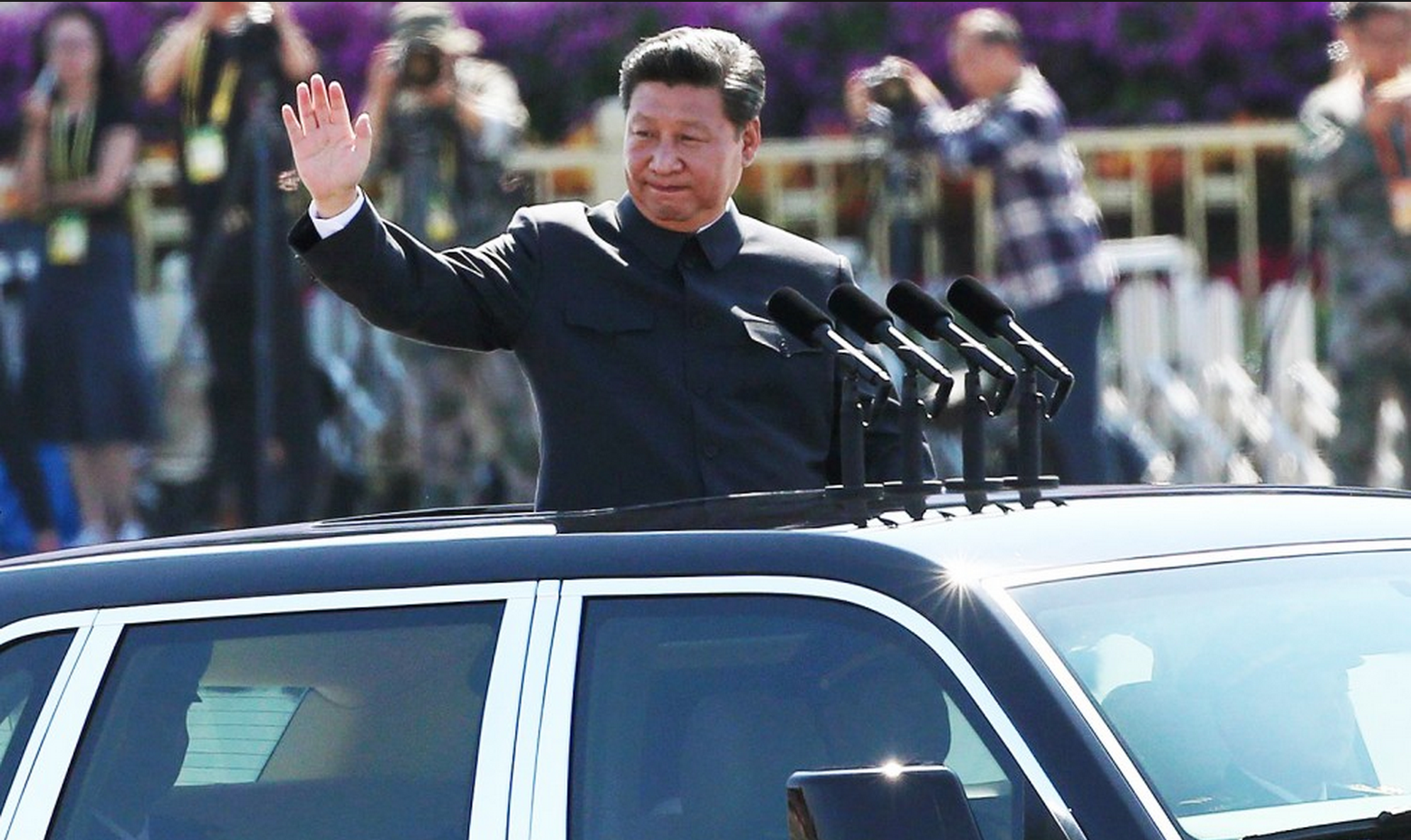
Images of Xi Jinping at the Sept. 3 military victory parade were shared around the world. But who is the Chinese leader and what does he stand for?
Chinese President Xi Jinping is coming to the United States, and very few Americans (or even American journalists) know much about the leader of the nation’s most populous country.
With apologies to Vladimir Putin, he has been called the most powerful leader in the world. But what does that mean?
Is Xi a reformer? Is he a hardliner? Is he a step forward, a step back — or both? Is he firmly in control or fearful of rivals within the ruling elite — or both? Is “Big Daddy Xi” widely popular or the beneficiary of a manufactured cult of personality?
As much as I’ve learned about China over the past two years, I still have a lot to learn. For additional background, I recommend you check out my former Philadelphia Inquirer colleague Jim Mann’s recent commentary in the Washington Post:
For American pundits, China isn’t a country. It’s a fantasyland.
In the meantime, test your knowledge of who Xi Jinping is — and isn’t — by taking this news quiz. Which of these statements are from Xi and which are from other world figures? Good luck.
For answers, scroll to the bottom of the post, after the final photo. Click on the quotations to read the original source material.

President Barack Obama and Xi Jinping have been careful to treat the other with respect and discuss fundamental disagreements without alienating the other nation’s leadership.
Who said the following?
1. Japan is “eating our lunch.”
a) Xi Jinping
b) Donald Trump
c) Paul Prudhomme
a) Xi Jinping
b) George W. Bush
c) Donald Rumsfeld
3. “Some foreigners with full bellies and nothing better to do engage in finger-pointing at us.”
a) Xi Jinping
b) Pat Buchanan
c) Chris Christie
4. “America must be a light to the world, not just a missile.”
a) Xi Jinping
b) Barack Obama
c) Nancy Pelosi
d) George H.W. Bush
5. A cooperative United States-China relationship is “essential to global stability and peace.”
a) Xi Jinping
b) Barack Obama
c) Henry Kissinger
a) Xi Jinping
b) George W. Bush
c) Margaret Thatcher
d) Ronald Reagan
a) Xi Jinping
b) Pope Francis
c) Raul Castro
d) Barack Obama
8. “Japan is not being nice to us.”
a) Xi Jinping
b) Donald Trump
c) Franklin D. Roosevelt
d) Theodore Roosevelt
a) Xi Jinping
b) Barack Obama
c) Binyamin Netanyahu
a) Xi Jinping
b) Barack Obama
c) Binyamin Netanyahu
11. “The international forces are shifting in a way that is more favorable to maintaining world peace.”
a) Xi Jinping
b) Shinzō Abe
c) Barack Obama
c) Hassan Rohani
a) Xi Jinping
b) Margaret Thatcher
c) Marco Rubio
d) Ronald Reagan
13. “When did we beat Japan at anything?”
a) Xi Jinping
b) Donald Trump
c) Michael Keaton in “Mr. Mom”
d) The captain of the U.S. Olympic baseball team
a) Xi Jinping
b) Bernie Sanders
c) Mao Zedong
d) Ronald Reagan
a) Xi Jinping
b) Deng Xiaoping
c) Ted Cruz
16. “As Deng Xiaoping said, we must ‘seek truth from facts.’ ”
a) Xi Jinping
b) Barack Obama
c) George H.W. Bush
17. “People should not underestimate me.”
a) Xi Jinping
b) George W. Bush
c) Bernie Sanders
d) Vladimir Putin
a) Xi Jinping
b) Henry Kissinger
c) Jim Mann, American journalist and author of The China Fantasy
d) Wang Jiarui, head of the Communist Party of China’s international department
a) Xi Jinping
b) George W. Bush
c) Dan Quayle
d) Rick Perry
a) Xi Jinping
b) Barack Obama
c) John Kerry
d) Ronald Reagan
Answers below this photo.

XI Jinping is honored in Iowa, where he lived several decades ago.
1.b; 2.a; 3.a; 4.c; 5.c; 6.a; 7.a; 8.b; 9.a; 10.c; 11.a; 12.a; 13.b; 14.a; 15.c; 16.b; 17.c; 18.d; 19.a ; 20.d

 Rick Dunham Blog
Recent Comments