Analysis: Confrontation inevitable as Republicans test a ‘weak’ Obama
Posted: November 7, 2014 Filed under: Rick in the news, U.S. politics | Tags: American politics, Barack Obama, Bill Clinton, CCTV, CNN, Democratic National Committee, Dialogue, Elections, Fox News, Francis Fukuyama, government shutdown, Hillary Clinton, Jade Ladal, National Public Radio, Newt Gingrich, Obamacare, President Barack Obama, Republican Party, The End of History, U.S. Congress, United States, White House, Yang Rui Leave a comment
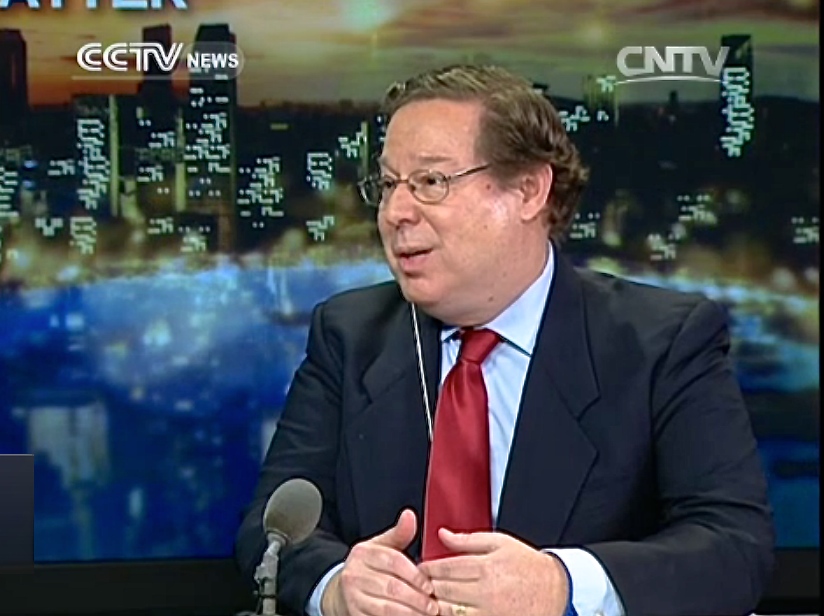
Live on CCTV as a Beijing-based expert on U.S. politics.
Yang Rui: How do these midterm elections damage what President Obama wants to do in the remaining two years?
Rick Dunham: Well, I think right now we’re in for a period of tension, we’re in for a period of confrontation between Congress and the President. The Republicans in Congress think President Obama is weak and they’re going to push very hard for their agenda. They’re going to see how far they can push him. I think the White House will want to reach out a bit more, but I think it’s going to be much harder for the White House to reach out because Republicans think he is weak.
Yang Rui: I believe you must have followed the midterm elections very closely. Anything that surprised you despite the results themselves that are not so surprising?
Rick Dunham: No, I actually was not surprised at the Republicans’ sweep of the Senate. Historically, you look back at almost every big wave election year and you have one party winning almost all the close elections, and Republicans only lost one of them –in New Hampshire. What I was surprised at in this election was the incompetent campaign run by the Democratic National Committee and the White House. There were never on the offensive and they let the Republicans attack President Obama. They almost had no positive message during the campaign. That really surprised me. I haven’t seen a campaign this bad since 1980.
Yang Rui: Exactly 20 years ago, President Clinton was facing the majority that Republicans enjoyed in the two chambers of the Congress. What happened was the shutdown of the federal government and the standoff between Newt Gingrich, Speaker of the House, and the president himself. Now, last year we saw the partial shut down of the federal government, do you think we are likely to see it another repeat of the shutdown?
Rick Dunham: I think it’s highly likely. We saw a short shutdown last year but I think the Republicans are going to push the president to the brink and see if he capitulates. I think it’s almost certain that we’re going to see a shutdown. President Obama is going to have to veto Republican legislation and then force a compromise.
Yang Rui: What are the major obstacles or issues that may be a test of the bipartisan wrangling?
Rick Dunham: I think that number one will be government spending. The Republicans will try to cut the amount of government spending and particularly programs the president likes. The second big one is health care — the president’s health reform law of 2010. House Republicans voted 40 times already to repeal it. I think that the Senate Republicans will try now to push the president and force him to veto.
A government shutdown is likely.
Yang Rui: Well that’s very bad. Now I start thinking about what I read from Francis Fukuyama, the guy who is the author of The End of History. Now, ironically he wrote in another book, it’s about political decay in U.S. domestic politics, meaning the architect of American constitution was able to restrict powers but they have not been able to create powers, and that has delivered a lot of friction and frustrations between the two parties. And the efficiency of the government, all at different levels, has been seriously compromised.
Rick Dunham: Well, I agree with the conclusion, but not necessarily his reasoning to get to the conclusion. I think that we see this kind of gridlock in the United States and dysfunctional democracy largely for two reasons. One is the amount out of money in politics that is making it difficult to pass anything. And the second issue is that you have partisan media in the United States. You have a fracture of the traditional media and you have people who get information that’s based on their own preconceived notions. So the country is deeply divided now and it’s very hard to have commonality because you have people on one side going to Fox News and on the other side going to CNN or National Public Radio, and you don’t really have a common area where they can reach agreement.
Yang Rui: And there are very serious disagreements between couples under the same roof.
Rick Dunham: Huge gender gap. Men overwhelmingly voted for Republican this election, women voted just about evenly, Democrat and Republican.
Yang Rui: Then there is the situation with the low turnout.
Rick Dunham: There has been a problem with turnout in America starting in 1990s. There was a spike up when Barack Obama ran in 2008. Turnout was the highest in 20 years but it has gone back down to its pre-2008 levels, and the biggest drop of was minority voters, black Americans and Hispanic voters, both of them heavily Democratic.
Black voters voted nine to one for Democrats but the turnout was far down from where it was, which cost the Democrats the governorship of Florida, it cost them the Senate seat in North Carolina. Those very narrow losses in those states were result of very low minority turnout.

A durable Democratic majority after 2008? Nope.
Yang Rui: What do you think of the impact of the midterm upheavals on the presidential election two years from now?
Rick Dunham: Well, I think it’s a mixed blessing for Hillary Clinton, the presumptive Democratic nominee. Now there’s no guarantee that she will be the nominee but if she is, the good news for her is that now people are going to be looking at the Republicans, and probably if there’s a backlash in two years it could be against the Republican Congress as opposed to focusing all about President Obama.
The bad news for Democrats is that this election proves that the Democratic electoral majority that elected Barak Obama twice is not strong and is not permanent. The Democrats have to go back and convince minority voters to turn out and they have to go back and convince more women to vote Democratic.
Yang Rui: Thank you very much for joining us.
Here’s a link to the video of the full interview: http://english.cntv.cn/2014/11/06/VIDE1415219400635230.shtml
Thanks to Jade Ladal for her work on the transcript.
The ten best political campaigns of 2014
Posted: November 3, 2014 Filed under: Top Ten, U.S. politics | Tags: American politics, Andrew Cuomo, Ann Richards, Barack Obama, Bill Clinton, Bob Graham, Boston Globe, Brian Sandoval, Brian Schatz, Charlie Baker, Chris Gibson, Colleen Hanabusa, Cory Gardner, Daniel Inouye, Deval Patrick, Ed Gillespie, Elections, George P. Bush, George W. Bush, Greg Abbott, Guns, Gwen Graham, Harry Reid, Jay Rockefeller, Jeb Bush, John Warner, Kay Hagan, Kyle Kondike, Mark Pryor, Mark Udall, Mark Warner, Martha Coakley, Mary Landrieu, Mitt Romney, President Obama, Rick Perry, Sharron Angle, Shelley Moore Capito, Steve Southerland, Texas, Texas politics, Thom Tillis, U.S. Congress, University of Virginia, Wendy Davis 3 Comments
It’s been a good year for very bad campaigns. But there also have been some very, very good efforts put forth by candidates across the United States, including a few who have surprised the political establishment and the Pundit Elite.
Here are my picks for the ten best campaigns of 2014 — whether they win on Election Night or not.
1. Hawaii Sen. Brian Schatz
How would you like to have been the interim senator appointed by a governor so unpopular that he was defeated in his party’s primary by more than two to one? And how would you like to have been forced to run in that same primary election against the anointed successor of the late and much-loved Democrat you replaced, Daniel Inouye?
Well, that was the predicament faced by Brian Schatz, Hawaii’s former lieutenant governor and now the second-youngest senator at age 42. He worked smart, worked hard, and won — barely — in the primary against Rep. Colleen Hanabusa.
“I was not overconfident that we were going to be successful,” he said after escaping the primary by seven-tenths of one percentage point. Now he’s coasting to a general election win against Republican Cam Cavasso.
2. Massachusetts gubernatorial candidate Charlie Baker
The Bay State may have voted Democratic in every presidential race except one in modern times, but it has an independent streak when it comes to picking its governors. Republican Mitt Romney was chosen by Massachusetts voters back when he was a moderate. And this time a Republican healthcare executive with business bona fides and an independent streak from his party on abortion and same-sex marriage is poised to win a surprising victory.
Charlie Baker, who was defeated by outgoing Gov. Deval Patrick four years ago, has run a campaign so steady that he won the endorsement of the iconically liberal Boston Globe. Indeed, the Globe praised his track record of “steady management and proven results.” He’s also been helped by the mistakes of Democratic nominee Martha Coakley, who is poised for another come-from-ahead defeat.
3. New York Rep. Chris Gibson
It’s not comfortable being a Republican congressman representing a New York district carried twice by President Obama. But two-term Republican Chris Gibson has done it through hard work, skillful constituent service and strategic moderation on issues such as arts funding and gay rights. (The retired Army officer is a Republican co-sponsor of the Employment Non-Discrimination Act designed to protect GLBT Americans from workplace discrimination.) One recent poll shows him 20 percentage points ahead of his Democratic rival in a district that Democratic Gov. Andrew Cuomo will win handily.

4. Texas gubernatorial candidate Greg Abbott
The Texas Attorney General has run the most disciplined governor’s campaign the Lone Star State has seen since George W. Bush toppled Ann Richards in 1994. Abbott has not veered off script, and that script is designed to maximize support among swing voters and motivate hard-core Republicans. With the national press corps hoping against hope for a dramatic storyline this year — Texas is “turning blue” or famous filibusterer Wendy Davis pulls off a miracle in the Land of Bush and Perry — Abbott has taken all of the drama out of Democratic dreams.
5. Colorado Senate candidate Cory Gardner
The Colorado Senate seat held by freshman Democrat Mark Udall wasn’t on many lists of vulnerable seats at the beginning of 2014. But Republican congressman Cory Gardner has been a nightmare for Democrats from Denver to Washington. He’s run an anti-Washington campaign designed to appeal to the swing state’s large bloc of disquieted independents, as well as populists peeved at the sophisticated population of the state capital. Gardner’s campaign site boasts that he is running “to represent all of Colorado, not just those from a particular city or political party.” Take that, Denver.
Democrats have tried to paint Gardner as an extremist and a harsh partisan. But it hasn’t seemed to stick to a candidate known for his high energy and hailed by DC media outlets as a Republican rising star.
6. North Carolina Sen. Kay Hagan
From all the Republican TV commercials, you’d think that “Barack Obama” is the name of the Democratic nominee for Senate in North Carolina. But rather than accept southern-fried doom in an anti-Obama year, the first-term Democratic senator has turned the tables on Republican nominee Thom Tillis, and has put him on the defensive about his role as state House Speaker in the extremely unpopular ongoings in the state capital of Raleigh. Contrast Hagan’s competitiveness in final pre-election polls with the flailing efforts of the two other Democratic Senate incumbents in the South, Mark Pryor of Arkansas and Mary Landrieu of Louisiana.
7. West Virginia Senate candidate Shelley Moore Capito
The last Republican to win a Senate seat in West Virginia was six decades ago. That’s going to change this year as longtime Rep. Shelley Moore Capito sweeps to victory to succeed Democratic legend Jay Rockefeller.
While West Virginia has swung Republican at the presidential level in the past four election cycles, it has favored Democrats for most statewide offices. The 60-year-old Capito, an influential House member, is considered by many to be a pragmatist, conservative on social policies, strong on guns but not hostile to organized labor. Her campaign has been pitch perfect. No wonder Kyle Kondike, the managing editor of the University of Virginia’s Sabato’s Crystal Ball, calls her the “best Republican Senate candidate this cycle.”
8. Virginia Senate candidate Ed Gillespie
Win or lose — and he will probably lose — Republican Ed Gillespie has run an exceptionally good Senate campaign in Virginia against a popular Democratic incumbent, Mark Warner. Gillespie has worked harder than just about any candidate in the country, has highlighted a future-oriented set of issues, and has built a statewide organization out of the ashes of Republican defeats in recent years. His efforts have paid off as he has trimmed Warner’s lead significantly over the past two months.
Sen. Warner, you may recall, also was defeated in his first Senate campaign by a venerable incumbent, Republican John Warner, before going on to win the governorship. Gillespie’s excellent campaign should move him to the front of the line of GOP candidates for governor in 2017.
9. Florida congressional candidate Gwen Graham
This is a year of promise for the children of former Florida governors, In Texas, Republican Jeb Bush’s son George is about to become the Lone Star State’s land commissioner. And in the Sunshine State, Democrat Bob Graham’s daughter Gwen is in a tight race with incumbent Republican Rep. Steve Southerland.
Graham has learned the basics of political campaigning from her masterful dad. She has raised more money than the Republican — something very few Democratic challengers have done this year. She has out-organized the incumbent and has mobilized early voting that favors Democrats by 14 percentage points. She has called in dad’s chits and got a campaign visit from former President Bill Clinton. Victory is far from assured, but a strong campaign has given Graham a decent chance in a tough Democratic year.
10. Nevada Gov. Brian Sandoval
Senate Majority Leader Harry Reid’s worst nightmare is coming true.
Yes, he may lose his job as Majority Leader if Republicans can pick up at least six seats. But he might be seeing the specter of 2016 defeat in Nevada in the person of Republican Gov. Brian Sandoval. The incumbent governor is running 25 percentage points ahead of his 2014 Democratic opponent. He may just keep on running.
Sandoval, the first Latino to serve as a federal judge in Nevada, would be a good bet to roll the dice against Reid. It would be hard for the Democratic senator to convince voters that Sandoval, who has presided over education reform and a slowly improving economy, is a fringe extremist like 2010 GOP nominee Sharron Angle.
The ten worst political campaigns of 2014
Posted: October 11, 2014 Filed under: Top Ten, U.S. politics | Tags: American Hustle, American politics, Ann Richards, Anthony Weiner, Anything Goes, Army War College, Ben Dreyfuss, Carl DeMaio, Carl Levin, Chris Frates, CNN, Ed FitzGerald, Eric Cantor, Fox & Friends, Fox News, Frank Luntz, Greg Abbott, John Kasich, John Walsh, KHOU, Kinky Friedman, Larry Pressler, Laura Bush, Max Baucus, Mike Rounds, Mother Jones, New York Times, Pat Roberts, Penn State, Rick Santorum, Scott Peters, TalkingPointsMemo, Ted Cruz, Texas politics, Tim Johnson, Todd Bosnich, Tom Corbett, Tom Wolf, Wall Street, Wendy Davis Leave a comment
Pat Roberts has been working overtime to show how he understands the problems of his Kansas constituents.
From pornographic emails to pervasive plagiarism, this has been a good year for bad candidates. We’ve seen hubris, laziness and monumental incompetence.
That’s not really something new in American politics.
What may be new is that some of the campaigns are so bad that even partisan news outlets like Mother Jones and Fox News have called out the perpetrators.
So who has run the worst campaign of 2014? There are lots of candidates in contention for runner-up status but we already have a clear winner of that dubious achievement:
1. Former House Majority Leader Eric Cantor

Biggest loser: The former #2 man in the House of Representatives. Soon to be a very rich nobody.
A Hall of Shame horrible campaign. Overconfident. Out of touch. The future House Speaker became a former House member with the help of an obscure but spirited Tea Party activist. Cantor is crying all the way to the bank as he cashed in on the capital’s revolving door culture by getting a nice Wall Street-ish job.
2. Kansas Sen. Pat Roberts
Win or lose, the veteran Kansas senator, who lives in Washington, was caught napping. He survived a primary scare that he didn’t see coming and then trailed badly against an independent in early general election polls. With the GOP establishment circling the wagons — and hardline conservatives like Texas Sen. Ted Cruz seizing the moment — Roberts has finally gained some momentum, at least for the time being. But win or lose, he’s evidence of what happens when you catch Potomac Fever and don’t keep up with the folks back home.
3. Montana Sen. John Walsh
Democrats were on the defensive from the moment longtime Montana Sen. Max Baucus resigned his seat to become envoy to Beijing. But Dems had high hopes for John Walsh, an Iraq veteran, former adjutant general of the Montana National Guard and former lieutenant governor. Those hopes evaporated when the New York Times reported that Walsh had “plagiarized large sections of the final paper he completed to earn his master’s degree at the prestigious Army War College in Carlisle, Pa.”
Walsh quickly made a bad situation a lot worse. According to the Times, Walsh initially “expressed no contrition for the plagiarism.” Even when withdrawing from the race two weeks later, he remained in denial, saying that the paper “has become a distraction from the debate you expect and deserve.” The Army War College thought it was much more serious, revoking his master’s degree. But he’s still a senator, however lame a duck he may be.
4. Texas gubernatorial nominee Wendy Davis
National Democrats thought they had found an instant superstar when the telegenic Fort Worth state senator staged a filibuster against a draconian Republican anti-abortion law in 2013. The party raised tons of money from her pro-choice passion and pink sneakers and shipped almost all of it out of state. It then somehow convinced the celebrity senator that she could be elected governor in one of the most reliably Republican states in the Union. All you had to do was read my 2012 statistical analysis of Texas demographic and electoral trends to know that true partisan competitiveness was from eight to 12 years away.
To make a difficult situation worse, Davis’ campaign has been inexplicably tone-deaf. They seem to be running the kind of a campaign a Democrat would run in Massachusetts or Illinois, not Texas. (In contrast, the last Texas Democrat to be elected governor, Ann Richards, knew how to appeal to the good-ole-boy and good-ole-girl vote without sacrificing her basic principles.)
Final exclamation point, a new television ad that tried to paint Republican Greg Abbott as a hypocrite but ended up making him a victim. Even liberal standard-bearer Mother Jones called it, “to be blunt, bullshit.”
“If Wendy Davis Thinks She Can Win an Election by Pointing Out Her Opponent’s Disability, She’s Wrong,” declared the MoJo headline.
“It’s offensive and nasty and it shouldn’t exist,” wrote Ben Dreyfuss. “She’s basically calling Abbott a cripple.”
That’s what her friends are saying. Texas Democrats should be saying, “Wait ’til next year.” Or is it “next decade”?
5. Pennsylvania Gov. Tom Corbett
This is not the kind of headline you want on Fox News’ web site if you are a Republican incumbent:
Porn scandal involving former staff puts Pa. governor on defense in already-tough race
It’s not a question of whether Tom Corbett will lose, it’s by how much he will lose. In a very good year for Republican candidates, the GOP incumbent is a very bad candidate. Whether it’s his ties to the Penn State football program’s child sexual abuse cover-up or the scandal involving pornographic emails sent by staffers, the news is relentlessly negative for the embattled incumbent. Democratic nominee Tom Wolf is breezing to victory. The only question is whether Corbett’s margin of defeat is larger than the 20 percentage point repudiation of then-Senator Rick Santorum in 2006.
It’s a hard time to be a GOP spinner in the Keystone State. “This is not an Anthony Weiner situation,” one Republican consultant said on Fox News, trying to put the best face on a very bad situation.
Cold comfort.
6. Ohio gubernatorial nominee Ed FitzGerald
It’s never good when a headline in the Washington Post declares:
The remarkable implosion of Ed FitzGerald
Especially not if you are an Ohio Democrat and Ed FitzGerald is your nominee for governor. Democrats had high hopes for unseating Ohio Gov. John Kasich, whose edgy personality and hard-driving policy agenda had alienated a fair number of voters. But their candidate, a local elected official with precious little big league experience, proved truly minor league. A typical lowlight was the revelation of a 2012 incident when he was approached by a police officer while in a parked car with a woman who was not his wife.
How bad have things gotten? With the campaign winding down, the Cleveland Plain Dealer reports that “the beleaguered Democrat is altering his strategy in an attempt to ensure his troubles don’t doom his party’s entire statewide ticket.” At least he’s not playing stupid “spin” games and trying to convince us that he still is in contention.
7. South Dakota Senate nominee Mike Rounds
Republicans thought this was a sure thing when Democratic Sen. Tim Johnson announced his retirement. Red state. Popular ex-governor. Anti-Obama electorate. Good Republican year. Can’t lose.
Well, yes you can.
Rounds has exhibited a severe case of overconfidence and has run a lackluster campaign (to be generous). Toss in a wild card — the independent candidacy of former Republican Sen. Larry Pressler, the only politician to say no to the “American Hustle” hustlers — and you have the South Dakota road show version of the venerable musical “Anything Goes.”
I’ll still be shocked if Rounds loses. But he’s trying his best.
8. Michigan Senate nominee Terri Lynn Land
Like Texas Democrats, Michigan Republicans thought they had a chance to pull an upset on hostile partisan turf by nominating Terri Lynn Land for the Senate seat long held by retiring Democrat Carl Levin. Now, national Republicans will tell you it is one of their biggest disappointments of the year. Land’s campaign has been mediocre, at best, lacking imagination, energy and an overarching strategy. She’s been on the defensive, like her attempts to counter perceptions that her policy positions were “anti-women.” She aired an ad that was described by Republican political consultant Frank Luntz as the worst of the election season (which is saying a lot). In the ad, she drank coffee and looked at her watch and said that, as a woman, she knows more about women than her male opponent. No discussion of any issues.
The “Really?” ad, aired in May, sought to reject claims that Land is anti-woman because of her opposition to abortion and federal legislation known as the Paycheck Fairness Act.
Luntz criticized the commercial on “Fox & Friends” for failing to “give any message” or “communicate any sense of substance.”
No wonder Democrat Gary Peters — once considered a “tough sell” — has been consistently leading in the polls for months.
9. California congressional candidate Carl DeMaio
In the category of snatching defeat from the jaws of victory, we take you to San Diego, where Republicans have been talking all year about their strong candidate against endangered Democratic incumbent Scott Peters.
Let’s just say the talk has shifted all of a sudden. After all, how many candidates for the House of Representatives find themselves in the bizarre position of denying that they masturbated in front of a staff member? Or groped his genitals?
That’s the plight of Carl DeMaio, a highly touted Republican candidate who had been leading in many polls in California’s 52nd Congressional District. Let’s just cut to the Oct. 10 CNN interview with his former aide, Todd Bosnich.
Bosnich: “I saw his hand —— his penis in his hand. He had a smile on his face. And as soon as I came over, he was looking at me.”
CNN reporter Chris Frates: “So there was no mistaking what was happening?”
Bosnich: “There was no mistaking whatsoever.”
According to TalkingPointsMemo, Bosnich has accused his ex-boss of “making inappropriate advances, massaging and kissing his neck, and groping.”
I should note that DeMaio categorically denies his ex-aide’s account and held a press conference to condemn it as “an outrageous lie” that has been dismissed by law enforcement authorities.
“This is an individual that was let go by our campaign manager for plagiarism, a well-documented plagiarism incident of taking a report from the National Journal and passing it off as his own work,” the candidate told CNN. “He was terminated. He admitted that he plagiarized.”
At his press conference, DeMaio went further: “It’s absolutely untrue and it’s unfortunate that an individual who is the prime suspect in the break-in at our campaign office would manufacture such an outrageous lie.”
Someone is lying. But no candidate wants to be denying this kind of thing in the final weeks of a campaign. Or ever.
http://www.cnn.com/video/api/embed.html#/video/politics/2014/10/10/lead-pkg-frates-gop-sexual-harassment-claims.cnn
10. Texas Agriculture Commission loser Kinky Friedman
Once considered a serious (or at least semi-serious) candidate for governor of Texas, this singer/songwriter/author has been failing downward. This year, he ran an erratic campaign for Texas Agriculture Commissioner and was defeated in the Democratic runoff by “not Kinky Friedman,” a.k.a., an unknown guy who was the other name on the ballot. Kinky’s top campaign issue this year was legalization of marijuana.
“I want to make this election into a referendum on lifting the prohibition on pot and hemp,” Friedman told KHOU 11 News during a campaign event in Houston. “This is about the future of Texas.”
It certainly wasn’t about Kinky’s political future.
Movie night at Tsinghua: All the President’s Men
Posted: April 28, 2014 Filed under: Dunham's Discourses, Global Business Journalism, Journalism Training, U.S. politics | Tags: All the President's Men, American politics, Arthur Bremer, Bay of Pigs, Ben Bradlee, Bob Woodward, Bobby Kennedy, Carl Bernstein, Central High School, Chappaquiddick, China, CIA, CIA scandals, CREEP, Deep Throat, Democratic National Committee, Dustin Hoffman, Edmund Muskie, FBI, Fidel Castro, George McGovern, George Wallace, John F. Kennedy, John Mitchell, Katharine Graham, Kennedy assassination, Mark Felt, National Press Club, Pam Tobey, Pentagon Papers, Richard Nixon, Robert Redford, Teddy Kennedy, Tom Eagleton, Tsinghua University, Vietnam War, Washington Post, Watergate, White House 6 Comments
An exact replica of the Washington Post newsroom was built in Hollywood.
I held my first “movie night” for my Chinese journalism grad students on Sunday night. After considering a few journalism-related classics (you can probably guess which they are), I chose one that highlights the best of journalism: “All the President’s Men.” It’s not just a journalism movie, of course. It’s a great detective story and an all-around outstanding movie with crisp writing, superb acting and tension-inducing directing. “All the President’s Men” is important journalism history. It’s also important American history. But I discovered as I played the video that many of the uniquely American topics (and 1970s cultural norms) contained in the movie were difficult to understand for my Tsinghua University students. So, in addition to playing the movie with English subtitles (do you realize how quickly Dustin Hoffman speaks, with that nasal accent of his?), I occasionally paused the movie for verbal annotations. Here are some of the important points I needed to explain to the students:
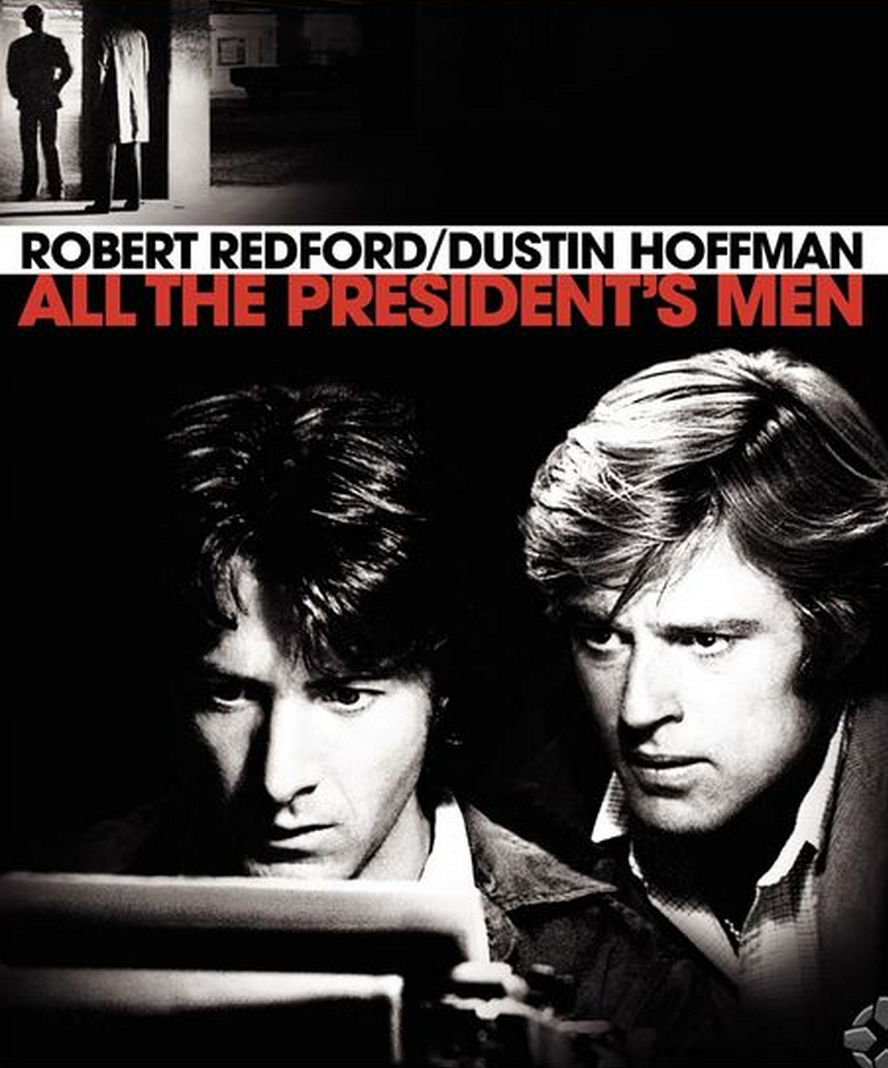
What is that machine those actors are using? And who is Robert Redford?
Newspaper references:
- Why Ben Bradlee and many American journalists curse a lot
- How Ben Bradlee cursed on live national TV when I hosted him as a speaker at a National Press Club luncheon in 2005
- What kind of a boss Ben Bradlee was to my wife Pam Tobey
- Who Deep Throat was and what motivated him to leak
- Where the real Bob Woodward/Mark Felt garage was located
- How the movie’s producers created a replica of the Washington Post’s newsroom in Hollywood for the movie — and the Post newsroom looked exactly the same when my wife Pam began working there in 1984
- Why reporters call the targets of their stories for comment before publishing the story
- Why it was unethical when Carl Bernstein called the secretary in the Miami prosecutor’s office and pretended he was someone he was not
- Why Watergate motivated me (and the entire Woodstein generation) to become reporters
Cultural references:
- Why all of the editors in the Post’s budget meetings were men
- What a manual typewriter is (or was) and why they were all over the newsroom
- Why I took Mrs. Wolin’s typing class at Central High when everybody said that typing was for girls who wanted to become secretaries. (Of course, I wanted to learn to type so I could become a reporter.)
- Who Robert Redford and Dustin Hoffman are
- What the movie “Deep Throat” was about and why Woodward’s editor chose it as a code name for Mark Felt
- What John Mitchell was talking about when he said Katharine Graham would get a certain part of anatomy caught in a wringer
- What a “creep” means and why CREEP became the acronym for the Committee to Re-elect the President
- Why so many people smoked in public spaces
Political references:
- Who John F. Kennedy was and why his photo was in Democratic National Committee headquarters at the Watergate
- The fact that JFK and his brother Bobby were assassinated
- Why the Vietnam War was so unpopular and why American society was torn apart by war, riots and civil rights struggles
- What the Pentagon Papers are
- Richard Nixon’s unique definition of “plumbers”
- Who Daniel Ellsberg is and why he had a psychiatrist
- Who George Wallace and Arthur Bremer were and how Woodward worked with Felt on stories about the Wallace assassination attempt
- Who the anti-Castro Cubans in Miami are
- What the Bay of Pigs is/was
- The long and sordid history of CIA scandals
- Why there is tension between the FBI and the CIA
- Why Nixon hated and feared the Kennedys
- What Chappaquiddick was
- Why George McGovern asked Tom Eagleton to leave the ticket in ’72
- Why Nixon wanted to run against McGovern and not Ted Kennedy or Edmund Muskie
- Why Ed Muskie “cried” in New Hampshire
- What a “Canuck” is
Any suggestions for my next American journalism movie night?
The most prominent American political figures in the global media — and a dozen who get no respect
Posted: October 8, 2013 Filed under: Dunham's Discourses, Top Ten, U.S. politics | Tags: American politics, Barack Obama, China, Chuck Hagel, Eric Cantor, Fox News, Harry Reid, Hillary Clinton, Jack Lew, Jay Carney, Joe Biden, John Boehner, John Kerry, John McCain, Marco Rubio, Mitch McConnell, Nancy Pelosi, Obama, Rush Limbaugh, Sarah Palin, Sean Hannity, Ted Cruz, United States 1 Comment
President Obama at my last White House press conference in August. (Photo by Rick Dunham)
After covering the White House and the U.S. Congress for 29 years — and being inside the 24/7 news bubble — it’s fascinating to be, for the first time, on the outside looking in.
Here’s a new outsider’s perspective on which American politicians figure most prominently around the world, and which DC figures vanish from the media scene when you cross the Pacific.
America’s Face around the World
1. President Barack Obama
The president is the president. He gets global press on some stories that earn barely a ripple in America-centered domestic media.
2. Secretary of State John Kerry
He didn’t get elected president, but his stentorian voice is everywhere on international issues. He comes across as knowledgeable, poised and, well, diplomatic.
3. House Speaker John Boehner
The Ohio Republican is the scowling face of the opposition. His soundbites are almost all partisan and negative. Not much of an image to project.
4. Sen. Ted Cruz
The first-year lawmaker from Texas has exploded onto the international stage as the leader of America’s ultraconservatives, which the global media love to highlight. Even people who don’t understand the concept of a filibuster understand that Cruz is the man who shut down the federal government. And he’s not even president.
5. Treasury Secretary Jack Lew
The American media almost never cover the charismatically challenged Treasury Secretary. Most Americans know him as the man with the illegible signature. But he’s often on TV and Internet news reports around the world. He comes across as measured and authoritative.
6. Hillary Clinton
The former U.S. Secretary of State is treated as America’s president-in-waiting. She’s also covered like the leader of the hawkish wing of the Democratic Party, as opposed to the dove-ish Obama.
The Dead-to-the-World Dozen
1. Vice President Joe Biden
Never mentioned. Well, almost never.
2. Senate Republican Leader Mitch McConnell
Who is less important than the minority leader of a body that has been eclipsed by the hard-right Republicans in the other chamber?
3. House Democratic Leader Nancy Pelosi
Maybe the only person less important than the Senate Minority Leader is the House Minority Leader.
4. Senate Majority Leader Harry Reid
He only appears on international TV when he comes up with his sound-bite zingers tearing into the Republicans.
5. Sen. John McCain
A media darling in the U.S., his mavericky style doesn’t translate to an international audience.
6. Sarah Palin
The only thing people in Asia remember about 2008 Republican vice presidential nominee is the report in Game Change that she didn’t know the Korean peninsula was divided into two countries.
7. Rush Limbaugh, Sean Hannity and the Fox News crowd
They may get good ratings in the USofA, but they don’t exist outside of its borders. And that’s probably fine with them.
8. Sen. Marco Rubio
The Florida freshman’s mystique hasn’t stretched to Asia and Europe, only Latin America and South America.
9. House Majority Leader Eric Cantor
There’s only room for one face of the opposition on international TV, and that’s John Boehner, not his (occasionally) loyal deputy from Virginia.
10. Defense Secretary Chuck Hagel
Barack Obama and John Kerry speak for the U.S. on global issues. The Pentagon chief is a bit player on the international stage.
11. White House press secretary Jay Carney
President Obama’s spokesman, a ubiquituous presence on domestic media, makes only cameo appearances on media outlets outside the U.S.
12. The U.S. Trade Representative
Who is the U.S. trade rep anyway? There are lots of trade stories, but the U.S. Commerce Secretary and U.S. Trade Representative are never quoted. Only Obama or Kerry.
My take on the dysfunction in DC
Posted: October 7, 2013 Filed under: Dunham's Discourses, Rick in the news, U.S. politics | Tags: American politics, Barry Goldwater, Bill Clinton, Democrats, Global Business Journalism, Houston Chronicle, John McCain, Katie Perkowski, Lindsey Graham, Mitt Romney, Rand Paul, Republican Party, Ronald Reagan, Tea Party, Ted Cruz, Texas on the Potomac, Tsinghua University, U.S. Congress, Washington, WBP Online Leave a commentI’m still getting used to be the interviewee and not the interviewer. Here’s a recent Q&A with me conducted by Katie Perkowski, a super-talented former Texas on the Potomac intern who now works and lives in Bratislava.
Katie’s piece first appeared in WBP Online.
—–
Behind Capitol Hill: Q&A with long-time Washington watchdog
Rick Dunham has had eyes and ears on Capitol Hill and in the White House for three decades, giving him a unique view into US politics. In an interview with WBP Online, the former Washington bureau chief for the Houston Chronicle explains how dramatic political party transformations have led to the dysfunction in Congress we are seeing today.

Ted Cruz (Texas Tribune photo)
By Katie Perkowski
WBP Online
Few people understand the inner workings of US politics quite as well as Rick Dunham, who covered the White House and Capitol Hill for three decades, during which time he served as Washington bureau chief for the Houston Chronicle, White House correspondent for BusinessWeek and board president of the National Press Club.
In a Q&A with WBP Online, Dunham explained the dramatic transformations of the two main political parties, Republicans and Democrats, that he saw during his time in Washington, and why those shifts have led to an ever-dived Congress seemingly incapable of getting anything done. The latest evidence of that now all-too-familiar phenomenon? The federal government’s shutdown, now on day four with no sign of stopping.
Here’s what Dunham had to say:
Q: Can you describe the shift in dynamic you noticed in both the Republican and Democrat parties during your time in Washington? What do you think brought about this change in the way things get done (or don’t)?
There has been a tremendous shift, both culturally and politically, over my three decades in Washington.
One is ideological. Both parties’ representatives were far more diverse in the past. Democrats ranged from far left to far right. Republicans ranged from liberal to very conservative. Now there are no liberals and very few moderates left among Republican lawmakers. And there are very few Democrats remaining who are right of the political center. The party is pretty well split between far left, left and center. Republicans are pretty well divided between right and far right, with a tiny group of centrists. The key Republican division is establishment and insurgent. The establishment Republicans still are in the majority but the radical right Republicans control the agenda through mastery of tactics and willingness to “do the unthinkable.”
Culturally, there has been an even bigger shift. When I arrived in Washington in 1984, Congress was controlled by “doers” and not “talkers.” The goal of lawmakers was to make laws. Legislators used to legislate. Now, the vast majority on both sides of the aisle want to posture and play to their ideological core rather than to get things done.
The great lawmakers I have covered were often very liberal or conservative – Ted Kennedy was hard left and Bob Dole was very conservative – but they believed in moving things forward for their country in the end. There are almost none of those left now, and certainly not enough to get things done.
Q: Covering Texas, you followed Ted Cruz in his rise from solicitor general to senator. What kind of change within the Republican party does Cruz represent? There have been numerous reports out about how senior members of his party, like McCain and Graham are not happy with the way he’s doing things. Do you think there could be a party split among Republicans in the near future? What is the Tea Party’s role in all of this?
The key figures representing the three strands of the Republican future are Ted Cruz, Marco Rubio and Rand Paul. All are ultraconservative but only Rubio among them is pragmatic and willing to cut deals. The other two are ideological purists who would rather lose than compromise. Rand Paul is the leader of the libertarian wing of the Republican Party. He is anti-government. Period. Ted Cruz is an ultraconservative in the mold of the 1964 version of Barry Goldwater, who believed that extremism in the defense of liberty (as he saw it) is no vice. Cruz is against government unless government will help him accomplish his ideological ends. He also is against (almost) anything Barack Obama is for. I call him the leader of the nihilist strain of the modern Republican Party.
That’s why old-fashioned conservatives like John McCain and Lindsey Graham don’t like him. They are very conservative – I don’t buy into the revisionist view of McCain and Graham as moderate because they are willing to cut deals and occasionally act like mavericks.
McCain took an instant dislike to Cruz because Cruz has such an authentic dislike for the institution. McCain respects the institution. Cruz despises it. They are both strong personalities, so it is natural that they will clash. Neither of them is phony. They genuinely dislike each other.
McCain and other Republican leaders believe that Cruz is leading the party on a political suicide mission. They believe he is hoping to burn down the village and then claim to be king of the ashes.
Cruz represents the socially conservative strand of Tea Party Republicanism. Rand Paul represents the pure libertarian strand of Tea Party Republicanism. Both are ideologically pure and strongly “pro-liberty” but both philosophies are distinct and different. They have a slightly different definition of what liberty means.
Q: What kind of precedent do you think it would set if Republicans hold to their current stance and hold the debt ceiling “hostage” as some are calling it in an effort to repeal or delay a law that’s already been passed? Could that lead to similar actions by Congress in the future, or even “revenge” acts of a similar manner by Democrats?
I don’t think it will lead to a “tit for tat” reaction from Democrats in the future. Democrats never held the government or the country hostage during George W. Bush’s administration. I’ve always said that the Democrats’ big problem is that they are too “responsible.” I’m not talking about being ideologically moderate. I mean that they won’t take extreme measures in order to prevail.
Filibusters are another matter. Both sides are irresponsible and hypocritical when it comes to filibusters. That’s another big change in the Washington culture. But that’s another story.
In some ways, Democrats are to blame for all of this. It started with the defeat of Robert Bork, who was very qualified for the Supreme Court (in terms of legal qualifications) but was defeated for ideological reasons, because he was out of the judicial mainstream. That has led to the political equivalent of an arms race where each side is willing to become more and more virulent in order to make political points. It’s gotten to the point that Republicans will block Democratic nominations just because the nominees exist, not even for reasons of ideology or the nominee’s personal issues. That is utterly irresponsible and, I am sorry to say, bipartisan.
Q: Do you think the current party structure in Washington can survive, or should it be changed to prevent the type of mess we’re seeing now?
I see the party structure surviving because that is the history of American representative democracy. We have always had two main parties. The two parties have not always been Republican and Democrat. Since we entered the R/D era, the two parties have changed radically. Now, just about anyone who would have been a Republican at the time of slavery and the Civil War is a Democrat, and anybody who would have been a Democrat at that time is a Republican. The two parties have reversed regional bases. One of the only common threads is that immigrants still tend to be Democrats.
I see the Democratic Party becoming more “moderate” in coming years as more disgruntled former Republicans and moderate young people join the party. I see the Republican Party finally having a showdown between the establishment right and the hard right. It probably will take the nomination of a far-right Republican for president and an overwhelming defeat for the party to move back toward the center. The last two nominees, John McCain and Mitt Romney, were not purists. Indeed, Ronald Reagan is the last hard-core conservative to be a presidential nominee. And Reagan would be considered a pragmatic moderate by today’s standards.
One last thought: If the Republicans are to have a future at the presidential level, they cannot afford to continue to lose immigrants, minorities and young voters. Those three blocs are the future. Republicans not only need to maintain their current levels of support, they need to increase them. A similar fate befell Democrats during the 1980s as Ronald Reagan cut into the blue-collar Democratic base, young voters went Republican and old New Deal Democrats died off rapidly. Democrats won just once in 24 years before Bill Clinton started to redefine the Democratic Party with his “New Democrat” movement. We’re at a similar point in reverse now. But I suspect we’ll need a disaster like the Democrats faced in 1980-1984-1988 to convince Republicans to rethink Cruz-ism.
Dunham is now based in Beijing, where he is a professor of multimedia journalism and co-director of the Global Business Journalism program at Tsinghua University. You can follow him at https://rickdunhamblog.com/.
To contact the author of this story, e-mail katherine.perkowski@wbponline.com.


Recent Comments