Flashback: My 2013 profile of Ted Cruz, when he was first being compared to Ronald Reagan and Joe McCarthy
Posted: January 12, 2016 Filed under: U.S. politics | Tags: 2016 presidential race, American politics, Barack Obama, Barbara Boxer, Charles E. Coughlin, Chris Matthews, Chuck Hagel, Chuck Schumer, CPAC, Daily Caller, David Bossie, David Dewhurst, Democratic Party, Elizabeth Warren, Fergus Cullen, Frank Bruni, Gilbert Hinojosa, Greg Abbott, Harry Reid, Heritage Foundation, Huey Long, immigration, Jared Woodfill, Jim Manley, Joe McCarthy, John Cornyn, John Kerry, John McCain, L. Brent Bozell III, Marco Rubio, Michael A. Needham, MoveOn.org, NBC, New Hampshire, New York Times, North Korea, Paul Ryan, Raul Reyes, Republican Party, Rohrschach Test, Ronald Reagan, Saudi Arabia, Tea Party, Ted Cruz, Ted Kennedy, Tim Scott, Timothy H. Nagle, U.S. Congress, U.S. politics, Violence Against Women Act, William Rehnquist Leave a comment
Presidential campaign bumper sticker: His supporters think Ted Cruz is always right
Thanks to the wonders of social media, Ted Cruz supporters and detractors are still circulating a profile I wrote of him that appeared on Texas on the Potomac on Feb. 21, 2013, six wild weeks into his Senate tenure. I’m glad to say it still holds up today. The most interesting quote in it may come from then-Attorney General Greg Abbott of Texas, when he discusses the futures of Cruz and freshman Florida Sen. Marco Rubio. Here’s the story:
Ted Cruz’s blazing start in the U.S. Senate has proven to be the political equivalent of a Rorschach test.
Cruz is a political Rorschach Test. Everybody sees the same thing — and everybody sees something different.
Cruz’s fans, and there are many, compare him to Ronald Reagan, who happens to be the 42-year-old senator’s boyhood hero. Cruz’s detractors, and there are many, compare him to Joe McCarthy, the controversial Wisconsin senator known for smearing his foes by innuendo and questioning their patriotism. And there are not many in between.
“It’s going to be in the eye of the beholder,” said Timothy M. Hagle, a political scientist at the University of Iowa.
To Cruz, the first Latino senator in Texas history, the swirling controversies of the past two months stem from his credo to “speak the truth,” whatever the consequences.

Official family portrait
The Houston Republican’s first legislative proposal, as promised during his campaign, was a complete repeal of the 2010 health-care law widely known as Obamacare. He was the only senator on the losing side of every key vote in his first month in office. He was one of only three senators to oppose the confirmation of Secretary of State John Kerry, and was one of just 22 to vote against the Violence Against Women Act.
But it’s Cruz’s hard-charging style — and not just his hard-line conservatism — that has attracted national attention.
Texas’ junior senator made a name for himself on Capitol Hill with his hostile grilling of Chuck Hagel, President Barack Obama’s nominee for Secretary of Defense. Showing no deference to his elders, the newcomer also had a tense encounter with Democratic Sen. Chuck Schumer on a usually sedate Sunday talk show.
Liberal New York Times columnist Frank Bruni dismissed him as “an ornery, swaggering piece of work” full of “too much quackery, belligerence and misplaced moralism.” NBC Latino commentator Raul Reyes declared that “Cruz knows no shame” and “it’s time the GOP presses the Cruz-control button.”
At the same time, Cruz has been welcomed as a conquering hero by the grassroots conservatives who fueled his upset victory over establishment Republican favorite David Dewhurst in the 2012 Republican runoff contest. The new senator was picked to deliver the closing address at next month’s Conservative Political Action Conference in Washington, the nation’s largest annual gathering of right-thinking activists.

Conquering hero or dangerous demagogue? (Texas Tribune photo)
“Ted Cruz has not sacrificed his values and beliefs on the altar of political correctness or to become part of the Washington, D.C., circuit,” said Harris County Republican Party chair Jared Woodfill. “Like Ronald Reagan, he can take our conservative values and beliefs and articulate them for the world. He has made a huge mark at the national level in just a few months.”
Republican strategists are particularly pleased that Cruz brings a fresh face — as well as much-needed diversity — to the GOP message machine.
“He’s not a grumpy old white guy like so many of our spokesmen have been,” said Fergus Cullen, a communications consultant and former New Hampshire Republican Party chair. “He comes from the policy/ideas/intellectual wing of the conservative movement, like (2012 vice presidential nominee) Paul Ryan, and we need more of them.”
While assessments of Cruz’s job performance vary widely, there’s one thing everyone can agree on: The former Texas solicitor general is willfully ignoring the age-old adage that in the Senate, freshman are seen but not heard.
“Sen. Ted Cruz came to Washington to advance conservative policies, not play by the same old rules that have relegated conservatives — and their ideas — to the backbench,” said Michael A. Needham, CEO of Heritage Action, the political committee of the conservative Heritage Foundation. “It should come as absolutely no surprise the Washington establishment — be it the liberal media, entrenched special interests or even wayward Republicans — is now attacking him in the press for following through on his promises.”
Some Republicans say that Cruz — as well as Florida Sen. Marco Rubio — are being targeted for tough criticism from the left because of his Hispanic heritage.
“Ted Cruz and Marco Rubio are an existential threat to the liberal status quo,” said Texas Attorney General Greg Abbott, Cruz’s boss for more than five years. “For a long time, liberals assumed that if you were Hispanic and went to Harvard, you’d be a Democrat, not a conservative Republican. Not only that, he embodies the conservative principles that exist in a majority of the Hispanic community.”
Cruz, a champion debater in college and a former law clerk to Supreme Court Chief Justice William Rehnquist, is undaunted by the criticism.
“Washington has a long tradition of trying to hurl insults to silence those who they don’t like what they’re saying,” Cruz said Tuesday as he toured the LaRue Tactical gun-manufacturing plant near Austin. “I have to admit I find it amusing that those in Washington are puzzled when someone actually does what they said they would do.”
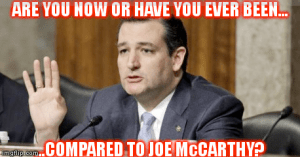
Critics speak: Another McCarthy?
Democrats, however, are decidedly not amused by his introduction to the national stage.
“He’s part of this right-wing, extreme group in the Republican Party,” said Gilbert Hinojosa, the Texas Democratic Party chairman. “He was elected to do the business of all the people of Texas, not just the business of a small group of Tea Party right-wingers. He makes (conservative former Sen.) Phil Gramm look like a progressive.”
Sen. Barbara Boxer, a liberal from California, went so far as to summon the ghost of Joe McCarthy during a discussion of Cruz on the Senate floor. MSNBC commentator Chris Matthews added former Louisiana Gov. Huey Long and Charles E. Coughlin, anti-Semitic radio broadcaster and fiery New Deal critic.
“He’s a potent combination of intellect and demagoguery that really has the potential to light a fire under the freshman Republicans to burn the place down,” said Jim Manley, a long-time Senate staffer who worked for Sen. Ted Kennedy and Senate Majority Leader Harry Reid. “But if you go down that path, you end up as nothing but roadkill in the Senate. If he continues down this path, his base may feel good about it, but he may just become isolated and irrelevant.”
A few Republicans have privately counseled Cruz to tone down his approach. One GOP colleague, Sen. John McCain, went so far as to rebuke him publicly after the Texas senator asked Hagel whether the former Nebraska senator had received payments from Saudi Arabia or North Korea.
“Sen. Hagel is an honorable man who served his country and no one on this committee at any time should impugn his character of his integrity,” McCain said as Cruz sat quietly by.
The two men shared another uncomfortable moment at the State of the Union speech, when McCain responded to Obama’s praise for bipartisan immigration reform with a quick jig while Cruz, two seats away, sat frowning.
Conservative activists are thrilled that Cruz has roiled both Democrats and old-line Republicans.
“We are encouraged that he is standing up to the establishment as a U.S. senator,” said David N. Bossie, president of the conservative group Citizens United. “Fighting the tough fights for conservative principles is why Ted Cruz was elected to the U.S. Senate.”
L. Brent Bozell III, chairman of the conservative group ForAmerica, blamed fellow Republicans for undercutting Cruz.
“The GOP establishment is at it again,” he said. ‘After capitulating to President Obama in negotiations over the fiscal cliff and promising to kneecap conservatives in the 2014 primaries, these moderates are attacking Sen. Ted Cruz for sticking to his conservative principles.”
Cruz’s brand of uncompromising conservatism gives Texas two of the most conservative members of the Senate. New ratings released Wednesday by National Journal indicated that the Lone Star State’s senior senator, John Cornyn of San Antonio, was the Senate’s second most conservative member in 2012.
Cornyn says he looks forward to “working closely” with Cruz “as we fight for a conservative agenda.”
“Ted has quickly proven himself to be among the next generation of leaders of Texas and the Republican Party,” Cornyn said.
It may be a bit early to declare Cruz a leader, but there’s little doubt Cruz is having an impact disproportionate to his seven-week Senate tenure. An editor of the conservative website The Daily Caller recently likened Cruz’s ability to shape the debate over Hagel to the liberal grassroots group MoveOn.org’s impact at the height of the Iraq War.
He’s certainly the most visible freshman senator, appearing on more national TV programs than any of his first-year colleagues, including the much-hyped liberal Sen. Elizabeth Warren of Massachusetts and conservative Republican Tim Scott of South Carolina, the first African American senator from the Deep South since Reconstruction.
With the hype, of course, come the jibes.
“Washington is a rough-and-tumble place, and I certainly don’t mind if some will take shots at me,” Cruz said. “What I do think is unfortunate is if the coverage of the political game overshadows the substance.”
“Ted Cruz and Marco Rubio are an existential threat to the liberal status quo.”
— Greg Abbott
Flashback: My 2013 article on Birtherism 2.0 and Canadian-born Ted Cruz’s eligibility to serve as president
Posted: January 5, 2016 Filed under: U.S. politics | Tags: 2016 presidential race, Alexandra Jaffe, American politics, Barack Obama, Barry Goldwater, Canada, Chester Alan Arthur, Congressional Research Service, Donald Trump, Dred Scott, George Romney, Harold Cook, Jack Maskell, James Garfield, John McCain, Mexico, Paul Begala, Peter Hamby, Philip Rucker, presidential election, South Texas School of Law, Steven E. Schier, Supreme Court, T. Gerald Treece, Tea Party, Texas on the Potomac, U.S. Constitution, U.S. politics, Wong Kim Ark Leave a comment
 I woke up this morning in Beijing to a tweetstorm fomented by Donald Trump’s new birther conspiracy: raising questions about Ted Cruz’s eligibility to be president. Here is a story I posted on Texas on the Potomac in 2013, when it was growing increasingly likely that the Canadian native would seek the U.S. presidency. In case you’re interested, here is what I wrote:
It seems like an obscure court case from a dusty old law book, but if Canadian-born Texas Sen. Ted Cruz ever decides to run for president, you’re likely to hear a lot about the United States v. Wong Kim Ark.
In that 1898 case, the U.S. Supreme Court voted 6-2 to repudiate the exclusive language of the infamous Dred Scott case and create an expansive definition of the Constitution’s “natural-born citizen” clause.
That’s important because the Constitution requires that the U.S. president be a natural-born citizen –and Cruz was born in Calgary, Alberta, in 1970. Cruz, who is being urged to run for president in 2016 by some conservative activists, argues that he is a natural-born citizen because his mother was an American citizen. His father, now a naturalized American, was born in Cuba.
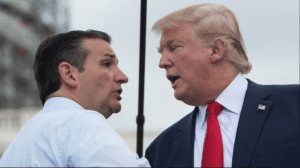
Trump: This is war!
As the Cruz-for-president talk heats up on the right, some bloggers on the left have argued that the strict interpretation of the Founding Fathers’ words that Cruz claims to worship would disqualify a Canadian-born American from serving as president.
Five years after celebrity billionaire Donald Trump and a motley assortment of conservatives raised questions about a liberal Democratic candidate’s American birthplace, the shoe is on the other foot.
Call it Birtherism 2.0.
“It is ironic that a Tea Party favorite might be blocked from serving as president by one of the Tea Party’s favorite constitutional provisions,” said Democratic strategist Paul Begala.
The question of presidential qualifications has never directly reached the Supreme Court. But there is a wide range of jurisprudence on the issue — which overwhelmingly favors the notion that Cruz is eligible to serve as president.
Ironically, the same legal logic that confirms Cruz’s eligibility would have permitted Barack Obama to serve as president even if he had been born in Kenya, because his mother was a U.S. citizen.
The most comprehensive study of the issue was a 2009 report by the nonpartisan Congressional Research Service, which cited English Common Law principles and American legal scholarship dating back to 1833.
“The weight of scholarly and historical opinion appears to support the notion that ‘natural born citizen’ means one who is entitled under the Constitution or laws of the United States to U.S. citizenship ‘at birth’ or ‘by birth,’ including …those born abroad of one citizen parent who has met U.S. residency requirements,” wrote Jack Maskell, a CRS legislative attorney.
So why the controversy?
Because, as in so many cases, the Constitution’s authors were silent on the meaning of the phrase “natural-born citizen,” leaving it to generations of constitutional scholars to divine their thoughts.
T. Gerald Treece, a professor at South Texas College of Law, said that despite the Founders’ silence on the subject, their intentions are easy to understand.
“The Founding Fathers merely did not want any British or other foreign subjects to become naturalized and, therefore, eligible to become president,” said Treece.
He said legal precedents focus on an individual’s status “at time of birth.”
“Most authorities agree that, if at time of birth, you are born to U.S. citizens — where they reside — then you are a U.S. citizen at time of birth,” Treece added.
But because the Supreme Court has never directly addressed the issue, it has been a subject of argument for centuries.
in 1881, some Democrats contended that Republican Vice President Chester A. Arthur was born in Canada and ineligible to succeed assassinated President James A. Garfield. But Arthur insisted he was born in Vermont, had a birth certificate and was sworn in as president.
in 1964, some critics of Republican nominee Barry Goldwater said he was barred from the presidency because he was born in Arizona before the territory gained statehood. The challenges got nowhere.
Four years later, Michigan Gov. George Romney sought the presidency although he was born in Mexico, where his American parents were living in a Mormon colony. The Mexican constitution in effect at the time of Romney’s birth in 1907 restricted citizenship to the children of Mexican nationals. So there was no issue off dual citizenship to cloud Romney’s campaign.
In 2008, both presidential nominees faced lawsuits to disqualify them based on their place of birth.
GOP nominee John McCain, the son of a Naval officer, was born in the Panama Canal Zone, then a U.S. territory, in 1937, months before Congress approved a law guaranteeing birthright citizenship to children of military personnel serving abroad. To erase any doubt, the U.S. Senate approved a bipartisan resolution confirming McCain’s citizenship, and a legal challenge to his eligibility was rejected.
There was far more fuss over false claims that McCain’s Democratic rival, Barack Obama, was born in Africa. A series of lawsuits were tossed out of court.
None of the anti-Obama “birthers” has stepped forward to challenge Cruz.
“I doubt that birthers will go after Cruz because he is ideologically compatible with them,” said Carleton College political scientist Steven E. Schier.
After the “birther” circus of 2008, friends and foes of Cruz say they’re ready to focus on his political positions, not his birthplace.
“The ‘birther’ issue — whether it’s Barack Obama, John McCain or Ted Cruz — has always been nothing more than a pointless hyperpartisan distraction and remains one,” says Democratic consultant Harold Cook.
Here’s the 2009 CRS document:
41131059 MoC Memo What to Tell Your Constituents in Answer to Obama Eligibility
A tribute to the shuttered McClatchy Beijing bureau — and the former Knight-Ridder international reporters
Posted: January 1, 2016 Filed under: Dunham's Discourses, Uncategorized | Tags: Alfonso Chardy, Beijing, China, Dallas Times Herald, Facebook, Knight-Ridder Newspapers, Mark Seibel, McClatchy Newspapers, Michael Browning, Nancy Youssef, Philadelphia Inquirer, Roy Guttman, The Miami Herald, University of Pennsylvania Leave a commentWhen I started as the University of Pennsylvania stringer for the Philadelphia Inquirer in 1974, I was greatly impressed that the Inquirer not only was a fearless advocate for Philadelphians, but it provided us with special insight into the world through its foreign correspondents and other reporters on the payroll of Knight-Ridder Newspapers. The global network of correspondents survived the demise of Knight-Ridder under the McClatchy umbrella.

Stuart Leavenworth: The last Beijing bureau chief
In my 2 1/2 years in Beijing, I’ve had the opportunity to see the amazing work of McClatchy’s final China bureau chief, Stuart Leavenworth. His stories — perceptive, interesting and unique — reminded me what international correspondents for hometown papers offer. It’s not the same breaking news you get from traditional wire services. It’s added value that comes from a combination of skilled journalists with expertise in the subject matter they are covering and experienced editors who understand their audience (and the world).
Sadly, McClatchy is shuttering its Beijing bureau — and all of its bureaus — this new year. Another casualty of declining newspaper audiences and diminishing news budgets. I will really miss the fine work of these intrepid journalists, as, I suspect, will thousands of loyal readers who now have yet another reason not to subscribe to their hometown paper.
Mark Seibel, a former Dallas Times Herald colleague of mine and a longtime editor for the Miami Herald and the McClatchy D.C. bureau, penned a Facebook tribute to his colleagues. With his permission, I’d like to share it with you:

– 30 –
By Mark Seibel
The other day, Stuart Leavenworth, until midnight McClatchy’s China bureau chief, posted a farewell photo that captured the door of the McClatchy office in Beijing. The plaque read “McClatchy/Miami Herald/Beijing Bureau.” It reminded me that the closing today of McClatchy’s last handful of foreign bureaus – Beijing, Irbil, Istanbul, Mexico City, though not yet Berlin, for reasons of logistics — ends an era when regional newspapers worked hard to make sure their readers were informed not just on local news but on world events. Because readers expected that of their papers.
I first began directing coverage of China in 1984, when I joined The Miami Herald as foreign editor. The correspondent in Beijing then was Michael Browning, perhaps the most talented writer and observer I‘ve ever been privileged to edit. Three decades and his untimely death haven’t dimmed my memory of the lyrical way he described the rippling of a pig’s flesh as it was carried to market at what was the beginning of China’s economic reformation. He once profiled a woman who smoked hundreds of cigarettes daily as a tester in a Chinese state factory.
At the time, Browning’s competitors included correspondents not just from AP and the usual suspects, but from the Baltimore Sun, the Chicago Tribune, and Newsday, among others. None of those papers has international bureaus today.
Browning’s time in China eventually ended, hastened by Chinese displeasure with his coverage of the Tiananmen Square massacre, and The Herald’s time as the keeper of the Beijing bureau also came to an end, when in the mid 90s, Knight-Ridder decided to centralize oversight of its eight corporate foreign bureaus in Washington. The wisdom of that move can still be debated; I’d argue it put another layer between local editors and international news coverage.
Many talented reporters have passed through the Knight Ridder/McClatchy foreign system. Marty Merzer, Juan O. Tamayo, Carol Rosenberg, Alfonso Chardy, John Donnelly, Soraya Nelson and Dion Nissenbaum all served in the Jerusalem bureau before it closed when Dion moved to Kabul. Hannah Allam, Nancy Youssef and Leila Fadel were Baghdad bureau chiefs, before Roy Gutman closed that bureau when he moved to Istanbul. Jack Changwas the last fulltime Rio de Janeiro correspondent, preceded by Kevin Halland Katherine Ellison. When Tom Lasseter left Moscow to cover China, the position was never filled; Brian Bonner occupied it for months, but never held the job permanently. Shashank Bengali’s departure from Nairobi ended McClatchy/Knight Ridder’s long run there. Nancy Youssef’s departure from Cairo ended our presence there.
Tim Johnson served in China before moving to the Mexico City bureau, which he’ll close in January. Matthew Schofield has been based in Berlin twice, and will eventually close it for a second time.
McClatchy kept the spark alive the last few years with a handful of staffers and an ample group of freelancers and contractors, all talented in their own right. David Enders covered Syria from the inside, being among the first to recognize that the jihadists were taking over the rebellion, and eventually winning a staff assignment (and a share of a Polk). Mitchell Prothero stepped in ably after David, and was willing to move to Irbil when the Islamic State captured Mosul. Others: Sheera Frenkel, Daniella Cheslow and Joel Greenberg from Israel, Adam Baron from Yemen, Alan Boswell from South Sudan and Nairobi, Jon Stephenson in Kabul, Saeed Shah and Tom Hussain in Islamabad.
There were many firsts, but some I think of often: Nancy Youssef was first to report that there had been no demonstration outside the Benghazi compound, and she did so within hours of the attack; Roy Gutman was the first to raise the issue of Obama’s lack of involvement in the negotiations over leaving U.S. troops in Iraq; Tom Lasseter, with an assist from Matthew Schofield, was the first to systematically interview former Guantanamo detainees about their time there, and David Enders reported in 2012 that al Qaida’s Nusra Front could be found at the fore of many key rebel victories in Syria.
I’m sorry to see that Miami Herald plaque disappear from that door in Beijing, but glad to have been a part of it.
16 bold predictions for 2016 (including ‘Cruz schlongs Trump’)
Posted: December 26, 2015 Filed under: Breaking news, Top Ten, U.S. politics | Tags: 2016 presidential race, American politics, Austin, Beijing pollution, Bernie Sanders, Bibi Netanyahu, China, Chris Matthews, clickbait, CNN, Dan Snyder, Democratic Party, Hillary Clinton, Huffington Post, international trade, Iowa caucuses, Israel, Jerusalem, Joe Scarborough, Julian Castro, Larry David, Las Vegas Review-Journal, Mike Huckabee, Mo Udall, Morning Joe, MSNBC, National Football League, New York Daily News, New York Times, Newt Gingrich, NFL, Philadelphia, Philadelphia Eagles, Pollution, protectionism, Pyonyang, Pyonyang Marathon, Republican Party, Rick Perry, Rick Santorum, Saturday Night Live, schlong, schlonged, Sears, Sheldon Adelson, Tea Party, Ted Cruz, trade, Washington Post, Washington Redskins, William Randolph Hearst 2 Comments
The bromance is headed for a rocky break-up in 2016.
The pundits were soooooo wrong in 2015 that it seems silly for anyone to pull out the crystal ball again. Especially in the midst of the most unpredictable Republican presidential nominating process in … what, four years? (President Gingrich, President Santorum, President Perry, we hardly knew ye.)
But since so many pundits make good salaries predicting things that don’t come true, I’m going to let you in on some things that are as solid as Sears. (OK, if you’re under 50 years old, you probably don’t understand that line.)
Here are my 16 bold predictions for 2016:
- The New York Daily News headline on Feb. 2, 2016 (the day after the Iowa caucuses): CRUZ SCHLONGS TRUMP
- Former Arkansas Gov. Mike Huckabee, the winner of the 2008 Iowa Republican caucuses, drops out of the 2016 race on Feb. 3 after finishing eighth in the previous evening’s Iowa caucuses. Nobody outside of the Huckabee family notices.
- Donald Trump continues his slide from frontrunner status on Feb. 23 with a stinging defeat in the Nevada caucuses when fellow gambling mogul Sheldon Adelson pulls out all the stops in support of [Editor’s note: He hasn’t yet decided which non-Trump candidate he will support]. Front page editorials in the Adelson family’s Las Vegas Review-Journal strongly support [candidate to be decided upon later]. Adelson tells close friends that Trump eliminated himself from contention when he didn’t know he was supposed to say that Jerusalem is and always will be the indivisible capital of Israel — and then canceled his meeting with Israeli Prime Minister Bibi Netanyahu in a fit of pique after Adelson buddy Bibi bashed Trump for saying he’d bar all non-citizen Muslims from the U.S. — and then used “schlong” as a verb.

Larry David got more attention from the mainstream media when he played Bernie Sanders on Saturday Night Live than the real candidate got when playing himself on the campaign trail.
- Bernie Sanders will be the Mo Udall of 2016. Without the wicked sense of humor. Favorite of the liberal liberals. String of second-place finishes. His last stand will be in the Vermont primary on March 1. But while Bernie battles for his home state’s 15 delegates chosen in the primary, Hillary Clinton will take something like 207 of the 208 Texas delegates up for grabs that day.
- The Republican Party in the United States will remain the only conservative party in the entire world to dispute the fact that humans contribute to climate change. Not a good strategy to win the support of young Americans, who wonder why so many old fogies can’t accept global scientific consensus.
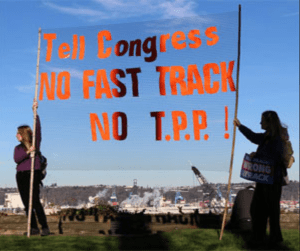
Just saying no.
- The Democratic Party in the United States will continue to argue for protectionism and managed trade. The Tea Party will continue to argue for protectionism and managed trade. The rest of the world will wonder why America continues to have such a robust, resilient economy when its politicians seem to be trying so hard to destroy its competitiveness.
- America will make history again — by electing the first female president ever, the first candidate with a Spanish surname and/or the first U.S. president ever born in Canada.
- The next vice president’s last name will end in an “o.” Leading possibilities are Castro, Rubio or uh-oh.
- Ratings on MSNBC will continue to slip-slide toward oblivion. Morning Joe’s audience will be limited to the DC Beltway, Manhattan and Joe Scarborough’s family’s homes. More than 95 percent of Chris Matthews’ audience will be aged 65 and above.
- The Washington Post website, having passed the New York Times in online audience in 2015, will rocket ahead of CNN through a combination of good, solid, old-fashioned reporting and analysis and an understanding of viral-news marketing.
- The Huffington Post, having reached the limits of page views through click-bait, rewrites and journalistic trolling, reassesses its business strategy amid general stagnation.
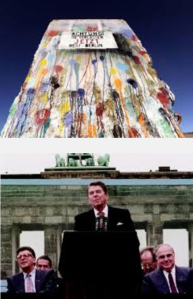
“Mister Hearst, tear down that wall.”
12. American newspapers continue to reassess the ill-fated paywall fad amid mounting evidence that they are destroying any potential for long-term community-building in a misguided attempt to increase short-term revenues.
13. No pro team from Philadelphia or Austin will make the playoffs in any sport.
14. Dan Snyder will continue to top the lists of “worst sports team owner,” despite his mediocre team’s miraculous 2015 run in the NFC Least division.
15. The Pyongyang Marathon will continue to be the least popular marathon in any nation’s capital. It’s on April 10, if you’re interested in signing up.

Have you signed up yet? One-way airfare not included.
16. American newspapers and news networks will feature stories about the poisonous air in Beijing with frightening regularity, causing the Chinese government to (a) condemn the negative news coverage and (b) develop a new and improved strategy for dealing with a problem that’s not going away, despite the occasional blasts of fresh air from Siberia.
Happy New Year to all!

Red Alert in Beijing
Top ten U.S. political winners and losers of 2015
Posted: December 22, 2015 Filed under: Top Ten, U.S. politics | Tags: 2016 presidential contest, Aaron Schock, Afghanistan, Afghanistan war, American politics, Anthony Kennedy, Barack Obama, Barry Goldwater, Beau Biden, Bernie Sanders, Big Oil, Bloomberg News, Charles C.W. Cooke, Chris Matthews, CNBC, ConocoPhillips, Darth Vader, Dick Cheney, Donald Trump, energy, George W. Bush, gun control, Harold Stassen, Hillary Clinton, Hugh Hewitt, Iraq, Iraq war, Jeb Bush, Jennifer Dlouhy, Joe Biden, John Boehner, John Cornyn, John Kasich, Lindsey Graham, marriage equality, Megyn Kelly, Mexico, National Press Club, National Review, National Rifle Association, neoconservatives, NRA, Paul Ryan, Pew Research Center, Pope Francis, President Barack Obama, presidential debates, Rand Paul, Republican establishment, Republican Party, Ronald Reagan, Rupert Murdoch, Ryan Lance, same-sex marriage, Saturday Night Live, Scott Walker, Supreme Court, Tea Party, terrorism, Time Magazine, US News, Walter Mondale, Washington Cartel, Will Ferrell 1 Comment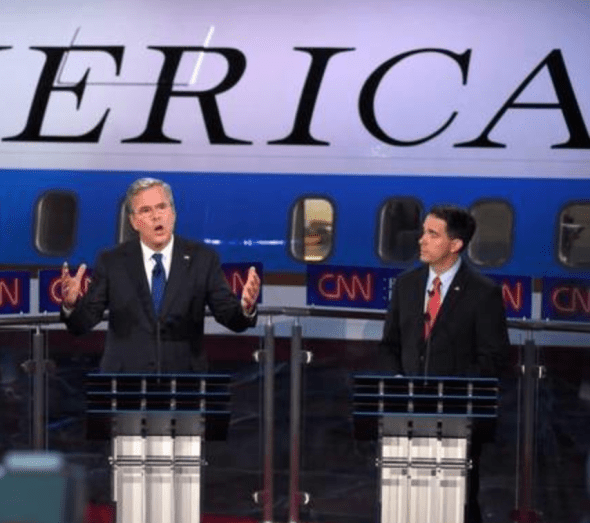
Long ago, in a galaxy far, far away, these were the GOP presidential frontrunners.
I promise that this list of 2015 American political winners and losers — one of dozens of such exercises being published this week — will not mention Donald Trump. (After that one.)
It’s been a long, long year in U.S. politics. It seems like decades ago that John Boehner was House Speaker, Jeb Bush was GOP-nominee-presumptive, Ted Cruz was a marginalized junior senator, Joe Biden was a GOP campaign trail laugh line and Barack Obama was a terrorist-loving, Kenyan-born, Muslim jihadist. (Well, four out of five ain’t bad.)
The list of political losers this year is loooooooooong. The list of political winners is short and subject to change without notice in 2016. (Will the honeymoon end, Speaker Ryan, or will we be talking about President-elect Paul Ryan one leap year from today?)
For what it’s worth, here’s my take, starting with losers:
Scott Walker
Nobody went from rising national star to minor-league dud faster than the in-over-his-head Wisconsin governor. He gave one good campaign speech in Iowa and was hailed as the GOP presidential frontrunner by the out-of-touch political media elite. His campaign was a free-spending disaster that was destroyed by one simple thing — a terrible candidate.
Rick Perry
Rick Perry, the Scott Walker of 2011, was the Harold Stassen of 2015. Nobody took the former Texas governor seriously as a presidential candidate. He couldn’t get traction, even though he gave the best speech of the Republican campaign — on the sensitive subject of race — at the National Press Club and articulately warned the GOP electorate about the candidate who shall not be named.

A tearful final act for House Speaker John Boehner
John Boehner
In his view: The inmates took over the asylum on Capitol Hill, and the keeper of the keys decided to flee the funny farm. A slightly more jaundiced view: The veteran House speaker and former fire-breathing Republican revolutionary was burned out and unable to reconcile the new generation of irreconcilable nihilists and the establishment majority in his very conservative caucus. After praying with Pope Francis, he chose a quiet glass of chardonnay on the balcony instead of a brass-knuckles brawl in the men’s room.
Jeb Bush
Remember when Walter Mondale decided not to run for president back in the 1970s because he doubted he had the fire in his belly for a presidential candidate. (You don’t? Well, trust me.) I get the feeling that Jeb Bush is the Walter Mondale of 2016. He acts like he really didn’t want to run for president, but everybody — except his mother — told him it was his duty (to the nation, to the party, to the Bush family) to run. So he ran. Badly, thus far. How bad is it? The incomparable Will Ferrell returned to Saturday Night Live to reprise his famous role as George W. Bush. His big laugh line: Bet you didn’t know I was the smart son.
The Republican political establishment
The GOP establishment — that amorphous, pan-ideological political group that shares a wariness of outsiders — is accustomed to getting its way. Over the past seven decades, only two insurgents (Barry Goldwater and Ronald Reagan) have defeated the candidate favored by a majority of GOP “wise men” and Daddy Warbuckses. Indeed, from 1976 through 2008, there was always someone named Bush or Dole on the Republican ticket. This year, the so-called establishment candidates (Jeb Bush, Chris Christie, John Kasich, Lindsey Graham, Scott Walker, Rick Perry) received less combined support than the first-term firebrand from Texas, Ted Cruz, is polling now. The purported savior of the Republican establishment may end up being Marco Rubio, a Tea Party champion who vanquished the GOP establishment in 2010 when he seized the Florida Senate nomination from a sitting Republican governor. Or Chris Christie, a.k.a. He Who Hugged Obama in 2012.
The Republican party
The GOP now has a presidential frontrunner who cannot win in the general election and could hand the House and Senate back to the Democrats in a Goldwater-style replay. (Goodbye, Illinois, Wisconsin, Ohio, Pennsylvania, New Hampshire Senate seats.) The GOP now has a second-running candidate who would be a very tough sell to general election swing voters. The “establishment” candidates who are running ahead of Hillary Clinton in general election match-ups seem to be long shots and getting longer by the week. (One of them, Marco Rubio, has been in a holiday slump and has compensated for his declining poll numbers by taking more time off of the campaign trail.)

The hits keep on coming: CNBC’s panel was roundly criticized by Republicans after a contentious presidential debate … and by some non-Republicans, too.
The establishment media
The Pundit Elite told you that a certain billionaire real estate and gambling tycoon was not a serious candidate for president. The Huffington Post relegated him to the entertainment section. They said he would fade when he questioned John McCain’s patriotism. They said he would fade when he said Mexico was sending rapists across the border to violate American … sovereignty. They said he would fade when he announced a plan to prohibit Muslim visitors from entering the United States. The big “they” have been wrong, wrong, wrong. They were wrong about Rick Perry. Time Magazine once asked. “Can Anyone Stop Rick Perry in 2016?” Duh, yes. They were wrong about Scott Walker. US News declared, “Walker Launches 2016 Campaign as GOP Frontrunner.” Chris Matthews was wrong when he declared that Rand Paul would be the 2016 nominee. (“You watch. This is what I do for a living.”) And the pundits were most definitely wrong about Jeb Bush, the one-time “Mister Inevitable” of the 2016 campaign. So what were they right about? The inevitable Hillary Clinton victory? OK, that seems likely, although the first vote has still not been counted. Here’s my final warning about pundit predictions: Beware all pundits who predict the general election with absolute certainty before Labor Day 2016.
Fox News
Having lit the match of the Tea Party revolution in 2009, Fox News saw the wildfire scorch the Republican Party in 2015. Populism trumped past favorite “isms” of Fox News: compassionate conservatism, neo-conservatism, Bush-Cheney-ism and O’Reilly-ism. A former Democrat who gave money to oodles of Democrats and praised both Clintons to the high heavens is now the favorite of the populist right. Rupert Murdoch despises the candidate who shall not be named. He’s shared his opinion with the world — repeatedly — through social media. But there’s seemingly nothing he or his TV network can do about it.
Dick “Darth Vader” Cheney
“I think this whole notion that somehow we can just say no more Muslims, just ban a whole religion, goes against everything we stand for and believe in. I mean, religious freedom has been a very important part of our history and where we came from. A lot of people, my ancestors got here, because they were Puritans.” This was not some lefty civil libertarian talking. This was Mister Waterboarding himself, Richard Cheney, talking to conservative radio host Hugh Hewitt. The former vice president, who embraces his “Darth Vader” image with Dickensian good cheer, thinks that the candidate who shall not be named has gone beyond the bounds of decency. But that certain candidate doesn’t care what Dick Cheney or George W. Bush or any of their neocon friends think. He says they screwed up Iraq and Afghanistan and the entirety of Southwest Asia with ill-considered invasions. When he talks like that, the billionaire tycoon sounds a lot like Bernie Sanders.
Aaron Schock

Schock and Awful
With all the big losers in 2015, I’d like to end my list with the year’s most insignificant loser. Aaron Schock. Once the youngest member of Congress, he showed off his “six-pack abs” on the cover of Men’s Health magazine. Turns out that the emperor had no clothes at all. The fourth-term congressman was snared in a series of scandals involving his accumulation of personal wealth through the aid of political donors and his alleged use of taxpayer money to fund a celebrity lifestyle. “Politics shouldn’t be a ticket to a celebrity lifestyle on the public’s dime,” Charles C.W. Cooke wrote in National Review. “For a man who has enjoyed such a short and undistinguished career, Illinois’s Representative Aaron Schock (R) has sure packed in a lot of corruption.” With no friends and no sympathy, the era of Shock and Awe ended abruptly on March 17 when he quit his day job.
And now the winners …

Total victory at the Supreme Court
Marriage equality
In 2004, when George W. Bush made same-sex marriage one of the key wedge issues in his re-election bid against Democrat John Kerry, 60 percent of Americans opposed gay marriage and just 31 percent supported it. The past decade has seem a seismic shift in public opinion. Not only did the U.S. Supreme Court legalize what is now known as “marriage equality” this year, but the public overwhelmingly supports it, 55 percent to 39 percent, according to the most recent Pew Research Center survey.
As Justice Anthony Kennedy wrote in his landmark majority opinion:
“No union is more profound than marriage, for it embodies the highest ideals of love, fidelity, devotion, sacrifice, and family. In forming a marital union, two people become something greater than once they were. As some of the petitioners in these cases demonstrate, marriage embodies a love that may endure even past death. It would misunderstand these men and women to say they disrespect the idea of marriage. Their plea is that they do respect it, respect it so deeply that they seek to find its fulfillment for themselves. Their hope is not to be condemned to live in loneliness, excluded from one of civilization’s oldest institutions. They ask for equal dignity in the eyes of the law. The Constitution grants them that right.”
The NRA
There have been 353 documented mass shootings in the United States this year, almost one per day. Gun and ammo sales have spiked with each of the largest mass murders. In Washington, all attempts to pass gun-control measures have been resoundingly rejected on Capitol Hill. Score two for the National Rifle Association.
Big Oil
Yes, I know, gasoline pump prices are down. That makes American consumers a winner but Big Oil companies a loser. But Big Oil is still having a very Merry Christmas after getting a very nice holiday gift from Congress and President Obama: an end to the four-decade-old domestic oil export ban. As recounted by my former colleague Jennifer Dlouhy, now with Bloomberg News:
Sensing they had momentum, oil industry lobbyists stepped up a social media campaign targeting possible supporters by placing ads on Facebook and elsewhere. Companies printed anti-ban messages on royalty checks. And in the end, supporters of retaining the ban were outmatched on the Hill, where at least 34 groups and companies were lobbying to allow exports compared to seven lobbying against.
“It moved quickly,” ConocoPhillips CEO Ryan Lance told Jennifer. “A lot quicker than industry thought it would.”

Tough questions
Megyn Kelly and Hugh Hewitt
Two conservative media personalities gained wide respect across the political spectrum by their tough but fair questioning of presidential candidates in nationally televised debates. For her professionalism, Kelly has faced sexist and misogynistic barbs from the candidate who shall not be named. Hewitt, one of the American media’s leading experts on foreign policy, asks specific and significant questions that cannot be dismissed as liberal propaganda.
Paul Ryan
Après Boehner, le déluge? Pas de tout.
Paul Ryan, the 2012 GOP VP nominee, maneuvered flawlessly into the position that Republicans from center, right and far right were all begging him to accept the job that Boehner suddenly vacated. The bizarre courtship process has given Ryan a lot of political capital, and he has used it wisely, cutting a conservative deal to keep the U.S. government operating that won the approval of a majority of Republicans and Democrats alike. It’s always hard to predict when the honeymoon might end, but Paul Ryan has led a charmed political life in 2015.
Ted Cruz
John McCain dismissed him as one of the wacko birds. His Texas colleague, John Cornyn, called him out after he accused Senate Republican Leader Mitch McConnell of telling a “flat-out lie.” His Senate colleagues have ridiculed and repudiated him repeatedly. To most officeholders, this would be a political kiss of death. But to Texas Sen. Ted Cruz, it is a kiss of life. Running for president as the sworn enemy of the “Washington Cartel,” Cruz has risen from low single digits in early polling to challenging for first place in national polls. He is a darling of right-wing radio, and he has rolled out dozens of endorsements from famous names in the conservative movement. His presidential campaign has been as disciplined as it has been cold-blooded in his attacks on President Obama and Democratic frontrunner Hillary Clinton. The Texas Tornado capped off the year by releasing a light-hearted Christmas video poking fun at himself and people who take themselves too seriously.
Mitch McConnell
Well, Mitch McConnell isn’t happy that Ted Cruz might become his party’s presidential nominee. But that’s 2016. In 2015, he pretty much outmaneuvered both the Cruz wing of the Senate GOP and Harry Reid’s Democratic minority. While the Senate Majority Leader is not a particularly big fan of Barack Obama, he has proven time and again that he can work with him to cut a deal. Cruz calls him a card-carrying “cartel” member. In the olden days, he would have been called a “legislator.”
Joe Biden
Through his grief at the loss of his son Beau, Joe Biden’s humanity shined. He embodied a word that has almost ceased to exist in American politics: “authentic.” As 2015 dawned, Republican presidential candidates regularly made Biden the butt of jokes. As the year is coming to a close, those jokes have been discarded.
Fear
If Joe Biden showed grace under pressure, most of the political world showed that America has lots to fear from fear itself. A fear of Muslim terrorists and Latino immigrants has convinced a majority of Republicans that it’s time to seal America’s borders. Presidential candidates have called for internet censorship and routine government surveillance power to peruse our private emails in search of potential terrorists. Ratings-challenged cable news networks have nurtured the nation’s paranoia with sensationalistic coverage.
How cropping photos can change the editorial content of a photograph
Posted: December 20, 2015 Filed under: Journalism Training, Rick's Rules, U.S. politics | Tags: 2016 presidential race, cropping, Donald Trump, Journalism Training, media bias, multimedia journalism, Nancy Pelosi, photo composition, photo cropping, photo editing, photography, presidential election, White House 1 Comment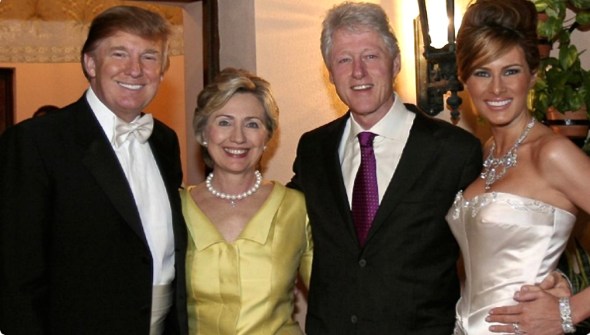
Marital bliss: This photograph from Donald Trump’s latest wedding is fraught with political overtones.
Photography captures reality.
Or does it?
Yes, a high-quality photograph that follows my 25 rules of photo composition can be a major asset for your multimedia journalism report.
But a photograph is not necessarily objective reality. Why?
Cropping.
As you edit the photograph, you are making editorial decisions: What part of the photo is most important or newsworthy? (That is different than editing decisions based on attractiveness.)
Here are two examples: One benign, one politically charged.
I took the first photo in my final day on the White House beat, Sept. 2, 2013. It shows House Democratic leader Nancy Pelosi speaking to a group of reporters outside the West Wing entrance (also known as “the Stakeout”). The second photo is a wedding snapshot featuring Bill and Hillary Clinton at Donald Trump’s most recent wedding.
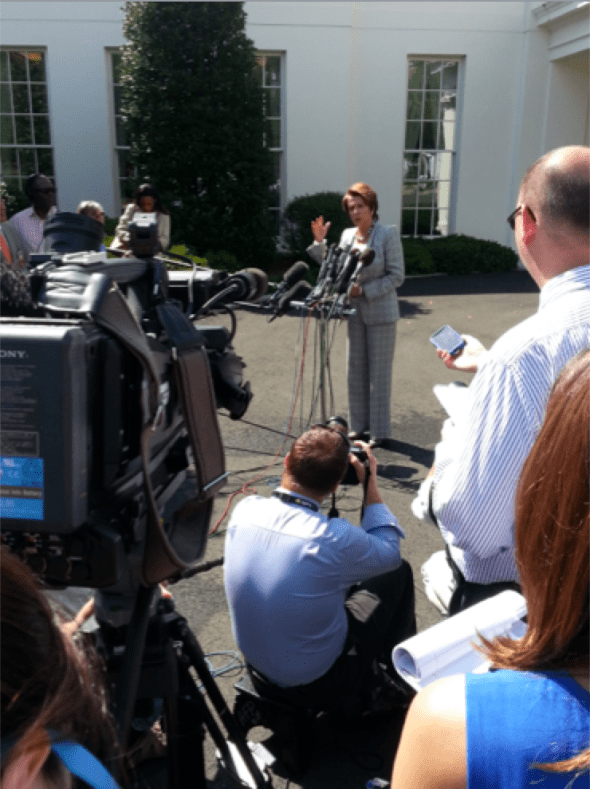
Nancy Pelosi at the Stakeout. The viewer’s eye focuses on the media scrum.
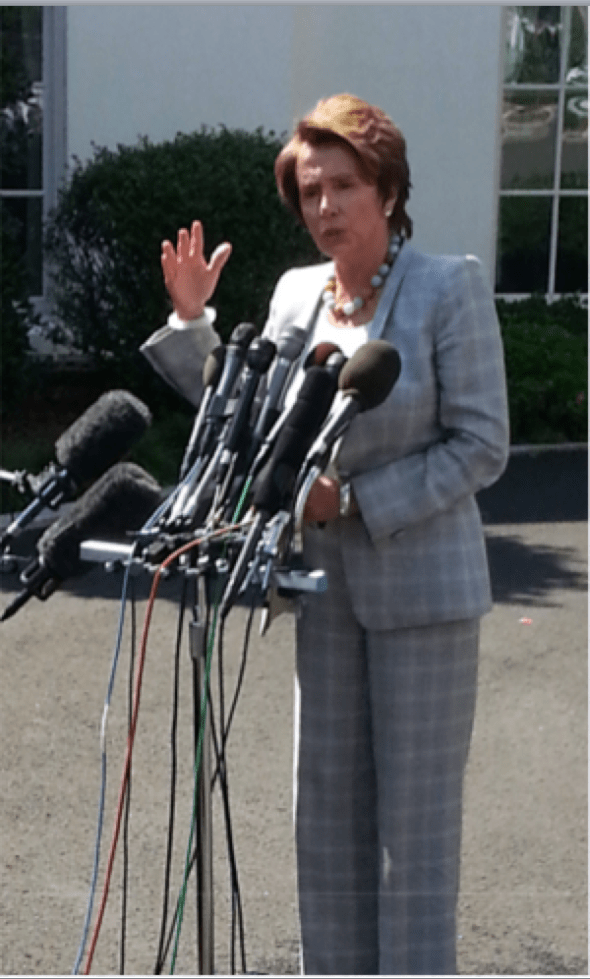
The edited photo focuses on Nancy Pelosi.
The original image: The Trumps and Clintons are all smiles at Donald Trump’s latest wedding.

Edited photo #1: That was then, this is war: Hillary and Donald look happy together. That’s not the way they’re acting in the heat of the presidential race.

Edited photo #2: Editing out the Trumps, this could be any of the tens of thousands of Clinton family photos taken over the decades.

Edited photo #3: Editing out the spouses, this version looks like Bill Clinton is enjoying his time with Mrs. Trump. It emphasizes their left hands meeting along her waist.
The Trump-Clinton wedding photo is fraught with political overtones. Some of Trump’s 2016 Republican presidential campaign rivals would like to remind voters of his bipartisan past and his longtime coziness with the Clintons. The unedited photo is incontrovertible evidence that the two families were close enough that they were all smiles together in the not-so-distant past.
By focusing on Donald and Hillary, the photo editor chooses to highlight the 2016 rivalry, without the spouses. It’s Hillary vs. Donald. All smiles then. All insults now.
By editing out the Trumps, this is an unexceptional photo of Bill and Hillary Clinton smiling for the cameras. Little news value.
By editing out Donald and Hillary, the photo focuses on Bill Clinton with his arm around an attractive woman. Her left hand touches his, prompting the viewer to reach her/his own conclusion about the body chemistry.
The takeaway lesson: When you are editing photos for content, think about how your cropping decisions change the meaning of the image in the eyes of your audience. Are you sending the message you want to send? Are you fairly reflecting reality? Are you being fair to the subjects in the photo?
If you are a professional photo editor, the answer to all of the questions should be yes.
Chris Roush: There is hope for journalism … in business journalism
Posted: December 7, 2015 Filed under: Breaking news, Global Business Journalism, Journalism Training | Tags: Atlanta Journal-Constitution, Auburn University, Beijing, bizjournalismhistory.org, Bloomberg News, BusinessWeek, Buzzfeed, CNBC, Coca Cola, collegebizjournalism.org, Financial Times, Global Business Journalism, Hurricane Andrew, MarketWatch, Multimedia Business Journalism, Reuters, TalkingBizNews.com, Tsinghua University, University of Florida, University of North Carolina, Wall Street Journal, Washington and Lee University Leave a commentChris Roush, a distinguished American journalism professor and author of two prominent business journalism textbooks, told Tsinghua students on Dec. 2 that the future of business journalism is bright, despite the economic woes gripping much of the news industry.
“If you can write about business and the economy, then they’re really interested in you,” he told 45 students in the Global Business Journalism Program at the Tsinghua School of Journalism and Communication.
Roush, a former reporter for Bloomberg News, Business Week and other U.S. publications, said there is a worldwide demand for young journalists who can explain complex economic topics “in a coherent way so that people can understand.” He told the students from more than a dozen countries enrolled in Professor Rick Dunham’s Multimedia Business Reporting class that their ability to tell journalism stories in multiple languages and on multiple media platforms would make them a valuable asset to news organizations in China and around the world.
“Your language skills are a big deal,” he said.
Unlike the students he was addressing, Roush said he had not planned to be a business journalist.
“After grad school, I needed a job,” he told the students. “The first job I found was as a business reporter in Florida.”
A history major at Auburn University who earned an M.A. in journalism from the University of Florida, Roush quickly made a name for himself in his first job and was recruited by a larger Florida newspaper. After distinguishing himself with his coverage of the deadly Hurricane Andrew in 1992, he was recruited by Business Week, the nation’s top weekly business news magazine. He later covered Coca Cola for the Atlanta Journal-Constitution and Bloomberg News before working for a dot-com start-up. His next stop was academia, as a professor at Washington and Lee University and then at the University of North Carolina.
At UNC, Roush has created a major in business journalism and runs a website called TalkingBizNews.com. He is the author of “Show Me the Money: Writing Business and Economics Stories for Mass Communication” (2010) and “Profits and Losses: Business Journalism and its Role in Society” (2011). He is the co-author of “The Society of American Business Editors and Writers’ Stylebook: 2,000 Business Terms Defined and Rated” (2012). He also has created the websites collegebizjournalism.org and bizjournalismhistory.org.
Like Tsinghua’s Global Business Journalism Program, Roush’s program at UNC has been very successful at placing its graduates at top media outlets, including The Wall Street Journal, Bloomberg News, Reuters, the Financial Times, CNBC, MarketWatch, BuzzFeed and Business Insider.
Roush advised the GBJ students to “find an area or topic where you are the expert” and practice their news writing.
“I really believe the best way to become a good writer is to write a lot,” he said. “Write one story a week.”
Roush said it was important for young journalists to bring both practical skills and a positive attitude to their jobs.
“No matter what you are passionate about, if you are good at it, good things will come your way,” he said.
Analysis: Why Xi Jinping’s summit with Barack Obama is more important than you may think
Posted: September 25, 2015 Filed under: Breaking news, Rick in the news, U.S. politics | Tags: AIIB, American politics, Asian Infrastructure Investment Bank, Barack Obama, Bill Clinton, CCTV, China, China Radio International, Chinese economy, CRI, Deng Xiaoping, Dialogue, Fed, Federal Reserve, Global Business Journalism Program, House of Cards, Hu Jingtao, Jiang Zemin, John Boehner, Justice Department, Korea, Li XIanian, Moody's Analytics, North Korea, Richard Nixon, Sleepless in Seatlle, summit, trade, Trans-Pacific Partnership, Tsinghua University, United States, Vladimir Putin, White House, Xi Jinping, Yang Jinyn Leave a comment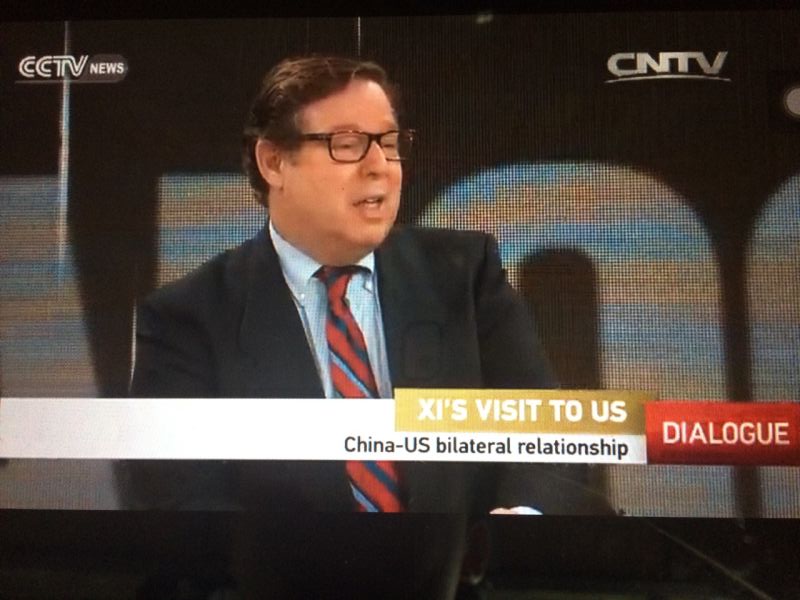
Analyzing the summit for CCTV. You can watch the entire Dialogue program here.
This week’s summit meeting between Chinese President Xi Jinping and U.S. President Barack Obama has been overshadowed in the United States by the historic visit by Pope Francis — and then the sudden resignation of U.S. House Speaker John Boehner. But the China-U.S. summit is likely to have broader and longer-lasting implications on both the global economy and geopolitical matters.
Here is my analysis of the high stakes and — at least for leaders in China — high hopes for the summit. It is in a Q&A format based on questions formulated by China Radio International designed to stimulate a roundtable discussion on its Today program.
Q: Xi Jinping’s first speech upon arriving in Seattle was peppered with U.S. cultural references, including the film Sleepless in Seattle and the television series House of Cards. He also shared some personal experiences, like his life as a visiting student in Iowa. Do you think the personal touches went down well with his American audience?
A: It’s always good to drop a few cultural references — though I will say that House of Cards may be more popular in China than it is in the U.S. At Tsinghua University, where I work in the Global Business Journalism program, everyone wants to know if it’s an accurate depiction of American politics and journalism.
More seriously, President Xi definitely connected with his business audience of leaders of major technology companies — and I think that is a big win for future partnerships with the tech and aerospace industries.
Q: Since China and the U.S. established diplomatic ties, only four Chinese presidents have paid state visits to the U.S.: Li Xianian in 1985, Jiang Zemin in 1997, and Hu Jintao in 2006 and 2011. We now have the fifth. How different is this one: what has changed and what remains the same in bilateral relations?
A: The biggest visit from a Chinese leader was not even a state visit, it was from Deng Xiaoping, who was vice chairman, not president.
What is the same? The desire of the leaders of both countries to deepen economic and cultural ties. The differences: the end of the Cold War, the rise of China’s economy (even with current uncertainties) and the increasing importance of China on the global diplomatic and military front. Also, for much of the relationship, China and the U.S. used each other as a wedge against the Soviet Union and then Russia. Now China and Russia are closer in a geopolitical sense than China and the U.S.

Presidents Obama and Xi walk from the White House to Blair House for dinner on Sept. 24.
Q: Apart from political rhetoric and media outcries, what really makes the two giants like each other and what turns them apart?
A: The leaders like each other. The countries share mutual respect, win-win economic ties and a concern for future of the world economy. The issues that drive them apart include economic competition, Taiwan, U.S. criticism about human rights issues and U.S. military alliances (particularly with Japan).
Q: Is there anything special about the personal relationship between Obama and Xi Jinping? They twice have discussed ideologies and history. The pictures of them walking on the Sunnylands Ranch in 2013 and their late evening stroll indicates some mutual understanding of the top jobs.
A: They have definitely connected on an intellectual level and it’s clear from the body language that they like and respect each other. You don’t see the same thing when President Obama and Russian President Putin get together.
Q: Xi Jinping’s visit comes at a time when geopolitical conditions in East Asia have evolved to a very subtle point. The Obama administration declared to its “Pivot-to-Asia” diplomacy shift in 2012. Tensions have been growing in the region with Shinzo Abe seeking to expand Japan’s overseas military role and several Southeast Asian nations embroiling themselves into a territorial dispute with Beijing. Is the timing of the trip too tough?
A: There’s never a perfect time for a trip. Japanese assertiveness on military matters, issues in the South and East China Seas, cyberspying all have created some tensions. The slowdown of China’s growth also has created some uncertainty on the economic side. But there are many important things the two countries can do to benefit each other and the world situation, economically and geopolitically.
Q: How does China fit into the current global strategy of the United States? And vice versa?
A: That’s a complicated pair of questions. The U.S. has not taken part in the AIIB — the Asia Infrastructure Investment Bank — and tried, thus far unsuccessfully, to launch a Trans-Pacific Partnership anchored by the U.S., Japan and Korea. But despite those problems, both countries are eager to welcome investment from the other nation to help grow jobs in their countries. And both are interested in improving the economies of Africa, where both have invested a substantial amount of soft-power capital.
In terms of geopolitics, the U.S. believes that China is a key player in resolving almost all of the most difficult international issues of the day, from the Korean Peninsula to the Middle East. The U.S. wants China as a leading player and not a marginalized actor.
Q: China has been very active in recent years on both political and economic fronts. Despite a global economic slowdown, China still manages to maintain a GDP growth at around 7 percent over the years and is now the world’s second largest economy, right after the U.S. Since Xi Jinping came to power, China has proposed several international cooperation mechanisms such as the AIIB, the New Development Bank, the Land and Maritime Silk Road Initiative and so on, taking more responsibility in regional and international affairs. What do you make of the U.S. reaction to this?
A: I think the U.S. should be more welcoming and more cooperative — while realizing that some tension and competition is natural. I’m not sure how much of this reflects the concerns of Japan about China’s growing influence and how much is Washington policymakers’ policy concerns. The world economy should allow for both nations to grow — it’s not a zero-sum game.

The two presidents take questions from the U.S. and Chinese media on Sept. 25.
Q: How much damage has been caused by conflicts between the two?
A: There have always been tensions and there still are. Taiwan was and will be a continuing strain, but the strain has been handled by both nations with mutual effort. Both nations have accused the other of spying, and they have had strong words about military actions in the South China and seas. But they have kept their disagreements civil and kept them in perspective. The shared goals of the two nations are much more important than the continuing differences.
Q: What’s the way to bring China-U.S. relations to a new level while properly handling these conflicts?
A: Agree to disagree about some things and work on the issues where progress can be made. A bilateral investment treaty is good for both countries and should not be blocked because of American fears about cybersecurity. However, international companies need to reach a comfort level that their trade secrets would not be compromised if they do business in China.
Q: China and the U.S. both shoulder responsibilities in dealing with major international issues, like the Iran nuclear issue, the North Korean nuclear issue, climate change and so on. What’s a more constructive way for the two sides to cooperate in order to solve these difficult problems?
A: I would hope that we hear more about this from President Xi at the United Nations. The key thing is more and higher-profile Chinese involvement alongside the U.S. and Russia. Korea is a very difficult problem and can only be resolved if China and the U.S. are in complete agreement about the future of the peninsula.
Q: Leaders from both countries have been exchanging visits regularly in history. When people reflect back in the future, how do you think they will think about this visit?
A: To use President Xi’s words, it was the first summit of the major-power relationship era. In my view, the most important meetings between the nation’s leaders were in 1972, when President Nixon came to Beijing, 1979, with Deng Xiaoping, when China was beginning to reshape its economy, and 1998, when Bill Clinton visited China as China was emerging as a global economic power. To me, this is the logical fourth leg of the chair — and could steady the relationship for the decade to come, whoever is elected president of the U.S. next year.

Photo op with CRI crew and fellow guests after the Today program on Sept. 25. You can listen here.
Q: Several economic deals are being announced this week during the visit, including companies such as Boeing and Cisco. How significant are these deals? Can economic and trade links still function as the main stabilizer of the overall China-U.S. relations?
A: Yes. Economic ties and trade not only will help the two nations but the global economy. The world economy may be more dependent on Chinese economic growth than U.S., particularly nations of Africa and Central and East Asia.
Q: Moody’s Analytics’ chief economist has calculated that every 1 percentage point drop in Chinese growth reduces U.S. economic growth by 0.2 percent. This is equal to the price of oil going up $20 a barrel. How interrelated and interdependent are the two economies?
A: I agree with Moody’s. Of course, the Chinese people are hurt more than the American people by any slump in the Chinese economy, but there is a ripple effect in this interdependent world. I think that the African and East Asian economies would suffer more by a prolonged slump in China, but the U.S. would feel it.
Q: China has been on a path towards reforming its economy. How important are China’s economic reforms to the U.S. economy and that of the world?
A: Internal reform in China is important to the U.S. — not reform for reform’s sake, but reform that makes the Chinese economy more efficient and reform that creates more disposable income in China and more markets for global goods. Also, reforms in rule of law and protection of intellectual property are very important to the U.S. and the rest of the world.
Q: Given the moves last month on the value of the RMB, how much of an issue is that in the relationship now?
A: Although some Republican presidential candidates have criticized China’s devaluation of the RMB as currency manipulation, most global economists do not believe that, and neither does the Obama administration. This was a legitimate issue in 1999, but times have changed. The IMF has stated that the RMB has shown signs of floating with the market, and I think the U.S. administration appreciates that.

The first families wave from the Truman Balcony at the White House.
Q: China and the U.S. respectively have proposed different international economic entities. China proposed the AIIB and the New Development Bank, while the U.S. is pushing forward with the Trans-Pacific Partnership. In what ways can these two countries and these different entities cooperate, especially in terms of global financial institutions reform?
A: It would be ideal to unify these partnerships, and I think that is likely at some time. But it might take a decade or more. International financial institutions are in serious need of reform. I’m not optimistic that such reform is coming in the near term, but it is inevitable in the long term.
Q: The U.S. Federal Reserve recently made a decision to delay an interest rate rise. How much did China’s current economic situation factor into the decision?
A: It played a role — along with the continuing economic softness in Europe. The Fed is ready to raise rates, but it remembers when its rate increases in previous decades created panic in Mexico and other emerging markets. So it is acting more cautious now. However, rate hikes are a near certainty over the next year.
Q: How does the decision affect the Chinese economy? How much should the Fed take such affects into account when making these decisions about the U.S. economy?
A: The impact should be minor, more psychological than real, more based on speculation than reality.
Q: In recent times, U.S. companies and business associations have mentioned issues of market access, national security and cyber-security laws, and potential requirements to hand over corporate security materials. Chinese tech companies like Huawei faces similar problems in the U.S. What can be done about this?
A: Talk about it honestly and openly, as has been going on. Agreeing on a treaty that would provide “rules of the road” for cybersecurity. That’s a first step. The agreement may not be unveiled this week, but a framework for future action is possible.
Q: Another on-going item is the bilateral investment treaty, or BIT, between the two nations. What are the main challenges, and how should they be overcome?
A: The main challenges are rule of law, cybersecurity, openness of U.S. markets to Chinese companies and openness of Chinese markets, particularly financial, to U.S. companies. Prolonged negotiations will be needed to resolve them, but both sides want to achieve results, so I’d be optimistic.
Q: In terms of a compromise, might we see a type of “cyber arms deal” being reached, which would help establish which kinds of cyber attacks could be outlawed – attacks on civilian infrastructure, for example?
A: Yes, that’s exactly right. Government on government spying has always existed. But companies want assurances that they will be able to do business without fear of corporate espionage.

Before becoming China’s president, Xi Jinping visited Iowa, where he lived several decades ago.
Q: One of China’s most wanted economic fugitives – Yang Jinyun – was returned to the country by the U.S. last week. This marked the first time China has succeeded in repatriating a wanted corruption suspect from the U.S., with whom it has no extradition treaty. Has Yang Jinyun’s repatriation laid an important foundation for bilateral cooperation, or is it just a separate move done only as an olive branch for a presidential trip?
A: It is symbolic but it also is part of a series of concrete actions by the United States to help China in cases of corruption-related fugitives. The U.S. Justice Department has shown a willingness to help China deal with corruption cases, which are different than political cases.
Q: Beyond all specifics, the fundamental question has always been: What does the rise of China mean to the USA, and vice versa? What should Xi Jinping say to Obama? “I have no intention to challenge the existing world order.” What should Obama say to Xi Jinping? “Play the second fiddle.”
A: No, there is no need to talk about who is number one and who is number two. It is the most important bilateral relationship in the world. The leaders must show each other and their nation’s respect. I think that exists. Xi Jinping doesn’t have to make any assurances about the existing world order. The new world order is emerging — and everyone knows it. There is no reason for irrational concern on either nation’s part. The leadership of both countries — economic, diplomatic and moral — is vital.
>> Link to CCTV Dialogue program: http://english.cntv.cn/2015/09/24/VIDE1443041881178448.shtml
>> Link to CRI Today program: http://english.cri.cn/7146/2015/09/25/3641s897467.htm
Who said it? Xi Jinping or … George Bush, Donald Trump, Ted Cruz, Nancy Pelosi or Henry Kissinger?
Posted: September 21, 2015 Filed under: Breaking news, Discovering China, U.S. politics | Tags: Barack Obama, Bernie Sanders, Binyamin Netanyahu, China, Chinese economy, Chris Christie, Communist Party, Dan Quayle, Deng Xiaoping, Donald Rumsfeld, Donald Trump, Franklin D. Roosevelt, George H.W. Bush, George W. Bush, Hassan Rohani, Henry Kissinger, Japan, Jeb Bush, Jim Mann, John Kerry, Mao Zedong, Margaret Thatcher, Michael Keaton, Mr. Mom, Nancy Pelosi, Pat Buchanan, Paul Prudhomme, peace, Philadelphia Inquirer, Pope Francis, Raul Castro, Rick Perry, Ronald Reagan, Shinzo Abe, Ted Cruz, terrorism, The China Fantasy, United States, Vladimir Putin, Wang Jiarui, Washington Post, world peace, Xi Jinping Leave a comment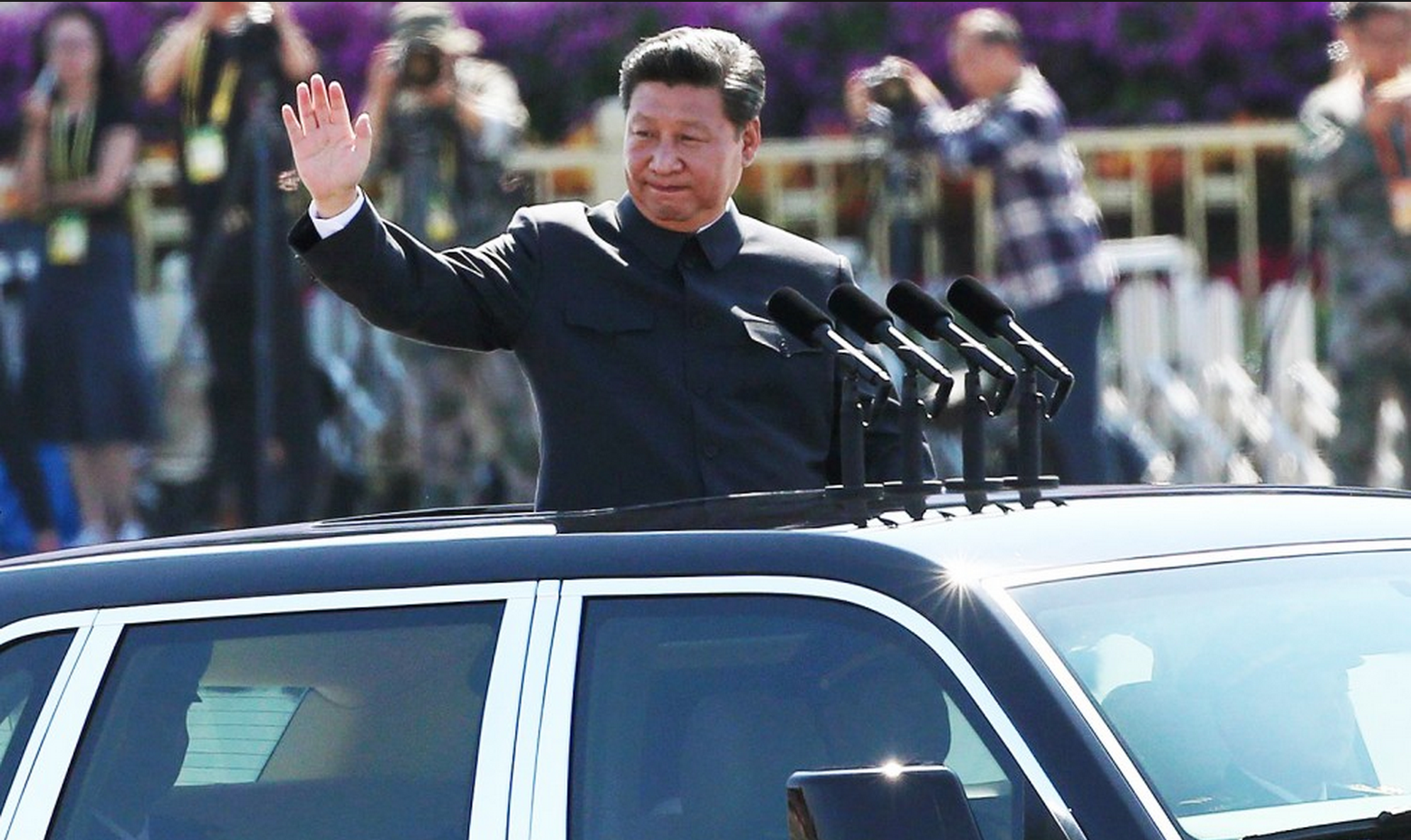
Images of Xi Jinping at the Sept. 3 military victory parade were shared around the world. But who is the Chinese leader and what does he stand for?
Chinese President Xi Jinping is coming to the United States, and very few Americans (or even American journalists) know much about the leader of the nation’s most populous country.
With apologies to Vladimir Putin, he has been called the most powerful leader in the world. But what does that mean?
Is Xi a reformer? Is he a hardliner? Is he a step forward, a step back — or both? Is he firmly in control or fearful of rivals within the ruling elite — or both? Is “Big Daddy Xi” widely popular or the beneficiary of a manufactured cult of personality?
As much as I’ve learned about China over the past two years, I still have a lot to learn. For additional background, I recommend you check out my former Philadelphia Inquirer colleague Jim Mann’s recent commentary in the Washington Post:
For American pundits, China isn’t a country. It’s a fantasyland.
In the meantime, test your knowledge of who Xi Jinping is — and isn’t — by taking this news quiz. Which of these statements are from Xi and which are from other world figures? Good luck.
For answers, scroll to the bottom of the post, after the final photo. Click on the quotations to read the original source material.

President Barack Obama and Xi Jinping have been careful to treat the other with respect and discuss fundamental disagreements without alienating the other nation’s leadership.
Who said the following?
1. Japan is “eating our lunch.”
a) Xi Jinping
b) Donald Trump
c) Paul Prudhomme
a) Xi Jinping
b) George W. Bush
c) Donald Rumsfeld
3. “Some foreigners with full bellies and nothing better to do engage in finger-pointing at us.”
a) Xi Jinping
b) Pat Buchanan
c) Chris Christie
4. “America must be a light to the world, not just a missile.”
a) Xi Jinping
b) Barack Obama
c) Nancy Pelosi
d) George H.W. Bush
5. A cooperative United States-China relationship is “essential to global stability and peace.”
a) Xi Jinping
b) Barack Obama
c) Henry Kissinger
a) Xi Jinping
b) George W. Bush
c) Margaret Thatcher
d) Ronald Reagan
a) Xi Jinping
b) Pope Francis
c) Raul Castro
d) Barack Obama
8. “Japan is not being nice to us.”
a) Xi Jinping
b) Donald Trump
c) Franklin D. Roosevelt
d) Theodore Roosevelt
a) Xi Jinping
b) Barack Obama
c) Binyamin Netanyahu
a) Xi Jinping
b) Barack Obama
c) Binyamin Netanyahu
11. “The international forces are shifting in a way that is more favorable to maintaining world peace.”
a) Xi Jinping
b) Shinzō Abe
c) Barack Obama
c) Hassan Rohani
a) Xi Jinping
b) Margaret Thatcher
c) Marco Rubio
d) Ronald Reagan
13. “When did we beat Japan at anything?”
a) Xi Jinping
b) Donald Trump
c) Michael Keaton in “Mr. Mom”
d) The captain of the U.S. Olympic baseball team
a) Xi Jinping
b) Bernie Sanders
c) Mao Zedong
d) Ronald Reagan
a) Xi Jinping
b) Deng Xiaoping
c) Ted Cruz
16. “As Deng Xiaoping said, we must ‘seek truth from facts.’ ”
a) Xi Jinping
b) Barack Obama
c) George H.W. Bush
17. “People should not underestimate me.”
a) Xi Jinping
b) George W. Bush
c) Bernie Sanders
d) Vladimir Putin
a) Xi Jinping
b) Henry Kissinger
c) Jim Mann, American journalist and author of The China Fantasy
d) Wang Jiarui, head of the Communist Party of China’s international department
a) Xi Jinping
b) George W. Bush
c) Dan Quayle
d) Rick Perry
a) Xi Jinping
b) Barack Obama
c) John Kerry
d) Ronald Reagan
Answers below this photo.
XI Jinping is honored in Iowa, where he lived several decades ago.
1.b; 2.a; 3.a; 4.c; 5.c; 6.a; 7.a; 8.b; 9.a; 10.c; 11.a; 12.a; 13.b; 14.a; 15.c; 16.b; 17.c; 18.d; 19.a ; 20.d
Remembering Ken Reigner: A life of passion for politics, words and friends
Posted: August 13, 2015 Filed under: Breaking news, U.S. politics | Tags: American politics, American Society of Journalists and Authors, Ann Reigner, Author's League Fund, Benjamin Franklin, Beryl Benderly, Bob Matsui, Brendan Byrne, Center for Environmental Education, CompuMedia Business Services, David Letterman, David Marannis, David McCullough, Detroit, Doris Kearns Goodwin, Doug Harbrecht, Enemies List, Eugene McCarthy, Frank Capra, Garrison Keillor, George McGovern, George Washington University, Grant Tinker, Hal Morton Reigner, Howard Dean, Isolde Chapin, It's a Wonderful Life, J.L. Hudson Company, James B. King, James Lardner, Janis Joplin, Jimmy Carter, John Burton, John Dickinson, John F. McDiarmid, John Morton, Jon Stewart, Kathleen Hall Jamieson, Ken Reigner, Larry King, MENSA, Michigan, Mickey Leland, Mike Barnes, National Credit Union Administration, National Press Club, NBC, NBC News Overnight, Pam Tobey, Paul Dickson, presidential election, Richard Nixon, Robert Maynes, Rosemary Clooney, Ted Kennedy, The New Yorker, University of Maryland, University of Pennsylvania, Walter Mondale, Warren Magnuson, Washington, Washington Independent Writers 1 CommentLast Saturday, my good friend Ken Reigner died just a few hours before we were scheduled to meet for dinner. Ken was one of the first people Pamela Tobey and I met when we moved to Washington in 1984 and he was part of many of our important life events, including our wedding, family holiday gatherings and even Adirondack vacations at the Dunham family compound. Here is my tribute to Ken’s life, written with the indispensable reporting of Michael Gessel and John McDiarmid.
In the fall of 1983, Ken Reigner was shocked to learn that NBC News had canceled one of his favorite programs, the critically acclaimed but ratings-challenged NBC News Overnight.
“It was just as if someone had shot me through with electricity,” the red-haired Michigander with insatiable energy and righteous passion told The New Yorker in December 1983. “I was dumbfounded. After that, it was like being in an accident. A couple of minutes went by before I knew where I was.”
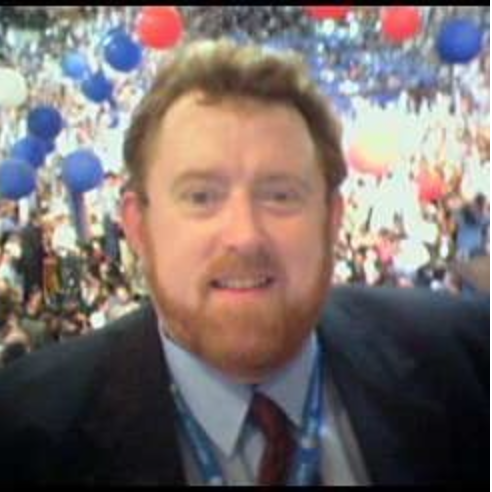
Ken Reigner at the 2000 Democratic National Convention in Los Angeles.
But while most people would have accepted the program’s fate with disappointment and sorrow, Reigner, already a veteran of four presidential campaigns, decided to fight back.
“Somebody had to start up a movement to save the show,” he decided.
In the days before the Internet, email and social media, Reigner led a crusade to save NBC News Overnight. He led a candle-light vigil in front of NBC’s Washington studios, shared his outrage by calling in to Larry King’s nationwide radio show, organized a letter-writing campaign to NBC Chairman Grant Tinker and even demonstrated his support by distributing campaign-style buttons to members of the show’s audience one night.
“We noticed yellow ‘Save NBC News Overnight’ buttons on an increasing number of chests as the night wore on,” James Lardner wrote later in The New Yorker, “and we traced them to a tote bag carried by a bright-faced man named Kenneth Reigner.”
That bright-faced man, who led a number of crusades during more than four decades as a political campaigner, congressional staffer, writer and editor, died in his sleep at his home in Greenbelt, Md., on Aug. 8. He was 66.
“Crusading was what Ken was best at and enjoyed most — crusading for political candidates in campaigns, crusading for NBC News Overnight, crusading to save Washington Independent Writers,” said John F. McDiarmid, his partner of 16 years and Professor Emeritus of British and American Literature at New College of Florida. “He could build up tremendous energy and zeal for crusading.”
Described by friends as “naturally enthusiastic,’ Mr. Reigner was accomplished in both the political sphere and the world of Washington writers. He was a former congressional press secretary, presidential campaign radio specialist and Democratic National Convention media operations fixture. He also was the founder and owner of CompuMedia Business Services, a two-term president of Washington Independent Writers, a freelance radio producer for several segments aired on National Public Radio and a tireless advocate for health-care and social safety net services for freelance writers facing tough economic times. One of his proudest “achievements” was earning a spot on one of President Richard M. Nixon’s infamous “enemies lists” along with fellow staffers and contributors to 1972 Democratic presidential candidate George McGovern.
“A remarkable person,” said Kathleen Hall Jamieson, a prominent American author, communications professor and director of the Annenberg Public Policy Center at the University of Pennsylvania who was a friend of Mr. Reigner’s for three decades after teaching him at the University of Maryland. “A sad loss.”
Paul Dickson, the author of more than 50 non-fiction books, called Mr. Reigner “a wonderful friend and a great person to work with when the going got tough. Watching him in action was to see a man of true determination working with the aid of a great smile and a deep sense of civility.”
Among Mr. Reigner’s ancestors was John Morton of Pennsylvania, a signer of the Declaration of Independence whose decision on July 1, 1776, to side with Benjamin Franklin against fellow Pennsylvanian John Dickinson cleared the way for final approval of independence. Two centuries later, Morton’s descendant entered the American political arena with the active encouragement of his family. Mr. Reigner always credited his mother Ann with instilling in him a keen interest in current events, politics and public service.
“I distinctly remember sitting with my mother when I was only three years old watching the 1952 Democratic and Republican National Conventions on television,” he recalled in 2004. “The message from my mother was loud and clear: this was important stuff that affected real people’s lives and I had better pay attention and learn about it.”
After decades of working on presidential campaigns, Mr. Reigner in 2000 helped his mother fulfill her lifelong ambition to attend a national convention by securing credentials for her to attend the Democratic convention in Los Angeles and hear the acceptance speech of party nominee Al Gore.
In a Washington culture often driven by ego and dominated by a lust for power, Mr. Reigner’s passion for life and his compassion for others made him an icon to many.
“Ken made life nicer for everyone he met,” said former National Press Club president Doug Harbrecht.
Mr. Reigner was born in Detroit, Mich., on May 20, 1949, to Mollie Ann Pocock Reigner and Hal Morton Reigner, a Ford Company engineer. He grew up in Battle Creek and Farmington, Mich., as the only son in a family with three sisters. As a boy, he was in a Battle Creek Cub Scout troop led by his mother. He once contemplated a life in the clergy and graduated from Sacred Heart Seminary in Detroit in 1967.
Educated at Wayne State University and later the University of Maryland at College Park, he worked for four years as a retail sales manager at the J.L. Hudson Company in Detroit before moving to Washington in 1972 to pursue his passion for politics.
He worked in five presidential campaigns, starting as a volunteer for anti-war Democrat Eugene McCarthy in 1968 and ending as a volunteer for anti-war Democrat Howard Dean in 2004. He was employed as a radio press assistant three times: for 1972 Democratic presidential nominee George McGovern, 1976 nominee Jimmy Carter, and Carter’s 1980 Democratic challenger, Ted Kennedy.
In the days before digital broadcasting, Mr. Reigner was a master of the radio actuality, a short recording of a presidential candidate’s speeches, press conferences or interviews that Mr. Reigner taped, edited and then trained an army of volunteers to transmit by telephone to more than 2,000 radio stations and broadcast networks across the United States for use in their news programming. He produced audio commercials for the Democratic presidential candidates and assisted with distribution of video spots. During his decade of presidential politics, he estimated that he recruited, trained and supervised about 500 volunteers and staffers.
“I knew no one in the campaign more exacting, dedicated and passionate about his work than Ken,” Carter Radio Director Robert W. Maynes said.
Mr. Reigner was a seasoned spokesman for Democrats on Capitol Hill, serving as press secretary to Senate Appropriations Committee Chairman Warren G. Magnuson of Washington and Representatives Bob Matsui of California, John Burton of California, Mickey Leland of Texas and Mike Barnes of Maryland. He was employed as radio press assistant for Brendan Byrne’s 1973 campaign for governor of New Jersey. He also worked as Director of Public Information for the National Credit Union Administration and Communications Director at the Center for Environmental Education.
The devoted Democrat worked with the media at every Democratic national convention from 1976 to 2012, the last seven times as one of the managers in the convention’s office handling printing and distributing of advance speech texts, schedules and news advisories to the thousands of members of the press corps covering the convention.
“Ken loved politics,” said John McDiarmid. “He was passionately and intelligently committed to liberal political causes.”
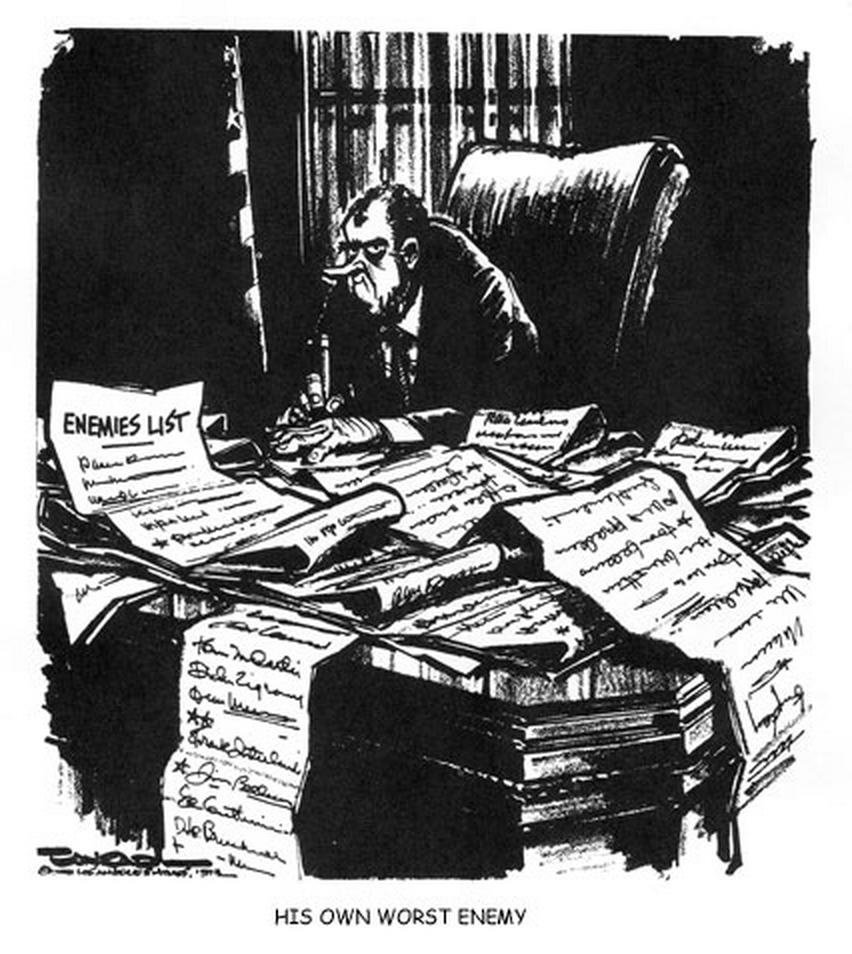
The Nixon “Enemies List” through the pen of legendary Los Angeles Times political cartoonist Paul Conrad.
Mr. Reigner’s top political heroes were South Dakota Senator George McGovern and Massachusetts Senator Ted Kennedy, both unsuccessful presidential candidates. He considered Richard M. Nixon the nation’s worst president—and earned a spot on one of of Nixon’s enemies lists.
“Not the first-string list, he would modestly point out, but the longer list that he got on by working for the McGovern campaign,” added Mr. McDiarmid.
Although he made rather a bad enemy of the president known to many as Tricky Dick, Mr. Reigner also had friends in high places. Among those who agreed to serve as job references for him were Vice President Walter Mondale and National Transportation Safety Board Chairman James B. King.
In 1986 Mr. Reigner founded his own writing and editing business, which he operated in suburban Maryland until his death. Over three decades, he edited hundreds of books, articles, academic papers, theses and dissertations, and wrote countless résumés.
“He was passionate about the use of the English language,” said Mr. McDiarmid. “He was knowledgeable and judicious about grammar and style, a hard-working, meticulous editor.”
Mr. Reigner was active in the independent writers movement in the national capital region, working to strengthen networking among freelance writers and editors and to help writers who faced financial or medical crises. He joined the Board of Directors of Washington Independent Writers (WIW), then the largest regional writers’ organization in the United States, in 1997. (WIW was renamed American Independent Writers in 2008, then dissolved 2011.)
When first elected to the WIW board of directors, he was named chairman of the WIW Technology Committee. In that position, he organized annual technology conferences at Washington’s University Club. He chaired technology panels at WIW’s annual Spring Writers Conference at the National Press Club and George Washington University.
Mr. Reigner received the Philip M. Stern Award, WIW’s highest honor, in 2000 “for his exceptional service in bringing WIW into the Electronic Age.” The award is named for the investigative journalist, author, early benefactor and founder of WIW.
A year later, in response to a move to dismantle the WIW main office, he ran for WIW president at the head of a “Save WIW” slate including well-known writers Paul Dickson, Beryl Benderly and others. Swept into office in a landslide, Mr. Reigner served two terms before retiring in 2003.
“For hundreds and hundreds of us, WIW was pivotal to building our careers, and Ken, by leading the ‘Save WIW’ ticket to resounding victory over a board that wanted to dismantle the downtown office, allowed it to continue prospering for an additional decade,” said Ms. Benderly.
As WIW president, Mr. Reigner worked with leaders of other writers’ groups and journalism organizations, particularly future National Press Club President Rick Dunham, to offer first-rate training programs for Washington area writers that focused on technology skills and job opportunities.
Ms. Benderly recalls—“vividly”—meeting Mr. Reigner at the National Press Club on a Friday night in April as dissatisfaction with the incumbent WIW board festered.
“The question arose of who would lead the campaign and take on the onerous and time-consuming role of the president who would have to rebuild the shattered organization,” she recalled. “We were all freelancers, so time was very important to us. Nobody came forward to do that.
“Eventually, Ken stepped forward to take on the burden. I don’t think that most people in the crowd knew him. I know that I didn’t. He was younger than most of us and hadn’t been that active. But that didn’t matter, because he seemed sincere in his outrage and his affection for [former staff director] Isolde [Chapin] and, mainly, he was willing to do it. So the ‘Save WIW’ slate was born that night.”
As a candidate, Mr. Reigner brought his organizational and messaging skills to a much smaller electorate.
“To the shock of our adversaries, who had absolutely no idea what was afoot, we put the plan into effect, completely blindsiding them,” said Ms. Benderly. “Ken, of course, knew what to do and relished the fight, as did we all. We raised money among ourselves to send a letter (by mail) to every member–about 1,500 as I recall. And we divided up the telephone directory—literally gave out pages to different people — and together our group and our supporters personally phoned every member to ask for their vote.
“When the votes were counted, we utterly crushed them, electing our entire slate by huge margins.”
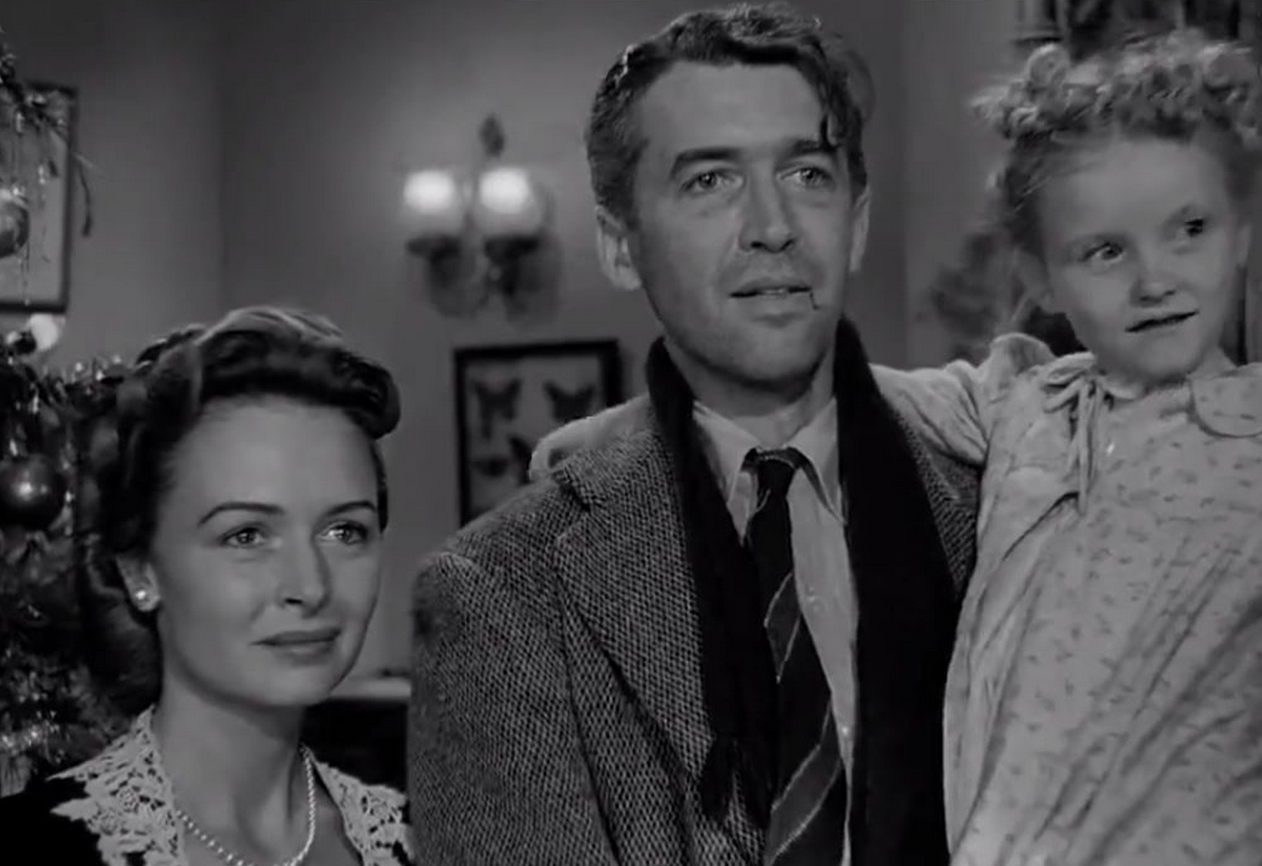
George Bailey’s in trouble. With WIW, like Frank Capra’s It’s a Wonderful Life, the good guys won in the end.
Ms. Benderly calls the “Save WIW” campaign her “Frank Capra moment,” like the scene from It’s a Wonderful Life in which the community unites to the cry of “George Bailey’s in trouble?”
“I keenly feel the loss of my partner in those glorious days of doing the right thing for our fellow writers simply because it was the right thing,” said Ms. Benderly. “Ken had such a big heart and because of it played an absolutely crucial role in WIW at an absolutely crucial time.”
As passionate as he was about politics, Mr. Reigner was equally passionate about words and music. His favorite entertainers—David Letterman, Jon Stewart and Garrison Keillor—were masters of intelligent conversation and piercing wit. His favorite authors—including the historians David McCullough and Doris Kearns Goodwin and the journalist and biographer David Maraniss—are masterful storytellers with an eye for detail.
His musical tastes ran the gamut from Rosemary Clooney to Janis Joplin. He loved theater and was a volunteer with the Ushers group in the Washington area. He also was proud to be a member of MENSA. For years, his Maryland license plate was “HIGH IQ.”
Always on the cutting edge of technology, Mr. Reigner was among the first Washingtonians to have a car phone, a cell phone, a personal computer, an email address and an Internet access account. But his first love was always radios.
“He was interested in computers but loved radio technology,” said Mr. McDiarmid. “He was the first person I have ever traveled with who pointed out different kinds of radio towers we passed. I gave him a radio towers calendar one year.”
Mr. Reigner died of natural causes on the 41st anniversary of Richard Nixon’s resignation speech. A year earlier, he and longtime friend Rick Dunham had toasted the 40th anniversary of Nixon’s disgrace.
Mr. Reigner is survived by Mr. McDiarmid, a resident of Falls Church, Va., and three sisters, Judith A. Crowe of York, Pa; Susan M. Justice of Seal Beach, Calif., and Beth Reigner of Garden City, Kan.
A memorial service is planned for later this year.
His ashes are likely to be interred alongside his parents in the suburbs of Detroit, a city he loved faithfully even after it hit hard times.
In lieu of flowers, Mr. Reigner’s family asks friends to consider donations to two organizations that provide financial support to freelance writers in financial crisis: the Author’s League Fund and the American Society of Journalists and Authors’ Writers Emergency Assistance Fund.
American Society of Journalists and Authors, Writers Emergency Assistance Fund
Donate online at http://www.asja.org/for-writers/weaf/weaf-donations.php or mail a check made out to the ASJA Charitable Trust to:
Writers Emergency Assistance Fund
IN CARE OF ASJA:
355 Lexington Ave, 15th Floor
New York, NY 10017-6603
or
The Authors League Fund
Donate online at http://www.authorsleaguefund.org/donate/ or make checks out to The Authors League Fund and mail to its office:
Attn: Isabel Howe, Executive Director
The Authors League Fund
31 East 32nd Street, 7th Floor
New York, NY 10016
– 30 –

 Rick Dunham Blog
Recent Comments