What’s in and what’s out in 2014
Posted: December 30, 2013 Filed under: Discovering China, Top Ten, U.S. politics | Tags: Barack Obama, Beijing, Beijing pollution, Beijing subway, Biking in Beijing, China, Chinese cuisine, New York Times, Obamacare, People's Daily, Ping pong, Pollution, Rush Limbaugh, Scrapple, Texas on the Potomac, Tiananmen, Tsinghua University, Xi'an 2 Comments
Moonrise over the ancient city wall, Xi’an.
Just a few things have changed in my life this year.
New job. New city. New country. New life.
Teaching journalism in China. It’s almost as much of a challenge as practicing journalism in America.
Here are some of the things that are “in” in my new life at Tsinghua University — and some of the old, familiar things I’ve left behind.
OUT: Texas on the Potomac
IN: Yankee on Tiananmen Square
OUT: Hikes on the National Mall
IN: Hikes on the Great Wall
OUT: Bike helmets
IN: Anti-pollution masks
OUT: Turn signals
IN: Chaos on the road
OUT: The second most congested commute in America
IN: The second most congested commute in the world
OUT: Considering something three days old as new
IN: Considering something three centuries old as new
OUT: Finnish saunas
IN: Chinese massages
OUT: American Chinese food
IN: Real Chinese food
OUT: DC Metro
IN: A subway system with trains every two minutes, polite employees and escalators that actually work
OUT: Dysfunctional democracy
IN: Democracy?
OUT: Taking your shoes off at airports
IN: VPNs to access Facebook, Twitter, YouTube and WordPress
OUT: Rush Limbaugh’s rants against Barack Obama
IN: Chinese media rants against Japanese Prime Minister Abe
OUT: The New York Times
IN: People’s Daily
OUT: The Abraham Lincoln statue at the Lincoln Memorial
IN: The terracotta warriors of Xi’an
OUT: Delicious Chesapeake crab cakes
IN: Delicious Chinese dumplings
OUT: Lobster rolls from food trucks
IN: Stinky tofu from street vendors
OUT: Scrapple
IN: Chicken feet, fish lips and duck brains
OUT: The Washington Redskins
IN: Mao’s little red book
OUT: Obscenely expensive Internet service
IN: Unreliable Internet, spotty WiFi and the Great Firewall of China
OUT: Obamacare
IN: Truly socialized medicine
OUT: Soccer moms
IN: Ping pong dads
OUT: 24/7 deadlines
IN: Monthlong breaks between semesters (We call them “district work periods”)
OUT: Suits and ties
IN: Casual Friday every day

The dress code is a lot more casual — even for a China Radio International appearance.
Texas political winners and losers of 2013
Posted: December 28, 2013 Filed under: Top Ten, U.S. politics | Tags: David Dewhurst, Domingo Garcia, Greg Abbott, Joaquin Castro, John Cornyn, Louie Gohmert, Marc Veasey, Meet the Press, Rick Perry, Steve Stockman, Tea Party, Ted Cruz, Texas, Texas Senate, United States Senate, Wendy Davis Leave a commentThe Texas political landscape has been transformed in 2013.
No, the state hasn’t gone from red to blue. But it’s gone from old to new.
Here are some of the politicians who have benefited — or suffered — from the transition:
Winners

Ted Cruz (Texas Tribune photo)
Ted Cruz
Began the year as a U.S. Senate newcomer. Ended the year as the leader of the national Tea Party movement.
John Cornyn
Began the year as an establishment Republican nervous about a 2014 Tea Party primary challenge. Ended the year with most leading conservative groups either on his side or on the sidelines.
Wendy Davis
Began the year as a junior member of a minority party in the Texas Senate. Ended the year as a national figure and a ballyhooed Democratic candidate for governor.
Greg Abbott
Began the year waiting for Rick Perry to decide what to do. Ended the year as a virtually unopposed Republican candidate for governor.
Joaquin Castro
Began the year as a House newcomer in the minority party. Ended the year as one of his party’s rising stars on Capitol Hill and a guest on Meet the Press. Oh, he got married, too.
Losers
Rick Perry
Began the year as a presidential longshot. Ended the year as a president longshot — and a lame duck governor.
David Dewhurst
Began the year as the most powerful person in the Texas Senate. Ended the year fighting for his political life in a re-election battle against stalwart conservatives.
Rick Perry’s UT Regents
Began the year trying to topple the university’s president and football coach. Ended the year an educational embarrassment and a political liability for the Texas Republican Party.
Louie Gohmert
Began the year as an off-the-wall right-wing congressman who talked about terror babies and presidential birth certificates. Ended the year looking downright boring compared to Steve Stockman.
Domingo Garcia
Began the year itching to end Fort Worth congressman Marc Veasey’s tenure after a single term. Ended the year on the sidelines as Veasey appears to be cruising to re-election.
Ten things I really miss living in China — and ten I definitely do not
Posted: November 24, 2013 Filed under: Dunham's Discourses, Top Ten, U.S. politics | Tags: Agnes Kneitz, Barbecue, Beijing, Cable TV, Caroline Ward, China, chocolate cake, CNN, Home Plate BBQ, Kennedy assassination, Media, Mengfei Chen, Midnight in Paris, National Press Club, New York, Philadelphia, Rush Limbaugh, Sara Balajthy, Texas politics, Trader Joe's, Troy Hernandez, U.S. Congress, Washington, Washington Redskins, Woody Allen 2 Comments
Birthday barbecue: Plates of tasty food and chocolate cake at Home Plate BBQ in Beijing (with Troy Hernandez, Agnes Kneitz, Sara Balajthy, Caroline Ward and Mengfei Chen)
It’s been nearly three months since I arrived in Beijing, and I’ve finally had my first attack of homesickness.
It started two weeks ago with a trip to a local Western market to pick up the fixings for macaroni and cheese (the real thing, not the Kraft version). It was followed by my birthday dinner of Texas BBQ and chocolate cake with peanut butter frosting. Then I broke down completely yesterday and went to Jenny Loo’s supermarket with my friend Eunice. My haul — a rare taste of Americana — included fresh bagels (“Montreal style”), feta cheese, olives, canned diced tomatoes for pasta sauce, fresh tortillas, tortillas chips, salsa, peanut butter and a Woody Allen movie.
A pretty pricey splurge, all told, except for the Woody Allen movie (“Midnight in Paris”), which cost 13 yuan, or $2.16.
I’m whipping up my famous linguini tonight with some of my big food purchase. But before I do, here’s a quick list of ten things I really miss after 11 weeks in China — and some that I decidedly do not.
What I miss:
1. My wife and family
2. The National Press Club
3. Live NHL hockey
4. Hummus
5. My good friends back home
6. Weekend trips to Philadelphia or New York
7. Trader Joe’s
8. Gossiping with my Texas political sources
9. Good wine at good prices
10. Target
What I Don’t Miss:
1. CNN
2. American cable news in general
3. The newspaper world I left behind
4. Cable TV
5. Congress
6. Driving
7. Texas BBQ (I’ve been surprised by the fine barbecue here.)
8. The Washington football team with the racist name
9. Rush Limbaugh and the vast right wing conspiracy
10. U.S. media coverage of the 50th anniversary of the Kennedy assassination
Top ten losers — and a few winners — in the DC debt ceiling debacle
Posted: October 16, 2013 Filed under: Dunham's Discourses, Top Ten, U.S. politics | Tags: Barack Obama, Beijing, C-SPAN, Harry Reid, Joe Biden, John Boehner, Mitch McConnell, Tea Party, Ted Cruz, U.S. Congress, U.S. economy, United States, Washington 1 Comment
We’re THIS close to a solution, folks.
As the newest American political analyst on Chinese national television, I’ve been asked to explain the U.S. government shutdown and default showdown.
It’s not easy.
How do you explain the farce that Washington has become? Lawmakers shutting down the government because of an issue not directly related to spending. Hostage-taking is for terrorists, not for Republicans.
International observers are even more baffled by the brinkmanship over the debt ceiling. Why, I am asked over and over, would congressional Republicans threaten the full faith and credit of the United States, risk a relapse into recession and jeopardize a very tenuous economic recovery around the world? Why would they, through their illogical enterprise, encourage other nations to replace the dollar as the global reserve currency, which will do nothing but create inflation at home, make borrowing more expensive for the American government and American consumers, and stifle foreign investment in the United States? And why is President Barack Obama incapable of rescuing the nation from the tar pit of Capitol Hill.
It’s a lose-lose proposition.
Are there any winners in the Washington wackiness? Not really, though there are some short-term gainers. Here’s my long list of losers and short list of winners in the continuing congressional catastrophe.
John Boehner
The House Speaker looks like a hostage being forced to read a script by his radical captors. He looks weary. He looks very, very sad.
Barack Obama
He looks weak.
House Republicans
They look extreme. Actually, they look beyond extreme. And incompetent.
The Tea Party
Did we mention extreme? The current situation is reminiscent of the Vietnam War-era saying, “We had to destroy the village in order to save it.”
Senate Republicans
They look weak, too, as the Tea Party tail continues to wag the Republican dog.
The Republican Party
The Grand Old Party is lurching toward the political cliff in the 2014 midterm elections. Its best asset: gerrymandered House districts. Its best ally: discombobulated Democrats.
Joe Biden
Who? Nonexistent.
The United States.
Forget partisan politics. Congress has made the U.S. an international laughingstock. The double showdown has led to grave global doubts about the reliability of the United States and the leadership skill (and power) of its president. So this will hurt the country for a long, long time and its president — whoever that may be, Democrat or Republican.
The U.S. economy
In the short run, thousands of Americans are without paychecks, tourism revenue has plunged and consumer confidence has taken a hit. Businesses have another reason to hold off on hiring. In the long run, interest rates will be higher and loans will be even harder to obtain for individual Americans and corporations alike. And they call Republicans the pro-growth party?
The global economy
The self-induced crisis in Washington has shaken global confidence in the United States If American lawmakers blunder into a default (still unimaginable from my distant vantage point), it would almost certain trigger an international recession as China, Japan, Brazil, the EU and other leading U.S. creditors take a massive hit. The consequences would be so severe that it’s not even worth contemplating.
The U.S. Congress wouldn’t do something so wantonly self-destructive, would they?
Would they?
Remember Smoot-Hawley? Call this modern-day version Cruz-Boehner.
“Winners”
Harry Reid and Mitch McConnell
There really are no winners in Washington, but the closest thing to it are the Senate leaders. Instead of acting like squabbling partisans, they are playing the role of sober cops coming to restore order after a frat party has descended into anarchy and drunken debauchery. Officers Reid and McConnell, your country needs you. Now.
Ted Cruz
In the short term, the freshman senator from Texas has become the hero of the ultraright, the face of Fox News, the Earl Grey of the Tea Party. In the long run, he will have to overcome the first impression of two-thirds of Americans (who know who he is) that he is a right-wing ideologue. Polls show that he’s poison among independent and swing voters outside of the Lone Star State.
House Democrats
They are only winners because House Republicans look so, so bad. The Dems haven’t won any awards for profiles in courage or bipartisan bridge building. Except another Bridge to Nowhere.
C-SPAN
Ratings are way, way up at the nation’s favorite cable channel for nerds and policy wonks. Heck, it’s the most bizarre reality show on television. And, unlike the Kardashians, it has real-world consequences.
China
The government in Beijing has won in two ways (so far). First, President Obama canceled his Asia trip, allowing first-year Chinese President Xi to be the star of the show at APEC. And China-bashing Washington Republicans have succeeded in making Beijing the victim of irresponsible fiscal policies in free-enterprise America that could lead to default. A bizarre lesson in capitalism.
The most prominent American political figures in the global media — and a dozen who get no respect
Posted: October 8, 2013 Filed under: Dunham's Discourses, Top Ten, U.S. politics | Tags: American politics, Barack Obama, China, Chuck Hagel, Eric Cantor, Fox News, Harry Reid, Hillary Clinton, Jack Lew, Jay Carney, Joe Biden, John Boehner, John Kerry, John McCain, Marco Rubio, Mitch McConnell, Nancy Pelosi, Obama, Rush Limbaugh, Sarah Palin, Sean Hannity, Ted Cruz, United States 1 Comment
President Obama at my last White House press conference in August. (Photo by Rick Dunham)
After covering the White House and the U.S. Congress for 29 years — and being inside the 24/7 news bubble — it’s fascinating to be, for the first time, on the outside looking in.
Here’s a new outsider’s perspective on which American politicians figure most prominently around the world, and which DC figures vanish from the media scene when you cross the Pacific.
America’s Face around the World
1. President Barack Obama
The president is the president. He gets global press on some stories that earn barely a ripple in America-centered domestic media.
2. Secretary of State John Kerry
He didn’t get elected president, but his stentorian voice is everywhere on international issues. He comes across as knowledgeable, poised and, well, diplomatic.
3. House Speaker John Boehner
The Ohio Republican is the scowling face of the opposition. His soundbites are almost all partisan and negative. Not much of an image to project.
4. Sen. Ted Cruz
The first-year lawmaker from Texas has exploded onto the international stage as the leader of America’s ultraconservatives, which the global media love to highlight. Even people who don’t understand the concept of a filibuster understand that Cruz is the man who shut down the federal government. And he’s not even president.
5. Treasury Secretary Jack Lew
The American media almost never cover the charismatically challenged Treasury Secretary. Most Americans know him as the man with the illegible signature. But he’s often on TV and Internet news reports around the world. He comes across as measured and authoritative.
6. Hillary Clinton
The former U.S. Secretary of State is treated as America’s president-in-waiting. She’s also covered like the leader of the hawkish wing of the Democratic Party, as opposed to the dove-ish Obama.
The Dead-to-the-World Dozen
1. Vice President Joe Biden
Never mentioned. Well, almost never.
2. Senate Republican Leader Mitch McConnell
Who is less important than the minority leader of a body that has been eclipsed by the hard-right Republicans in the other chamber?
3. House Democratic Leader Nancy Pelosi
Maybe the only person less important than the Senate Minority Leader is the House Minority Leader.
4. Senate Majority Leader Harry Reid
He only appears on international TV when he comes up with his sound-bite zingers tearing into the Republicans.
5. Sen. John McCain
A media darling in the U.S., his mavericky style doesn’t translate to an international audience.
6. Sarah Palin
The only thing people in Asia remember about 2008 Republican vice presidential nominee is the report in Game Change that she didn’t know the Korean peninsula was divided into two countries.
7. Rush Limbaugh, Sean Hannity and the Fox News crowd
They may get good ratings in the USofA, but they don’t exist outside of its borders. And that’s probably fine with them.
8. Sen. Marco Rubio
The Florida freshman’s mystique hasn’t stretched to Asia and Europe, only Latin America and South America.
9. House Majority Leader Eric Cantor
There’s only room for one face of the opposition on international TV, and that’s John Boehner, not his (occasionally) loyal deputy from Virginia.
10. Defense Secretary Chuck Hagel
Barack Obama and John Kerry speak for the U.S. on global issues. The Pentagon chief is a bit player on the international stage.
11. White House press secretary Jay Carney
President Obama’s spokesman, a ubiquituous presence on domestic media, makes only cameo appearances on media outlets outside the U.S.
12. The U.S. Trade Representative
Who is the U.S. trade rep anyway? There are lots of trade stories, but the U.S. Commerce Secretary and U.S. Trade Representative are never quoted. Only Obama or Kerry.
Ten ways appearing on TV in China is different than the United States
Posted: September 24, 2013 Filed under: Discovering China, Rick in the news, Top Ten, U.S. politics | Tags: Beijing subway, Biking in Beijing, CCTV, China, Dialogue, East Gate of Peking University subway station, media appearance, Rick in the news, United States 1 Comment
The logo of CCTV English’s current affairs program
I’ve just completed my debut on Chinese TV before what was probably the biggest audience in my 35-year journalism career.
I was a guest on the nightly news show called “Dialogue” on CCTV (China Central TV). It’s a half-hour program where policy experts sit down and debate — freely, in my case — important international issues. No yelling. No screaming.
That alone is a big change from my appearances on — and viewing of — American TV news.
Here are some other differences between being a guest on Chinese TV and American TV:
1. No limo to pick you up.
2. No make-up artist.
3. No green room.
4. All of the anchors know what they’re talking about.
5. All of the anchors speak perfect English.
6. In-depth discussion of international issues.
7. Thirty minutes. No commercial interruptions.
8. No interruptions at all — the host and other panelist let me finish each answer before responding themselves.
9. No limo to drive you home.
10. I rode my bike home from the East Gate of Peking University subway stop after finishing the show.
Rick’s Rules: Top ten tips for effective interviewing
Posted: September 15, 2013 Filed under: Journalism Training, Rick's Rules, Top Ten | Tags: George Clooney, Interviewing skills, Interviewing techniques, Interviews, Journalism Training, National Press Club, Rick's Rules, Top Ten 2 Comments
If you’re lucky enough to get an interview with George Clooney, don’t waste half of the time telling him about all of his movies that you’ve enjoyed.
I continue today with another edition of Rick’s Rules, my lists of professional development suggestions for journalism students and veteran journalists alike.
Feel free to email me with suggestions for future Rick’s Rules posts.
TOP TEN TIPS FOR EFFECTIVE INTERVIEWING
1. Prepare, prepare, prepare.
There is no substitute for adequate preparation — and no excuse for “winging it” in an interview. You should become an expert on the interview subject and the subject matter. If you show that you know your stuff, you are more likely to gain the respect and confidence of the interviewee.
2. Choreograph the interview in advance.
Plan out what you hope to accomplish and the series of questions that will get you from Point A to Point Z. Also plan out what you will do if the interviewee tries to hijack the interview. (See below.)
3. Listen.
A major mistake made by reporters is that they don’t pay attention to what the interviewee is saying; they just wait to ask the next question on their list. It’s very, very important to listen attentively. Your interview subject may tell you something that leads to a valuable new avenue of questioning.
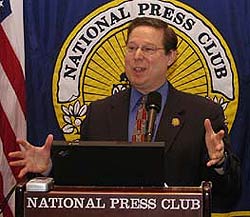
Lesson #9: Don’t talk too much.
4. Follow up.
Persistence usually pays off. If somebody tries to evade your question, try again. Depending on the situation, you can decide whether to rephrase the question or simply tell them that they haven’t answered the question. If your interview subject is evading the question, you want to let them know that you know that they aren’t answering.
5. Word your questions carefully.
You don’t want a “yes” or “no” answer, especially for audio or video. Ask a question in a manner designed to elicit a descriptive answer. It is embarrassing when you look at your notebook after an interview and you see that the answer you wrote down was “no” rather than “I didn’t do anything wrong.”
6. Know when to be the tiger and when to be the fox.
It’s important to gauge the personality of your interview subject and know when to be aggressive, when to be empathetic and when to admit your ignorance. Doing the right thing at the right time can pay off — big time. Doing the wrong thing can ruin an interview.
6. Don’t assume anything.
Ask Ms. Smith how to spell her name. It might be “Smythe.” Ask for job titles and spellings of home towns, spouses and employers’ names (if you are not certain). When possible, it’s good to double-check via a Google search to confirm on their personal or business web sites.
7. Know your subject material and don’t fake it.
You are supposed to be prepared. Remember that. But if you don’t know something, admit it. Don’t say that you’ve read a book — or a report, or an article — if you haven’t. If the interview subject believes you are fudging, it harms your credibility.
8. Don’t let the interview get hijacked.
When your interviewee says “that’s a good question, but the important point is….,” he or she is trying to change the subject and deliver a pre-packaged spin. Make sure to return as soon as possible to the questions you want to ask.
9. Don’t talk too much.
If you have a 15-minute interview, you want almost all of it to come from the mouth of your interview subject. Don’t go off on tangents or monologues. Don’t engage in too much chit chat before you get to your questions, unless you have plenty of time for the interview.
10. Appearances matter.
Look and sound professional. Don’t dress inappropriately or chew gum. Don’t smell of smoke or alcohol. It may sound obvious, but you’d be surprised how many reporters mess up their interview before uttering their first word.
Beijing by the numbers: Random observations from my first week in China
Posted: September 13, 2013 Filed under: Discovering China, Top Ten, Uncategorized | Tags: Beijing, Beijing pollution, Beijing subway, Biking in Beijing, Caroline Ward, Dallas Cowboys, Houston Texans, Jane Sasseen, Kentucky Fried Chicken, Nancy Pelosi, Pennsylvania, Philadelphia Eagles, Pollution, Tea Party, Ted Cruz, Texas A&M University, Texas on the Potomac, U.S. Congress, Washington Redskins Leave a comment
Everything at Tiananmen seems to be undergoing restoration — except for Chairman Mao
I’m not one of those often-wrong, never-in-doubt Americans who visits a city for a week and decides he knows everything about its history, culture and politics.
That having been said, I do have a few first impressions through the eyes of a China newbie. Here are some random observations of life in Beijing by the numbers:
7
Number of Beijingers wearing anti-pollution face masks
5
Number of Beijingers wearing bike helmets
0
Number of Beijingers who have used hand signals while riding bikes
2

Cornering the market on blondes in Beijing: with Caroline Ward (left) and Jane Sasseen (right)
Number of Beijingers holding a cell phone while biking in traffic
8
Number of blonde people sighted in Beijing
5
Number of blonde people sighted in Beijing who are not friends or students of mine
5
Number of European-origin people seen on the subway
0
Number of people speaking English on the subway
9
Number of Kentucky Fried Chicken restaurants seen around town
0
Number of people who have asked me about the Cowboys, Redskins, Eagles, Texans, Ted Cruz, the Tea Party, Mitch McConnell, Nancy Pelosi or Capitol Hill gridlock
1
Number of students who have asked me about the American government’s lies leading up to the invasion of Iraq
8
Number of universities in this section of northwest Beijing
3
Number of Texas on the Potomac alumni now living and working in Beijing
3
Number of people I’ve met who have worked or studied in Pennsylvania
1
Number of Texas Aggies I’ve run across. (Gig ’em, Caroline!)
Greetings from China: 5 pleasant discoveries and 5 things that might take some getting used to
Posted: September 9, 2013 Filed under: Discovering China, Dunham's Discourses, Top Ten | Tags: Beijing, China, Chinese food, food, parking, peanut butter, Peking Duck, traffic, Tsinghua University, Walmart 1 Comment
This is where I went hiking … for the history, the exercise, the fellowship and the fresh air.
The eagle has landed. I’ve been in Beijing for four days now — long enough to hike a remote section of the Great Wall, sample the best Peking Duck (Beijing Duck? Just plain roast duck?) of my life and explore every nook and cranny of one of the most beautiful college campuses in the world — but not quite long enough to get over jet lag.
Rather than write the traditional “first impressions” story, I’m going to share five of my pleasant discoveries in Beijing and an equal number of things that will take some time to get used to.
Pleasant discoveries

The campus is stunningly beautiful, an island of serenity in a bustling metropolis.
1. Tsinghua University is one of the most beautiful in the world. It’s made one of those top ten lists for beautiful campuses, and I can see why. From the magnificent gates to the marvelous and varied sculpture, from the breath-taking canals and lily ponds to the impressive architecture and ivy-covered walls, this is a fine environment for teaching and for learning.
2. The high quality of the faculty. They don’t call it the MIT of China for nothing. The professors here are among the best in the world. The journalism faculty is uniformly excellent. I hope to live up to their very high standards.
3. The high quality of the students. I could tell from the moment I began my new student orientation session last Friday morning. These students are the best and the brightest, not just from China but from around the world. They are smart and they are motivated.
4. I can get around town without too much problem. It is a problem that I don’t speak Chinese. (Yet.) But the Beijing subway — most of which was built for the 2008 Olympics — is modern, efficient, inexpensive and very easy to navigate. Crowded? That’s a given. There are more than 20 million people here in the capital.
5. I can communicate with the outside world. Yes, I heard all of the warnings about the Great Firewall of China. And all the blocked sites. The good news, at least at this point, is that I have been able to communicate with all of my old and new friends with only minor problems.

They say everything is bigger in Texas. It’s even bigger in Beijing. Here I am with one of the campus’ lions.
Things that might take some getting used to
1. A fifth-floor walk-up apartment. On the bright side, I’m getting a lot of aerobic exercise every day.
2. Cold showers for four days. Well, I finally have hot water. Actually, I’ve had it all along but haven’t known how to turn it on. You see, the instruction guide to my apartment is in Chinese and I’m linguistically challenged. It means I also couldn’t figure out how to use the satellite TV. Or the apartment internet. The take-away lesson: Keep taking those Mandarin lessons on the Mango app.
3. Can you believe the way people drive around here? Washington drivers are awful. Drivers in Rome are maniacs. Drivers in Naples view traffic signals as suggestions. Drivers in Beijing are all of that and more. U-turns in the middle of traffic. Left turns from the right lane. Turning right on red without stopping or even looking for pedestrians or bike riders.
And while you’re at it, watch out for the bikes coming at you every which way. And the pedestrians darting across highways and major thoroughfares in the middle of traffic.
4. The parking situation. People park any place they can find a space. Not a parking space. Any old space. They park on sidewalks. They park on pedestrian malls. They park where they want, when they want. Just get out of the way when the car is coming at you.
5. Peanut butter is hard to find. I love Chinese food. I could eat it almost every meal. But I am going through peanut butter withdrawal now. Yes, yes, I’ve been told that you can get peanut butter at Walmart and in European grocery stores in Beijing. But I haven’t gone on a scouting mission yet.
Top Ten: The ten most influential U.S. senators
Posted: September 1, 2013 Filed under: Journalism Training, Top Ten, U.S. politics | Tags: Bloomberg News, Bob Corker, Chuck Schumer, Congress, Dick Durbin, Harry Reid, Hillary Clinton, John Cornyn, John McCain, Lindsey Graham, Mitch McConnell, Phil Gramm, Rand Paul, Senate, Ted Cruz, The Bloomberg Way Leave a comment
Good advice from “The Bloomberg Way”
I’ve been reading the invaluable journalism handbook “The Bloomberg Way” as I prepare to start my new life as a professor at Tsinghua University in Beijing. One of the many must-remember pieces of advice for journalists (whether seasoned or student) is author Matt Winkler’s suggestion to draw up a “top ten” list of influential people on your beat.
In his chapter on preparation, Winkler instructs the reader to get to know those influential figures on her or his beat.
Since I have covered the U.S. Congress for the past 29 years, I have put together my own list of ten most influential members of the U.S. Senate — as an example for my students and as a discussion topic for my friends in Washington:
1. Minority Leader Mitch McConnell
The Kentucky senator has proven time after time that a minority senator able to command 41 votes can have more influence over the Senate’s agenda than the leader of its majority.
2. Arizona Sen. John McCain
President Obama’s favorite frenemy in the Senate is a key player in almost all legislation to emerge from the Senate — even if his maverick ways rankle colleagues.
3. Senate Majority Leader Harry Reid
The feisty Nevada senator controls the Senate’s calendar but not necessarily the outcome.
4. New York Sen. Chuck Schumer
He’s a liberal Democrat able to build partnerships with conservative Republicans. Effective and relentless.
5. Texas Sen. John Cornyn
The second-ranking Senate Republican, an articulate and telegenic lawmaker, is more likely than McConnell to be the public face of the not-so-loyal opposition.
6. Kentucky Sen. Rand Paul
it’s rare for a freshman senator to be one of the chamber’s most influential, but the first-term firebrand (and potential 2016 presidential candidate) is a key figure in both the Tea Party and Libertarian wings of the Republican Party.
7. Illinois Sen. Dick Durbin
Like Cornyn, the number two Senate Democrat is a smoother spokesman for his party than the top guy. He’s also a key player on immigration issues.
8. Tennessee Sen. Bob Corker
The former Chattanooga mayor has emerged as a pragmatic conservative and a get-it-done legislator in the mold of legendary Tennessee Sen. Howard Baker.
9. South Carolina Sen. Lindsey Graham
He might denounce Barack Obama and meet with the president on different issues on the same day. John McCain’s sidekick is a power in his own right.
10. Texas Sen. Ted Cruz
It is exceptionally rare that a first-year senator ranks in the upper echelon in the upper chamber (Hillary Clinton and Phil Gramm are the exceptions that prove the rule). The hard-line Houston conservative has made his mark with an unceasing assault on the Obama administration and a skillful alliance with conservative opinion leaders.

 Rick Dunham Blog
Recent Comments