An evening bike ride through Tian’anmen Square on June 3, 2014
Posted: June 4, 2014 Filed under: Discovering China | Tags: Beijing, Biking in Beijing, China, Facebook, Felicia Sonmez Leave a commentThis guest blog was written as a Facebook post by Felicia Sonmez, one of the best journalists in Beijing. Many thanks to Felicia for giving me permission to share it with you.
First you get a hunch you’re being followed. Then you think you must be crazy. Why would an old man on a bike be doing a thing like that, on a leafy Beijing street, on such a pleasant spring night?
Then you slow down, and so does he. You start up again and bike faster, and so does he. Finally he gets ahead of you and stops at a corner. You hesitate for a moment, then turn right, back toward the long road to the Square. And before you know it, he’s approaching you on your left side, and suddenly, he’s crashed into you.
“Sorry!” he says.
“What are you doing?” you ask, as he stumbles off his bike.
Rather than stick around to find out the answer, you hurry to get back on your bike and pedal away as fast as you can, without looking back.
Ordinarily, you might be worried about the chance of some stranger following you back to your house. But in this case, you’re almost relieved to get home. He probably works for the government. And they already know where you live.
It’s June 3, 2014, the eve of the 25th anniversary of the Tiananmen massacre, and also a year to the day since I moved back to Beijing. The visit last month from black-clad plainclothes security agents to our bureau — as well as most every foreign news outlet in Beijing — warning us not to do any newsgathering related to the anniversary has had several weeks to sink in. So have the various warnings that have come down from the Chinese foreign ministry.
Dozens of Chinese activists, rights lawyers, artists, journalists and others with even the most tenuous of links to Tiananmen have been detained over the past few months — enough to make it clear that any reporter would be foolish to think of heading down to the Square on June 3 or 4 and expect to get any reporting done, let alone avoid getting detained.
So, after a day spent in the office, I decided on a whim to hop on my bike and just go for an evening ride around town, to see what I could see. I left my recorder and notebook and home, bringing only my pocketbook, a deactivated smartphone I use for taking photos, and a few H&M shopping bags, which I threw in the basket of my bike.
I was only gone for an hour, and I wasn’t sure what I’d encounter.
I biked down Dongdan North Street until I got to East Chang’an Avenue, about four big blocks away from Tiananmen Square. Central Beijing usually has a fair police presence to begin with, but tonight felt different. Every police car or van that passed was silently flashing blue and red lights, as was every police box on the street, and officers were stationed at every main intersection. I must have passed more than 100 police over the course of my bike ride.
As I approached the corner, there was suddenly a lot of yelling. I looked on as four uniformed police officers dragged a young man across the street and toward the accordion gate that was blocking part of the bike lane.
About a dozen bikers waiting for the light to change watched as the police forced the man onto his knees and yelled at him. I couldn’t make out what the man had done wrong. But a woman with him was making a phone call, and one of the bikers next to me was recording the confrontation on his smartphone. I snapped a few photos, then turned onto Chang’an Avenue and kept biking to avoid causing a scene myself.
The police presence on Chang’an Avenue has been ramping up steadily over the past few weeks, with dogs and armed officers gradually being added to the mix. But tonight was unlike anything I’ve seen. Officers and police vehicles were stationed all along the giant east-west thoroughfare, which has seven lanes of traffic on each side. A few other bikers were riding along like me, including a few guys clad in racing gear and spandex (not like me). Even among those pro-looking riders, there was a palpable tension as they sped down the road under the officers’ watchful gaze.
I approached the Square. It was unlike any time I’ve ever seen it in the eight years since I first came to China. It’s normally a pretty festive place, teeming with tourists snapping photos, as well as a fair amount of police and vendors. That’s how it was two days ago, when I came by with some friends visiting from out of town.
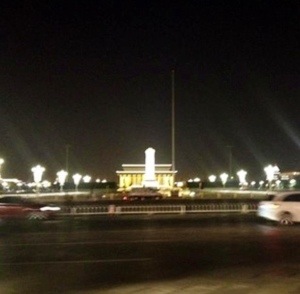
Tonight, it was completely empty. Not a single person was on the Square as I biked by, just a lone white police van parked in front of the Monument to the People’s Heroes, facing against traffic.
I recalled a conversation with a Beijing lawyer I met recently. Hundreds of thousands of police officers being mobilized across the city — for what? he asked. Just to ensure that a non-commemoration of a non-anniversary remains that way? He thought it was not only a waste, but a shameful one.
I thought, also, of a story the lawyer had told me about a friend of his. It was last year, and news had just broken of the arrest of venture capitalist Wang Gongquan. Wang was outspoken, but his surprising arrest was taken as a sign that the neither the wealthy nor the well-known would be spared in Beijing’s new crackdown on dissent.
Many were spooked. But perhaps that was the intention. Regardless, the day Wang’s arrest was reported, the lawyer said, was the day his friend decided to pack up and leave China.
I kept biking down Chang’an Avenue, slowing down to snap a few photos with my smartphone, and suddenly something struck me. In clearing out the Square and deploying thousands of police across the city to quell any potential disturbances, the authorities had created a spectacle — a memorial, almost — of their own. The vast emptiness at the heart of the capital was a manifestation of the void that has existed since 1989, and of which the world is reminded — though perhaps not quite so vividly — every June.
That was the thought I was planning to end my night on, until I turned north onto Nanchang Jie. I realized after a few minutes that the old man was following me, and he kept pace with me all the way up the street past the Zhongnanhai leadership compound, across the north end of the Forbidden City and to the corner of Beichizi Street.
The bizarre run-in with him, which echoed stories I’d heard from other reporters during sensitive periods in China, quickly turned my mood tonight from pensive to spooked. But perhaps that was the intention. I left before I could find out more — and before my phone, press card, or other belongings could potentially be snatched.
Movie night at Tsinghua: All the President’s Men
Posted: April 28, 2014 Filed under: Dunham's Discourses, Global Business Journalism, Journalism Training, U.S. politics | Tags: All the President's Men, American politics, Arthur Bremer, Bay of Pigs, Ben Bradlee, Bob Woodward, Bobby Kennedy, Carl Bernstein, Central High School, Chappaquiddick, China, CIA, CIA scandals, CREEP, Deep Throat, Democratic National Committee, Dustin Hoffman, Edmund Muskie, FBI, Fidel Castro, George McGovern, George Wallace, John F. Kennedy, John Mitchell, Katharine Graham, Kennedy assassination, Mark Felt, National Press Club, Pam Tobey, Pentagon Papers, Richard Nixon, Robert Redford, Teddy Kennedy, Tom Eagleton, Tsinghua University, Vietnam War, Washington Post, Watergate, White House 6 Comments
An exact replica of the Washington Post newsroom was built in Hollywood.
I held my first “movie night” for my Chinese journalism grad students on Sunday night. After considering a few journalism-related classics (you can probably guess which they are), I chose one that highlights the best of journalism: “All the President’s Men.” It’s not just a journalism movie, of course. It’s a great detective story and an all-around outstanding movie with crisp writing, superb acting and tension-inducing directing. “All the President’s Men” is important journalism history. It’s also important American history. But I discovered as I played the video that many of the uniquely American topics (and 1970s cultural norms) contained in the movie were difficult to understand for my Tsinghua University students. So, in addition to playing the movie with English subtitles (do you realize how quickly Dustin Hoffman speaks, with that nasal accent of his?), I occasionally paused the movie for verbal annotations. Here are some of the important points I needed to explain to the students:
What is that machine those actors are using? And who is Robert Redford?
Newspaper references:
- Why Ben Bradlee and many American journalists curse a lot
- How Ben Bradlee cursed on live national TV when I hosted him as a speaker at a National Press Club luncheon in 2005
- What kind of a boss Ben Bradlee was to my wife Pam Tobey
- Who Deep Throat was and what motivated him to leak
- Where the real Bob Woodward/Mark Felt garage was located
- How the movie’s producers created a replica of the Washington Post’s newsroom in Hollywood for the movie — and the Post newsroom looked exactly the same when my wife Pam began working there in 1984
- Why reporters call the targets of their stories for comment before publishing the story
- Why it was unethical when Carl Bernstein called the secretary in the Miami prosecutor’s office and pretended he was someone he was not
- Why Watergate motivated me (and the entire Woodstein generation) to become reporters
Cultural references:
- Why all of the editors in the Post’s budget meetings were men
- What a manual typewriter is (or was) and why they were all over the newsroom
- Why I took Mrs. Wolin’s typing class at Central High when everybody said that typing was for girls who wanted to become secretaries. (Of course, I wanted to learn to type so I could become a reporter.)
- Who Robert Redford and Dustin Hoffman are
- What the movie “Deep Throat” was about and why Woodward’s editor chose it as a code name for Mark Felt
- What John Mitchell was talking about when he said Katharine Graham would get a certain part of anatomy caught in a wringer
- What a “creep” means and why CREEP became the acronym for the Committee to Re-elect the President
- Why so many people smoked in public spaces
Political references:
- Who John F. Kennedy was and why his photo was in Democratic National Committee headquarters at the Watergate
- The fact that JFK and his brother Bobby were assassinated
- Why the Vietnam War was so unpopular and why American society was torn apart by war, riots and civil rights struggles
- What the Pentagon Papers are
- Richard Nixon’s unique definition of “plumbers”
- Who Daniel Ellsberg is and why he had a psychiatrist
- Who George Wallace and Arthur Bremer were and how Woodward worked with Felt on stories about the Wallace assassination attempt
- Who the anti-Castro Cubans in Miami are
- What the Bay of Pigs is/was
- The long and sordid history of CIA scandals
- Why there is tension between the FBI and the CIA
- Why Nixon hated and feared the Kennedys
- What Chappaquiddick was
- Why George McGovern asked Tom Eagleton to leave the ticket in ’72
- Why Nixon wanted to run against McGovern and not Ted Kennedy or Edmund Muskie
- Why Ed Muskie “cried” in New Hampshire
- What a “Canuck” is
Any suggestions for my next American journalism movie night?
Communicating from China: My five lifelines to the world
Posted: March 28, 2014 Filed under: Dunham's Discourses | Tags: Africa, China, email, Facebook, Iran, National Press Club, Pakistan, Skype, Texas, Thailand, Twitter, University of Pennsylvania, WeChat, Y2K 2 Comments
Facebook is my #1 communications tool.
One of the realities of living in China is that I must communicate differently with friends and family.
No more drinks at the National Press Club. Cell phone calls and individual emails are an inefficient way to communicate with a large number of people.
So how have my communications methods evolved? Here are my five most frequently used sources — dominated by social media.
1. Facebook.
It is my lifeline. It is how I share my life experiences and travelogue through words and images. It reaches a large audience instantaneously. And it is my primary method of chatting with friends in America and Europe. The only problem is that Facebook is blocked by the Chinese government, so it is necessary to climb the Great Firewall of China to use it. That occasionally means some unplanned days of Facebook blackout.
2. WeChat.
I had never heard of WeChat when I arrived in China. I knew that Weibo was the Chinese combination of Facebook and Twitter. But I quickly learned (taught by my students) that WeChat is far superior. Almost nobody uses email in China. WeChat is the preferred means of communicating. Its “moments” feature allows you to post updates and photos like Facebook. And group chats allow me to communicate instantaneously with everyone in my class — or with a group of friends heading to dinner. It’s great. And there’s nothing in the U.S. quite like it. Yet.
3. Twitter.
I hadn’t realized just how much drivel gets posted on Twitter until I left the United States. So many American political reporters post so many unimportant updates. So many politicians have nothing to say. So many words (140 characters at a time). So little value. When I came to China, I spent a month “unfollowing” people who offered little insight and added some of the best tweeters in China. Now, once again, Twitter has value to me. But it is no longer my number one social media source, like it was when I was a reporter in search of breaking news, 24/7.
4. Skype.
In the past week, I have Skyped with people in Africa, Iran, Pakistan, Malaysia, Thailand, Texas and France. It is the most cost-effective way for me to do my job as an academic. The quality is usually decent, though, as with everything in China, technology is hit or miss. But Skype allows me to see Pam regularly and to communicate with friends from America to Europe to Asia. I also spend less on long-distance calls today than I did as a college student at the University of Pennsylvania. Thank you, Skype.
5. Email.
My students don’t use email. My colleagues rarely use email. Email is a very “Y2K” thing. But I still use it. It’s the best way to send documents or memos. And it’s the best way to have lengthy exchanges. It’s the only “old-fashioned” way I communicate.
Funny thing: None of these five methods of communication had been invented when I started my career as a journalist. My, oh my, how technology has changed our world.
What every tourist should know before visiting China
Posted: January 3, 2014 Filed under: Discovering China, Dunham's Discourses | Tags: Beijing, Beijing pollution, Beijing subway, Biking in Beijing, China, Chinese food, National Museum, Summer Palace, the Forbidden City, tourism, traffic 2 Comments
- Check your cultural assumptions with your luggage. Life is different here. Don’t view life in China through the prism of your American or European experiences.
- Beijing is crowded and massive. Don’t be intimidated by the volume of traffic, the human gridlock or the seeming chaos on the streets and in the subways. You’ll get used to it.
- Don’t be afraid to jostle people. There is no sense of personal space here. Don’t take it personally if somebody elbows you or pushes you.
- There is no “walk right, pass left” etiquette here. People walk, bike or drive every which way. Cars DO NOT stop for pedestrians. Bikes DO NOT yield to pedestrians. In fact, nobody yields to anybody.
- Be decisive. Indecisive people get run over by bikes or cars or other pedestrians.
- Don’t get upset when people spit on the street at any time in any place. Spit happens in China.
- Do not expect Western-style toilets. Get used to holes in the ground. Don’t complain about it. Get used to it.
- If there is not a price listed on an item in a market, you are expected to bargain. At tourist-oriented markets (such as the Silk Market), the original prices might be ten times what is reasonable. Don’t be afraid to walk away. Even if you are interested in buying something. Negotiate aggressively. If you don’t want to negotiate, go to a regular store.
Food and drink

Be careful of street food, despite its enticing aroma.
- Don’t drink the water. Use bottled water, even for brushing your teeth.
- Be smart when it comes to street food. Some of it is delicious, but some of it is cooked in oil that is, simply put, poisonous. Unless a Beijinger vouches for a vendor, think twice before trying it. I’m afraid I speak from experience (some bad “stinky tofu”).
- Don’t be afraid to sample the rich variety of tasty regional cooking. Experiment beyond your comfort zone. Try things.
- Don’t expect Chinese food to be the same as American Chinese food. It’s better. Most of all, it’s different.
- Your drinks may be warm or hot when served at restaurants. This includes water, milk and juices. Chinese meals maintain a balance. Cold drinks can throw a hot meal off-balance. If you want cold water (or beer) make sure to order it “bing.”
Getting around
- Fewer people speak English than you might expect. It’s not like traveling in Europe. Younger people are more likely to understand English than older people. Some younger people may want to practice their English on you. Enjoy that – unless they’re trying to sell you something.
- Stay calm. If things go wrong, it won’t do any good to raise your voice. If people don’t understand you, it won’t help you to get agitated.
- Go to the most popular tourist attractions during the week. Earlier is better for places like the Forbidden City, the Summer Palace and the National Museum. They can get very crowded by midday, particularly on weekends or holidays.
- Use the subway. Because of surface traffic gridlock, the subway usually is the fastest way to get from Point A to Point B in Beijing. It is clean, efficient and cheap, in addition to being crowded. Relax and enjoy it.
- If you are taking a taxi, make sure somebody writes down your destination in advance IN CHINESE. Do not assume that you will be able to communicate with a cab driver by trying to pronounce a location in Mandarin. You’re probably mispronouncing it, or worse, saying something embarrassing that you don’t mean to say.
- Try to find a good street map in English (or at least in Pinyin).
- Use Google Maps online to get an idea of where you’re going and a sense of how far it is from the nearest subway stop.
- Make sure you have your passport with you when checking in to hotels or on plane or train journeys. Carry a photocopy of your passport ID page and your visa with you at all times.
Technology
- Get ready for slow, unreliable Internet and spotty WiFi. Do not expect that you will have working Internet 24/7. Internet and WiFi can stop working at any time.
- If you want to use Facebook or Twitter or YouTube or other blocked sites, you will need to have working VPN service before you arrive in China. (Email me if you need information on VPNs.) You also will need a VPN to access the New York Times, Bloomberg and some other news site.
- Bring an electrical converter or a couple of converters designed for use in China. (Not Hong Kong.)
- Bring a multiple-USB recharger for your electronic devices such as cameras and smartphones. You will need an electrical converter for this, along with one for your laptop.
- It may be very expensive to use your U.S. smartphone for calls and data. Check in advance before you leave the U.S. You can always disable the data and use it via WiFi. That’s what I do, which allows me to use email, social media and the Internet for free. I also use my U.S. cell phone for text messages with friends and family in the U.S. (at a cost of 50 cents per text sent and 5 cents per text received).
What to pack
- Dress in layers. Be ready for wind gusts.
- Bring disposable 3M anti-pollution masks. They aren’t very expensive and they can make your life more enjoyable on dangerously polluted days. Don’t be self-conscious about using masks. It’s for your own health.
- Bring toilet paper, napkins, tissues and hand sanitizer. You often will not find these products in public places.
- Make sure you have plenty of prescription medicine and vitamins. It will be hard to find, if you need it, and it may be expensive and questionable in quality.
- Make sure you bring extra medication to combat stomach ailments and flu-liked symptoms such as Pepto Bismol, cold medicine, DayQuil and NyQuil.
- Check in with your credit card companies and banks before you leave to let them know you will be making purchases in China.
Feel free to offer suggestions to make this guide more useful. I will update it with your ideas.
Enjoy China!
What’s in and what’s out in 2014
Posted: December 30, 2013 Filed under: Discovering China, Top Ten, U.S. politics | Tags: Barack Obama, Beijing, Beijing pollution, Beijing subway, Biking in Beijing, China, Chinese cuisine, New York Times, Obamacare, People's Daily, Ping pong, Pollution, Rush Limbaugh, Scrapple, Texas on the Potomac, Tiananmen, Tsinghua University, Xi'an 2 Comments
Moonrise over the ancient city wall, Xi’an.
Just a few things have changed in my life this year.
New job. New city. New country. New life.
Teaching journalism in China. It’s almost as much of a challenge as practicing journalism in America.
Here are some of the things that are “in” in my new life at Tsinghua University — and some of the old, familiar things I’ve left behind.
OUT: Texas on the Potomac
IN: Yankee on Tiananmen Square
OUT: Hikes on the National Mall
IN: Hikes on the Great Wall
OUT: Bike helmets
IN: Anti-pollution masks
OUT: Turn signals
IN: Chaos on the road
OUT: The second most congested commute in America
IN: The second most congested commute in the world
OUT: Considering something three days old as new
IN: Considering something three centuries old as new
OUT: Finnish saunas
IN: Chinese massages
OUT: American Chinese food
IN: Real Chinese food
OUT: DC Metro
IN: A subway system with trains every two minutes, polite employees and escalators that actually work
OUT: Dysfunctional democracy
IN: Democracy?
OUT: Taking your shoes off at airports
IN: VPNs to access Facebook, Twitter, YouTube and WordPress
OUT: Rush Limbaugh’s rants against Barack Obama
IN: Chinese media rants against Japanese Prime Minister Abe
OUT: The New York Times
IN: People’s Daily
OUT: The Abraham Lincoln statue at the Lincoln Memorial
IN: The terracotta warriors of Xi’an
OUT: Delicious Chesapeake crab cakes
IN: Delicious Chinese dumplings
OUT: Lobster rolls from food trucks
IN: Stinky tofu from street vendors
OUT: Scrapple
IN: Chicken feet, fish lips and duck brains
OUT: The Washington Redskins
IN: Mao’s little red book
OUT: Obscenely expensive Internet service
IN: Unreliable Internet, spotty WiFi and the Great Firewall of China
OUT: Obamacare
IN: Truly socialized medicine
OUT: Soccer moms
IN: Ping pong dads
OUT: 24/7 deadlines
IN: Monthlong breaks between semesters (We call them “district work periods”)
OUT: Suits and ties
IN: Casual Friday every day

The dress code is a lot more casual — even for a China Radio International appearance.
How living in China has made me a better person
Posted: December 28, 2013 Filed under: Dunham's Discourses | Tags: Beijing, Beijing pollution, Beijing subway, China, Hearst Newspapers, Houston Chronicle, Joe Biden, Naomi Tumarkin, National Press Club, Pollution, Tsinghua University 2 Comments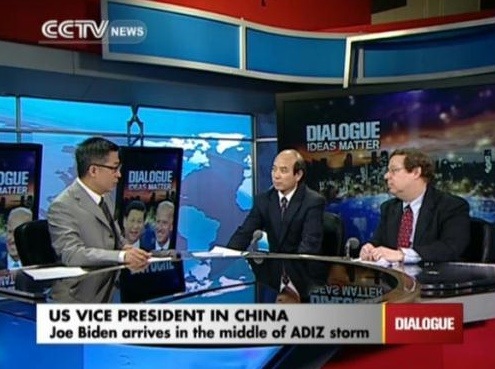
Appearance #7 on CCTV. I’m a big fan of the “Dialogue” program.
My grandmother Naomi and I had a 4-decade-long debate over human nature. Having survived Stalin’s Russia, McCarthy’s America, the Depression and deprivation, she passionately insisted that people don’t change as they age, they only become more like they are (or were). I, on the other hand, a child of the Baby Boom who had evolved from the transistor radio to the smart phone, argued that people can grow or change, for better or for worse.
Our dialogue did not end until Grandmom Naomi’s death three years ago just a few years shy of 100.
I now want to claim victory — at least from personal experience — although I can still hear her arguing with me for being naive and idealistic.
My first semester at Tsinghua University in Beijing has given me plenty of time to contemplate life. After all, I am living alone for the first time in 30 years in a campus apartment, the only English speaker in my building. I chucked my job at the Houston Chronicle for a great leap into the unknown in a country I had never visited.
As I await my graduate students’ final multimedia journalism projects, I can reflect on how living in China has changed me. And it has. Mostly, I hope, for the better.
The biggest change in me is that I have become more accepting of the vagaries of life. In China, you are either patient or you go mad. Internet, WiFi, hot water, heat, electricity: none can be taken for granted at any moment. If you are brave enough to travel on surface roads, you have to expect unexpected delays. You have to let go of the things you can’t control. That’s a big change for me.
You also have to be decisive … or die. (As Joe Biden would say, “literally” die.) Bicyclists pedal every which way. Near misses with another bike … or a pedestrian … or a car … are everyday occurrences. If you don’t push your way out of the crowded subway car, you miss your stop. Don’t think. Act. All in all, I like that philosophy.

I have learned so much from students in China. Here I am in Xi’an with Lu LAN and Jane Sasseen.
At the same time, I feel I have become a lot less materialistic. Americans like to collect things. I like to collect things. Everyone who knows me knows how many things I have collected. In China, I live in a spartan apartment with nothing on the walls, a pot, a pan and enough clothing for ten days. I feel oddly liberated. I realize that I don’t need “things” to make me happy. I need to do things that make me happy. And I have discovered that spending time with friends makes me a lot happier than spending time with “things.”
My professional makeover — new occupation in a new land — also has allowed me to evolve into a different kind of leader. As president of the National Press Club and Washington bureau chief for the Houston Chronicle and Hearst Newspapers, I led by example and governed by consensus. That wasn’t always the formula for success — or effective management — I learned. Too many times, people mistook collegiality for weakness.
Starting over in China, I realized the importance of being a strong, focused, disciplined leader. No more “player-coach.” I hope I have earned the right to be an authority figure both from my knowledge of my subject and my post at the university. Whatever I do in years to come, my time at Tsinghua will have shaped me as a leader.
I’ve also become much more of an environmentalist. Not in the sense of political activism. But in the sense of appreciating clean air, clean water and cooking oil that doesn’t make you sick. It’s a bit spooky to travel around your (new) hometown wearing an anti-particulate mask by 3M. It’s disconcerting to have a thin layer of toxic dust on your bicycle seat in the morning. This is what can happen to the world if we don’t do more to reduce carbon emissions and create green technology — now.
And that brings me to my final thought about the future. My journalism students have made me even more optimistic about the future. After all, they are preparing to enter a business with an uncertain future in a nation where the future of journalism is quite uncertain. But they are some of the smartest young people I’ve ever worked with, and they have a breadth of knowledge and a drive to do well (and do good) that makes me think that they can change the world.
I hope so.
They already have changed me.
Ten things I really miss living in China — and ten I definitely do not
Posted: November 24, 2013 Filed under: Dunham's Discourses, Top Ten, U.S. politics | Tags: Agnes Kneitz, Barbecue, Beijing, Cable TV, Caroline Ward, China, chocolate cake, CNN, Home Plate BBQ, Kennedy assassination, Media, Mengfei Chen, Midnight in Paris, National Press Club, New York, Philadelphia, Rush Limbaugh, Sara Balajthy, Texas politics, Trader Joe's, Troy Hernandez, U.S. Congress, Washington, Washington Redskins, Woody Allen 2 Comments
Birthday barbecue: Plates of tasty food and chocolate cake at Home Plate BBQ in Beijing (with Troy Hernandez, Agnes Kneitz, Sara Balajthy, Caroline Ward and Mengfei Chen)
It’s been nearly three months since I arrived in Beijing, and I’ve finally had my first attack of homesickness.
It started two weeks ago with a trip to a local Western market to pick up the fixings for macaroni and cheese (the real thing, not the Kraft version). It was followed by my birthday dinner of Texas BBQ and chocolate cake with peanut butter frosting. Then I broke down completely yesterday and went to Jenny Loo’s supermarket with my friend Eunice. My haul — a rare taste of Americana — included fresh bagels (“Montreal style”), feta cheese, olives, canned diced tomatoes for pasta sauce, fresh tortillas, tortillas chips, salsa, peanut butter and a Woody Allen movie.
A pretty pricey splurge, all told, except for the Woody Allen movie (“Midnight in Paris”), which cost 13 yuan, or $2.16.
I’m whipping up my famous linguini tonight with some of my big food purchase. But before I do, here’s a quick list of ten things I really miss after 11 weeks in China — and some that I decidedly do not.
What I miss:
1. My wife and family
2. The National Press Club
3. Live NHL hockey
4. Hummus
5. My good friends back home
6. Weekend trips to Philadelphia or New York
7. Trader Joe’s
8. Gossiping with my Texas political sources
9. Good wine at good prices
10. Target
What I Don’t Miss:
1. CNN
2. American cable news in general
3. The newspaper world I left behind
4. Cable TV
5. Congress
6. Driving
7. Texas BBQ (I’ve been surprised by the fine barbecue here.)
8. The Washington football team with the racist name
9. Rush Limbaugh and the vast right wing conspiracy
10. U.S. media coverage of the 50th anniversary of the Kennedy assassination
Want the latest analysis of U.S. politics? In China, I’m your guy.
Posted: October 12, 2013 Filed under: Rick in the news, U.S. politics | Tags: Asia Pacific, Asia-Pacific Economic Cooperation, Barack Obama, Beijing, CCTV, China, China Central Television, Dialogue, Global Business Journalism, global economy, media appearance, Tian Wei, Tsinghua University, U.S. economy, United States Leave a comment
Appearance #2.
I didn’t come to China to be a talking head.
I was thrilled to join the faculty of Tsinghua University this September to teach multimedia journalism and co-direct the Global Business Journalism program. The TV gig has been an unexpected pleasure.
Four times during my first month in Beijing, I’ve been called upon to analyze American economic, diplomatic and political issues for China Central Television’s English-language news show “Dialogue.” The show is blessed with one of the smartest hosts in global TV, Tian Wei, and allows guests to engage in an in-depth dialogue on important international issues.
No yelling. No screaming. Instead, viewers watch a briskly paced discussion with smart questions.
In case you missed my appearances, here are links to the four shows. (I tried to embed the videos from the CCTV web site but WordPress is acting finnicky.
The first show is a discussion of the emerging U.S.-China “major power relationship” in diplomacy. The second is a review of the United Nations resolution on Syria. The third focuses on the Asia Pacific economic summit (APEC) skipped by President Obama because of the government shutdown in DC. And the fourth was — guess what? — about the government shutdown itself and its impact on America, America’s place in the world, and the U.S. and global economies.
You may have better things to do than watching me talk for four hours. But in case you want to take a look … enjoy!
9/24/13
DIRECT LINK: http://english.cntv.cn/program/dialogue/20130925/100634.shtml
9/28/13
DIRECT LINK: http://english.cntv.cn/program/dialogue/20130929/100452.shtml
10/7/13
DIRECT LINK: http://english.cntv.cn/program/dialogue/20131008/100695.shtml
10/10/13
DIRECT LINK: http://english.cntv.cn/program/dialogue/20131011/100593.shtml
The most prominent American political figures in the global media — and a dozen who get no respect
Posted: October 8, 2013 Filed under: Dunham's Discourses, Top Ten, U.S. politics | Tags: American politics, Barack Obama, China, Chuck Hagel, Eric Cantor, Fox News, Harry Reid, Hillary Clinton, Jack Lew, Jay Carney, Joe Biden, John Boehner, John Kerry, John McCain, Marco Rubio, Mitch McConnell, Nancy Pelosi, Obama, Rush Limbaugh, Sarah Palin, Sean Hannity, Ted Cruz, United States 1 Comment
President Obama at my last White House press conference in August. (Photo by Rick Dunham)
After covering the White House and the U.S. Congress for 29 years — and being inside the 24/7 news bubble — it’s fascinating to be, for the first time, on the outside looking in.
Here’s a new outsider’s perspective on which American politicians figure most prominently around the world, and which DC figures vanish from the media scene when you cross the Pacific.
America’s Face around the World
1. President Barack Obama
The president is the president. He gets global press on some stories that earn barely a ripple in America-centered domestic media.
2. Secretary of State John Kerry
He didn’t get elected president, but his stentorian voice is everywhere on international issues. He comes across as knowledgeable, poised and, well, diplomatic.
3. House Speaker John Boehner
The Ohio Republican is the scowling face of the opposition. His soundbites are almost all partisan and negative. Not much of an image to project.
4. Sen. Ted Cruz
The first-year lawmaker from Texas has exploded onto the international stage as the leader of America’s ultraconservatives, which the global media love to highlight. Even people who don’t understand the concept of a filibuster understand that Cruz is the man who shut down the federal government. And he’s not even president.
5. Treasury Secretary Jack Lew
The American media almost never cover the charismatically challenged Treasury Secretary. Most Americans know him as the man with the illegible signature. But he’s often on TV and Internet news reports around the world. He comes across as measured and authoritative.
6. Hillary Clinton
The former U.S. Secretary of State is treated as America’s president-in-waiting. She’s also covered like the leader of the hawkish wing of the Democratic Party, as opposed to the dove-ish Obama.
The Dead-to-the-World Dozen
1. Vice President Joe Biden
Never mentioned. Well, almost never.
2. Senate Republican Leader Mitch McConnell
Who is less important than the minority leader of a body that has been eclipsed by the hard-right Republicans in the other chamber?
3. House Democratic Leader Nancy Pelosi
Maybe the only person less important than the Senate Minority Leader is the House Minority Leader.
4. Senate Majority Leader Harry Reid
He only appears on international TV when he comes up with his sound-bite zingers tearing into the Republicans.
5. Sen. John McCain
A media darling in the U.S., his mavericky style doesn’t translate to an international audience.
6. Sarah Palin
The only thing people in Asia remember about 2008 Republican vice presidential nominee is the report in Game Change that she didn’t know the Korean peninsula was divided into two countries.
7. Rush Limbaugh, Sean Hannity and the Fox News crowd
They may get good ratings in the USofA, but they don’t exist outside of its borders. And that’s probably fine with them.
8. Sen. Marco Rubio
The Florida freshman’s mystique hasn’t stretched to Asia and Europe, only Latin America and South America.
9. House Majority Leader Eric Cantor
There’s only room for one face of the opposition on international TV, and that’s John Boehner, not his (occasionally) loyal deputy from Virginia.
10. Defense Secretary Chuck Hagel
Barack Obama and John Kerry speak for the U.S. on global issues. The Pentagon chief is a bit player on the international stage.
11. White House press secretary Jay Carney
President Obama’s spokesman, a ubiquituous presence on domestic media, makes only cameo appearances on media outlets outside the U.S.
12. The U.S. Trade Representative
Who is the U.S. trade rep anyway? There are lots of trade stories, but the U.S. Commerce Secretary and U.S. Trade Representative are never quoted. Only Obama or Kerry.
My local Beijing Walmart isn’t like any you’ve ever visited in the USA
Posted: October 2, 2013 Filed under: Discovering China | Tags: beer, Beijing, Beijing subway, Biking in Beijing, China, Colgate, Crest, Egg Foo Young, Laughing Cow Cheese, Scarlett Caterpillar Fungus, Tsinghua University, United States, Walmart, Wudaokou Leave a comment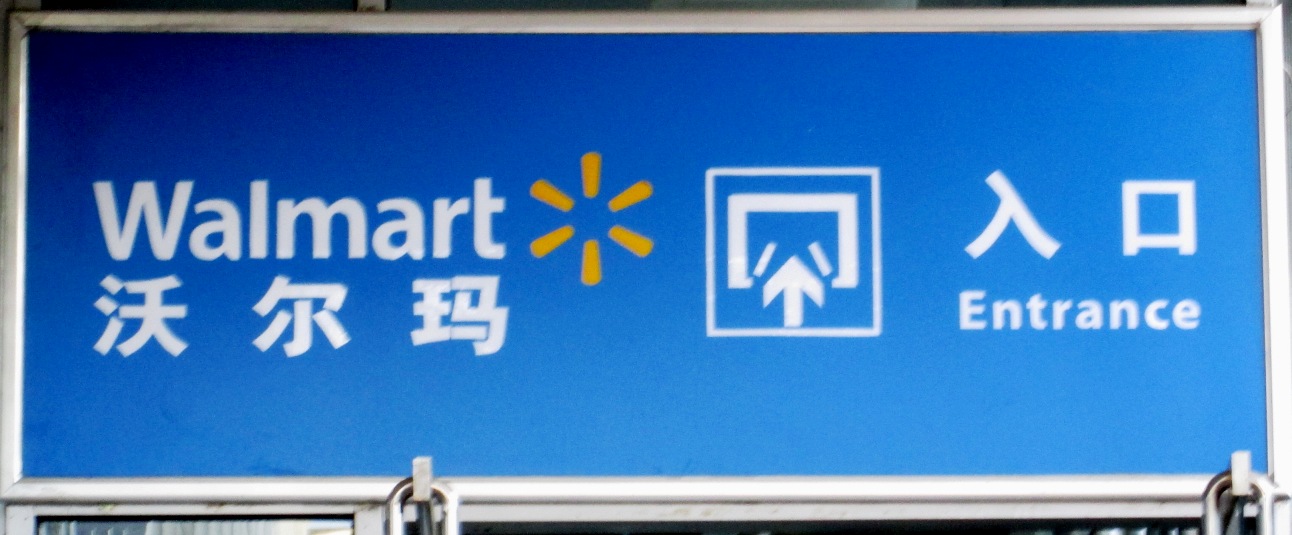
You are leaving the Beijing subway and nearing the entrance to Walmart.
I had this vision in my mind of what the Beijing Walmart would look like.
Elderly person at the front door welcoming you to the store. Wide aisles. Bright lighting. A little bit of Middle America in the middle of China’s capital.
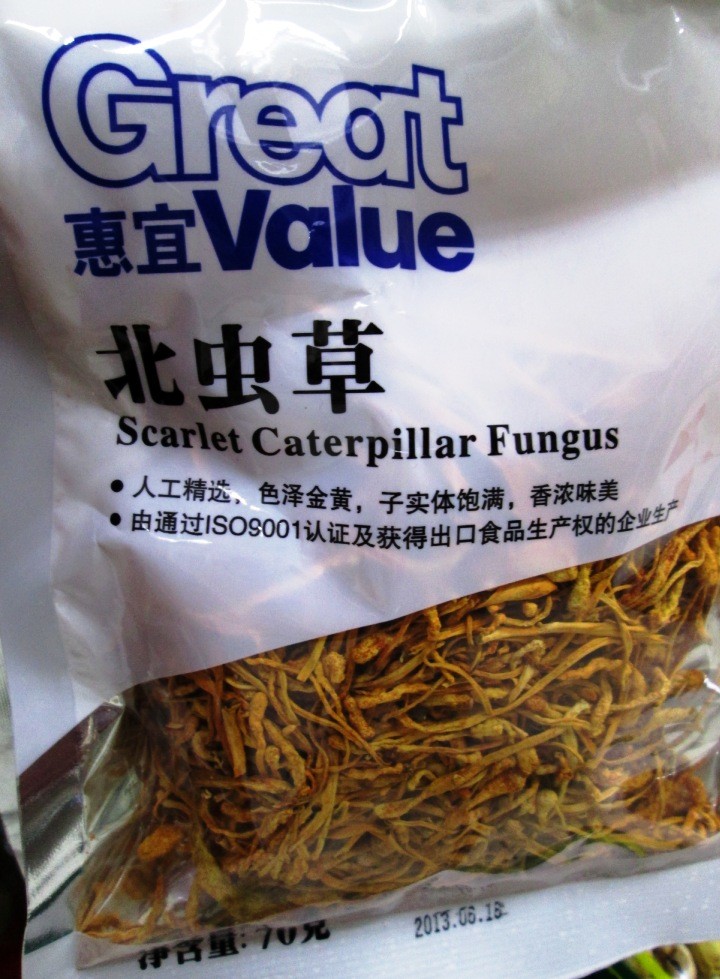
Definitely not on sale in U.S. Walmarts: Scarlet Caterpillar Fungus.
But no…
My local Haidan district Walmart, just one subway stop south of Tsinghua University’s Wudaokou subway station, is a strange sort of American-Chinese hybrid. The Egg Foo Young of Chinese retailing.
First of all, there is no greeter. There isn’t even a front door, just those semi-transparent plastic flaps that substitute for doors all over China.
The store itself doesn’t resemble any Walmart in the USA. It looks more like your local dollar store. On steroids. Three floors of crowded bargains, from washing machines and treadmills to live turtles (not to bring home as pets).
What’s completely different is the product selection. You can buy Crest and Colgate and Laughing Cow cheese, but not much else that you’d buy in the American big box.
When’s the last time you saw the Walmart “Great Value” brand bag of Scarlet Caterpillar Fungus in the USA? Or Marinated Duck Gizzard? Or Prickly Ash Powder? Or Purple Sweet Potato snacks? Or Pineapple-flavored Beer? Or Apple Vinegar Drink?
The list goes on — check it out in my slide show.
I ended up on a shopping spree that cost me more than $40 in yuan. Doesn’t sound like much, does it? Well, think of it this way: That’s the cost of about 25 meals on campus. Or three months of cell phone service. I think I’ve stocked my apartment for a month with everything from loose Chinese tea and two kinds of tofu to, yes, purple sweet potato snacking pieces.
My most expensive purchase was a living room rug for the equivalent of $13. The second most costly purchases was imported almonds (for hiking, of course), at about $4.
My shopping journey took four hours, most of it pure entertainment. After all, how many of you can say that you carried a rug in a backpack while you rode a bicycle home from the subway while balancing two bags of groceries?

 Rick Dunham Blog
Recent Comments