Beijing by the numbers: Random observations from my first week in China
Posted: September 13, 2013 Filed under: Discovering China, Top Ten, Uncategorized | Tags: Beijing, Beijing pollution, Beijing subway, Biking in Beijing, Caroline Ward, Dallas Cowboys, Houston Texans, Jane Sasseen, Kentucky Fried Chicken, Nancy Pelosi, Pennsylvania, Philadelphia Eagles, Pollution, Tea Party, Ted Cruz, Texas A&M University, Texas on the Potomac, U.S. Congress, Washington Redskins Leave a comment
Everything at Tiananmen seems to be undergoing restoration — except for Chairman Mao
I’m not one of those often-wrong, never-in-doubt Americans who visits a city for a week and decides he knows everything about its history, culture and politics.
That having been said, I do have a few first impressions through the eyes of a China newbie. Here are some random observations of life in Beijing by the numbers:
7
Number of Beijingers wearing anti-pollution face masks
5
Number of Beijingers wearing bike helmets
0
Number of Beijingers who have used hand signals while riding bikes
2

Cornering the market on blondes in Beijing: with Caroline Ward (left) and Jane Sasseen (right)
Number of Beijingers holding a cell phone while biking in traffic
8
Number of blonde people sighted in Beijing
5
Number of blonde people sighted in Beijing who are not friends or students of mine
5
Number of European-origin people seen on the subway
0
Number of people speaking English on the subway
9
Number of Kentucky Fried Chicken restaurants seen around town
0
Number of people who have asked me about the Cowboys, Redskins, Eagles, Texans, Ted Cruz, the Tea Party, Mitch McConnell, Nancy Pelosi or Capitol Hill gridlock
1
Number of students who have asked me about the American government’s lies leading up to the invasion of Iraq
8
Number of universities in this section of northwest Beijing
3
Number of Texas on the Potomac alumni now living and working in Beijing
3
Number of people I’ve met who have worked or studied in Pennsylvania
1
Number of Texas Aggies I’ve run across. (Gig ’em, Caroline!)
Greetings from China: 5 pleasant discoveries and 5 things that might take some getting used to
Posted: September 9, 2013 Filed under: Discovering China, Dunham's Discourses, Top Ten | Tags: Beijing, China, Chinese food, food, parking, peanut butter, Peking Duck, traffic, Tsinghua University, Walmart 1 Comment
This is where I went hiking … for the history, the exercise, the fellowship and the fresh air.
The eagle has landed. I’ve been in Beijing for four days now — long enough to hike a remote section of the Great Wall, sample the best Peking Duck (Beijing Duck? Just plain roast duck?) of my life and explore every nook and cranny of one of the most beautiful college campuses in the world — but not quite long enough to get over jet lag.
Rather than write the traditional “first impressions” story, I’m going to share five of my pleasant discoveries in Beijing and an equal number of things that will take some time to get used to.
Pleasant discoveries

The campus is stunningly beautiful, an island of serenity in a bustling metropolis.
1. Tsinghua University is one of the most beautiful in the world. It’s made one of those top ten lists for beautiful campuses, and I can see why. From the magnificent gates to the marvelous and varied sculpture, from the breath-taking canals and lily ponds to the impressive architecture and ivy-covered walls, this is a fine environment for teaching and for learning.
2. The high quality of the faculty. They don’t call it the MIT of China for nothing. The professors here are among the best in the world. The journalism faculty is uniformly excellent. I hope to live up to their very high standards.
3. The high quality of the students. I could tell from the moment I began my new student orientation session last Friday morning. These students are the best and the brightest, not just from China but from around the world. They are smart and they are motivated.
4. I can get around town without too much problem. It is a problem that I don’t speak Chinese. (Yet.) But the Beijing subway — most of which was built for the 2008 Olympics — is modern, efficient, inexpensive and very easy to navigate. Crowded? That’s a given. There are more than 20 million people here in the capital.
5. I can communicate with the outside world. Yes, I heard all of the warnings about the Great Firewall of China. And all the blocked sites. The good news, at least at this point, is that I have been able to communicate with all of my old and new friends with only minor problems.

They say everything is bigger in Texas. It’s even bigger in Beijing. Here I am with one of the campus’ lions.
Things that might take some getting used to
1. A fifth-floor walk-up apartment. On the bright side, I’m getting a lot of aerobic exercise every day.
2. Cold showers for four days. Well, I finally have hot water. Actually, I’ve had it all along but haven’t known how to turn it on. You see, the instruction guide to my apartment is in Chinese and I’m linguistically challenged. It means I also couldn’t figure out how to use the satellite TV. Or the apartment internet. The take-away lesson: Keep taking those Mandarin lessons on the Mango app.
3. Can you believe the way people drive around here? Washington drivers are awful. Drivers in Rome are maniacs. Drivers in Naples view traffic signals as suggestions. Drivers in Beijing are all of that and more. U-turns in the middle of traffic. Left turns from the right lane. Turning right on red without stopping or even looking for pedestrians or bike riders.
And while you’re at it, watch out for the bikes coming at you every which way. And the pedestrians darting across highways and major thoroughfares in the middle of traffic.
4. The parking situation. People park any place they can find a space. Not a parking space. Any old space. They park on sidewalks. They park on pedestrian malls. They park where they want, when they want. Just get out of the way when the car is coming at you.
5. Peanut butter is hard to find. I love Chinese food. I could eat it almost every meal. But I am going through peanut butter withdrawal now. Yes, yes, I’ve been told that you can get peanut butter at Walmart and in European grocery stores in Beijing. But I haven’t gone on a scouting mission yet.
My final White House pool report: Inside the Cabinet Room as President Obama meets with congressional leaders on Syria
Posted: September 3, 2013 Filed under: Rick in the news, U.S. politics | Tags: Barack Obama, Joe Biden, John Boehner, John Cornyn, John Kerry, Nancy Pelosi, President Obama Leave a comment
President Obama meets with a bipartisan delegation of congressional leaders. (White House pool photo by Rick Dunham)
On my final day at the Houston Chronicle, I was fortunate enough to have White House pool duty, where I witnessed up close the debate over possible military action against Syria. Here is the pool report I filed to fellow reporters:
In-town Pool Report #1
Meeting with Congressional Leaders, Pool Spray
Tuesday, September 3
With the Obama administration ramping up its efforts to persuade Congress (and the American people) to back a resolution supporting a U.S. military response in Syria, President Obama met with a bipartisan group of 16 lawmakers in the Cabinet Room.
A tight pool got a glimpse inside at the top of the meeting. (Check TV video for more precise quotes and more atmospherics.)
The President was seated between House Minority Leader Nancy Pelosi, on his left, and House Speaker John Boehner, on his right. Flanking Pelosi were Senate Minority Leader Mitch McConnell, House Majority Whip Eric Cantor, Sen. Dianne Feinstein and Rep. Eliot Engel. Flanking Boehner were National Security Adviser Susan Rice, Senate Majority Whip Dick Durbin, House Minority Whip Steny Hoyer and Sen. Bob Menendez.
Vice President Joe Biden sat directly across the table from the President. The VP brushed his fingers across his temples and held his hands clased in front of his mouth as the President spoke.
Secretary of State John Kerry, seated at one end of the table next to Rep. Engel, sat with his hands clasped in front of his chin.

John Boehner and Nancy Pelosi flanked President Obama at the White House this morning, then endorsed action against Syria. (Pool photo by Rick Dunham)
White House press secretary Jay Carney stood behind Kerry.
The congressional leaders sat without expression throughout the President’s six minutes of public remarks.
President Obama began speaking at 9:52 a.m. EDT, summarizing his case that Syria “should be held to account” for what he said was clear evidence of chemical weapons use.
“I made a clear decision that America should take action, ” he said.
He then addressed the congressional leaders, calling for hearings and a “prompt vote” on a Syria resolution.
“The key point that I want to emphasize to the American people,” President Obama said in the take-away quote (check transcript for accuracy): “It is proportional, it is limited, it does not involve boots on the ground. This is not Iraq. Thos is not Afghanistan. This is a clear proportional response…”
The President responded to one question, saying the U.S. “will be more effective” if Congress approves a resolution. President Obama said “I’m confident” Congress will act.
The pool was ushered out at 9:58 as the President twice said, “Thank you, guys.”
He then started the meeting by saying “good to see you, Buck” to Rep. Buck McKeon.
Other lawmakers in attendance were Sens. John Cornyn, Bob Corker and Carl Levin, plus Reps. Kevin McCarthy, Ed Royce, Dutch Ruppersberger.
White House reps also included Defense Secretary Chuck Hagel, James Clapper, General Martin Dempsey, Rob Nabors, Ben Rhodes, Miguel Rodriguez, Tony Blinken and Jake Sullivan, per pool wranglers.
Some of the lawmakers may speak at the stakeout after the meeting. Open press.

The lawmakers — and the camera people — had left the White House stakeout point when I decided to give farewell remarks. (Photo by Sarah Ferris)
On a personal note, today is my final day with the Houston Chronicle. I am heading to Beijing tomorrow to teach multimedia journalism and run the Global Business Journalism program at Tsinghua University’s graduate school of journalism. It has been an honor and privilege to cover the White House for most of the past 29 years.
I’d like to salute the hard-working White House correspondents who strive for transparency, access and information. And I’d like to wish Godspeed to President Obama, my (very) distant cousin on the Dunham side. My grandfather Barrows Dunham and President Obama were both known as Barry to their schoolmates, but the comparisons end there.
Good luck to all!
Rick Dunham
Houston Chronicle
Top Ten: The ten most influential U.S. senators
Posted: September 1, 2013 Filed under: Journalism Training, Top Ten, U.S. politics | Tags: Bloomberg News, Bob Corker, Chuck Schumer, Congress, Dick Durbin, Harry Reid, Hillary Clinton, John Cornyn, John McCain, Lindsey Graham, Mitch McConnell, Phil Gramm, Rand Paul, Senate, Ted Cruz, The Bloomberg Way Leave a comment
Good advice from “The Bloomberg Way”
I’ve been reading the invaluable journalism handbook “The Bloomberg Way” as I prepare to start my new life as a professor at Tsinghua University in Beijing. One of the many must-remember pieces of advice for journalists (whether seasoned or student) is author Matt Winkler’s suggestion to draw up a “top ten” list of influential people on your beat.
In his chapter on preparation, Winkler instructs the reader to get to know those influential figures on her or his beat.
Since I have covered the U.S. Congress for the past 29 years, I have put together my own list of ten most influential members of the U.S. Senate — as an example for my students and as a discussion topic for my friends in Washington:
1. Minority Leader Mitch McConnell
The Kentucky senator has proven time after time that a minority senator able to command 41 votes can have more influence over the Senate’s agenda than the leader of its majority.
2. Arizona Sen. John McCain
President Obama’s favorite frenemy in the Senate is a key player in almost all legislation to emerge from the Senate — even if his maverick ways rankle colleagues.
3. Senate Majority Leader Harry Reid
The feisty Nevada senator controls the Senate’s calendar but not necessarily the outcome.
4. New York Sen. Chuck Schumer
He’s a liberal Democrat able to build partnerships with conservative Republicans. Effective and relentless.
5. Texas Sen. John Cornyn
The second-ranking Senate Republican, an articulate and telegenic lawmaker, is more likely than McConnell to be the public face of the not-so-loyal opposition.
6. Kentucky Sen. Rand Paul
it’s rare for a freshman senator to be one of the chamber’s most influential, but the first-term firebrand (and potential 2016 presidential candidate) is a key figure in both the Tea Party and Libertarian wings of the Republican Party.
7. Illinois Sen. Dick Durbin
Like Cornyn, the number two Senate Democrat is a smoother spokesman for his party than the top guy. He’s also a key player on immigration issues.
8. Tennessee Sen. Bob Corker
The former Chattanooga mayor has emerged as a pragmatic conservative and a get-it-done legislator in the mold of legendary Tennessee Sen. Howard Baker.
9. South Carolina Sen. Lindsey Graham
He might denounce Barack Obama and meet with the president on different issues on the same day. John McCain’s sidekick is a power in his own right.
10. Texas Sen. Ted Cruz
It is exceptionally rare that a first-year senator ranks in the upper echelon in the upper chamber (Hillary Clinton and Phil Gramm are the exceptions that prove the rule). The hard-line Houston conservative has made his mark with an unceasing assault on the Obama administration and a skillful alliance with conservative opinion leaders.
The big announcement: How the Twittersphere reacted to my new job in China
Posted: August 14, 2013 Filed under: Rick in the news | Tags: Aaron Pena, Al Weaver, Alan Blinder, Ayman Mhanna, Carla Marinucci, Dallas Times Herald, Daniel Wright, Dwight Silverman, Elizabeth Traynor, Emily Wilkins, Global Business Journalism, Hailey Branson-Potts, Harold Cook, Houston Chronicle, Jane Sasseen, Jay Root, John Cornyn, John Weaver, Joyce Barnathan, Kay Bailey Hutchison, Kristiina Helenius, Lisa Falkenberg, Mackenzie Warren, Matt Mackowiak, Melissa Aguilar, Priya Anand, Rebecca Acuna, Ricardo Ramirez, Rich Galen, Samuel Rubenfeld, Steve Stockman, Ted Cruz, Texas, Tsinghua University, United States, Wayne Slater Leave a comment
Tsinghua, here I come! (University web site)
People who know me well know that I don’t possess one of the larger egos in American journalism. So I’m a tad apologetic for the blatant boosterism that follows. But I wanted to do it to thank all of my friends and the public officials who took to social media to respond to this announcement.
Breaking news, Twitter friends: I’m leaving the @HoustonChron to run a graduate journalism program at Tsinghua University in Beijing.
— Rick Dunham (@rickdunham) August 13, 2013
My co-director job at Tsinghua’s Graduate Business Journalism program will allow me to pursue my love of multimedia journalism and training.
— Rick Dunham (@rickdunham) August 13, 2013
I am thrilled to be reunited with friends from @BW days: Joyce Barnathan, president of @ICFJ, and @janesasseen, who is joining me on faculty
— Rick Dunham (@rickdunham) August 13, 2013
The overwhelming — and rapid — response reminded me of the power of social media. Twitter and Facebook have transformed our means of communication in just a few years. (Six years ago, when I left Business Week for the Houston Chronicle, I had to send emails to all of my friends just to let them know what had happened.)
Just like we do on Texas on the Potomac, I’ll start with Capitol Hill reaction:
Best wishes in your next journey @rickdunham Thank you for the years of professionalism
— JohnCornyn (@JohnCornyn) August 13, 2013
Congratulations to @rickdunham and thanks for your years of service! Wishing you all the best in your next endeavor.
— Senator Ted Cruz (@SenTedCruz) August 14, 2013
Even former Sen. Kay Bailey Hutchison, who’s had to deal with my questions since my days as a young pup at the Dallas Times Herald, weighed in:
@rickdunham – you did a great job reporting for the @houstonchron! Tsinghua is one of the top univ. in china; an exciting challenge for you.
— Kay Bailey Hutchison (@kaybaileyhutch) August 14, 2013
In the polarized American political world, there was bipartisan agreement — for once.
.@RickDunham, TX & DC are losing a great reporter and a true pro with your departure. You’ll be missed. All the best in your new adventure.
— Ricardo A. Ramírez (@rramirez44) August 14, 2013
.@rickdunham @HoustonChron Whaaattt?!? I want to say congratulations but you will be so missed!!! Ok…congrats!
— Rebecca Acuna (@racunatx) August 14, 2013
@rickdunham @MattMackowiak @HoustonChron Wow! Great news for you and your soon-to-be students! Best of luck, Rick.
— Rich Galen (@richgalen) August 13, 2013
.@rickdunham Best of luck on your new journey. Thanks for your service to our community. Keep us informed.
— Aaron For Texas (@AaronForTexas) August 14, 2013
@rickdunham Rick, going to miss your coverage & insight! But, can you do all of us a favor and take Steve Stockman, among others, with you?
— John Weaver (@JWGOP) August 14, 2013
Reaction poured in from around the world, Helsinki to Beirut to Shanghai:
@rickdunham @HoustonChron Congrats. Thanks for great reporting. In the age of social media – and easy air travel – I’ll keep following you.
— Kristiina Helenius (@AmChamKristiina) August 14, 2013
Congratulations @rickdunham. Lucky students.
— Ayman Mhanna (@AymanMhanna) August 13, 2013
@nycjim @rickdunham @HoustonChron Sell America, Buy China
— Daniel Wright (@DanSWright) August 13, 2013
In Austin and Manhattan journalism circles, disbelief:
@rickdunham Nooooo!
— Jay Root (@byjayroot) August 13, 2013
@rickdunham Wow. Just wow.
— Harold Cook (@HCookAustin) August 14, 2013
@rickdunham @joiechen @HoustonChron Whoa! Amazing! Congrats!
— Andrea Stone (@andreastonez) August 13, 2013
It was nice to hear from my colleagues:
@rickdunham Bummer for us, good for you! Congratulations!
— dwight silverman (@dsilverman) August 13, 2013
@rickdunham @houstonchron A grumpy goodbye to the least curmudgeon political reporter I know. I’ll miss ur wit, ur energy and ur Rolodex.
— Lisa Falkenberg (@ChronFalkenberg) August 14, 2013
@rickdunham Congrats to a true pro & great @Hearst colleague who will be so missed!! Onto great adventure at Tsinghua University in Beijing!
— Carla Marinucci (@cmarinucci) August 14, 2013
@rickdunham @HoustonChron You will be sorely missed! Can we visit you in Beijing?
— Melissa Aguilar (@MelissAguilar) August 13, 2013
Yes, Melissa. Definitely.
I’m especially grateful for the kind words from my former interns who have made me proud over the past six years.
Congrats to @rickdunham on his move to Beijing’s Tsinghua U. Those journalism grad students are lucky they’ll get to learn from him. I was.
— Priya Anand (@Priyasideas) August 13, 2013
One of my greatest mentors. Congratulations. MT @RickDunham I’m leaving the @HoustonChron to run a graduate journalism program in Beijing.
— Alan Blinder (@alanblinder) August 13, 2013
big loss for DC print scene. will miss you rick! RT @rickdunham I’m leavingto run a graduate journalism program at Tsinghua University
— Elizabeth Traynor (@ektraynor) August 13, 2013
@rickdunham Congrats!!! What an adventure. You will be missed.
— Mackenzie Warren (@MackWarrenTV) August 13, 2013
我希望这次是最好的! RT @rickdunham: I’m leaving the @HoustonChron to run a graduate journalism program at Tsinghua University in Beijing.
— Emily Wilkins (@emrwilkins) August 13, 2013
Congratulations to @rickdunham, who I met as a rising college senior covering the DNC and RNC in 2008, and let me work at @txpotomac in 09
— Samuel Rubenfeld (@srubenfeld) August 13, 2013
All the best to @rickdunham and his move to China. Mentored me at my first real world gig at the @HoustonChron. Enjoy it, I know you will
— Al Weaver (@alweaver22) August 14, 2013
@rickdunham Thank you. And — OK! Sounds fun. Don’t ever forget our inaugural use of video (with giant flashcards) at @TxPotomac!
— Hailey Branson-Potts (@haileybranson) August 13, 2013
And I’ll leave you with the words of that ancient Chinese philosopher Wayne Slater:
@rickdunham Wow, sorry to see u leave but what a great opportunity. A great reporter. Like the proverb: May you live in interesting times.
— Wayne Slater (@WayneSlater) August 14, 2013
Top Ten: My proudest accomplishments at the Houston Chronicle
Posted: August 13, 2013 Filed under: Dunham's Discourses, Top Ten | Tags: Alan Bernstein, Arizona State University, Aurora Losada, Dwight Silverman, George Haj, Houston, Houston Chronicle, Jacquee Petchel, Jeff Cohen, Jennifer Dlouhy, Jesse Awards, Jesse Jones, La Voz, La Voz de Houston, Los Angeles Times, National Press Club, National Press Club Journalism Institute, New York Times, NPC Journalism Institute, Patti Kilday Hart, Peggy Fikac, Perry Presidential, Republican National Convention, Rick Perry, Rick Perry Watch, Silvia Struthers, Stewart Powell, Susan Lucci, Texas, Texas Associated Press Managing Editors, Texas on the Potomac, United States Leave a comment
The superstar intern crew of spring semester 2012. (Photo by Pam Tobey)
I have been fortunate to be able to experiment and innovate over the past six years at the Houston Chronicle. As I look back on my tenure at Texas’ largest newspaper, I am particularly proud of these accomplishments:
 1. Creating Texas on the Potomac
Launched in December 2007, Texas on the Potomac developed into a valued “brand” in Texas journalism — THE place to go for news about Texans in Washington or national news of interest to a Texas audience. We proved that high quality journalism and “clicks” are not mutually exclusive. We built a large and loyal audience not only in our home base of Houston, but in Austin, Washington, Dallas-Fort Worth and in more than 20 countries around the world including Finland, Norway and Korea.
2. Reinventing Washington bureau coverage for a regional newspaper
Chronicle editor-in-chief Jeff Cohen hired me to reinvent the Chron Washington bureau, and I took the challenge to the next level. I reimagined how a regional newspaper should cover the nation’s capital. Rather than duplicate the wires or the national newspapers, we tailored our national stories to our local audience. We offered analytical coverage explaining the importance of the events that were unfolding in Washington. And we covered the Texas delegation and Texans on the Potomac like they had never been covered before. We broke news story after news story on the web and then offered value-added coverage for print. We had a robust social media presence, too, offering comprehensive coverage to readers interested in Houston and Texas politics on whatever platform they preferred. All while seeing our staff shrink. And shrink.
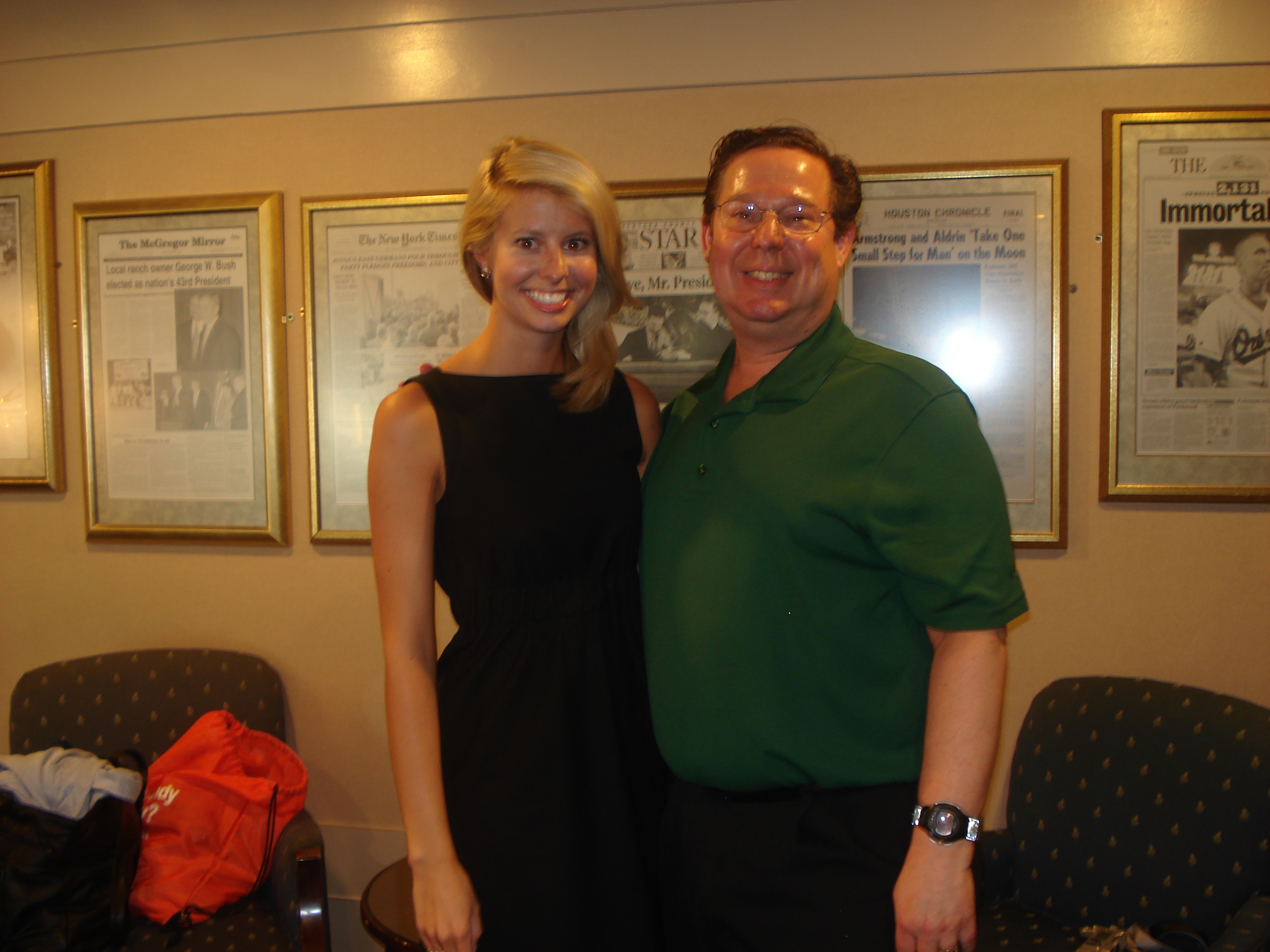
With MacKenzie Warren before she became a famous TV anchor. (Photo by Marco Van Stralen)
3. Helping to launch the careers of so many talented young journalists
It’s been a pleasure and an honor to work with so many talented interns from across the globe. Our former interns have gone on to journalism greatness (already) at the Los Angeles Times, New York Times, Politico, The Hill, Roll Call and many other news outlets, large and small, print and broadcast … and digital. I hope my interns learned as much from me as I learned from them. The interns’ talents and enthusiasm prove to me that there is a future in journalism. To all my interns: You have inspired me.
4. Teaching cutting-edge training programs for journalism students and midcareer professionals
Through my role as president of the National Press Club Journalism Institute — the educational and charitable arm of the National Press Club — I was able to teach thousands of aspiring journalists, midcareer journalists, journalism educators and professional communicators the skills they needed to survive and thrive in today’s rapidly changing multimedia world. Whether the subject was writing for the web or building a community and brand via Twitter, I embraced the turbulent times and tried to help others navigate through rocky seas. That training has trained me for the next chapter in my life.
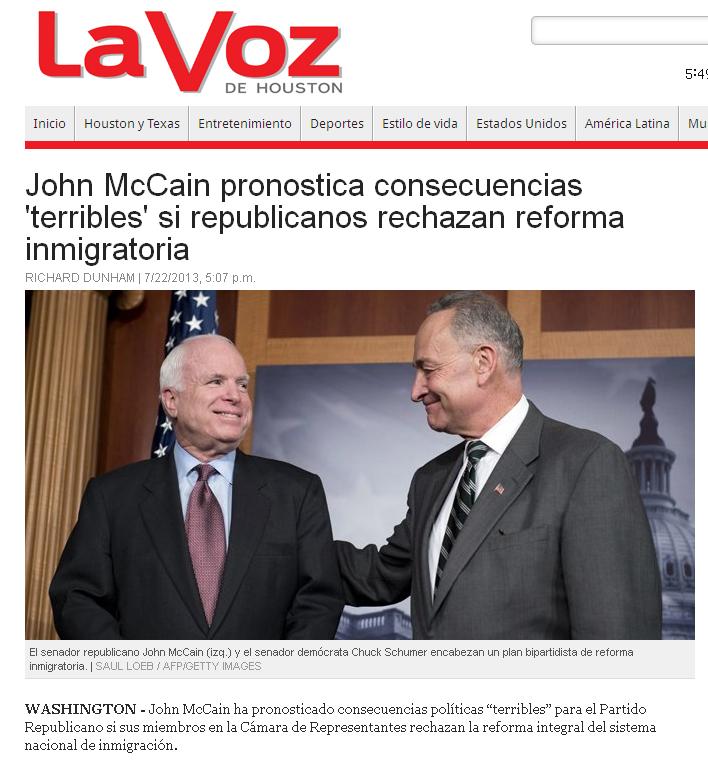 5. Offering robust coverage of issues of importance to our Latino audience
Before Texas on the Potomac came along, there was a void in “mainstream media” coverage of Latino politics and national policy issues of interest to Texas Latinos. With the help of my TxPotomac compatriots and superb La Voz de Houston editors Aurora Losada and Silvia Struthers, we provided comprehensive coverage of important issues such as immigration, health care, border policy, U.S.-Mexico issues, Voter ID, voting rights, redistricting, education and other matters of particular interest to our Latino audience. We gave special attention to Latino elected officials and representatives of heavily Latino districts across Texas. I often wrote stories that appeared in print only in Spanish in La Voz.

Covering Rick Perry in New York (Photo by Andrea Vasquez)
6. Award-winning coverage of Rick Perry’s 2012 presidential campaign
Texas Associated Press Managing Editors gave only one journalism award for coverage of the 2012 elections. It was to our Houston Chronicle team for coverage of Rick Perry’s disastrous White House run. I was proud to have created “Rick Perry Watch” on Texas on the Potomac, the forerunner of our robust “Perry Presidential” web site. Our coverage combined breaking news, ahead-of-the-curve analysis, multimedia storytelling and interesting items culled from other outlets. The result was the most comprehensive daily report on an ill-fated campaign, one that became a must-read for political reporters covering the 2012 campaign.
“First, readers were lucky to have a newspaper willing to dedicate the staff to cover Perry’s bid as an intensely local story,” the Texas Associated Press Managing Editors wrote in their citation. “Just as important, the overall level of work was superb.”
7. Starting a monthly lunch with the Texas delegation
When I arrived as Chronicle Washington bureau chief, there was widespread grumbling in the Houston-area congressional delegation about the Chronicle. To improve lines of communication, I created a monthly, bipartisan lunch with our local lawmakers and the Chronicle reporters and editors. It gave Houston-area House members a chance to tell us what they were working on and what their constituents were talking about, and gave us a chance to ask questions and develop in-depth stories. It also provided opportunities for some bipartisan legislative efforts on issues such as energy, transportation . All in all, it allowed all of us to better serve our joint constituency — the news consumers of Texas and the voters of the Houston area.
I owe bipartisan thanks to Rep. Kevin Brady of The Woodlands and Gene Green of Houston for rounding up lawmakers from Houston — and more recently South Texas — each month.
8. Reaching one million monthly page views on Texas on the Potomac
When I created Texas on the Potomac, I asked how we would judge success. I was told 100,000 page views per month.
Well, we twice hit one million page views — once during the Republican National Convention in August 2012 and again in November, the month of the election. The doubters have been vanquished. Even with very little publicity, we built a franchise. It also helped that I taught our tremendous team of interns the science of search engine optimization.
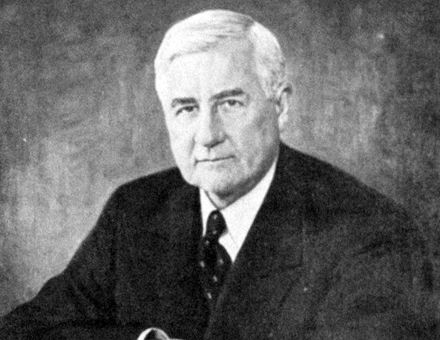
“Mister Houston,” a.k.a., Jesse Jones — publisher of the Houston Chronicle and Commerce Secretary to President Franklin D. Roosevelt
9. Winning all those “Jesse” Award nominations — if not the award itself
I’ve been the Susan Lucci of the Houston Chronicle. Year after year, I’ve been nominated for the “Jesse” Award for outstanding Houston journalism but I never took home the statuette. Reporter of the Year. Editor of the Year. Innovation of the Year. Blog of the Year. Multimedia Journalist of the Year. And some more that I can’t remember right now. Congrats to all the winners! As they say, it’s an honor just to be nominated.
10. An emphasis on teamwork
The Chronicle is one of the ten largest newspapers in America and has drawn, over the years, some of the most talented journalists in America. I hope I contributed to that sense of teamwork — the “we” rather than the “me” — that leads to great journalism. My DC colleague Stewart Powell has been the consummate professional and a willing teammate on Houston stories. Energy expert Jennifer Dlouhy has “taken one for the team” numerous times — I’ll remember those emails at 10:30 on Sunday night as she gets a head start on the week ahead.
Special kudos to super-editor George Haj, who has the best news judgment of any editor I’ve ever worked with, Jacquee Petchel, the best investigative and projects editor in the USA, now teaching the next generation at Arizona State, Ernie Williamson, the best election night editor there ever was, Alan Bernstein, who has a deeper knowledge of Houston politics (and Chron politics) than anybody else in town, Peggy Fikac, the hardest working reporter in Texas, Dwight Silverman, the tech wizard and my favorite web consultant, and Patti Kilday Hart, my partner in journalistic crime in Dallas, Austin and Houston.
Welcome to RickDunhamBlog.com!
Posted: August 9, 2013 Filed under: Rick in the news | Tags: Capitol Hill, Dallas Times Herald, Houston Chronicle, Reporters Committee for Freedom of the Press, Richard Dunham bio, Rick Dunham bio, San Antonio Express-News, Texas A&M University, Texas on the Potomac, Twitter, White House Leave a commentNearly six years after creating Texas on the Potomac — the popular political blog of the Houston Chronicle and San Antonio Express-News, I am launching my own personal blog.
I will periodically offer insight, news and analysis on topics I find interesting. I’ll also post multimedia tips for aspiring journalists and mid-career professionals alike. And I’ll experiment with innovative story-telling techniques.
Feel free to interact and send ideas for posts.
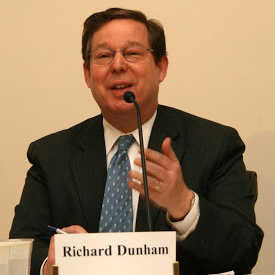
Discussing 2012 election results on a Capitol Hill panel.
I’ll start with the basic biography:
I’m a veteran political journalist and one of the nation’s foremost authorities on the use of social media for journalism and community-building. I’ve been Washington bureau chief of the Houston Chronicle since 2007 and also served as Hearst Newspapers Washington bureau chief from 2009 to 2012.
I am the creator and chief author of the popular political blog “Texas on the Potomac” on chron.com and mysanantonio.com. I was the leading content provider for Perry Presidential, an award-winning web site dedicated to comprehensive coverage and analysis of Texas Gov. Rick Perry’s unsuccessful 2012 presidential campaign.
“First, readers were lucky to have a newspaper willing to dedicate the staff to cover Perry’s bid as an intensely local story,” the Texas Associated Press Managing Editors wrote in the 2013 award explanation. “Just as important, the overall level of work was superb.”
(Twitter: @RickDunham)
From 1992 to July 2007, I was the national political correspondent for Business Week magazine, covering the White House, Congress, economic issues, and political and policy trends.
I earlier spent seven years in the Washington bureau of the Dallas Times Herald as a national political reporter, congressional correspondent and Supreme Court correspondent. During my 13 years at the Dallas Times Herald, I also was a city desk reporter in Dallas and a correspondent in the Austin bureau, where I covered state government, the Texas Legislature, the state budget, education and Texas politics.
I have offered political analysis on ABC, CNN, CNBC, MSNBC, the PBS News Hour and SiriusXM Satellite Radio. I also have appeared on C-SPAN, the BBC, National Public Radio, ABC Radio, Fox News Channel and numerous radio stations and networks.
From 2005 to 2009, I wrote a “Letter from America” column for the Finnish newspaper Aamulehti explaining U.S. politics and culture to an international audience.
A former president of both the National Press Club and the National Press Club Journalism Institute, the educational and charitable arm of the world’s leading professional organization for journalists, I try to remain on the cutting edge of journalism technology and training. I have taught classes and hosted panel discussions on journalism skills, web content, social media and journalism ethics.
From 1999 to 2005, I was a mentor with the UNITY Mentor Program for young journalists of color, where I worked one-on-one with young journalists and taught workshops on journalism skills. I have lectured to classes at institutions including Texas A&M University, American University, Boston University, the University of Alabama, Towson State University, Carleton College and Flagler College.
I also have written for the Philadelphia Inquirer (as University of Pennsylvania stringer) and the Cleveland Plain Dealer (as a summer intern), and have contributed to three books (“The Founding City,” Chilton Books, 1976, “The Handbook of Campaign Spending,” Congressional Quarterly Press, 1992, and “The Almanac of the Unelected,” Bernan Press, 2006). I wrote a new foreword to the 60th anniversary edition of my grandfather Barrows Dunham’s classic philosophy book, “Man against Myth,” which was republished in 2007.
I have served on the steering committee of The Reporters Committee for Freedom of the Press since 1999 and am a former chairman of the steering committee.
From 1992 to 1999, I served on the Executive Committee of Periodical Correspondents, which oversees the press galleries on Capitol Hill for more than 2,000 news magazine and newsletter correspondents. As Executive Committee chairman from 1995 to 1997, I helped to coordinate press logistics for the national conventions and presidential inauguration.I am a graduate of Central High School in Philadelphia (233rd class) and hold B.A. and M.A. degrees in history from the University of Pennsylvania. My wife, Pam Tobey, is a graphic artist at the Washington Post.


Recent Comments