Global Business Journalism Program: Leading the next generation of journalism around the world
Posted: July 4, 2016 Filed under: Discovering China, Dunham's Discourses, Global Business Journalism, Journalism Training, Uncategorized | Tags: Bank of America, Barrows Dunham, Bloomberg News, China, commencement, Cynthia Chen, Gaelle Patricia Chekma, Global Business Journalism, Global Business Journalism Program, ICFJ, International Center for Journalists, Jade Ladal, Jarchine Zhou, Jiao Jie, Jordyn Dahl, Journalism, journalism education, journalism ethics, Journalism Training, Knight Foundation, Media Economics, philosophy, Tsinghua University, Zhou Jaxin Leave a commentIt has been a honor to serve as international co-director of the Global Business Journalism Program at Tsinghua University for the past three years. Here is a transcript of my remarks at the 2016 commencement on June 30:
This is a very special day for all of us. To you, the graduating class of 2016, it is the culmination of a multicultural, global experience that is certain to benefit you personally and professionally. For me, this day is very special, too.
This is the first group of Chinese students I taught at Tsinghua, and you have made this veteran journalist into a better professor and a better person. Jiao Jie, Cynthia, Jarchine. I could go on and on. I have such respect and affection for you. I am so proud of all of you.
This is the first group of international students I interviewed, taught and mentored from beginning to end. Jade: you may not remember it, but I recall asking you in your interview: Who was your favorite character from En Attendant Godot? (I bet you didn’t prepare for that question.)
From the beginning, I can remember being supremely impressed by the qualifications and enthusiasm of Lauren and Gaelle, who have been leaders and high achievers since the day they arrived.
And I can remember recruiting Jordyn as if she were a star athlete in the United States and I were an eager coach. I knew she would be an invaluable addition to our program. Even while she’s still in school, she’s published superb articles in Forbes and Beijing Review, respected global news outlets.
I am honored, on behalf of the faculty of the Global Business Journalism Program and the International Center for Journalists, to congratulate all of you on your successful completion of graduate studies at the Tsinghua School of Journalism and Communication.
You are entering an uncertain world of journalism … of business and economics … of geopolitics and global conflict. I guess any commencement speaker could have said that at any time. But the pace of technological change, the immediacy brought by social media and 24/7 news, and the interconnectedness of the world, have made it easier for human beings to create positive things — or sow destruction anywhere, anytime.
The disruption created by the digital communications revolution has affected businesses from Dallas to Da Tong. In our world of journalism and communication, traditional forms of communication are collapsing – rapidly in America and Europe, more slowly in China. But make no mistake about it, the old world is gone and will never be revived, despite the antediluvian longings of ultranationalists and isolationists and technophobes.
The good news is that there are so many opportunities for people who embrace change and embrace the latest technologies. You are among the fortunate few. You have been trained in the latest technologies, but you also understand the enduring basics of journalism: accuracy, fairness, accountability, ethics and compelling storytelling. The Global Business Journalism program is a combination of a rigorous academic education taught by some of the finest professors in China, and a real-world journalism newsroom where students learn from distinguished journalists from around the world and create professional multimedia projects and data journalism reports.
With the skills you have learned, and the intelligence and drive you bring to your work, I have no doubt some of you are going to be journalism industry leaders and innovators, in China and around the world.
The Global Business Journalism Program is about to begin its tenth academic year this fall. In its first decade — with the support of Bloomberg News, ICFJ, the Knight Foundation and Merrill Lynch/Bank of America — it has brought together students from about 60 countries to experience a diversity of cultures and ideas.
The GBJ program has been indispensable in creating a new generation of business journalists who are reshaping and improving journalism in China. Not only does Chinese journalism benefit from our superbly trained alumni, but international journalism benefits because the next generation of reporters from Cameroon to California have a more accurate and sophisticated view of the Chinese economy and its role in global growth – and an understanding of the highest standards in global reporting.
What’s more, GBJ has created de facto goodwill ambassadors for China in dozens of countries throughout Africa, Asia, Europe and the Americas. It could not come at a more important time.
The journalism industry is facing an era of limits. In the United States and Europe, those limits are mostly economic: the profit imperative at a time of declining revenues, the mistaken choice of click bait journalism over quality. In China, those limits are mostly political.
But neither the journalism establishments of China nor the rest of the world can afford to be reactive. Traditional news outlets, whether in Beijing or Great Britain, are at risk of losing the next generation of information consumers to social media or alternative sources of information. We must – and we will –adapt, to create innovative new ways to share news.
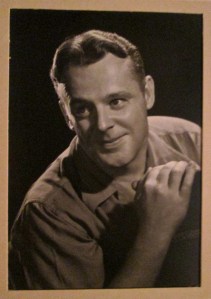
Barrows Dunham, 1947
I would like to close by quoting from my favorite philosopher, who happens to be my grandfather, Barrows Dunham. Seventy years ago, as the world emerged from the destruction wrought by fascists, he wrote in his book Man Against Myth that the peoples of our planet faced “ambiguous gloom, which may perhaps be twilight and may perhaps be dawn.”
Sounds like today. Looking at the pace of change, he wrote in 1947:
“In our day, indeed, events have attained so formidable a tempo that a single lifetime … will seem to contain more than there once appeared to be in history itself.”
Sounds like today.
Every generation sees an unprecedented pace of social change. That is the reality of human accomplishment, and human nature. There are always those who see the dawn and those who see the sunset. In the dawn of our new era, many in our chosen line of work will resist the changes that are needed.
This challenge reminds me of the Season 6 finale of Game of Thrones – specifically, the reaction of the receptionist at the Citadel, who, in response to a message delivered by Samwell Tarly, told our hero: “This is highly irregular.”
“Well,” Samwell responded, “I suppose that life is irregular.”
Indeed, life is irregular. But we can’t respond to occasional irregularities by retreating or taking the safe path. We must pursue the ambitious vision we learned in GBJ.
As all of you know, I am an optimist. I choose to see the dawn. I don’t fear the future, and you should not, either. You are uniquely prepared to be the change – to lead the change – as we approach the third decade of the 21st century.
To quote Dr. Dunham one last time: “Even now, we ourselves are determining the future, not by knowing what it will be, but by conceiving what it can be.”
Congratulations to the GBJ graduating class. Good luck to all of you. Thank you.
Explaining America to the world: I analyze Trump’s populist revolt for a Finnish audience
Posted: March 6, 2016 Filed under: Rick in the news, U.S. politics | Tags: 2016 presidential race, Aamulehti, American politics, Bernie Sanders, Big Business, Bill Clinton, China, Donald Trump, Europe, Finland, Franklin D. Roosevelt, George McGovern, Global Business Journalism, Hillary Clinton, Iran, Japan, Korea, Lannen Media, Matti Posio, Mexico, New Deal, Orson Welles, populism, reality TV, Republican Party, Ronald Reagan, Slovakia, Ted Cruz, Ulkomaat, United States, Vladimir Putin, Wall Street, Watergate, White House Correspondents' Association Dinner Leave a commentWhen I moved to Beijing in 2013 to explain global best practices in journalism to a diverse group of Global Business Journalism Program students, I had not expected that I also would frequently be asked to explain American politics and democracy to a global audience. I’ve been interviewed regularly in Chinese media, but also in European news outlets from Finland to Slovakia (plus the good old USA).
This week, I discussed the rise of Donald Trump with my friend Matti Posio, who heads up the national news operation for a group of Finnish newspapers, Lannen Media. Here’s a transcript of our conversation:
Q: You have met Donald Trump in person. Tell me about it.
I am one of thousands of people who has met Donald Trump at black-tie social events. For me, it was the White House Correspondents’ Association Dinner in Washington several years ago. He was cordial and polite, very different than his public persona. He was clearly a celebrity among celebrities. Reporters were coming up to him an asking if they could pose for photos with him. He was patient, unlike the hot-tempered character on the campaign trail. Nobody I talked to thought he would ever run for president. I really didn’t do more than exchange small talk. He seems comfortable with social conversation and, obviously, he has been going to formal events for a half-century. From my very short glimpse into his life, I would say that he is a very good actor playing certain roles that are expected of him at different times.
Q: I don’t see how anyone can actually be like that. Is his personality the same in real life than portrayed on media?
How many of us get to see him in “real life”? Real life is his life in his big mansion in Florida. Real life is his family. I can imagine Orson Welles playing the role.
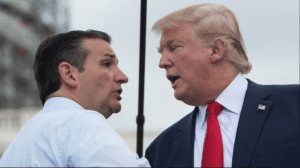
Cruz + Trump = Volatile mix
Q: What is it that foreigners / Europeans really don’t get about Trump?
Do you mean, “Why is he getting so many votes? Why would anyone vote for him for president?” Politically, he is the right man at a very strange time in American political history. After two decades of anti-elitist rhetoric on right-wing talk radio and the Rupert Murdoch-owned conservative cable news network Fox, there is a large minority of the country that believes their way of life has been taken from away from them by the faceless “them” — minorities, immigrants, big companies shipping jobs overseas, corrupt speculators, too-big-to-fail banks, gays and lesbians, working women, feminists, or Big Government giving their tax dollars to undeserving others, Donald Trump is a reality TV performer and is playing to that audience. He is playing the role of populist demagogue, race-baiter, keeper of the working-class flame, proud leader of the “poorly educated,” ranter against the system and the elites and Wall Street and Big Business. So what if he is a son of privilege, a highly educated billionaire and someone who has played the system for years to make deals and make money.
Q: What are the main reasons he has become so popular?
He strikes a responsive chord with less-educated, lower-income white voters across the political spectrum. He is winning among moderate Republicans, conservative Republicans and Evangelical Christians.. He is even getting a modest share of higher-educated, higher-income voters. He is bringing new voters into the system, economically struggling people who thought they had no voice until Donald Trump appeared. While Trump moved relentlessly forward in a media frenzy, his opponents spent months destroying each other rather than going after him. His opponents sound like traditional politicians — which they are — at a time American voters yearn for the myth of “authenticity.” Trump is acting the role of “truth-sayer” supremely well, even if the fact-checking web sites say he is lying much of the time.
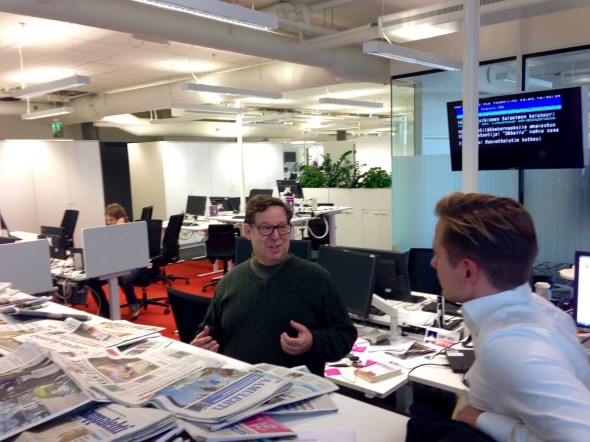
- Talking multimedia innovation at Lannen Media’s Helsinki offices last March
Q: He is behind both Hillary Clinton and Bernie Sanders for the real election. Could he still win?
When it is a one-on-one race, anything could happen. If there are independent candidates dividing the non-Trump vote, anything could happen. There has never been an election like this. Bill Clinton says he expects a close general election. Pundits, who have been wrong all year, are predicting a Trump defeat that costs Republicans control of the U.S. Senate. I’ve been predicting that the public will eventually tire of Trump and “cancel” his election-year reality TV show. But I’ve been wrong for months, along with my fellow political reporters and pundits. So, to repeat an American political cliche, never say never.
Q What would happen if he really became the president? How much would he change?
In recent days, his primary opponent rival Ted Cruz has claimed that Trump told the New York Times editorial board privately that he would act very differently as president than he has during the campaign, as least as far as immigration is concerned. None of us know. As a reporter, I’ve always said that the best way to judge what a politician will do after getting elected to office is to study what he or she promises during the campaign. We can’t read his mind. If he does everything he’s promising to do on the campaign trail, there will be a constitutional crisis and a global economic and diplomatic catastrophe. You’ll have the Putin-Trump axis versus the world. I can’t see it. He would have to change or he would be ineffective domestically and isolated internationally.
Q: Let’s assume he doesn’t become the president. Has he already achieved something, left a lasting mark in the country and its politics? What is it?
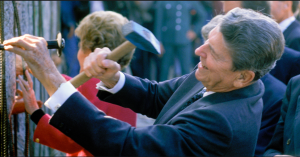
Dismantling the Reagan coalition
Yes, he has achieved something of historical significance. He has destroyed Ronald Reagan’s Republican Party. If he wins the nomination, the party of Reagan will have ceased to exist. It is the same thing that happened to the Democrats in 1972, when George McGovern won the presidential nomination and destroyed the four-decade-old New Deal coalition of Franklin D. Roosevelt. Although Democrats won the White House four years later because of Nixon’s Watergate scandal, it took them two decades to recover institutionally from the crack-up of 1972.
Q: You are currently a professor in China. What is told about Trump there? How much of it is true?
Trump has been portrayed in Chinese media as an eccentric, bombastic showman and celebrity. He’s seen more as a curiosity than a threat, so far, at least. Most people who are savvy about the United States ask me, “Could Trump be elected? Why would Americans vote for Trump?” It’s similar to questions people would ask you in Europe. The coverage of him on Chinese state television is generally straightforward, so far, at least. There has been a bit of negative editorial commentary in traditional state print media, but nothing nearly as inflammatory as what Trump has said about China. And Japan. And Korea. And Mexico. And Iran. And Europe. And Obama.
Q: Would you consider moving to China all together, should Trump be elected?
How about Finland?

Taping an interview at YLE, the Finnish radio network
Photo gallery: A new semester begins for Global Business Journalism students
Posted: February 25, 2016 Filed under: Global Business Journalism, Journalism Training | Tags: Chen Weiyue, China, Cynthia Chen, GBJ, Global Business Journalism, Global Business Journalism Program, Great Britain, ICFJ, International Center for Journalists, Iran, Israel, journalism education, Michigan State, Multimedia Business Journalism, Multimedia Business Reporting, multimedia journalism, Russia, South Africa, South Korea, Tsinghua University, Ukraine, United States, Vietnam, Zimbabwe Leave a commentA new beginning. There’s nothing like the first day of class each semester. Meeting smart young students who are eager to learn. My 35 years as a reporter were exciting and eventful, but my time in the classroom is personally rewarding in a very different way.
My Global Business Journalism Program has trained students from China and 58 other nations of the world, from the U.S. to Vietnam, Russia to Ukraine, Zimbabwe to Great Britain, Israel to Iran, South Africa to South Korea. It is an exciting incubator for the next generation of journalism leaders around the globe.
Tuesday was the first class in my spring semester course, “Multimedia Business Reporting.” Thanks to Weiyue Cynthia Chen, one of the best students I’ve ever taught, for creating this photo gallery of the Global Business Journalism Program in action. (And congrats to Cynthia for getting accepted to Michigan State for her Ph.D. studies!)
For more information, check out the International Center for Journalists’ web link. The deadline for 2016-2017 applications has been extended until March 20. Scholarship deadline is March 10. You can contact me directly if you have any questions.
A tribute to the shuttered McClatchy Beijing bureau — and the former Knight-Ridder international reporters
Posted: January 1, 2016 Filed under: Dunham's Discourses, Uncategorized | Tags: Alfonso Chardy, Beijing, China, Dallas Times Herald, Facebook, Knight-Ridder Newspapers, Mark Seibel, McClatchy Newspapers, Michael Browning, Nancy Youssef, Philadelphia Inquirer, Roy Guttman, The Miami Herald, University of Pennsylvania Leave a commentWhen I started as the University of Pennsylvania stringer for the Philadelphia Inquirer in 1974, I was greatly impressed that the Inquirer not only was a fearless advocate for Philadelphians, but it provided us with special insight into the world through its foreign correspondents and other reporters on the payroll of Knight-Ridder Newspapers. The global network of correspondents survived the demise of Knight-Ridder under the McClatchy umbrella.

Stuart Leavenworth: The last Beijing bureau chief
In my 2 1/2 years in Beijing, I’ve had the opportunity to see the amazing work of McClatchy’s final China bureau chief, Stuart Leavenworth. His stories — perceptive, interesting and unique — reminded me what international correspondents for hometown papers offer. It’s not the same breaking news you get from traditional wire services. It’s added value that comes from a combination of skilled journalists with expertise in the subject matter they are covering and experienced editors who understand their audience (and the world).
Sadly, McClatchy is shuttering its Beijing bureau — and all of its bureaus — this new year. Another casualty of declining newspaper audiences and diminishing news budgets. I will really miss the fine work of these intrepid journalists, as, I suspect, will thousands of loyal readers who now have yet another reason not to subscribe to their hometown paper.
Mark Seibel, a former Dallas Times Herald colleague of mine and a longtime editor for the Miami Herald and the McClatchy D.C. bureau, penned a Facebook tribute to his colleagues. With his permission, I’d like to share it with you:

– 30 –
By Mark Seibel
The other day, Stuart Leavenworth, until midnight McClatchy’s China bureau chief, posted a farewell photo that captured the door of the McClatchy office in Beijing. The plaque read “McClatchy/Miami Herald/Beijing Bureau.” It reminded me that the closing today of McClatchy’s last handful of foreign bureaus – Beijing, Irbil, Istanbul, Mexico City, though not yet Berlin, for reasons of logistics — ends an era when regional newspapers worked hard to make sure their readers were informed not just on local news but on world events. Because readers expected that of their papers.
I first began directing coverage of China in 1984, when I joined The Miami Herald as foreign editor. The correspondent in Beijing then was Michael Browning, perhaps the most talented writer and observer I‘ve ever been privileged to edit. Three decades and his untimely death haven’t dimmed my memory of the lyrical way he described the rippling of a pig’s flesh as it was carried to market at what was the beginning of China’s economic reformation. He once profiled a woman who smoked hundreds of cigarettes daily as a tester in a Chinese state factory.
At the time, Browning’s competitors included correspondents not just from AP and the usual suspects, but from the Baltimore Sun, the Chicago Tribune, and Newsday, among others. None of those papers has international bureaus today.
Browning’s time in China eventually ended, hastened by Chinese displeasure with his coverage of the Tiananmen Square massacre, and The Herald’s time as the keeper of the Beijing bureau also came to an end, when in the mid 90s, Knight-Ridder decided to centralize oversight of its eight corporate foreign bureaus in Washington. The wisdom of that move can still be debated; I’d argue it put another layer between local editors and international news coverage.
Many talented reporters have passed through the Knight Ridder/McClatchy foreign system. Marty Merzer, Juan O. Tamayo, Carol Rosenberg, Alfonso Chardy, John Donnelly, Soraya Nelson and Dion Nissenbaum all served in the Jerusalem bureau before it closed when Dion moved to Kabul. Hannah Allam, Nancy Youssef and Leila Fadel were Baghdad bureau chiefs, before Roy Gutman closed that bureau when he moved to Istanbul. Jack Changwas the last fulltime Rio de Janeiro correspondent, preceded by Kevin Halland Katherine Ellison. When Tom Lasseter left Moscow to cover China, the position was never filled; Brian Bonner occupied it for months, but never held the job permanently. Shashank Bengali’s departure from Nairobi ended McClatchy/Knight Ridder’s long run there. Nancy Youssef’s departure from Cairo ended our presence there.
Tim Johnson served in China before moving to the Mexico City bureau, which he’ll close in January. Matthew Schofield has been based in Berlin twice, and will eventually close it for a second time.
McClatchy kept the spark alive the last few years with a handful of staffers and an ample group of freelancers and contractors, all talented in their own right. David Enders covered Syria from the inside, being among the first to recognize that the jihadists were taking over the rebellion, and eventually winning a staff assignment (and a share of a Polk). Mitchell Prothero stepped in ably after David, and was willing to move to Irbil when the Islamic State captured Mosul. Others: Sheera Frenkel, Daniella Cheslow and Joel Greenberg from Israel, Adam Baron from Yemen, Alan Boswell from South Sudan and Nairobi, Jon Stephenson in Kabul, Saeed Shah and Tom Hussain in Islamabad.
There were many firsts, but some I think of often: Nancy Youssef was first to report that there had been no demonstration outside the Benghazi compound, and she did so within hours of the attack; Roy Gutman was the first to raise the issue of Obama’s lack of involvement in the negotiations over leaving U.S. troops in Iraq; Tom Lasseter, with an assist from Matthew Schofield, was the first to systematically interview former Guantanamo detainees about their time there, and David Enders reported in 2012 that al Qaida’s Nusra Front could be found at the fore of many key rebel victories in Syria.
I’m sorry to see that Miami Herald plaque disappear from that door in Beijing, but glad to have been a part of it.
16 bold predictions for 2016 (including ‘Cruz schlongs Trump’)
Posted: December 26, 2015 Filed under: Breaking news, Top Ten, U.S. politics | Tags: 2016 presidential race, American politics, Austin, Beijing pollution, Bernie Sanders, Bibi Netanyahu, China, Chris Matthews, clickbait, CNN, Dan Snyder, Democratic Party, Hillary Clinton, Huffington Post, international trade, Iowa caucuses, Israel, Jerusalem, Joe Scarborough, Julian Castro, Larry David, Las Vegas Review-Journal, Mike Huckabee, Mo Udall, Morning Joe, MSNBC, National Football League, New York Daily News, New York Times, Newt Gingrich, NFL, Philadelphia, Philadelphia Eagles, Pollution, protectionism, Pyonyang, Pyonyang Marathon, Republican Party, Rick Perry, Rick Santorum, Saturday Night Live, schlong, schlonged, Sears, Sheldon Adelson, Tea Party, Ted Cruz, trade, Washington Post, Washington Redskins, William Randolph Hearst 2 Comments
The bromance is headed for a rocky break-up in 2016.
The pundits were soooooo wrong in 2015 that it seems silly for anyone to pull out the crystal ball again. Especially in the midst of the most unpredictable Republican presidential nominating process in … what, four years? (President Gingrich, President Santorum, President Perry, we hardly knew ye.)
But since so many pundits make good salaries predicting things that don’t come true, I’m going to let you in on some things that are as solid as Sears. (OK, if you’re under 50 years old, you probably don’t understand that line.)
Here are my 16 bold predictions for 2016:
- The New York Daily News headline on Feb. 2, 2016 (the day after the Iowa caucuses): CRUZ SCHLONGS TRUMP
- Former Arkansas Gov. Mike Huckabee, the winner of the 2008 Iowa Republican caucuses, drops out of the 2016 race on Feb. 3 after finishing eighth in the previous evening’s Iowa caucuses. Nobody outside of the Huckabee family notices.
- Donald Trump continues his slide from frontrunner status on Feb. 23 with a stinging defeat in the Nevada caucuses when fellow gambling mogul Sheldon Adelson pulls out all the stops in support of [Editor’s note: He hasn’t yet decided which non-Trump candidate he will support]. Front page editorials in the Adelson family’s Las Vegas Review-Journal strongly support [candidate to be decided upon later]. Adelson tells close friends that Trump eliminated himself from contention when he didn’t know he was supposed to say that Jerusalem is and always will be the indivisible capital of Israel — and then canceled his meeting with Israeli Prime Minister Bibi Netanyahu in a fit of pique after Adelson buddy Bibi bashed Trump for saying he’d bar all non-citizen Muslims from the U.S. — and then used “schlong” as a verb.

Larry David got more attention from the mainstream media when he played Bernie Sanders on Saturday Night Live than the real candidate got when playing himself on the campaign trail.
- Bernie Sanders will be the Mo Udall of 2016. Without the wicked sense of humor. Favorite of the liberal liberals. String of second-place finishes. His last stand will be in the Vermont primary on March 1. But while Bernie battles for his home state’s 15 delegates chosen in the primary, Hillary Clinton will take something like 207 of the 208 Texas delegates up for grabs that day.
- The Republican Party in the United States will remain the only conservative party in the entire world to dispute the fact that humans contribute to climate change. Not a good strategy to win the support of young Americans, who wonder why so many old fogies can’t accept global scientific consensus.
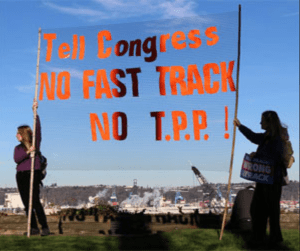
Just saying no.
- The Democratic Party in the United States will continue to argue for protectionism and managed trade. The Tea Party will continue to argue for protectionism and managed trade. The rest of the world will wonder why America continues to have such a robust, resilient economy when its politicians seem to be trying so hard to destroy its competitiveness.
- America will make history again — by electing the first female president ever, the first candidate with a Spanish surname and/or the first U.S. president ever born in Canada.
- The next vice president’s last name will end in an “o.” Leading possibilities are Castro, Rubio or uh-oh.
- Ratings on MSNBC will continue to slip-slide toward oblivion. Morning Joe’s audience will be limited to the DC Beltway, Manhattan and Joe Scarborough’s family’s homes. More than 95 percent of Chris Matthews’ audience will be aged 65 and above.
- The Washington Post website, having passed the New York Times in online audience in 2015, will rocket ahead of CNN through a combination of good, solid, old-fashioned reporting and analysis and an understanding of viral-news marketing.
- The Huffington Post, having reached the limits of page views through click-bait, rewrites and journalistic trolling, reassesses its business strategy amid general stagnation.
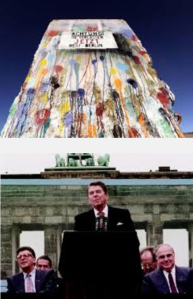
“Mister Hearst, tear down that wall.”
12. American newspapers continue to reassess the ill-fated paywall fad amid mounting evidence that they are destroying any potential for long-term community-building in a misguided attempt to increase short-term revenues.
13. No pro team from Philadelphia or Austin will make the playoffs in any sport.
14. Dan Snyder will continue to top the lists of “worst sports team owner,” despite his mediocre team’s miraculous 2015 run in the NFC Least division.
15. The Pyongyang Marathon will continue to be the least popular marathon in any nation’s capital. It’s on April 10, if you’re interested in signing up.
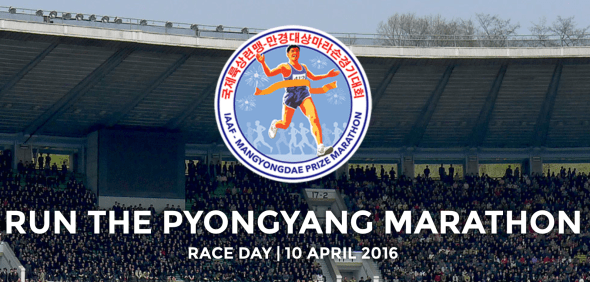
Have you signed up yet? One-way airfare not included.
16. American newspapers and news networks will feature stories about the poisonous air in Beijing with frightening regularity, causing the Chinese government to (a) condemn the negative news coverage and (b) develop a new and improved strategy for dealing with a problem that’s not going away, despite the occasional blasts of fresh air from Siberia.
Happy New Year to all!

Red Alert in Beijing
Analysis: Why Xi Jinping’s summit with Barack Obama is more important than you may think
Posted: September 25, 2015 Filed under: Breaking news, Rick in the news, U.S. politics | Tags: AIIB, American politics, Asian Infrastructure Investment Bank, Barack Obama, Bill Clinton, CCTV, China, China Radio International, Chinese economy, CRI, Deng Xiaoping, Dialogue, Fed, Federal Reserve, Global Business Journalism Program, House of Cards, Hu Jingtao, Jiang Zemin, John Boehner, Justice Department, Korea, Li XIanian, Moody's Analytics, North Korea, Richard Nixon, Sleepless in Seatlle, summit, trade, Trans-Pacific Partnership, Tsinghua University, United States, Vladimir Putin, White House, Xi Jinping, Yang Jinyn Leave a comment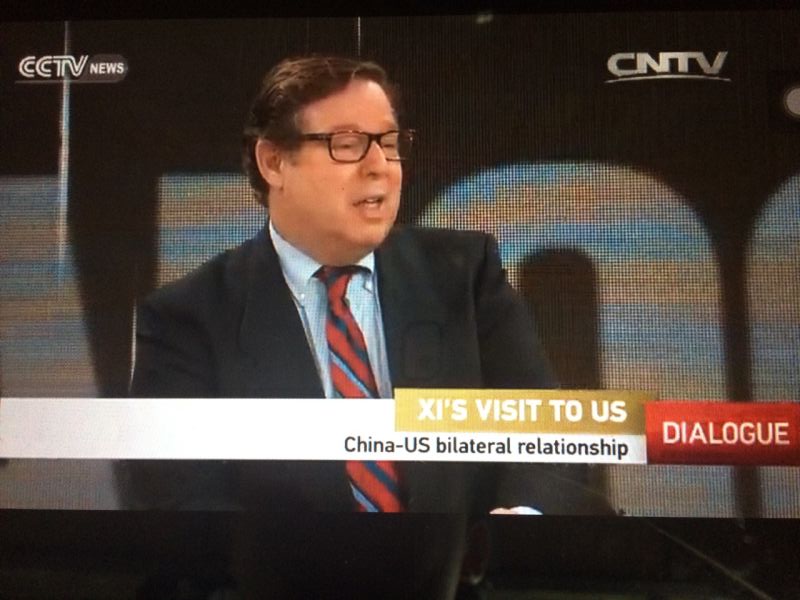
Analyzing the summit for CCTV. You can watch the entire Dialogue program here.
This week’s summit meeting between Chinese President Xi Jinping and U.S. President Barack Obama has been overshadowed in the United States by the historic visit by Pope Francis — and then the sudden resignation of U.S. House Speaker John Boehner. But the China-U.S. summit is likely to have broader and longer-lasting implications on both the global economy and geopolitical matters.
Here is my analysis of the high stakes and — at least for leaders in China — high hopes for the summit. It is in a Q&A format based on questions formulated by China Radio International designed to stimulate a roundtable discussion on its Today program.
Q: Xi Jinping’s first speech upon arriving in Seattle was peppered with U.S. cultural references, including the film Sleepless in Seattle and the television series House of Cards. He also shared some personal experiences, like his life as a visiting student in Iowa. Do you think the personal touches went down well with his American audience?
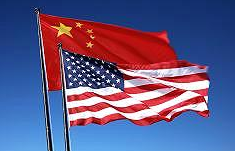
A: It’s always good to drop a few cultural references — though I will say that House of Cards may be more popular in China than it is in the U.S. At Tsinghua University, where I work in the Global Business Journalism program, everyone wants to know if it’s an accurate depiction of American politics and journalism.
More seriously, President Xi definitely connected with his business audience of leaders of major technology companies — and I think that is a big win for future partnerships with the tech and aerospace industries.
Q: Since China and the U.S. established diplomatic ties, only four Chinese presidents have paid state visits to the U.S.: Li Xianian in 1985, Jiang Zemin in 1997, and Hu Jintao in 2006 and 2011. We now have the fifth. How different is this one: what has changed and what remains the same in bilateral relations?
A: The biggest visit from a Chinese leader was not even a state visit, it was from Deng Xiaoping, who was vice chairman, not president.
What is the same? The desire of the leaders of both countries to deepen economic and cultural ties. The differences: the end of the Cold War, the rise of China’s economy (even with current uncertainties) and the increasing importance of China on the global diplomatic and military front. Also, for much of the relationship, China and the U.S. used each other as a wedge against the Soviet Union and then Russia. Now China and Russia are closer in a geopolitical sense than China and the U.S.

Presidents Obama and Xi walk from the White House to Blair House for dinner on Sept. 24.
Q: Apart from political rhetoric and media outcries, what really makes the two giants like each other and what turns them apart?
A: The leaders like each other. The countries share mutual respect, win-win economic ties and a concern for future of the world economy. The issues that drive them apart include economic competition, Taiwan, U.S. criticism about human rights issues and U.S. military alliances (particularly with Japan).
Q: Is there anything special about the personal relationship between Obama and Xi Jinping? They twice have discussed ideologies and history. The pictures of them walking on the Sunnylands Ranch in 2013 and their late evening stroll indicates some mutual understanding of the top jobs.
A: They have definitely connected on an intellectual level and it’s clear from the body language that they like and respect each other. You don’t see the same thing when President Obama and Russian President Putin get together.
Q: Xi Jinping’s visit comes at a time when geopolitical conditions in East Asia have evolved to a very subtle point. The Obama administration declared to its “Pivot-to-Asia” diplomacy shift in 2012. Tensions have been growing in the region with Shinzo Abe seeking to expand Japan’s overseas military role and several Southeast Asian nations embroiling themselves into a territorial dispute with Beijing. Is the timing of the trip too tough?
A: There’s never a perfect time for a trip. Japanese assertiveness on military matters, issues in the South and East China Seas, cyberspying all have created some tensions. The slowdown of China’s growth also has created some uncertainty on the economic side. But there are many important things the two countries can do to benefit each other and the world situation, economically and geopolitically.
Q: How does China fit into the current global strategy of the United States? And vice versa?
A: That’s a complicated pair of questions. The U.S. has not taken part in the AIIB — the Asia Infrastructure Investment Bank — and tried, thus far unsuccessfully, to launch a Trans-Pacific Partnership anchored by the U.S., Japan and Korea. But despite those problems, both countries are eager to welcome investment from the other nation to help grow jobs in their countries. And both are interested in improving the economies of Africa, where both have invested a substantial amount of soft-power capital.
In terms of geopolitics, the U.S. believes that China is a key player in resolving almost all of the most difficult international issues of the day, from the Korean Peninsula to the Middle East. The U.S. wants China as a leading player and not a marginalized actor.
Q: China has been very active in recent years on both political and economic fronts. Despite a global economic slowdown, China still manages to maintain a GDP growth at around 7 percent over the years and is now the world’s second largest economy, right after the U.S. Since Xi Jinping came to power, China has proposed several international cooperation mechanisms such as the AIIB, the New Development Bank, the Land and Maritime Silk Road Initiative and so on, taking more responsibility in regional and international affairs. What do you make of the U.S. reaction to this?
A: I think the U.S. should be more welcoming and more cooperative — while realizing that some tension and competition is natural. I’m not sure how much of this reflects the concerns of Japan about China’s growing influence and how much is Washington policymakers’ policy concerns. The world economy should allow for both nations to grow — it’s not a zero-sum game.

The two presidents take questions from the U.S. and Chinese media on Sept. 25.
Q: How much damage has been caused by conflicts between the two?
A: There have always been tensions and there still are. Taiwan was and will be a continuing strain, but the strain has been handled by both nations with mutual effort. Both nations have accused the other of spying, and they have had strong words about military actions in the South China and seas. But they have kept their disagreements civil and kept them in perspective. The shared goals of the two nations are much more important than the continuing differences.
Q: What’s the way to bring China-U.S. relations to a new level while properly handling these conflicts?
A: Agree to disagree about some things and work on the issues where progress can be made. A bilateral investment treaty is good for both countries and should not be blocked because of American fears about cybersecurity. However, international companies need to reach a comfort level that their trade secrets would not be compromised if they do business in China.
Q: China and the U.S. both shoulder responsibilities in dealing with major international issues, like the Iran nuclear issue, the North Korean nuclear issue, climate change and so on. What’s a more constructive way for the two sides to cooperate in order to solve these difficult problems?
A: I would hope that we hear more about this from President Xi at the United Nations. The key thing is more and higher-profile Chinese involvement alongside the U.S. and Russia. Korea is a very difficult problem and can only be resolved if China and the U.S. are in complete agreement about the future of the peninsula.
Q: Leaders from both countries have been exchanging visits regularly in history. When people reflect back in the future, how do you think they will think about this visit?
A: To use President Xi’s words, it was the first summit of the major-power relationship era. In my view, the most important meetings between the nation’s leaders were in 1972, when President Nixon came to Beijing, 1979, with Deng Xiaoping, when China was beginning to reshape its economy, and 1998, when Bill Clinton visited China as China was emerging as a global economic power. To me, this is the logical fourth leg of the chair — and could steady the relationship for the decade to come, whoever is elected president of the U.S. next year.

Photo op with CRI crew and fellow guests after the Today program on Sept. 25. You can listen here.
Q: Several economic deals are being announced this week during the visit, including companies such as Boeing and Cisco. How significant are these deals? Can economic and trade links still function as the main stabilizer of the overall China-U.S. relations?
A: Yes. Economic ties and trade not only will help the two nations but the global economy. The world economy may be more dependent on Chinese economic growth than U.S., particularly nations of Africa and Central and East Asia.
Q: Moody’s Analytics’ chief economist has calculated that every 1 percentage point drop in Chinese growth reduces U.S. economic growth by 0.2 percent. This is equal to the price of oil going up $20 a barrel. How interrelated and interdependent are the two economies?
A: I agree with Moody’s. Of course, the Chinese people are hurt more than the American people by any slump in the Chinese economy, but there is a ripple effect in this interdependent world. I think that the African and East Asian economies would suffer more by a prolonged slump in China, but the U.S. would feel it.
Q: China has been on a path towards reforming its economy. How important are China’s economic reforms to the U.S. economy and that of the world?
A: Internal reform in China is important to the U.S. — not reform for reform’s sake, but reform that makes the Chinese economy more efficient and reform that creates more disposable income in China and more markets for global goods. Also, reforms in rule of law and protection of intellectual property are very important to the U.S. and the rest of the world.
Q: Given the moves last month on the value of the RMB, how much of an issue is that in the relationship now?
A: Although some Republican presidential candidates have criticized China’s devaluation of the RMB as currency manipulation, most global economists do not believe that, and neither does the Obama administration. This was a legitimate issue in 1999, but times have changed. The IMF has stated that the RMB has shown signs of floating with the market, and I think the U.S. administration appreciates that.

The first families wave from the Truman Balcony at the White House.
Q: China and the U.S. respectively have proposed different international economic entities. China proposed the AIIB and the New Development Bank, while the U.S. is pushing forward with the Trans-Pacific Partnership. In what ways can these two countries and these different entities cooperate, especially in terms of global financial institutions reform?
A: It would be ideal to unify these partnerships, and I think that is likely at some time. But it might take a decade or more. International financial institutions are in serious need of reform. I’m not optimistic that such reform is coming in the near term, but it is inevitable in the long term.
Q: The U.S. Federal Reserve recently made a decision to delay an interest rate rise. How much did China’s current economic situation factor into the decision?
A: It played a role — along with the continuing economic softness in Europe. The Fed is ready to raise rates, but it remembers when its rate increases in previous decades created panic in Mexico and other emerging markets. So it is acting more cautious now. However, rate hikes are a near certainty over the next year.
Q: How does the decision affect the Chinese economy? How much should the Fed take such affects into account when making these decisions about the U.S. economy?
A: The impact should be minor, more psychological than real, more based on speculation than reality.
Q: In recent times, U.S. companies and business associations have mentioned issues of market access, national security and cyber-security laws, and potential requirements to hand over corporate security materials. Chinese tech companies like Huawei faces similar problems in the U.S. What can be done about this?
A: Talk about it honestly and openly, as has been going on. Agreeing on a treaty that would provide “rules of the road” for cybersecurity. That’s a first step. The agreement may not be unveiled this week, but a framework for future action is possible.
Q: Another on-going item is the bilateral investment treaty, or BIT, between the two nations. What are the main challenges, and how should they be overcome?
A: The main challenges are rule of law, cybersecurity, openness of U.S. markets to Chinese companies and openness of Chinese markets, particularly financial, to U.S. companies. Prolonged negotiations will be needed to resolve them, but both sides want to achieve results, so I’d be optimistic.
Q: In terms of a compromise, might we see a type of “cyber arms deal” being reached, which would help establish which kinds of cyber attacks could be outlawed – attacks on civilian infrastructure, for example?
A: Yes, that’s exactly right. Government on government spying has always existed. But companies want assurances that they will be able to do business without fear of corporate espionage.

Before becoming China’s president, Xi Jinping visited Iowa, where he lived several decades ago.
Q: One of China’s most wanted economic fugitives – Yang Jinyun – was returned to the country by the U.S. last week. This marked the first time China has succeeded in repatriating a wanted corruption suspect from the U.S., with whom it has no extradition treaty. Has Yang Jinyun’s repatriation laid an important foundation for bilateral cooperation, or is it just a separate move done only as an olive branch for a presidential trip?
A: It is symbolic but it also is part of a series of concrete actions by the United States to help China in cases of corruption-related fugitives. The U.S. Justice Department has shown a willingness to help China deal with corruption cases, which are different than political cases.
Q: Beyond all specifics, the fundamental question has always been: What does the rise of China mean to the USA, and vice versa? What should Xi Jinping say to Obama? “I have no intention to challenge the existing world order.” What should Obama say to Xi Jinping? “Play the second fiddle.”
A: No, there is no need to talk about who is number one and who is number two. It is the most important bilateral relationship in the world. The leaders must show each other and their nation’s respect. I think that exists. Xi Jinping doesn’t have to make any assurances about the existing world order. The new world order is emerging — and everyone knows it. There is no reason for irrational concern on either nation’s part. The leadership of both countries — economic, diplomatic and moral — is vital.
>> Link to CCTV Dialogue program: http://english.cntv.cn/2015/09/24/VIDE1443041881178448.shtml
>> Link to CRI Today program: http://english.cri.cn/7146/2015/09/25/3641s897467.htm
Who said it? Xi Jinping or … George Bush, Donald Trump, Ted Cruz, Nancy Pelosi or Henry Kissinger?
Posted: September 21, 2015 Filed under: Breaking news, Discovering China, U.S. politics | Tags: Barack Obama, Bernie Sanders, Binyamin Netanyahu, China, Chinese economy, Chris Christie, Communist Party, Dan Quayle, Deng Xiaoping, Donald Rumsfeld, Donald Trump, Franklin D. Roosevelt, George H.W. Bush, George W. Bush, Hassan Rohani, Henry Kissinger, Japan, Jeb Bush, Jim Mann, John Kerry, Mao Zedong, Margaret Thatcher, Michael Keaton, Mr. Mom, Nancy Pelosi, Pat Buchanan, Paul Prudhomme, peace, Philadelphia Inquirer, Pope Francis, Raul Castro, Rick Perry, Ronald Reagan, Shinzo Abe, Ted Cruz, terrorism, The China Fantasy, United States, Vladimir Putin, Wang Jiarui, Washington Post, world peace, Xi Jinping Leave a comment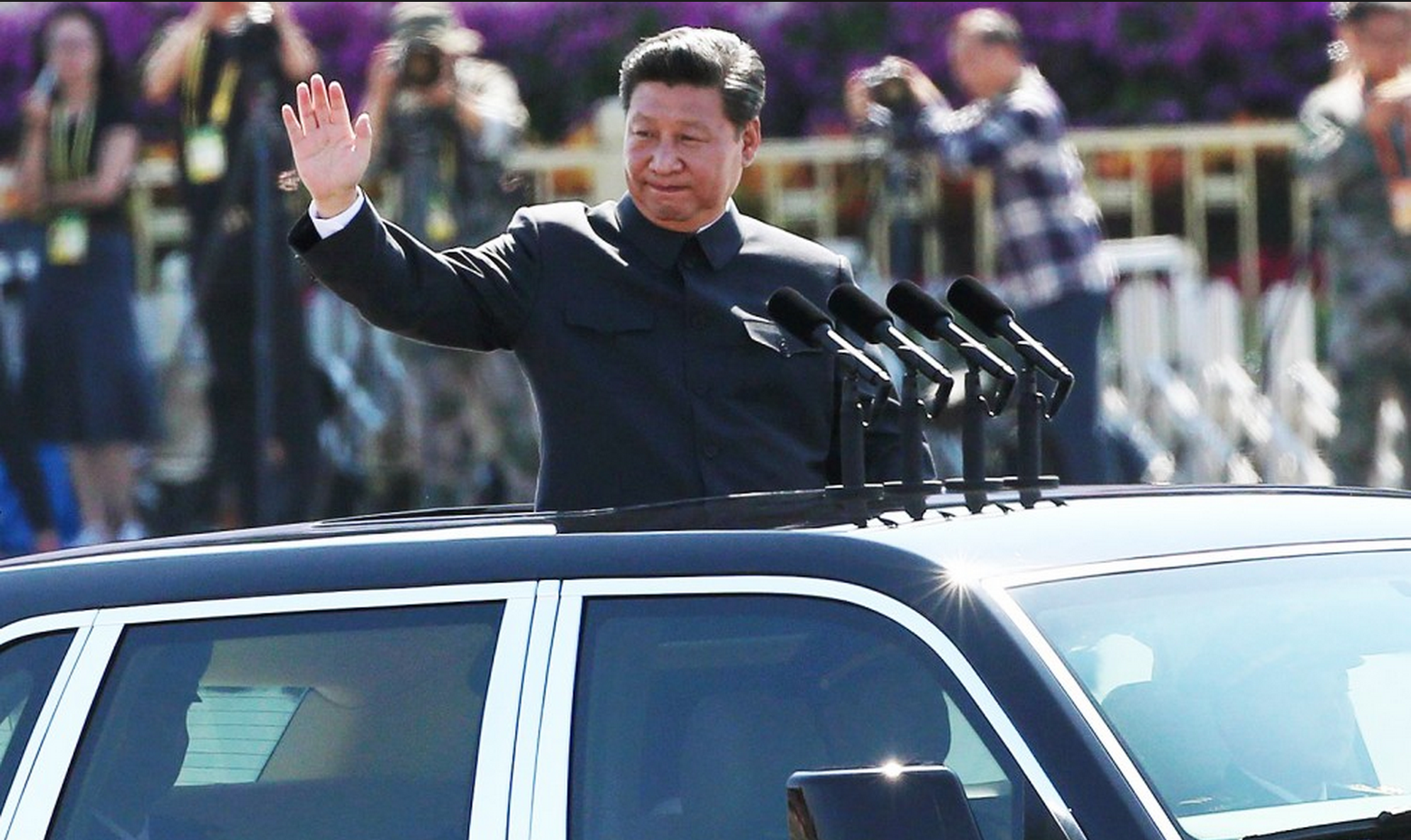
Images of Xi Jinping at the Sept. 3 military victory parade were shared around the world. But who is the Chinese leader and what does he stand for?
Chinese President Xi Jinping is coming to the United States, and very few Americans (or even American journalists) know much about the leader of the nation’s most populous country.
With apologies to Vladimir Putin, he has been called the most powerful leader in the world. But what does that mean?
Is Xi a reformer? Is he a hardliner? Is he a step forward, a step back — or both? Is he firmly in control or fearful of rivals within the ruling elite — or both? Is “Big Daddy Xi” widely popular or the beneficiary of a manufactured cult of personality?
As much as I’ve learned about China over the past two years, I still have a lot to learn. For additional background, I recommend you check out my former Philadelphia Inquirer colleague Jim Mann’s recent commentary in the Washington Post:
For American pundits, China isn’t a country. It’s a fantasyland.
In the meantime, test your knowledge of who Xi Jinping is — and isn’t — by taking this news quiz. Which of these statements are from Xi and which are from other world figures? Good luck.
For answers, scroll to the bottom of the post, after the final photo. Click on the quotations to read the original source material.

President Barack Obama and Xi Jinping have been careful to treat the other with respect and discuss fundamental disagreements without alienating the other nation’s leadership.
Who said the following?
1. Japan is “eating our lunch.”
a) Xi Jinping
b) Donald Trump
c) Paul Prudhomme
a) Xi Jinping
b) George W. Bush
c) Donald Rumsfeld
3. “Some foreigners with full bellies and nothing better to do engage in finger-pointing at us.”
a) Xi Jinping
b) Pat Buchanan
c) Chris Christie
4. “America must be a light to the world, not just a missile.”
a) Xi Jinping
b) Barack Obama
c) Nancy Pelosi
d) George H.W. Bush
5. A cooperative United States-China relationship is “essential to global stability and peace.”
a) Xi Jinping
b) Barack Obama
c) Henry Kissinger
a) Xi Jinping
b) George W. Bush
c) Margaret Thatcher
d) Ronald Reagan
a) Xi Jinping
b) Pope Francis
c) Raul Castro
d) Barack Obama
8. “Japan is not being nice to us.”
a) Xi Jinping
b) Donald Trump
c) Franklin D. Roosevelt
d) Theodore Roosevelt
a) Xi Jinping
b) Barack Obama
c) Binyamin Netanyahu
a) Xi Jinping
b) Barack Obama
c) Binyamin Netanyahu
11. “The international forces are shifting in a way that is more favorable to maintaining world peace.”
a) Xi Jinping
b) Shinzō Abe
c) Barack Obama
c) Hassan Rohani
a) Xi Jinping
b) Margaret Thatcher
c) Marco Rubio
d) Ronald Reagan
13. “When did we beat Japan at anything?”
a) Xi Jinping
b) Donald Trump
c) Michael Keaton in “Mr. Mom”
d) The captain of the U.S. Olympic baseball team
a) Xi Jinping
b) Bernie Sanders
c) Mao Zedong
d) Ronald Reagan
a) Xi Jinping
b) Deng Xiaoping
c) Ted Cruz
16. “As Deng Xiaoping said, we must ‘seek truth from facts.’ ”
a) Xi Jinping
b) Barack Obama
c) George H.W. Bush
17. “People should not underestimate me.”
a) Xi Jinping
b) George W. Bush
c) Bernie Sanders
d) Vladimir Putin
a) Xi Jinping
b) Henry Kissinger
c) Jim Mann, American journalist and author of The China Fantasy
d) Wang Jiarui, head of the Communist Party of China’s international department
a) Xi Jinping
b) George W. Bush
c) Dan Quayle
d) Rick Perry
a) Xi Jinping
b) Barack Obama
c) John Kerry
d) Ronald Reagan
Answers below this photo.
XI Jinping is honored in Iowa, where he lived several decades ago.
1.b; 2.a; 3.a; 4.c; 5.c; 6.a; 7.a; 8.b; 9.a; 10.c; 11.a; 12.a; 13.b; 14.a; 15.c; 16.b; 17.c; 18.d; 19.a ; 20.d
Global Business Journalism students are improving the quality of journalism in China and around the world
Posted: July 12, 2015 Filed under: Global Business Journalism, Journalism Training, Rick in the news | Tags: Bank of America, Barrows Dunham, Bloomberg News, CCTV, China, China Daily, Chinese economy, commencement, Data Journalism, Global Business Journalism, graduation, Hang Min, House Un-American Activities Committee, ICFJ, International Center for Journalists, Jin Jianbin, Lee Miller, multimedia journalism, Radio Beijing, Red Scare, Shi Anbin, Tsinghua University, Xinhua, Zhang Sihan Leave a comment
A talented group of global journalists, including the first graduates from Nepal, Jamaica and Ukraine.
I am so excited about the opportunities I have had in China to work with journalism students — both international and Chinese — and professional journalists to improve the caliber of reporting and writing in China, and to prepare us all for the Brave New World of journalism in the Digital Age. Here is a transcript of my speech at the July 10 commencement of the Tsinghua School of Journalism and Communication Global Business Journalism Program.
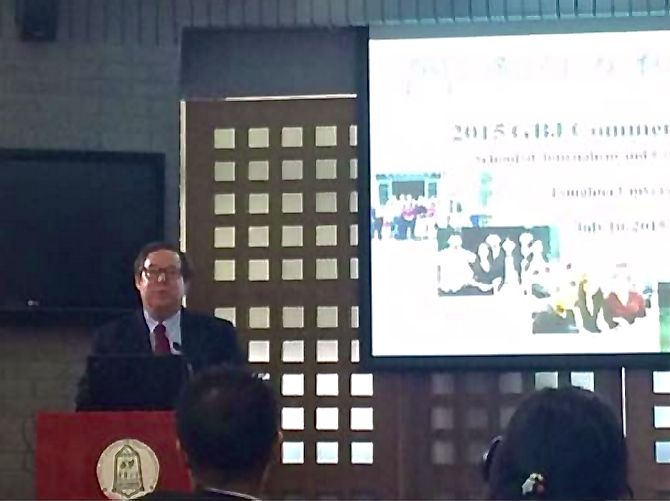
Speaking to the 2015 graduating class of the Global Business Journalism Program at Tsinghua University.
I am honored, on behalf of the faculty of the Global Business Journalism Program, to congratulate you on your successful completion of graduate studies at the Tsinghua School of Journalism and Communication graduation.
It indeed has been an adventure – a voyage of discovery – for all of us. You represent the best of China and the best of the world.
Over the past eight years, students from more than 50 countries have studied together, worked together, gotten to know each other here in the Global Business Journalism Program at Tsinghua University. Ours is a vibrant tapestry of cultures and ideas. You have been exposed to new perspectives, whether they are from the minds of brilliant Chinese professors or veteran international journalists who have plied their trade at the highest levels in the United States and around the world. All of us have gained a better understanding of the rapidly changing world we are inheriting, the rise of China and the rapid transformation of its economy, the complicated dynamics of our interdependent global business world, the rapid transformation of our own world of journalism and the imperative to learn new multimedia and data skills to compete in the emerging journalism marketplace. You have been tested with rigor. You have passed the test. I am so proud of you.
Eight years ago, the Global Business Journalism Master’s Degree Program was just a dream, an idea conceived by some exceptionally creative souls at Tsinghua University in Beijing and at the International Center for Journalists in Washington. In just a few years, it has gained tremendous respect throughout China and around the world, attracting renowned international scholars and Pulitzer Prize winning journalists to work with our students and share their wisdom and their skills.
From the beginning, the GBJ program has been nurtured by the invaluable and incalculable support of Bloomberg News, with its unprecedented gift of ten of its priceless terminals, a series of guest lecturers and events, and a wonderful faculty member named Lee Miller.

One of Tsinghua’s finest, Zhang Sihan, is heading to Columbia University to pursue a dual master’s program in journalism and public policy.
And special thanks to my partner in the program, Dr. Hang Min, for her support, her wisdom and her guidance in making the GBJ program an invaluable resource for global journalism. Under her leadership, we have offered some of the most advanced classes in communication theory, as well as practical, advanced skills that will help our graduates succeed in their chosen field of endeavor, whether that be global business journalism, business, journalism, or something else somewhere on this globe.
By setting exacting standards and requiring rigorous coursework, the GBJ Program has helped to improve business journalism in China by training a new generation of highly qualified journalists specializing in economics and business. Our Chinese graduates now work at some of the most important media outlets in China, such as China Daily, Xinhua News Service, CCTV, and Radio Beijing, as well as at important international media outlets such as Bloomberg News.
That is a testament to the quality of our alumni. It also is a testament to the iron will of friends in the Tsinghua School of Journalism and Communication who have exhibited an unwavering commitment to our success and our continuing growth. Dr. Shi Anbin has been a champion of our cause and a special mentor to me as a newly minted college professor. Thanks, Dean Shi, for everything you have done to make GBJ what it is today, and thanks to Dr. Jin Jianbin and other school officials for their support.
Of course, as all of us know in business journalism, you can’t have an entrepreneurial venture without some venture capital. I would like to thank our founding sponsor, Bank of America, for its steadfast commitment to the program since 2007.
I would like to close by quoting from my favorite philosopher, who happens to be my grandfather, Barrows Dunham. Despite a turbulent professional career that included an unwelcome appearance before the U.S. House Un-American Activities Committee and a spot on the American blacklist during the Red Scare Era of the 1950s, my grandfather, a distinguished philosophy professor and internationally acclaimed author, never lost his sense of patriotism or optimism.
“Even now,” he once wrote, “we ourselves are determining the future, not by knowing what it will be, but by conceiving what it can be.”
None of us know what the future will hold. But with the knowledge we have gained at Tsinghua, the support of our families – and, yes, the Global Business Journalism family – we can conceive that better future.
Congratulations to the Tsinghua Global Business Journalism graduating class. Good luck to all of you. Thank you.
Why you should join the Global Business Journalism Program at Tsinghua — or recommend it to a friend
Posted: December 29, 2014 Filed under: Global Business Journalism, Journalism Training | Tags: Beijing, Bloomberg News, China, Data Journalism, Global Business Journalism, Hang Min, International Center for Journalists, multimedia journalism, Olivia Zhou, Tsinghua University 1 Comment
Our 2014 graduating class
To all of my journalism friends around the world: I invite you to spread the good word about the good work we are doing here at Tsinghua. We’re looking to recruit an exceptional class of graduate students for the upcoming school year and to prove to any skeptics that you can have a world-class journalism program in China. Here’s the pitch. Feel free to share. Comments and questions are welcome.
Are you interested in becoming an expert on the world’s fastest-growing economy?
Do you want to study Asia Pacific business development and report that to the world?
Do you want to have an amazing educational and personal experience in a dynamic country?
Do you want to learn how to share your stories with audiences via print, audio, video and digital media?
Please join in us in the Global Business Journalism Master’s Degree Program at Tsinghua University in China!
2015 Enrollment Instructions
for M.A. in Global Business Journalism
at the School of Journalism and Communication, Tsinghua University, Beijing, China
- Introduction
With China playing a central role in the global economy, there is a soaring demand for trained professionals who can understand the exciting, complicated development of the world’s fastest-growing economy – and can explain it – clearly and in depth — to audiences in China and around the world.

Co-Director Dr. Hang Min with GBJ student
Tsinghua University Master of Arts degree in Global Business Journalism is designed to meet that growing need. The program offers international students the opportunity to master the fine points of business, finance and economics in China. All courses are taught in English — the international language of business — by internationally renowned scholars and accomplished journalists with extensive global experience. The program’s facilities rival those of other leading journalism schools worldwide. The news lab has the largest number of Bloomberg terminals of any college in the world.
Business journalism is one of the fastest growing areas of employment opportunities in the industry today. News audiences are eager to learn about the world of business, while media departments expect PR professionals to understand and analyze the complexities of business issues.
Tsinghua’s Master of Global Business Journalism Program is designed to offer you the opportunity to meet these growing needs and, at the same time, master the fine points of economics, finance and business in China and the world. We welcome you to join in us!
The first English-language graduate business journalism program on the Chinese mainland, created in partnership with the International Center for Journalists, it has sent 171 graduates to news outlets in China and globally over its first seven years.
Launched in 2007, the GBJ program has already been recognized by students and recruiters alike as a world-class program. Academe, the world’s leading journal on higher education, featured a cluster of articles on the program in February 2008. Only the most talented applicants from around the world are accepted, and the student body is culturally and professionally diverse. The full-time program spans two years of intense, fast-paced, rewarding study. Those who complete it successfully emerge with valuable connections, a rich array of opportunities and the business and journalism skills to capitalize on them. It is a two-year experience that will last a lifetime.
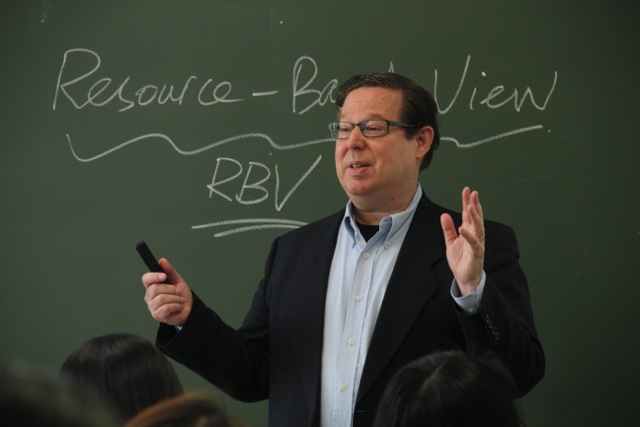
Professor Dunham in the classroom at Tsinghua. (Photo by Zhang Sihan)
The program aims to bring business journalism in China in line with top international reporting standards. The Tsinghua School of Journalism and Communication has a long history of cooperation with major international media and financial-information organizations, and visiting scholars have come from outlets such as Bloomberg, Reuters, Business Week, The New York Times, Financial Times, The Washington Post and CNN.
GBJ offers an array of specialized courses that are at the forefront of global business journalism. Students can learn about international accounting standards, multimedia journalism, data mining, complex financial derivatives, journalism ethics, advanced feature writing techniques and the management of media organizations – knowledge that is transferable to other economies and other professions. At the same time, they gain a deeper knowledge of the Chinese language and economy.
The GBJ program benefits from other academic resources on the Tsinghua campus, including its prestigious School of Economics and Management, as well many Chinese and global media and technology companies in Beijing. Internships, field trips and recruiter visits are integral parts of the program.
GBJ students have opportunities to attend conferences on new media, economic development and other business topics. They benefit from meetings and discussions with guest speakers, including top editors and reporters from leading Chinese and Western news outlets and international business executives. The GBJ has a growing network of smart, sophisticated reporters, editors and public relations professionals who can enhance the world’s understanding of economic and corporate developments in China and globally.
- Program Courses
| Basic Courses | |
| Introduction to Mass Communications and Society in Contemporary China | |
| Chinese Language | |
| Intercultural communication | |
| Media Research Methods | |
| Core Courses | |
| English Financial News Reporting and Writing | |
| Multimedia Business Reporting | |
| Global Business Journalism (advanced) | |
| Economics and Accounting Basics for Journalists | |
| Business Data Mining and Analysis | |
| Elective Courses | |
| Corporate Communication | |
| Opinion and News Commentary | |
| Hot topics in the Global Economy | |
| Feature Writing | |
| Corporate Strategies, Case Studies of Chinese and Global Companies | |
| Personal Finance Reporting | |
| Media Management | |
| Workshop on Film and TV Production | |
| Theory and Practice of Public Diplomacy | |
| Data Journalism | |
| Public Relations: An Introduction | |
| Public Speaking | |
| Other Requirements | |
| Pro-Seminar for Master Candidates in Global Business Journalism | |
| Literature Review and Thesis Proposal | |
| Academic Activities | |
| Internship | |
- Qualification of Applicants
Applicants should have a Bachelor’s degree in related fields and certificate for English proficiency.
- Application Documents
1) The completed Foreigner’s Application Form for Admission to Graduate Programs of Tsinghua University with a 2-inch recent photo, signed by the applicant;
2) Statement of Purpose and resume;
3) The original or the notarial degree certificate or proof of education at an academic institution (you need to submit an original or notarial degree certificate after it was awarded) and an academic transcript. The degree certificate and academic transcript must be officially sealed.
4) Two academic recommendation letters from scholars of associate professorship or higher. They must show referee’s phone number and email address on the letter.
5) For non-English speaking students, please provide English level certificates. e.g. TOEFL, IELTS, etc.
6) A copy of your passport page with personal information (personal and ordinary passport);
7) The completed Application Form for Tsinghua University Scholarship (if applicable, original);
8) A non-refundable application fee of RMB600.
The certificates provided should be the original documents in Chinese or in English, otherwise notarial translations in Chinese or English are required. None of the above application documents will be returned.

Some of the best students from China and around the world.
- Application Procedure
Step 1: Online Application
Complete Online Application on the website of the Foreign Student Affairs Office, Tsinghua University
(http://www.is.tsinghua.edu.cn/EN/online-application/instruction.html). Print and sign the Application Form produced by the system after the application status changes to “verified.”
Step 2: Documents Submission
Submit the application documents listed above to the address indicated below by post mail or in person.
Step 3:Application Fee Payment
There are two ways to pay application fee:
1 . Pay online using a credit card;
After your online application form is verified or the materials are received by Tsinghua University, the staff will make you the online payment draft, and at the same time, an email will be automatically sent out to remind you to pay the application fee via the online application system.
2 . Pay in cash at the Foreign Student Affairs Office (Room 120, Zijing Building 22) on the campus of Tsinghua University.
- Application Deadline
November 1, 2014 — March 20, 2015
Both the Online Application and a complete set of Application documents should be completed and the package should be received by March 20, 2015.
- Tuition and Scholarship
Tuition:Program tuition fee is RMB39000/year.
Accidental Injury and Hospitalization Insurance: RMB 600/year.
Please visit http://is.tsinghua.edu.cn for more information about scholarships.
- Program Website:
For more information about the program, please visit the GBJ website at:
http://gbj.tsjc.tsinghua.edu.cn/publish/jcgbj/index.html
- Application Website:
For an application, please visit the Application Website at:
http://www.is.tsinghua.edu.cn/EN/online-application/instruction.html
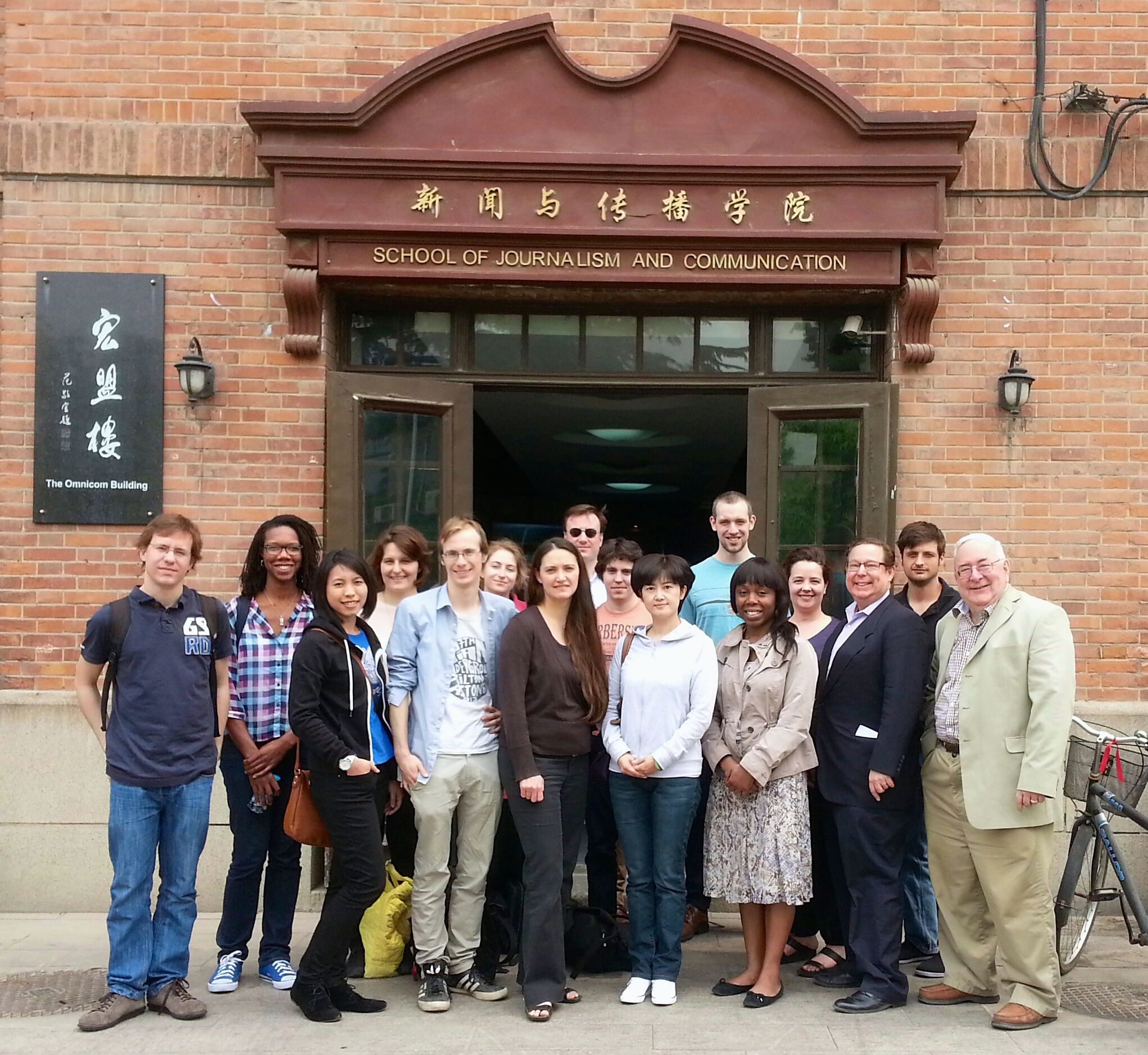
We regularly host international scholars, lecturers from global businesses and exchange students.
10.Contact Information:
Ms. Olivia Xiaoyu Zhou
Room 302, Omnicom Building,
School of Journalism and Communication
Tsinghua University,
Beijing 100084, P. R. China
Tel: +86 10 6279 6842
Fax: +86 10 6277 1410
E-mail: tsjcws@tsinghua.edu.cn
Eric Cantor not only joins the list of most shocking House primary losers ever, he tops the list
Posted: June 11, 2014 Filed under: U.S. politics | Tags: Bill Green, China, Congress, Dan Rostenkowski, Elizabeth Holtzman, Emanuel Celler, Eric Cantor, Fiorello LaGuardia, Greg Laughlin, James A. Byrne, Jim Wright, John F. Kennedy, Larry Neal, Michael Patrick Flanagan, New York Times, Ralph Hall, Richard Nixon, Ron Paul, Ross Perot, Tea Party, Tom Foley, U.S. Congress, Wingate Lucas 6 Comments Sometimes, the hyperbole is right.
The New York Times calls House Majority Leader Eric Cantor’s lopsided primary loss to an underfunded Tea Party challenger “one of the most stunning primary election upsets in congressional history.”
It sounded like hyperbole to me, so I started to think. And think. And think. And I couldn’t think of a comparable repudiation of a House powerhouse by his own party’s voters.
Then I called out the search engines — even the ones blocked here in China — and I soon concluded that Cantor, the first House Majority Leader to be ousted by his own party since the post was created 115 years ago, topped the list.
It’s a short list, because so few primary defeats come out of nowhere. There was a bit of a buzz a couple of weeks ago when Rep. Ralph Hall of Texas, a former committee chairman and the oldest man ever to serve in the House, was ousted by a Tea Party insurgent. But few among the Pundit Elite were shocked.
This one was different. I was thinking back and I thought all the way back to the dark days of the Vietnam War, when anti-war insurgent Elizabeth Holtzman stunned longtime House Judiciary Committee Chairman Emanuel Celler in the 1972 New York Democratic primary. Celler was the longest-serving member of the House, a 50-year veteran, and his defeat rocked the House leadership almost as much as George McGovern’s landslide presidential loss did two months later.
General election shockers are nothing new in wave election years or special circumstances. House Speaker Tom Foley was toppled in the 1994 Republican Revolution that ended four decades of Democratic dominance. People were shocked when Dan Rostenkowski, the Ways and Means Committee chairman, lost after getting in trouble with the law over postage stamps and a few other low crimes and misdemeanors. After all, it was Chicago, and what Daley Machine pol loses … to a Republican?
Chicago’s Michael Patrick Flanagan (the Rosty Slayer) isn’t the only challenger to see lightning strike. New York sent Republican Fiorello LaGuardia to Congress in a shocker over Tammany Hall’s own incumbent Democrat, Michael F. Farley, in 1916. LaGuardia went on to become a legendary New York mayor and the subject of a Pulitzer Prize winning musical, “Fiorello!” Farley died in 1921 of exposure to anthrax from his shaving brush.
Rostenkowski’s general election defeat was a final ripple from the the biggest anti-incumbent primary wave in modern history, when 19 lawmakers were purged by constituents angered by the House bank scandal and the lingering aftereffects of recession. The biggest name to fall in a primary that year was Michigan Rep. Guy Vander Jagt, chairman of the National Republican Congressional Commitee, who was beaten by conservative insurgent Peter Hoekstra.
The next biggest wave of incumbent House member defeats in primaries came in 1946, when 18 sitting House members were ousted so that a group of World War Two vets could come to power. None rivaled Cantor in star power.
Among the newcomers: Richard Nixon and John F. Kennedy, neither of whom ousted incumbents in primaries. Nixon shocked five-term California Democrat Jerry Voorhis in the general election, while Kennedy earned his way to DC by dispatching nine Democrats (including two named Joseph Russo — one of them recruited by his dad to split the opposition vote).
Many of the biggest primary surprises have come after reapportionment and redistricting, when party leaders try to eliminate upstarts by “pairing” them against powerful veterans. Sometimes, it backfires, like when anti-machine Philadelphia Democrat Bill Green buried ten-term incumbent (and former funeral director) James A. Byrne in 1972.
Party-switchers also have been prime targets for primary defeats, even with the support of their new party. Such was the fate of Texas Rep. Greg Laughlin, who was toppled in a 1996 GOP primary by a supposedly washed-up former congressman (and Libertarian Party presidential candidate) named Ron Paul, a man who lives to bedevil the Pundit Elite.
Occasionally — very, very occasionally — a grassroots insurgent takes out the Establishment favorite. How many of you remember when a young upstart from Weatherford, Texas, named James Claude Wright Jr. unseated four-term incumbent Wingate Lucas, the favorite of Fort Worth publisher and power broker Amon Carter, in the 1954 Democratic primary? (Former Star-Telegram political reporter and DC veteran Larry Neal does.) Wright went on to become one of the most powerful House members of the second half of the 20th century, serving as House Majority Leader and House Speaker.
Does anybody have any other nominees for biggest primary election surprises? As Ross Perot said famously, “I’m all ears.”

 Rick Dunham Blog
Recent Comments