Who said it? Xi Jinping or … George Bush, Donald Trump, Ted Cruz, Nancy Pelosi or Henry Kissinger?
Posted: September 21, 2015 Filed under: Breaking news, Discovering China, U.S. politics | Tags: Barack Obama, Bernie Sanders, Binyamin Netanyahu, China, Chinese economy, Chris Christie, Communist Party, Dan Quayle, Deng Xiaoping, Donald Rumsfeld, Donald Trump, Franklin D. Roosevelt, George H.W. Bush, George W. Bush, Hassan Rohani, Henry Kissinger, Japan, Jeb Bush, Jim Mann, John Kerry, Mao Zedong, Margaret Thatcher, Michael Keaton, Mr. Mom, Nancy Pelosi, Pat Buchanan, Paul Prudhomme, peace, Philadelphia Inquirer, Pope Francis, Raul Castro, Rick Perry, Ronald Reagan, Shinzo Abe, Ted Cruz, terrorism, The China Fantasy, United States, Vladimir Putin, Wang Jiarui, Washington Post, world peace, Xi Jinping Leave a comment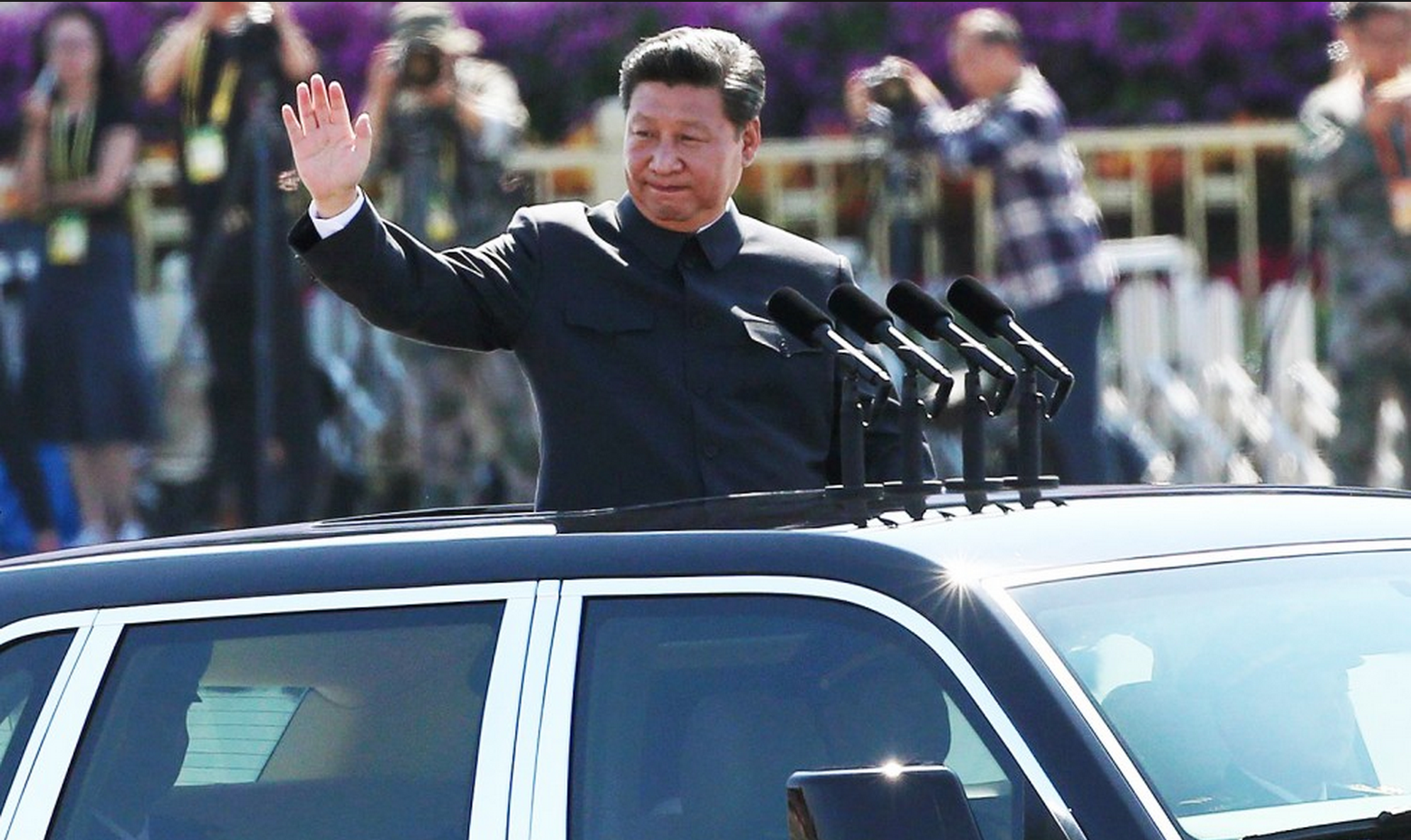
Images of Xi Jinping at the Sept. 3 military victory parade were shared around the world. But who is the Chinese leader and what does he stand for?
Chinese President Xi Jinping is coming to the United States, and very few Americans (or even American journalists) know much about the leader of the nation’s most populous country.
With apologies to Vladimir Putin, he has been called the most powerful leader in the world. But what does that mean?
Is Xi a reformer? Is he a hardliner? Is he a step forward, a step back — or both? Is he firmly in control or fearful of rivals within the ruling elite — or both? Is “Big Daddy Xi” widely popular or the beneficiary of a manufactured cult of personality?
As much as I’ve learned about China over the past two years, I still have a lot to learn. For additional background, I recommend you check out my former Philadelphia Inquirer colleague Jim Mann’s recent commentary in the Washington Post:
For American pundits, China isn’t a country. It’s a fantasyland.
In the meantime, test your knowledge of who Xi Jinping is — and isn’t — by taking this news quiz. Which of these statements are from Xi and which are from other world figures? Good luck.
For answers, scroll to the bottom of the post, after the final photo. Click on the quotations to read the original source material.

President Barack Obama and Xi Jinping have been careful to treat the other with respect and discuss fundamental disagreements without alienating the other nation’s leadership.
Who said the following?
1. Japan is “eating our lunch.”
a) Xi Jinping
b) Donald Trump
c) Paul Prudhomme
a) Xi Jinping
b) George W. Bush
c) Donald Rumsfeld
3. “Some foreigners with full bellies and nothing better to do engage in finger-pointing at us.”
a) Xi Jinping
b) Pat Buchanan
c) Chris Christie
4. “America must be a light to the world, not just a missile.”
a) Xi Jinping
b) Barack Obama
c) Nancy Pelosi
d) George H.W. Bush
5. A cooperative United States-China relationship is “essential to global stability and peace.”
a) Xi Jinping
b) Barack Obama
c) Henry Kissinger
a) Xi Jinping
b) George W. Bush
c) Margaret Thatcher
d) Ronald Reagan
a) Xi Jinping
b) Pope Francis
c) Raul Castro
d) Barack Obama
8. “Japan is not being nice to us.”
a) Xi Jinping
b) Donald Trump
c) Franklin D. Roosevelt
d) Theodore Roosevelt
a) Xi Jinping
b) Barack Obama
c) Binyamin Netanyahu
a) Xi Jinping
b) Barack Obama
c) Binyamin Netanyahu
11. “The international forces are shifting in a way that is more favorable to maintaining world peace.”
a) Xi Jinping
b) Shinzō Abe
c) Barack Obama
c) Hassan Rohani
a) Xi Jinping
b) Margaret Thatcher
c) Marco Rubio
d) Ronald Reagan
13. “When did we beat Japan at anything?”
a) Xi Jinping
b) Donald Trump
c) Michael Keaton in “Mr. Mom”
d) The captain of the U.S. Olympic baseball team
a) Xi Jinping
b) Bernie Sanders
c) Mao Zedong
d) Ronald Reagan
a) Xi Jinping
b) Deng Xiaoping
c) Ted Cruz
16. “As Deng Xiaoping said, we must ‘seek truth from facts.’ ”
a) Xi Jinping
b) Barack Obama
c) George H.W. Bush
17. “People should not underestimate me.”
a) Xi Jinping
b) George W. Bush
c) Bernie Sanders
d) Vladimir Putin
a) Xi Jinping
b) Henry Kissinger
c) Jim Mann, American journalist and author of The China Fantasy
d) Wang Jiarui, head of the Communist Party of China’s international department
a) Xi Jinping
b) George W. Bush
c) Dan Quayle
d) Rick Perry
a) Xi Jinping
b) Barack Obama
c) John Kerry
d) Ronald Reagan
Answers below this photo.

XI Jinping is honored in Iowa, where he lived several decades ago.
1.b; 2.a; 3.a; 4.c; 5.c; 6.a; 7.a; 8.b; 9.a; 10.c; 11.a; 12.a; 13.b; 14.a; 15.c; 16.b; 17.c; 18.d; 19.a ; 20.d
Global Business Journalism students are improving the quality of journalism in China and around the world
Posted: July 12, 2015 Filed under: Global Business Journalism, Journalism Training, Rick in the news | Tags: Bank of America, Barrows Dunham, Bloomberg News, CCTV, China, China Daily, Chinese economy, commencement, Data Journalism, Global Business Journalism, graduation, Hang Min, House Un-American Activities Committee, ICFJ, International Center for Journalists, Jin Jianbin, Lee Miller, multimedia journalism, Radio Beijing, Red Scare, Shi Anbin, Tsinghua University, Xinhua, Zhang Sihan Leave a comment
A talented group of global journalists, including the first graduates from Nepal, Jamaica and Ukraine.
I am so excited about the opportunities I have had in China to work with journalism students — both international and Chinese — and professional journalists to improve the caliber of reporting and writing in China, and to prepare us all for the Brave New World of journalism in the Digital Age. Here is a transcript of my speech at the July 10 commencement of the Tsinghua School of Journalism and Communication Global Business Journalism Program.
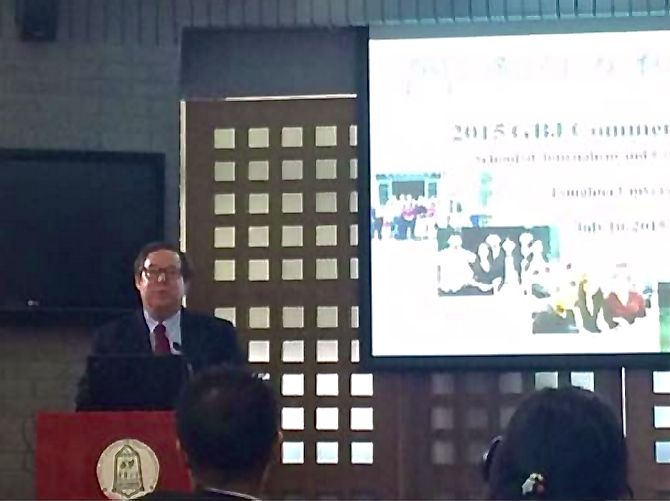
Speaking to the 2015 graduating class of the Global Business Journalism Program at Tsinghua University.
I am honored, on behalf of the faculty of the Global Business Journalism Program, to congratulate you on your successful completion of graduate studies at the Tsinghua School of Journalism and Communication graduation.
It indeed has been an adventure – a voyage of discovery – for all of us. You represent the best of China and the best of the world.
Over the past eight years, students from more than 50 countries have studied together, worked together, gotten to know each other here in the Global Business Journalism Program at Tsinghua University. Ours is a vibrant tapestry of cultures and ideas. You have been exposed to new perspectives, whether they are from the minds of brilliant Chinese professors or veteran international journalists who have plied their trade at the highest levels in the United States and around the world. All of us have gained a better understanding of the rapidly changing world we are inheriting, the rise of China and the rapid transformation of its economy, the complicated dynamics of our interdependent global business world, the rapid transformation of our own world of journalism and the imperative to learn new multimedia and data skills to compete in the emerging journalism marketplace. You have been tested with rigor. You have passed the test. I am so proud of you.
Eight years ago, the Global Business Journalism Master’s Degree Program was just a dream, an idea conceived by some exceptionally creative souls at Tsinghua University in Beijing and at the International Center for Journalists in Washington. In just a few years, it has gained tremendous respect throughout China and around the world, attracting renowned international scholars and Pulitzer Prize winning journalists to work with our students and share their wisdom and their skills.
From the beginning, the GBJ program has been nurtured by the invaluable and incalculable support of Bloomberg News, with its unprecedented gift of ten of its priceless terminals, a series of guest lecturers and events, and a wonderful faculty member named Lee Miller.

One of Tsinghua’s finest, Zhang Sihan, is heading to Columbia University to pursue a dual master’s program in journalism and public policy.
And special thanks to my partner in the program, Dr. Hang Min, for her support, her wisdom and her guidance in making the GBJ program an invaluable resource for global journalism. Under her leadership, we have offered some of the most advanced classes in communication theory, as well as practical, advanced skills that will help our graduates succeed in their chosen field of endeavor, whether that be global business journalism, business, journalism, or something else somewhere on this globe.
By setting exacting standards and requiring rigorous coursework, the GBJ Program has helped to improve business journalism in China by training a new generation of highly qualified journalists specializing in economics and business. Our Chinese graduates now work at some of the most important media outlets in China, such as China Daily, Xinhua News Service, CCTV, and Radio Beijing, as well as at important international media outlets such as Bloomberg News.
That is a testament to the quality of our alumni. It also is a testament to the iron will of friends in the Tsinghua School of Journalism and Communication who have exhibited an unwavering commitment to our success and our continuing growth. Dr. Shi Anbin has been a champion of our cause and a special mentor to me as a newly minted college professor. Thanks, Dean Shi, for everything you have done to make GBJ what it is today, and thanks to Dr. Jin Jianbin and other school officials for their support.
Of course, as all of us know in business journalism, you can’t have an entrepreneurial venture without some venture capital. I would like to thank our founding sponsor, Bank of America, for its steadfast commitment to the program since 2007.
I would like to close by quoting from my favorite philosopher, who happens to be my grandfather, Barrows Dunham. Despite a turbulent professional career that included an unwelcome appearance before the U.S. House Un-American Activities Committee and a spot on the American blacklist during the Red Scare Era of the 1950s, my grandfather, a distinguished philosophy professor and internationally acclaimed author, never lost his sense of patriotism or optimism.
“Even now,” he once wrote, “we ourselves are determining the future, not by knowing what it will be, but by conceiving what it can be.”
None of us know what the future will hold. But with the knowledge we have gained at Tsinghua, the support of our families – and, yes, the Global Business Journalism family – we can conceive that better future.
Congratulations to the Tsinghua Global Business Journalism graduating class. Good luck to all of you. Thank you.
Why you should join the Global Business Journalism Program at Tsinghua — or recommend it to a friend
Posted: December 29, 2014 Filed under: Global Business Journalism, Journalism Training | Tags: Beijing, Bloomberg News, China, Data Journalism, Global Business Journalism, Hang Min, International Center for Journalists, multimedia journalism, Olivia Zhou, Tsinghua University 1 Comment
Our 2014 graduating class
To all of my journalism friends around the world: I invite you to spread the good word about the good work we are doing here at Tsinghua. We’re looking to recruit an exceptional class of graduate students for the upcoming school year and to prove to any skeptics that you can have a world-class journalism program in China. Here’s the pitch. Feel free to share. Comments and questions are welcome.
Are you interested in becoming an expert on the world’s fastest-growing economy?
Do you want to study Asia Pacific business development and report that to the world?
Do you want to have an amazing educational and personal experience in a dynamic country?
Do you want to learn how to share your stories with audiences via print, audio, video and digital media?
Please join in us in the Global Business Journalism Master’s Degree Program at Tsinghua University in China!
2015 Enrollment Instructions
for M.A. in Global Business Journalism
at the School of Journalism and Communication, Tsinghua University, Beijing, China
- Introduction
With China playing a central role in the global economy, there is a soaring demand for trained professionals who can understand the exciting, complicated development of the world’s fastest-growing economy – and can explain it – clearly and in depth — to audiences in China and around the world.

Co-Director Dr. Hang Min with GBJ student
Tsinghua University Master of Arts degree in Global Business Journalism is designed to meet that growing need. The program offers international students the opportunity to master the fine points of business, finance and economics in China. All courses are taught in English — the international language of business — by internationally renowned scholars and accomplished journalists with extensive global experience. The program’s facilities rival those of other leading journalism schools worldwide. The news lab has the largest number of Bloomberg terminals of any college in the world.
Business journalism is one of the fastest growing areas of employment opportunities in the industry today. News audiences are eager to learn about the world of business, while media departments expect PR professionals to understand and analyze the complexities of business issues.
Tsinghua’s Master of Global Business Journalism Program is designed to offer you the opportunity to meet these growing needs and, at the same time, master the fine points of economics, finance and business in China and the world. We welcome you to join in us!
The first English-language graduate business journalism program on the Chinese mainland, created in partnership with the International Center for Journalists, it has sent 171 graduates to news outlets in China and globally over its first seven years.
Launched in 2007, the GBJ program has already been recognized by students and recruiters alike as a world-class program. Academe, the world’s leading journal on higher education, featured a cluster of articles on the program in February 2008. Only the most talented applicants from around the world are accepted, and the student body is culturally and professionally diverse. The full-time program spans two years of intense, fast-paced, rewarding study. Those who complete it successfully emerge with valuable connections, a rich array of opportunities and the business and journalism skills to capitalize on them. It is a two-year experience that will last a lifetime.
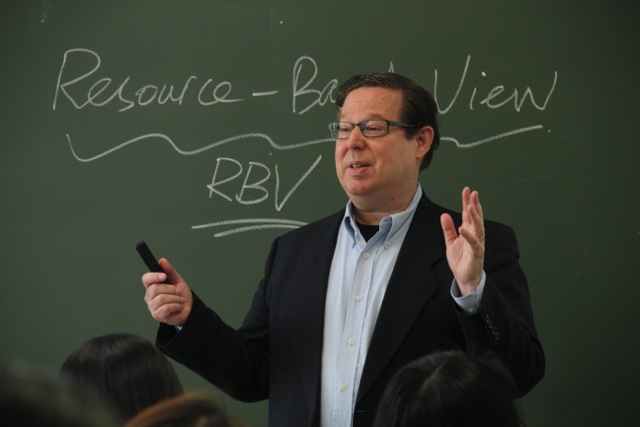
Professor Dunham in the classroom at Tsinghua. (Photo by Zhang Sihan)
The program aims to bring business journalism in China in line with top international reporting standards. The Tsinghua School of Journalism and Communication has a long history of cooperation with major international media and financial-information organizations, and visiting scholars have come from outlets such as Bloomberg, Reuters, Business Week, The New York Times, Financial Times, The Washington Post and CNN.
GBJ offers an array of specialized courses that are at the forefront of global business journalism. Students can learn about international accounting standards, multimedia journalism, data mining, complex financial derivatives, journalism ethics, advanced feature writing techniques and the management of media organizations – knowledge that is transferable to other economies and other professions. At the same time, they gain a deeper knowledge of the Chinese language and economy.
The GBJ program benefits from other academic resources on the Tsinghua campus, including its prestigious School of Economics and Management, as well many Chinese and global media and technology companies in Beijing. Internships, field trips and recruiter visits are integral parts of the program.
GBJ students have opportunities to attend conferences on new media, economic development and other business topics. They benefit from meetings and discussions with guest speakers, including top editors and reporters from leading Chinese and Western news outlets and international business executives. The GBJ has a growing network of smart, sophisticated reporters, editors and public relations professionals who can enhance the world’s understanding of economic and corporate developments in China and globally.
- Program Courses
| Basic Courses | |
| Introduction to Mass Communications and Society in Contemporary China | |
| Chinese Language | |
| Intercultural communication | |
| Media Research Methods | |
| Core Courses | |
| English Financial News Reporting and Writing | |
| Multimedia Business Reporting | |
| Global Business Journalism (advanced) | |
| Economics and Accounting Basics for Journalists | |
| Business Data Mining and Analysis | |
| Elective Courses | |
| Corporate Communication | |
| Opinion and News Commentary | |
| Hot topics in the Global Economy | |
| Feature Writing | |
| Corporate Strategies, Case Studies of Chinese and Global Companies | |
| Personal Finance Reporting | |
| Media Management | |
| Workshop on Film and TV Production | |
| Theory and Practice of Public Diplomacy | |
| Data Journalism | |
| Public Relations: An Introduction | |
| Public Speaking | |
| Other Requirements | |
| Pro-Seminar for Master Candidates in Global Business Journalism | |
| Literature Review and Thesis Proposal | |
| Academic Activities | |
| Internship | |
- Qualification of Applicants
Applicants should have a Bachelor’s degree in related fields and certificate for English proficiency.
- Application Documents
1) The completed Foreigner’s Application Form for Admission to Graduate Programs of Tsinghua University with a 2-inch recent photo, signed by the applicant;
2) Statement of Purpose and resume;
3) The original or the notarial degree certificate or proof of education at an academic institution (you need to submit an original or notarial degree certificate after it was awarded) and an academic transcript. The degree certificate and academic transcript must be officially sealed.
4) Two academic recommendation letters from scholars of associate professorship or higher. They must show referee’s phone number and email address on the letter.
5) For non-English speaking students, please provide English level certificates. e.g. TOEFL, IELTS, etc.
6) A copy of your passport page with personal information (personal and ordinary passport);
7) The completed Application Form for Tsinghua University Scholarship (if applicable, original);
8) A non-refundable application fee of RMB600.
The certificates provided should be the original documents in Chinese or in English, otherwise notarial translations in Chinese or English are required. None of the above application documents will be returned.

Some of the best students from China and around the world.
- Application Procedure
Step 1: Online Application
Complete Online Application on the website of the Foreign Student Affairs Office, Tsinghua University
(http://www.is.tsinghua.edu.cn/EN/online-application/instruction.html). Print and sign the Application Form produced by the system after the application status changes to “verified.”
Step 2: Documents Submission
Submit the application documents listed above to the address indicated below by post mail or in person.
Step 3:Application Fee Payment
There are two ways to pay application fee:
1 . Pay online using a credit card;
After your online application form is verified or the materials are received by Tsinghua University, the staff will make you the online payment draft, and at the same time, an email will be automatically sent out to remind you to pay the application fee via the online application system.
2 . Pay in cash at the Foreign Student Affairs Office (Room 120, Zijing Building 22) on the campus of Tsinghua University.
- Application Deadline
November 1, 2014 — March 20, 2015
Both the Online Application and a complete set of Application documents should be completed and the package should be received by March 20, 2015.
- Tuition and Scholarship
Tuition:Program tuition fee is RMB39000/year.
Accidental Injury and Hospitalization Insurance: RMB 600/year.
Please visit http://is.tsinghua.edu.cn for more information about scholarships.
- Program Website:
For more information about the program, please visit the GBJ website at:
http://gbj.tsjc.tsinghua.edu.cn/publish/jcgbj/index.html
- Application Website:
For an application, please visit the Application Website at:
http://www.is.tsinghua.edu.cn/EN/online-application/instruction.html
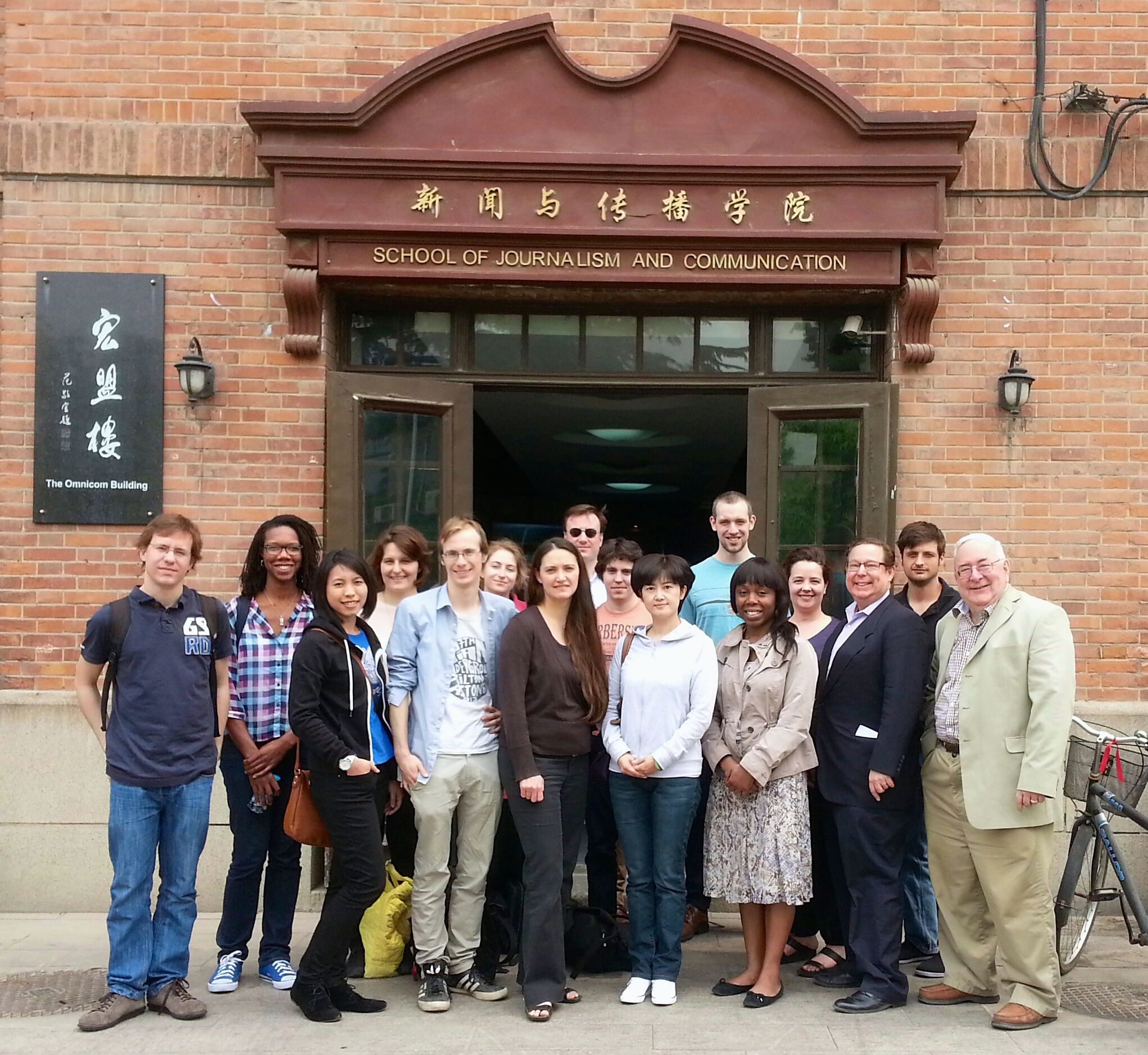
We regularly host international scholars, lecturers from global businesses and exchange students.
10.Contact Information:
Ms. Olivia Xiaoyu Zhou
Room 302, Omnicom Building,
School of Journalism and Communication
Tsinghua University,
Beijing 100084, P. R. China
Tel: +86 10 6279 6842
Fax: +86 10 6277 1410
E-mail: tsjcws@tsinghua.edu.cn
Eric Cantor not only joins the list of most shocking House primary losers ever, he tops the list
Posted: June 11, 2014 Filed under: U.S. politics | Tags: Bill Green, China, Congress, Dan Rostenkowski, Elizabeth Holtzman, Emanuel Celler, Eric Cantor, Fiorello LaGuardia, Greg Laughlin, James A. Byrne, Jim Wright, John F. Kennedy, Larry Neal, Michael Patrick Flanagan, New York Times, Ralph Hall, Richard Nixon, Ron Paul, Ross Perot, Tea Party, Tom Foley, U.S. Congress, Wingate Lucas 6 Comments Sometimes, the hyperbole is right.
The New York Times calls House Majority Leader Eric Cantor’s lopsided primary loss to an underfunded Tea Party challenger “one of the most stunning primary election upsets in congressional history.”
It sounded like hyperbole to me, so I started to think. And think. And think. And I couldn’t think of a comparable repudiation of a House powerhouse by his own party’s voters.
Then I called out the search engines — even the ones blocked here in China — and I soon concluded that Cantor, the first House Majority Leader to be ousted by his own party since the post was created 115 years ago, topped the list.
It’s a short list, because so few primary defeats come out of nowhere. There was a bit of a buzz a couple of weeks ago when Rep. Ralph Hall of Texas, a former committee chairman and the oldest man ever to serve in the House, was ousted by a Tea Party insurgent. But few among the Pundit Elite were shocked.
This one was different. I was thinking back and I thought all the way back to the dark days of the Vietnam War, when anti-war insurgent Elizabeth Holtzman stunned longtime House Judiciary Committee Chairman Emanuel Celler in the 1972 New York Democratic primary. Celler was the longest-serving member of the House, a 50-year veteran, and his defeat rocked the House leadership almost as much as George McGovern’s landslide presidential loss did two months later.
General election shockers are nothing new in wave election years or special circumstances. House Speaker Tom Foley was toppled in the 1994 Republican Revolution that ended four decades of Democratic dominance. People were shocked when Dan Rostenkowski, the Ways and Means Committee chairman, lost after getting in trouble with the law over postage stamps and a few other low crimes and misdemeanors. After all, it was Chicago, and what Daley Machine pol loses … to a Republican?
Chicago’s Michael Patrick Flanagan (the Rosty Slayer) isn’t the only challenger to see lightning strike. New York sent Republican Fiorello LaGuardia to Congress in a shocker over Tammany Hall’s own incumbent Democrat, Michael F. Farley, in 1916. LaGuardia went on to become a legendary New York mayor and the subject of a Pulitzer Prize winning musical, “Fiorello!” Farley died in 1921 of exposure to anthrax from his shaving brush.
Rostenkowski’s general election defeat was a final ripple from the the biggest anti-incumbent primary wave in modern history, when 19 lawmakers were purged by constituents angered by the House bank scandal and the lingering aftereffects of recession. The biggest name to fall in a primary that year was Michigan Rep. Guy Vander Jagt, chairman of the National Republican Congressional Commitee, who was beaten by conservative insurgent Peter Hoekstra.
The next biggest wave of incumbent House member defeats in primaries came in 1946, when 18 sitting House members were ousted so that a group of World War Two vets could come to power. None rivaled Cantor in star power.
Among the newcomers: Richard Nixon and John F. Kennedy, neither of whom ousted incumbents in primaries. Nixon shocked five-term California Democrat Jerry Voorhis in the general election, while Kennedy earned his way to DC by dispatching nine Democrats (including two named Joseph Russo — one of them recruited by his dad to split the opposition vote).
Many of the biggest primary surprises have come after reapportionment and redistricting, when party leaders try to eliminate upstarts by “pairing” them against powerful veterans. Sometimes, it backfires, like when anti-machine Philadelphia Democrat Bill Green buried ten-term incumbent (and former funeral director) James A. Byrne in 1972.
Party-switchers also have been prime targets for primary defeats, even with the support of their new party. Such was the fate of Texas Rep. Greg Laughlin, who was toppled in a 1996 GOP primary by a supposedly washed-up former congressman (and Libertarian Party presidential candidate) named Ron Paul, a man who lives to bedevil the Pundit Elite.
Occasionally — very, very occasionally — a grassroots insurgent takes out the Establishment favorite. How many of you remember when a young upstart from Weatherford, Texas, named James Claude Wright Jr. unseated four-term incumbent Wingate Lucas, the favorite of Fort Worth publisher and power broker Amon Carter, in the 1954 Democratic primary? (Former Star-Telegram political reporter and DC veteran Larry Neal does.) Wright went on to become one of the most powerful House members of the second half of the 20th century, serving as House Majority Leader and House Speaker.
Does anybody have any other nominees for biggest primary election surprises? As Ross Perot said famously, “I’m all ears.”
An evening bike ride through Tian’anmen Square on June 3, 2014
Posted: June 4, 2014 Filed under: Discovering China | Tags: Beijing, Biking in Beijing, China, Facebook, Felicia Sonmez Leave a commentThis guest blog was written as a Facebook post by Felicia Sonmez, one of the best journalists in Beijing. Many thanks to Felicia for giving me permission to share it with you.
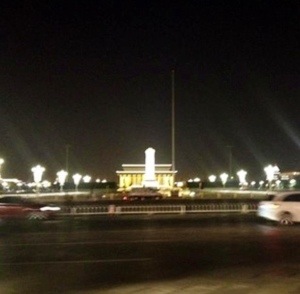
First you get a hunch you’re being followed. Then you think you must be crazy. Why would an old man on a bike be doing a thing like that, on a leafy Beijing street, on such a pleasant spring night?
Then you slow down, and so does he. You start up again and bike faster, and so does he. Finally he gets ahead of you and stops at a corner. You hesitate for a moment, then turn right, back toward the long road to the Square. And before you know it, he’s approaching you on your left side, and suddenly, he’s crashed into you.
“Sorry!” he says.
“What are you doing?” you ask, as he stumbles off his bike.
Rather than stick around to find out the answer, you hurry to get back on your bike and pedal away as fast as you can, without looking back.
Ordinarily, you might be worried about the chance of some stranger following you back to your house. But in this case, you’re almost relieved to get home. He probably works for the government. And they already know where you live.
It’s June 3, 2014, the eve of the 25th anniversary of the Tiananmen massacre, and also a year to the day since I moved back to Beijing. The visit last month from black-clad plainclothes security agents to our bureau — as well as most every foreign news outlet in Beijing — warning us not to do any newsgathering related to the anniversary has had several weeks to sink in. So have the various warnings that have come down from the Chinese foreign ministry.
Dozens of Chinese activists, rights lawyers, artists, journalists and others with even the most tenuous of links to Tiananmen have been detained over the past few months — enough to make it clear that any reporter would be foolish to think of heading down to the Square on June 3 or 4 and expect to get any reporting done, let alone avoid getting detained.
So, after a day spent in the office, I decided on a whim to hop on my bike and just go for an evening ride around town, to see what I could see. I left my recorder and notebook and home, bringing only my pocketbook, a deactivated smartphone I use for taking photos, and a few H&M shopping bags, which I threw in the basket of my bike.
I was only gone for an hour, and I wasn’t sure what I’d encounter.
I biked down Dongdan North Street until I got to East Chang’an Avenue, about four big blocks away from Tiananmen Square. Central Beijing usually has a fair police presence to begin with, but tonight felt different. Every police car or van that passed was silently flashing blue and red lights, as was every police box on the street, and officers were stationed at every main intersection. I must have passed more than 100 police over the course of my bike ride.
As I approached the corner, there was suddenly a lot of yelling. I looked on as four uniformed police officers dragged a young man across the street and toward the accordion gate that was blocking part of the bike lane.
About a dozen bikers waiting for the light to change watched as the police forced the man onto his knees and yelled at him. I couldn’t make out what the man had done wrong. But a woman with him was making a phone call, and one of the bikers next to me was recording the confrontation on his smartphone. I snapped a few photos, then turned onto Chang’an Avenue and kept biking to avoid causing a scene myself.
The police presence on Chang’an Avenue has been ramping up steadily over the past few weeks, with dogs and armed officers gradually being added to the mix. But tonight was unlike anything I’ve seen. Officers and police vehicles were stationed all along the giant east-west thoroughfare, which has seven lanes of traffic on each side. A few other bikers were riding along like me, including a few guys clad in racing gear and spandex (not like me). Even among those pro-looking riders, there was a palpable tension as they sped down the road under the officers’ watchful gaze.
I approached the Square. It was unlike any time I’ve ever seen it in the eight years since I first came to China. It’s normally a pretty festive place, teeming with tourists snapping photos, as well as a fair amount of police and vendors. That’s how it was two days ago, when I came by with some friends visiting from out of town.
Tonight, it was completely empty. Not a single person was on the Square as I biked by, just a lone white police van parked in front of the Monument to the People’s Heroes, facing against traffic.
I recalled a conversation with a Beijing lawyer I met recently. Hundreds of thousands of police officers being mobilized across the city — for what? he asked. Just to ensure that a non-commemoration of a non-anniversary remains that way? He thought it was not only a waste, but a shameful one.
I thought, also, of a story the lawyer had told me about a friend of his. It was last year, and news had just broken of the arrest of venture capitalist Wang Gongquan. Wang was outspoken, but his surprising arrest was taken as a sign that the neither the wealthy nor the well-known would be spared in Beijing’s new crackdown on dissent.
Many were spooked. But perhaps that was the intention. Regardless, the day Wang’s arrest was reported, the lawyer said, was the day his friend decided to pack up and leave China.
I kept biking down Chang’an Avenue, slowing down to snap a few photos with my smartphone, and suddenly something struck me. In clearing out the Square and deploying thousands of police across the city to quell any potential disturbances, the authorities had created a spectacle — a memorial, almost — of their own. The vast emptiness at the heart of the capital was a manifestation of the void that has existed since 1989, and of which the world is reminded — though perhaps not quite so vividly — every June.
That was the thought I was planning to end my night on, until I turned north onto Nanchang Jie. I realized after a few minutes that the old man was following me, and he kept pace with me all the way up the street past the Zhongnanhai leadership compound, across the north end of the Forbidden City and to the corner of Beichizi Street.
The bizarre run-in with him, which echoed stories I’d heard from other reporters during sensitive periods in China, quickly turned my mood tonight from pensive to spooked. But perhaps that was the intention. I left before I could find out more — and before my phone, press card, or other belongings could potentially be snatched.
Movie night at Tsinghua: All the President’s Men
Posted: April 28, 2014 Filed under: Dunham's Discourses, Global Business Journalism, Journalism Training, U.S. politics | Tags: All the President's Men, American politics, Arthur Bremer, Bay of Pigs, Ben Bradlee, Bob Woodward, Bobby Kennedy, Carl Bernstein, Central High School, Chappaquiddick, China, CIA, CIA scandals, CREEP, Deep Throat, Democratic National Committee, Dustin Hoffman, Edmund Muskie, FBI, Fidel Castro, George McGovern, George Wallace, John F. Kennedy, John Mitchell, Katharine Graham, Kennedy assassination, Mark Felt, National Press Club, Pam Tobey, Pentagon Papers, Richard Nixon, Robert Redford, Teddy Kennedy, Tom Eagleton, Tsinghua University, Vietnam War, Washington Post, Watergate, White House 6 Comments
An exact replica of the Washington Post newsroom was built in Hollywood.
I held my first “movie night” for my Chinese journalism grad students on Sunday night. After considering a few journalism-related classics (you can probably guess which they are), I chose one that highlights the best of journalism: “All the President’s Men.” It’s not just a journalism movie, of course. It’s a great detective story and an all-around outstanding movie with crisp writing, superb acting and tension-inducing directing. “All the President’s Men” is important journalism history. It’s also important American history. But I discovered as I played the video that many of the uniquely American topics (and 1970s cultural norms) contained in the movie were difficult to understand for my Tsinghua University students. So, in addition to playing the movie with English subtitles (do you realize how quickly Dustin Hoffman speaks, with that nasal accent of his?), I occasionally paused the movie for verbal annotations. Here are some of the important points I needed to explain to the students:
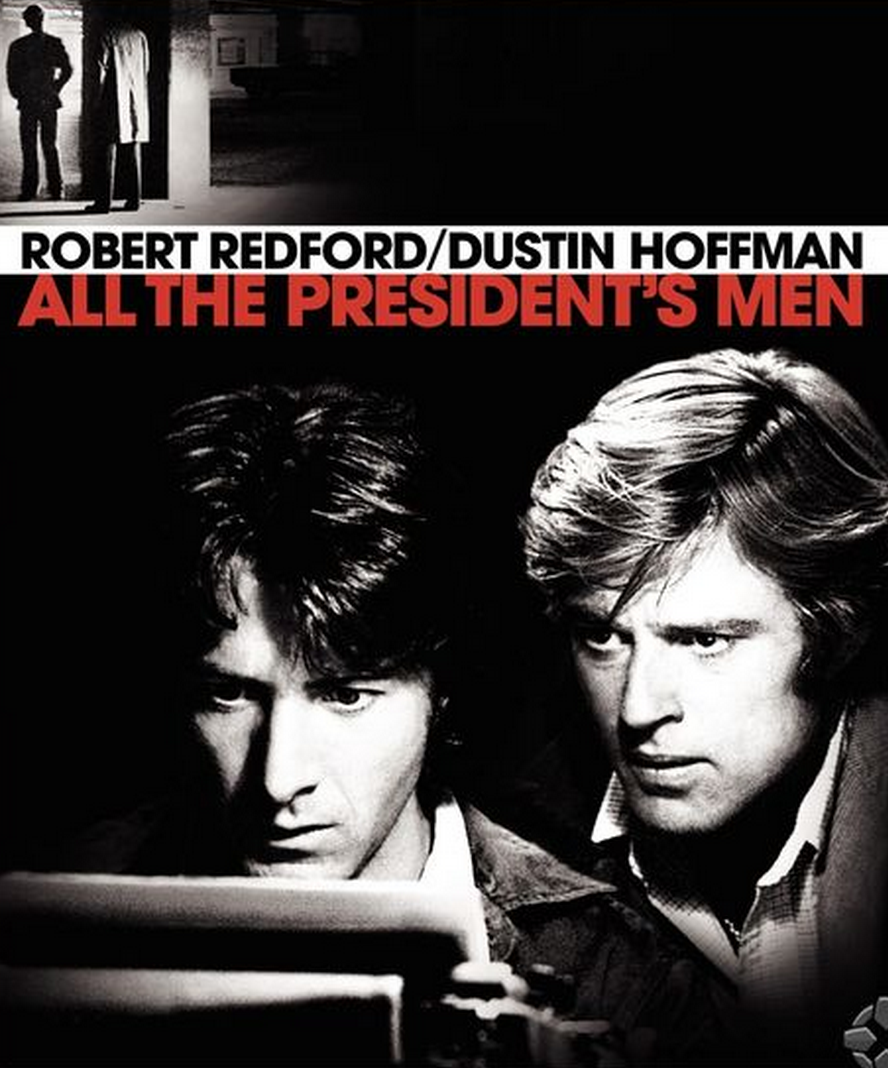
What is that machine those actors are using? And who is Robert Redford?
Newspaper references:
- Why Ben Bradlee and many American journalists curse a lot
- How Ben Bradlee cursed on live national TV when I hosted him as a speaker at a National Press Club luncheon in 2005
- What kind of a boss Ben Bradlee was to my wife Pam Tobey
- Who Deep Throat was and what motivated him to leak
- Where the real Bob Woodward/Mark Felt garage was located
- How the movie’s producers created a replica of the Washington Post’s newsroom in Hollywood for the movie — and the Post newsroom looked exactly the same when my wife Pam began working there in 1984
- Why reporters call the targets of their stories for comment before publishing the story
- Why it was unethical when Carl Bernstein called the secretary in the Miami prosecutor’s office and pretended he was someone he was not
- Why Watergate motivated me (and the entire Woodstein generation) to become reporters
Cultural references:
- Why all of the editors in the Post’s budget meetings were men
- What a manual typewriter is (or was) and why they were all over the newsroom
- Why I took Mrs. Wolin’s typing class at Central High when everybody said that typing was for girls who wanted to become secretaries. (Of course, I wanted to learn to type so I could become a reporter.)
- Who Robert Redford and Dustin Hoffman are
- What the movie “Deep Throat” was about and why Woodward’s editor chose it as a code name for Mark Felt
- What John Mitchell was talking about when he said Katharine Graham would get a certain part of anatomy caught in a wringer
- What a “creep” means and why CREEP became the acronym for the Committee to Re-elect the President
- Why so many people smoked in public spaces
Political references:
- Who John F. Kennedy was and why his photo was in Democratic National Committee headquarters at the Watergate
- The fact that JFK and his brother Bobby were assassinated
- Why the Vietnam War was so unpopular and why American society was torn apart by war, riots and civil rights struggles
- What the Pentagon Papers are
- Richard Nixon’s unique definition of “plumbers”
- Who Daniel Ellsberg is and why he had a psychiatrist
- Who George Wallace and Arthur Bremer were and how Woodward worked with Felt on stories about the Wallace assassination attempt
- Who the anti-Castro Cubans in Miami are
- What the Bay of Pigs is/was
- The long and sordid history of CIA scandals
- Why there is tension between the FBI and the CIA
- Why Nixon hated and feared the Kennedys
- What Chappaquiddick was
- Why George McGovern asked Tom Eagleton to leave the ticket in ’72
- Why Nixon wanted to run against McGovern and not Ted Kennedy or Edmund Muskie
- Why Ed Muskie “cried” in New Hampshire
- What a “Canuck” is
Any suggestions for my next American journalism movie night?
Communicating from China: My five lifelines to the world
Posted: March 28, 2014 Filed under: Dunham's Discourses | Tags: Africa, China, email, Facebook, Iran, National Press Club, Pakistan, Skype, Texas, Thailand, Twitter, University of Pennsylvania, WeChat, Y2K 2 Comments
Facebook is my #1 communications tool.
One of the realities of living in China is that I must communicate differently with friends and family.
No more drinks at the National Press Club. Cell phone calls and individual emails are an inefficient way to communicate with a large number of people.
So how have my communications methods evolved? Here are my five most frequently used sources — dominated by social media.
1. Facebook.
It is my lifeline. It is how I share my life experiences and travelogue through words and images. It reaches a large audience instantaneously. And it is my primary method of chatting with friends in America and Europe. The only problem is that Facebook is blocked by the Chinese government, so it is necessary to climb the Great Firewall of China to use it. That occasionally means some unplanned days of Facebook blackout.
2. WeChat.
I had never heard of WeChat when I arrived in China. I knew that Weibo was the Chinese combination of Facebook and Twitter. But I quickly learned (taught by my students) that WeChat is far superior. Almost nobody uses email in China. WeChat is the preferred means of communicating. Its “moments” feature allows you to post updates and photos like Facebook. And group chats allow me to communicate instantaneously with everyone in my class — or with a group of friends heading to dinner. It’s great. And there’s nothing in the U.S. quite like it. Yet.
3. Twitter.
I hadn’t realized just how much drivel gets posted on Twitter until I left the United States. So many American political reporters post so many unimportant updates. So many politicians have nothing to say. So many words (140 characters at a time). So little value. When I came to China, I spent a month “unfollowing” people who offered little insight and added some of the best tweeters in China. Now, once again, Twitter has value to me. But it is no longer my number one social media source, like it was when I was a reporter in search of breaking news, 24/7.
4. Skype.
In the past week, I have Skyped with people in Africa, Iran, Pakistan, Malaysia, Thailand, Texas and France. It is the most cost-effective way for me to do my job as an academic. The quality is usually decent, though, as with everything in China, technology is hit or miss. But Skype allows me to see Pam regularly and to communicate with friends from America to Europe to Asia. I also spend less on long-distance calls today than I did as a college student at the University of Pennsylvania. Thank you, Skype.
5. Email.
My students don’t use email. My colleagues rarely use email. Email is a very “Y2K” thing. But I still use it. It’s the best way to send documents or memos. And it’s the best way to have lengthy exchanges. It’s the only “old-fashioned” way I communicate.
Funny thing: None of these five methods of communication had been invented when I started my career as a journalist. My, oh my, how technology has changed our world.
What every tourist should know before visiting China
Posted: January 3, 2014 Filed under: Discovering China, Dunham's Discourses | Tags: Beijing, Beijing pollution, Beijing subway, Biking in Beijing, China, Chinese food, National Museum, Summer Palace, the Forbidden City, tourism, traffic 2 Comments
- Check your cultural assumptions with your luggage. Life is different here. Don’t view life in China through the prism of your American or European experiences.
- Beijing is crowded and massive. Don’t be intimidated by the volume of traffic, the human gridlock or the seeming chaos on the streets and in the subways. You’ll get used to it.
- Don’t be afraid to jostle people. There is no sense of personal space here. Don’t take it personally if somebody elbows you or pushes you.
- There is no “walk right, pass left” etiquette here. People walk, bike or drive every which way. Cars DO NOT stop for pedestrians. Bikes DO NOT yield to pedestrians. In fact, nobody yields to anybody.
- Be decisive. Indecisive people get run over by bikes or cars or other pedestrians.
- Don’t get upset when people spit on the street at any time in any place. Spit happens in China.
- Do not expect Western-style toilets. Get used to holes in the ground. Don’t complain about it. Get used to it.
- If there is not a price listed on an item in a market, you are expected to bargain. At tourist-oriented markets (such as the Silk Market), the original prices might be ten times what is reasonable. Don’t be afraid to walk away. Even if you are interested in buying something. Negotiate aggressively. If you don’t want to negotiate, go to a regular store.
Food and drink

Be careful of street food, despite its enticing aroma.
- Don’t drink the water. Use bottled water, even for brushing your teeth.
- Be smart when it comes to street food. Some of it is delicious, but some of it is cooked in oil that is, simply put, poisonous. Unless a Beijinger vouches for a vendor, think twice before trying it. I’m afraid I speak from experience (some bad “stinky tofu”).
- Don’t be afraid to sample the rich variety of tasty regional cooking. Experiment beyond your comfort zone. Try things.
- Don’t expect Chinese food to be the same as American Chinese food. It’s better. Most of all, it’s different.
- Your drinks may be warm or hot when served at restaurants. This includes water, milk and juices. Chinese meals maintain a balance. Cold drinks can throw a hot meal off-balance. If you want cold water (or beer) make sure to order it “bing.”
Getting around
- Fewer people speak English than you might expect. It’s not like traveling in Europe. Younger people are more likely to understand English than older people. Some younger people may want to practice their English on you. Enjoy that – unless they’re trying to sell you something.
- Stay calm. If things go wrong, it won’t do any good to raise your voice. If people don’t understand you, it won’t help you to get agitated.
- Go to the most popular tourist attractions during the week. Earlier is better for places like the Forbidden City, the Summer Palace and the National Museum. They can get very crowded by midday, particularly on weekends or holidays.
- Use the subway. Because of surface traffic gridlock, the subway usually is the fastest way to get from Point A to Point B in Beijing. It is clean, efficient and cheap, in addition to being crowded. Relax and enjoy it.
- If you are taking a taxi, make sure somebody writes down your destination in advance IN CHINESE. Do not assume that you will be able to communicate with a cab driver by trying to pronounce a location in Mandarin. You’re probably mispronouncing it, or worse, saying something embarrassing that you don’t mean to say.
- Try to find a good street map in English (or at least in Pinyin).
- Use Google Maps online to get an idea of where you’re going and a sense of how far it is from the nearest subway stop.
- Make sure you have your passport with you when checking in to hotels or on plane or train journeys. Carry a photocopy of your passport ID page and your visa with you at all times.
Technology
- Get ready for slow, unreliable Internet and spotty WiFi. Do not expect that you will have working Internet 24/7. Internet and WiFi can stop working at any time.
- If you want to use Facebook or Twitter or YouTube or other blocked sites, you will need to have working VPN service before you arrive in China. (Email me if you need information on VPNs.) You also will need a VPN to access the New York Times, Bloomberg and some other news site.
- Bring an electrical converter or a couple of converters designed for use in China. (Not Hong Kong.)
- Bring a multiple-USB recharger for your electronic devices such as cameras and smartphones. You will need an electrical converter for this, along with one for your laptop.
- It may be very expensive to use your U.S. smartphone for calls and data. Check in advance before you leave the U.S. You can always disable the data and use it via WiFi. That’s what I do, which allows me to use email, social media and the Internet for free. I also use my U.S. cell phone for text messages with friends and family in the U.S. (at a cost of 50 cents per text sent and 5 cents per text received).
What to pack
- Dress in layers. Be ready for wind gusts.
- Bring disposable 3M anti-pollution masks. They aren’t very expensive and they can make your life more enjoyable on dangerously polluted days. Don’t be self-conscious about using masks. It’s for your own health.
- Bring toilet paper, napkins, tissues and hand sanitizer. You often will not find these products in public places.
- Make sure you have plenty of prescription medicine and vitamins. It will be hard to find, if you need it, and it may be expensive and questionable in quality.
- Make sure you bring extra medication to combat stomach ailments and flu-liked symptoms such as Pepto Bismol, cold medicine, DayQuil and NyQuil.
- Check in with your credit card companies and banks before you leave to let them know you will be making purchases in China.
Feel free to offer suggestions to make this guide more useful. I will update it with your ideas.
Enjoy China!
What’s in and what’s out in 2014
Posted: December 30, 2013 Filed under: Discovering China, Top Ten, U.S. politics | Tags: Barack Obama, Beijing, Beijing pollution, Beijing subway, Biking in Beijing, China, Chinese cuisine, New York Times, Obamacare, People's Daily, Ping pong, Pollution, Rush Limbaugh, Scrapple, Texas on the Potomac, Tiananmen, Tsinghua University, Xi'an 2 Comments
Moonrise over the ancient city wall, Xi’an.
Just a few things have changed in my life this year.
New job. New city. New country. New life.
Teaching journalism in China. It’s almost as much of a challenge as practicing journalism in America.
Here are some of the things that are “in” in my new life at Tsinghua University — and some of the old, familiar things I’ve left behind.
OUT: Texas on the Potomac
IN: Yankee on Tiananmen Square
OUT: Hikes on the National Mall
IN: Hikes on the Great Wall
OUT: Bike helmets
IN: Anti-pollution masks
OUT: Turn signals
IN: Chaos on the road
OUT: The second most congested commute in America
IN: The second most congested commute in the world
OUT: Considering something three days old as new
IN: Considering something three centuries old as new
OUT: Finnish saunas
IN: Chinese massages
OUT: American Chinese food
IN: Real Chinese food
OUT: DC Metro
IN: A subway system with trains every two minutes, polite employees and escalators that actually work
OUT: Dysfunctional democracy
IN: Democracy?
OUT: Taking your shoes off at airports
IN: VPNs to access Facebook, Twitter, YouTube and WordPress
OUT: Rush Limbaugh’s rants against Barack Obama
IN: Chinese media rants against Japanese Prime Minister Abe
OUT: The New York Times
IN: People’s Daily
OUT: The Abraham Lincoln statue at the Lincoln Memorial
IN: The terracotta warriors of Xi’an
OUT: Delicious Chesapeake crab cakes
IN: Delicious Chinese dumplings
OUT: Lobster rolls from food trucks
IN: Stinky tofu from street vendors
OUT: Scrapple
IN: Chicken feet, fish lips and duck brains
OUT: The Washington Redskins
IN: Mao’s little red book
OUT: Obscenely expensive Internet service
IN: Unreliable Internet, spotty WiFi and the Great Firewall of China
OUT: Obamacare
IN: Truly socialized medicine
OUT: Soccer moms
IN: Ping pong dads
OUT: 24/7 deadlines
IN: Monthlong breaks between semesters (We call them “district work periods”)
OUT: Suits and ties
IN: Casual Friday every day

The dress code is a lot more casual — even for a China Radio International appearance.
How living in China has made me a better person
Posted: December 28, 2013 Filed under: Dunham's Discourses | Tags: Beijing, Beijing pollution, Beijing subway, China, Hearst Newspapers, Houston Chronicle, Joe Biden, Naomi Tumarkin, National Press Club, Pollution, Tsinghua University 2 Comments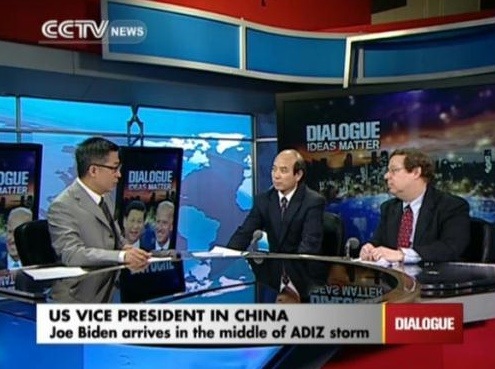
Appearance #7 on CCTV. I’m a big fan of the “Dialogue” program.
My grandmother Naomi and I had a 4-decade-long debate over human nature. Having survived Stalin’s Russia, McCarthy’s America, the Depression and deprivation, she passionately insisted that people don’t change as they age, they only become more like they are (or were). I, on the other hand, a child of the Baby Boom who had evolved from the transistor radio to the smart phone, argued that people can grow or change, for better or for worse.
Our dialogue did not end until Grandmom Naomi’s death three years ago just a few years shy of 100.
I now want to claim victory — at least from personal experience — although I can still hear her arguing with me for being naive and idealistic.
My first semester at Tsinghua University in Beijing has given me plenty of time to contemplate life. After all, I am living alone for the first time in 30 years in a campus apartment, the only English speaker in my building. I chucked my job at the Houston Chronicle for a great leap into the unknown in a country I had never visited.
As I await my graduate students’ final multimedia journalism projects, I can reflect on how living in China has changed me. And it has. Mostly, I hope, for the better.
The biggest change in me is that I have become more accepting of the vagaries of life. In China, you are either patient or you go mad. Internet, WiFi, hot water, heat, electricity: none can be taken for granted at any moment. If you are brave enough to travel on surface roads, you have to expect unexpected delays. You have to let go of the things you can’t control. That’s a big change for me.
You also have to be decisive … or die. (As Joe Biden would say, “literally” die.) Bicyclists pedal every which way. Near misses with another bike … or a pedestrian … or a car … are everyday occurrences. If you don’t push your way out of the crowded subway car, you miss your stop. Don’t think. Act. All in all, I like that philosophy.

I have learned so much from students in China. Here I am in Xi’an with Lu LAN and Jane Sasseen.
At the same time, I feel I have become a lot less materialistic. Americans like to collect things. I like to collect things. Everyone who knows me knows how many things I have collected. In China, I live in a spartan apartment with nothing on the walls, a pot, a pan and enough clothing for ten days. I feel oddly liberated. I realize that I don’t need “things” to make me happy. I need to do things that make me happy. And I have discovered that spending time with friends makes me a lot happier than spending time with “things.”
My professional makeover — new occupation in a new land — also has allowed me to evolve into a different kind of leader. As president of the National Press Club and Washington bureau chief for the Houston Chronicle and Hearst Newspapers, I led by example and governed by consensus. That wasn’t always the formula for success — or effective management — I learned. Too many times, people mistook collegiality for weakness.
Starting over in China, I realized the importance of being a strong, focused, disciplined leader. No more “player-coach.” I hope I have earned the right to be an authority figure both from my knowledge of my subject and my post at the university. Whatever I do in years to come, my time at Tsinghua will have shaped me as a leader.
I’ve also become much more of an environmentalist. Not in the sense of political activism. But in the sense of appreciating clean air, clean water and cooking oil that doesn’t make you sick. It’s a bit spooky to travel around your (new) hometown wearing an anti-particulate mask by 3M. It’s disconcerting to have a thin layer of toxic dust on your bicycle seat in the morning. This is what can happen to the world if we don’t do more to reduce carbon emissions and create green technology — now.
And that brings me to my final thought about the future. My journalism students have made me even more optimistic about the future. After all, they are preparing to enter a business with an uncertain future in a nation where the future of journalism is quite uncertain. But they are some of the smartest young people I’ve ever worked with, and they have a breadth of knowledge and a drive to do well (and do good) that makes me think that they can change the world.
I hope so.
They already have changed me.


Recent Comments