Application for the USA Summer Journalism Training Program
Posted: April 7, 2017 Filed under: Global Business Journalism, Journalism Training | Tags: business journalism, City University of New York, CUNY, GBJ, Global Business Journalism Program, Journalism, journalism education, Journalism Training, Li Chengzhang, top journalism programs, Tsinghua School of Journalism and Communication, Tsinghua University, United States, USA Summer Journalism Training Program, Washington 1 CommentThank you for your interest in the USA Summer Journalism Training Program, organized by Rick Dunham, a veteran of 29 years of Washington journalism experience and co-director of the International Center for Journalists’ Global Business Journalism Program. The two-week program is scheduled to be held in Washington, D.C., from July 24 to August 4, 2017, and is open to university students and recent graduates from China and around the world.
The application form is included in this post. Please copy-and-paste the form and send it via email to the USA Summer Journalism Training Program at SummerProgramDC@gmail.com. You can reach teaching assistant Li Chengzhang at licz15@mails.tsinghua.edu.cn.
- Application deadline: May 31
海外学习短期项目
美国新闻报道夏令营项目申请表
Application form
| 姓名 | Name | 国籍 | Nationality | ||
| 生源地 | Birthplace | ||||
| 本/硕/博 | Bachelor’s/Master’s/Ph.D. | 出生年月 | Date of birth | ||
| 在读学校 | University | 专业 | Major | ||
| 联系电话 | Phone number | 邮箱 | |||
| 是否定向/委培 | 外语水平(种类及成绩) | English language certificate | |||
| 拟毕业时间 | When will you (did you) graduate from your university program? | ||||
| 申请理由:
Please explain the reason why you want to apply to this program: |
|||||
注:请将报名表、个人简历、学生证、外语水平证书的电子版发送至助教邮箱。如有任何疑问,欢迎随时联系助教。邮箱:SummerProgramDC@gmail.com or licz15@mails.tsinghua.edu.cn 电话:+86 13426000951 或 +1(312)468-3257
Note: Please send your application form, CV, English language certificate copy and a photo of your student ID card to SummerProgramDC@gmail.com. If you have any questions, please feel free to contact Teaching Assistant Li Chengzhang at licz15@mails.tsinghua.edu.cn. By telephone: +86 13426000951, +1 (312) 468-3257.
- 费用:
项目费:1500美元
住宿费:600-750美元(由项目方提供统一住宿)
- Estimated costs:
Fees $1,500*
Housing (estimated, double occupancy) $600-$750
Note: Global Business Journalism students and Tsinghua School of Journalism and Communication students are eligible for a scholarship to cover $500 of the costs, making their final fee $1,000.
Note: GBJ and TSJC students who also enroll in the City University of New York Summer Intensive program are eligible for a scholarship to cover $750 of their costs, making their final fee $750.
Note: Visa fee, transportation, travel, meals, insurance are not included.
Note: Housing will be available from Sunday, July 23, to Saturday, August 5.
A completed application does not guarantee acceptance. To guarantee personal attention, the program will have a maximum of 25 participants. Admission is at the discretion of program organizers.
>>> More information on the Global Business Journalism Program
>> More information on the USA Summer Journalism Training Program
>>> Questions? Contact the USA Summer Journalism Training Program by email
>>> More information on CUNY Summer Intensive program
Trump, Putin and journalism in the post-truth world: A philosophical dialogue
Posted: March 11, 2017 Filed under: Dunham's Discourses, Journalism Training, Rick in the news, U.S. politics | Tags: AmCham Finland, Barack Obama, Bill Clinton, China, Director of National Intelligence, Donald Trump, Finland, George H.W. Bush, Guantanamo Bay, Hillary Clinton, impeachment, Journalism, journalism ethics, Justice Department, Kellyanne Conway, Kremlin, liar, lies, lying, Matti Virtanen, New Hampshire, post-truth world, Republican Party, Ronald Reagan, Russia, Trump Tower, truth, U.S. Congress, United States, Vladimir Putin, voter fraud, wiretapping Leave a comment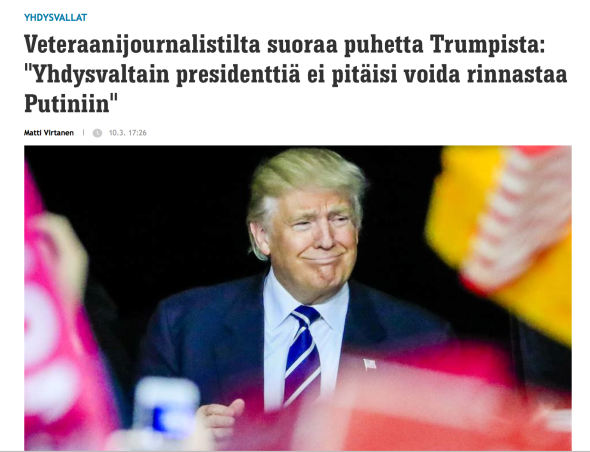
My conversation with Matti Virtanen, as it appeared online in Finnish.
During my latest speaking tour of Finland, I’ve been discussing the policy implications of the Trump presidency with business leaders, university students and business school alumni. But I’ve also had the chance to talk to some of the top editors in Finland about the ethical and journalistic challenges facing American reporters trying to cover a very different kind of president.
Here is my conversation with Matti Virtanen, a veteran journalist with Talouselämä. Click here to read his article in Finnish.
Q: If you look at Trump’s communications as a whole, what do you think is the main difference between his and a professional politician’s rhetoric?
A: Trump’s rhetoric is more colorful and less “politically correct” than an average politician. He seems to enjoy being incendiary and provocative. He never fears the consequences of his own words.
Q: Much of political discourse is full of exaggerations and embellishments, and statements that are meaningless or “not even wrong.” Where do you draw the line that differentiates all this from lying?
A: Lying is intentionally or knowingly saying something that is untrue. It is the same as the distinction between a killing and a murder. Murder is killing with malicious intent. Lying is telling falsehoods or untruths with malicious intent. Saying that 3 million “illegal aliens” voted — and all voted for Hillary Clinton — is untrue. Once you are told it’s not true and you keep saying it, it’s a lie. (Or if you knew it was untrue when you first said it, it’s a lie.) The difference between Trump and typical politicians is that Trump’s supporters do not hold him accountable for not telling the truth. Average supporters and his advisers will lecture the press, saying you are “taking him too literally.” It’s dangerous territory for the media and for politicians when the truth is a philosophical concept and not an objective reality.
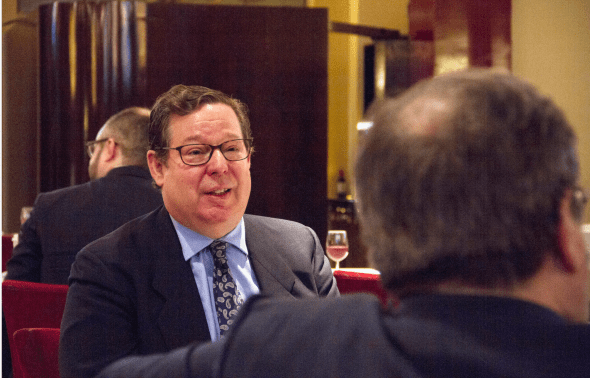
Talking Trump in Finland.
Q: What are the most obvious lies that Trump has expressed in office? (Three examples will do, let’s forget the campaign lies for now.)
He falsely stated, over and over, that he had the biggest Electoral College landslide with Ronald Reagan, when, in reality, Barack Obama (twice), Bill Clinton (twice) and George H.W. Bush all had more. He stated without evidence that Obama tapped his phones in Trump Tower, something flatly denied by the FBI and the former Director of National Intelligence. He claimed, without offering evidence, that Hillary Clinton won the popular vote only because 3 million illegal immigrants voted for her. He said she won New Hampshire because of “massive” voter fraud. Elections officials in the states he mentioned all denied his claims, which he has repeated over and over since then. Also, he said more than 100 former Guantanamo Bay prisoners were released by Obama and have returned to the battlefield. (All but nine were released by Bush.)
Q: How is the system equipped to counter lies from the White House?
A: The media ecosystem is not set up to deal with serial lies from public officials, or, as Trump adviser Kellyanne Conway called them, “alternative facts.” Trump’s strange relationship with the truth has left reporters in an uncomfortable position: report his claims factually, as you would with most public officials, and become part of a disinformation or propaganda campaign — or state that the president of the United States did not tell the truth, which makes many Americans believe that you are taking political sides and are part of “the opposition” to Trump, as Trump aide Steve Bannon puts it.
Q: Why is he getting away with lies better than his predecessors, who were also not quite immune to the syndrome?
A: Many of Trump’s supporters say it is just “Trump being Trump.” They think it is refreshing to have a “politically incorrect” president. Some find it entertaining to see the establishment ridiculed. Thus far, none of the falsehoods seem to have harmed Trump’s public standing. His approval rate has changed relatively little since it dipped during his first week in office, despite a barrage of reporting on false statements from the president.
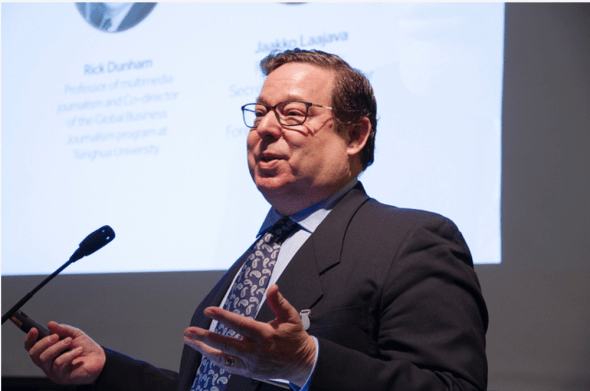
Speaking at an AmCham Finland “Brief on the Go” in Helsinki.
Q: What is the threshold that would trigger a formal, legal investigation of the president’s lying?
A: Either a Democratic-controlled Congress (in two years at the earliest) or a lie on a sensitive national security subject, such as his relationship with the Kremlin or possible blackmailing of him by Vladimir Putin or Russian intelligence.
Q: How long can the Republican Party remain united in defense of presidential lying?
A: Party leaders are following their followers. As long as Trump’s support among rank-and-file Republicans remains above 80 percent, as it has been since he assumed office, Republican elected officials will be cautious in they criticism. Some Republican elected officials have dismissed some of Trump’s statements as incorrect (such as his allegations of voter fraud or his claims about wiretapping), but they have not broken with Trump politically. As long as Republican voters do not abandon Trump, he will maintain a base of power in Congress.
Q: How likely is it that we are going to see an impeachment process against Trump?
A: It won’t happen as long as the Republicans control Congress — unless there is evidence that he sold out the United States to Russia for business purposes or under threat of blackmail. There is no evidence of that now. Short of that, it won’t happen in the next two years. I think it would be a mistake for Democrats, should they take control of Congress in 2019, to immediately initiate impeachment proceedings. It would look like crass politics. It would be smarter to have oversight hearings and see where the evidence leads.
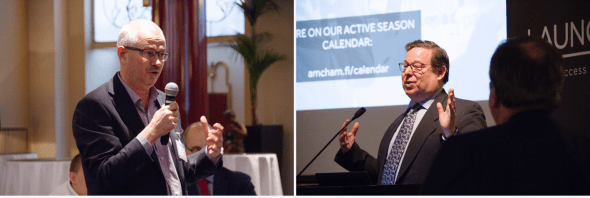
Q&A in Helsinki
Q: What if the Department of Justice refuses to appoint a special prosecutor? Does the Congress have any way around that?
A: Excellent question. Congress can’t appoint a special prosecutor, but it can create a bipartisan investigating committee or empower an independent, bipartisan commission. I think the commission approach is the most likely. It will be less inflammatory and more likely to get at the truth, quietly and over a longer period of time.
Q: How would you rate Trump’s lying if you compare it with the untruths from Russian and Chinese governments?
A: Trump’s relationship to the truth is similar to Putin’s. They both say things that are demonstrably untrue. With the Chinese government, there is a lot of “partisan spin,” but rarely does the government say things that can be easily contradicted. One way or another, an American president doesn’t want to be compared to Putin or other authoritarian regimes when it comes to credibility.
Q: What about the personal level: how do you feel about the situation?
A: I feel that it’s a tough time to be a reporter. You must have a thick skin and be willing to be bullied and threatened. Thus far, no harm has come to an American reporter, but many of my former colleagues have been subjected to online harassment and even phone calls at their homes. The old rules of fairness apply to our reporting, even if the norms of truthfulness are shifting. Reporters have to adjust if they want to maintain their integrity and shed light on the words and deeds of public officials.

Pay no attention to the man behind the podium.
A Pulitzer-winning couple tells GBJ students what it’s like to cover a mass shooting in real time
Posted: March 6, 2017 Filed under: Global Business Journalism, Journalism Training | Tags: Alexis See Tho, Barack Obama, Donald Trump, GBJ, Global Business Journalism Program, Hailey Branson-Potts, Houston Chronicle, Los Angeles Times, Mark Potts, Multimedia Business Reporting, multimedia journalism, New York Times, Oklahoma, Pakistan, Perry Daily Journal, Pulitzer Prize, San Bernardino, Tsinghua School of Journalism and Communication, Tsinghua University 1 Comment
Mark Potts speaks about the L.A. Times’ video editing process for coverage of the San Bernardino shootings at the Tsinghua School of Journalism and Communication. (Photo by Alexis See Tho)
By Alexis See Tho
“It was an organized chaos,” recalled Mark Potts, a video editor at the Los Angeles Times, describing the scene in the newsroom when photographs, videos and Twitter posts poured in from the San Bernardino shootings two years ago.
Potts and his wife Hailey Branson-Potts, who is also a journalist for the L.A. Times shared the drama of covering a breaking news story of global significance with Tsinghua University’s multimedia reporting class. Branson-Potts and Potts were part of the Times team that received the 2016 Pulitzer Prize, the top award in American journalism, for breaking news reporting.
“In the back of your head, you’re thinking, this is what I went to school for. You train and work your whole life so when you get into these situations, you don’t mess it up,” Potts added.
The prize-winning young journalists spoke to Global Business Journalism Program students in Professor Rick Dunham’s Multimedia Business Reporting course on March 1. Branson-Potts worked for Professor Dunham as an intern in the Washington bureau of the Houston Chronicle, where she covered the 2009 inauguration of President Barack Obama, among other national stories.

Professor Dunham uses the coverage of the San Bernardino shootings as a “best practices” case study for using social media in reporting. (Photo by Alexis See Tho)
The December 2015 shootings in San Bernardino, California, made international headlines when 14 people were killed an American man and his Pakistan-born wife. U.S. President Donald Trump has cited the shooting as a reason why he is seeking to restrict immigration to the United States.
Branson-Potts did live reporting on Twitter from the shooting scene, talking to the police and interviewing victims’ family members. And for days she stayed put in San Bernardino to get more information on the ground. It’s important to always be ready for moments like that she said.
“I have a ‘go-bag’ in my car,” Branson-Potts added, where she keeps a pair of jeans, comfortable shoes, make-up and supplies for at least a day.
But there are some areas that cannot be prepared ahead of time and only real-life experiences can be the teacher. Branson-Potts was answering a student’s questions whether news organizations train journalists on how to face situations such as the shooting.
“There’s no psychological training in newsrooms,” said Branson-Potts, who have worked and interned at news organizations such as the New York Times, Chicago Tribune and the
Houston Chronicle.
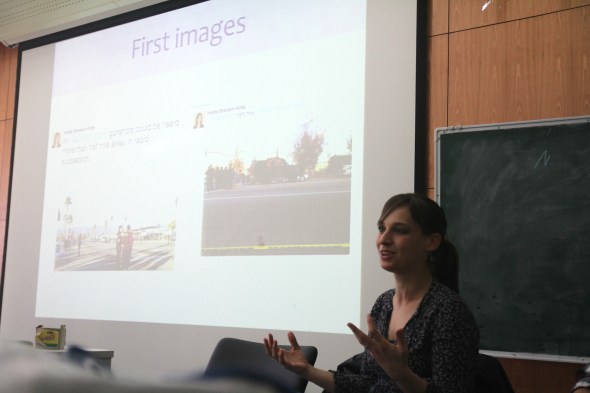
Hailey Branson-Potts explains to the class her first few live tweets from the scene of the San Bernardino shootings. (Photo by Alexis See Tho)
She added that although her editor did ask how she was coping when she was on the ground in San Bernardino for days, the answer would always be “I’m fine.”
“You don’t want to be pulled out of the story,” Branson-Potts said.
Although she has worked for big names in America’s newspaper industry, Branson-Potts’ first taste of the world of journalism came when she was 15 when she worked on the printing press for her hometown newspaper, the Perry Daily Journal, one of Oklahoma’s smallest daily newspapers.
“They only printed 2,000 copies everyday, but it was real experience (for me),” Branson-Potts said. She advised students to find as many opportunities as they could to work in newsrooms.
“When we hire young people at our paper, we don’t care what grades they made at school, we don’t care what classes they took. We care about their resumés and the stories they produced as an intern,” she said.
For shooting and editing videos, Mark Potts’ greatest education came from watching bad movies during his student days while working at a movie theatre.
He added that a journalist’s work attitude is of utmost importance. “I approach things like there’s nothing below me,” he said, “I’ve done videos for subjects that secretly…I don’t want to cover. But I go in there and say, ‘I’m going to make a really good video. I’m going to cover this like I’ve covered the inauguration and a protest.’”
For both of them, they repeat the mantra: There’s no story that you’re too good for.

The Hailey and Mark Show (Photo by Alexis See Tho)
Q&A: The causes and consequences of Michael Flynn’s NSC exit
Posted: February 15, 2017 Filed under: Breaking news, Rick in the news, U.S. politics | Tags: Barack Obama, China Radio International, CIA, David Petraeus, Donald Trump, Iraq, Iraq war, James Mattis, Jill Stein, Jim Mattis, Justice Department, Keith Kellogg, Logan Act, Michael Flynn, Mike Pence, National Security Council, Pentagon, Robert Harward, Russia, Sean Spicer, Sergey Kislyak, Steve Bannon, Steve Miller, U.S. Congress, United States, Vietnam War, White House Leave a comment
Happier times: Michael Flynn is all smiles as Vladimir Putin and Green Party presidential candidate Jill Stein applaud at the 10th anniversary gala for Russia’s international propaganda outlet, RT.
I discussed the sudden resignation of U.S. National Security Adviser Michael Flynn with China Radio International this morning. The interview came hours after White House press secretary Sean Spicer said Flynn had breached his trust with Donald Trump by lying to Vice President Mike Pence about the contents of conversations with Russian Ambassador to the U.S. Sergey Kislyak. Flynn’s call to Kislyak was intercepted by U.S. intelligence sources and a transcript was reviewed by the U.S. Department of Justice.
Here is a Q&A of my conversation, lightly edited for content and clarity:
Q: We know that Flynn resigned because of the scandal involving his talk with Russian ambassador to the U.S. before Trump was in office. But what law did he exactly violate?
A: He did not violate any law simply by talking to the ambassador. If he was promising a future Trump administration action in return for a certain Russian response to the Obama sanctions against Russia that had just been announced, he might have violated the Logan Act. That law, enacted in the year 1799, makes it a crime for unauthorized American citizens to negotiate with foreign governments involved in disputes with the United States, such as promising future U.S. government action.
The bigger issue is whether Flynn lied to the FBI, which is conducting a criminal investigation into Trump campaign ties to the Russian government, about this conversation. That would be a felony crime. Apparently, the acting attorney general informed Trump that Flynn may have lied to the FBI. Trump apparently kept that information from his vice president, Mike Pence, who lied to the press as a result. Trump and Flynn also lied to the press about this call — but it’s not a crime to lie to the press.
Q: Did Flynn have any other choices besides resignation?
A: Not really. According to the White House spokesman, Trump demanded his resignation. If that statement from Sean Spicer is true, then his only choice was to either resign or be fired. By resigning, Trump allowed Flynn to issue a statement explaining his point of view in the matter.
With this scandal, Flynn sets some sort of record for being forced to leave two consecutive White House administrations, first Obama and now Trump.

Russian ambassador Sergey Kislyak speaks at the University of Nebraska at Omaha (UNO photo)
Q: White House spokesman Sean Spicer later said President Donald Trump knew weeks ago — at the end of January — there were problems with Michael Flynn’s Russia phone calls. Then what’s the long pause between Trump knowing the fact and Flynn’s resignation about? Why the wait?
A: This is the question that reporters — and many Republicans in Washington — want answered. The simple answer is that Trump knew Flynn lied, but the public did not know. We don’t know the backstory yet, but Trump may have thought he could get away with keeping Flynn on the job as long as the lies did not become public knowledge. Once the Washington Post published a report that Trump was told Flynn had lied (and did not tell Mike Pence or others in the administration), Flynn was gone in a day.
Q: Will there be an investigation of the phone call and everyone involved in the White House?
A: Yes, and no. Congressional Republicans say they will investigate Flynn and his ties to Russia. The Senate Intelligence Committee says it will conduct an investigation. The House Intelligence Committee chairman said today he will not investigate Trump’s conversations with Flynn, citing a concept called “executive privilege,” which shields a president’s discussions with aides from public disclosure.
Q: What political implications does this have on the presidency?
A: It elevates the importance of criminal investigations by the FBI and Justice Department into Russian attempts to influence the election, it removes Russia’s most vocal supporter from Trump’s inner circle and empowers Russia’s top critic in the Trump inner circle, Vice President Pence. In the U.S., it’s further evidence of chaos within the White House and reinforces the concept that White House officials regularly deceive each other and lie to the public. Whether that is true or not, the perception is becoming more widely accepted.
Q: Following Mr Flynn’s resignation, the White House announced that Keith Kellogg, who was serving as chief of staff of the National Security Council, would take over as interim national security advisor while the White House would scout for a candidate for the position. What do we know about Kellogg and how does his national security plan for the U.S. look like?
A: He is 72 years old. He is a decorated veteran of the Vietnam War. He was a top civilian official in post-war in Iraq. He was generally respected by people in both parties. He was the first retired general to endorse Trump’s campaign for the presidency when few in U.S. politics took it seriously. He has Trump’s confidence, but some mainstream Republicans believe he is not strong enough by to stand up to Trump’s most hawkish advisers, Steve Bannon and Steve Miller. They would rather have remain as a specialist in policy rather than the top administrator.
If Vice Admiral Robert Harward, a protege of Defense Secretary Jim Mattis, is chosen, that is a sign of Mattis’ influence in the administration. If former CIA director David Petraeus is chosen, it is a good sign for the U.S. intelligence community. If Kellogg is chosen, it may be a sign that Trump values loyalty over everything else. The selection may tell us who’s up and who’s down inside the Trump White House.
Major shifts in U.S. trade policy make it vitally important to study global business and China’s role in it
Posted: February 2, 2017 Filed under: Global Business Journalism, Journalism Training, U.S. politics | Tags: best business journalism programs, Bloomberg News, business journalism, China, Donald Trump, Global Business Journalism, Global Business Journalism Program, global economy, ICFJ, International Center for Journalists, international trade, master's programs in journalism, National Press Club, New York Times, Sarah Ma, study in China, top journalism programs, trade, Tsinghua School of Journalism and Communication, Tsinghua University, United States Leave a comment
Some of the top international students from the 2016 graduating class.
The global economic order is rapidly changing, and China, with the world’s second-largest economy, is becoming an increasingly important player. As U.S. international and trade policies shift dramatically under a new administration, China is aggressively seeking to bolster its leadership role in the world’s interconnected global economy on trade and other business issues.
If you are interested in pursuing a career in business journalism, now is a great time to study global business in China in the Global Business Journalism Master’s Program at Tsinghua University in Beijing. (Of course, your blog author has a personal stake in this program: I’m co-director.) The extended deadline to apply for admission to the GBJ program is March 20, 2017.
Tsinghua University is the most prestigious university in China, providing a genuine international environment to students from around the world. The Global Business Journalism Program at Tsinghua, founded in 2007, has won international acclaim for teaching global best practices in business journalism and the technical skills needed to succeed in today’s digital news environment.
The program, a partnership between Tsinghua, the International Center for Journalists and Bloomberg News, trains future journalists who can help the public understand the complexities of global business and the economy. Students in the program benefit from a faculty that includes award-winning journalists from prominent media organizations such as Bloomberg News, the National Press Club of Washington and Business Week, as well as renowned Chinese scholars with degrees from prestigious international institutions.
The two-year program is fully taught in English. Enrollment in the courses is about half international, half Chinese. The program provides internship opportunities at major media organizations and offers summer reporting programs in New York and Washington.
Scholarships are available to top applicants. The deadline to apply for scholarships, as well as admission, is February 28.
Graduates of the intensive program emerge with a network of valuable connections that can enrich their careers. You can contact GBJ or ICFJ with any questions.
To share the mini-documentary on GBJ, send your friends this link: https://www.youtube.com/watch?v=VQ6kr_rUeI8&feature=youtu.be
To apply, please visit the application site:
http://gbj.tsjc.tsinghua.edu.cn/publish/jcgbj/370/index.html
For more of the program, please visit the program’s official website:
http://gbj.tsjc.tsinghua.edu.cn/publish/jcgbj/index.html

2016 GBJ grads Jordyn Dahl and Jade Ladal
Contact at Tsinghua School of Journalism and Communication:
Ms. Ma Chengcheng (Sarah)
The GBJ Office
Room 302, Omnicom Building,
School of Journalism and Communication
Tsinghua University,
Beijing 100084, P. R. China
Tel: +86 10 6279 6842
Fax: +86 10 6277 1410
E-mail: tsjcws@mail.tsinghua.edu.cn
Video: Why the Global Business Journalism Program at Tsinghua is a great choice for graduate school
Posted: January 18, 2017 Filed under: Discovering China, Global Business Journalism, Journalism Training | Tags: Anish Pandey, Beijing, best business journalism programs, best journalism programs, Bloomberg News, business journalism, China, documentary, Global Business Journalism, Global Business Journalism Program, graduate journalism programs, Hang Min, ICFJ, International Center for Journalists, Italy, journalism schools, master's programs in journalism, Media, Min Hang, People's Daily, Sarah Taylor Talaat, Simone Martin, Slovakia, Tendekai Finos, top journalism programs, Tsinghua School of Journalism and Communication, Tsinghua University, United States, Viktoria Fricova, Xinhua News Agency, Zimbabwe 4 CommentsThe Global Business Journalism Program is the subject of a documentary film that highlights the program’s unique role in teaching advanced economics reporting skills to Chinese and international graduate students.
The GBJ program, the first graduate business journalism program taught in English on the Chinese mainland, features a rigorous curriculum taught by leading Chinese academics and prominent international journalists.
The five-minute mini-documentary was produced and directed by second-year GBJ student Simone Martin of Italy. It was based on a project he completed for a documentary news course. First-year GBJ student Sarah Taylor Talaat of the United States was the film’s narrator.

2016 GBJ grads Anish Pandey and Jade Ladal
“In its first decade, the GBJ program has been recognized as one of the top international programs in China — and now, students from around the world, together with Chinese students, are learning advanced business writing, corporate strategies, economics, accounting, data mining, multimedia storytelling and other skills,” Talaat says in the documentary.
The film features interviews with current students and GBJ faculty. GBJ student Tendekai Finos from Zimbabwe called the program “an interesting opportunity to learn in China, as well to study in China, where the economy is growing rapidly.” Viktoria Fricova, a second-year student from Slovakia, said she first discovered the program when searching for a high-quality international graduate journalism program. “When I found it on the internet, I knew this was the option for me,” she told the documentarian.
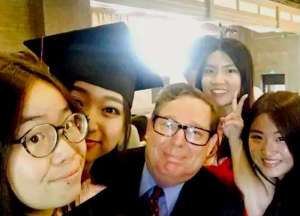
Professor Dunham and GBJ grads celebrate, June 2016
The Tsinghua School of Journalism and Communication will use the documentary to reach out to potential students internationally, to further enhance its reputation in China, and to attract partners and supporters to the program, said GBJ Co-Director Rick Dunham.
“We’d like continue to expand, so that we can be the leaders in training Chinese journalists of the next generation, and become a destination spot for global journalism,” Professor Dunham says in the film.
Launched in 2007 in partnership with the International Center for Journalists and Bloomberg News, the GBJ program has trained more than 400 graduates, many of whom have become journalists at prominent news outlets from Bloomberg to People’s Daily and Xinhua News Agency.
“We wish to welcome the world to join us,” GBJ Co-Director Dr. Hang Min says in the documentary. “We are setting the standard for business journalism education.”
>>> You can also watch the video on YouTube
>> For more information on the application process
>>> Here’s the GBJ website
>>> Here’s how you can begin the application process

2016 graduation festivities
The rise of Trump explained in four graphics
Posted: November 6, 2016 Filed under: Dunham's Discourses, U.S. politics | Tags: 2016 presidential race, American politics, Ann Coulter, Catholic Church, China, civil rights, CNN, Donald Trump, fake news, Fox News, George W. Bush, Hillary Clinton, Iran, Israel, Japan, Kellyanne Conway, Korea, Mexico, MSNBC, NATO, New York Times, NPR, Republican establishment, Republican National Committee, Rush Limbaugh, Sean Hannity, social media, U.S. Congress, U.S. politics, Vietnam War, Wall Street, Wall Street Journal Leave a comment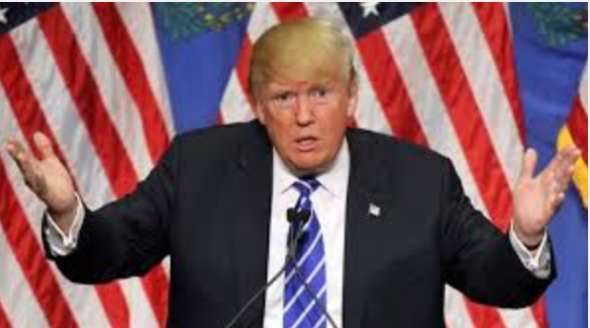
How did he get this far this quickly?
A little more than a year ago, when Donald Trump opened his presidential campaign by gliding down the golden escalators of Trump Tower, with paid extras hired from the New York theater community to pad the crowd size, it was easy to dismiss the real estate mogul as a self-promoting dilettante more interested in publicity than politics.
So many people got it so wrong. His Republican rivals, in the famous words of George W. Bush, “misunderestimated” him. The Pundit Elite kept predicting that just one more embarrassing gaffe would extinguish his White House hopes. The nation’s best newspapers kept churning out damning investigative pieces questioning Trump’s business acumen, his honesty, his ethics, his wild flip-flops on issues and his command of basic knowledge of the world ~ and it seemed to matter nary a bit.
Historians will be discussing the Trump phenomenon for decades. Yet here we are, the general election upon us. How did Donald Trump, a political neophyte and nearly lifelong Democrat, emerge as the self-proclaimed champion of conservative values, the master of the Republican National Committee, and the voice of angry white people?
It’s easy to oversimplify Trump’s appeal, but I’d like to try to explain the rise of Trump in four informational graphics.
#1: Americans have grown increasingly alienated from major institutions

Until the 1960s — amid Vietnam, civil rights struggles and social unrest — Americans had almost universally positive views about basic institutions in U.S. society. The trend has been downward ever since. But there has been a significant drop in the past decade in institutions as diverse as religion, schools, banking, the news business, the courts, and, of course, the Congress. There are two major reasons: self-inflicted wounds, such as congressional dysfunction and the Catholic church sexual abuse scandal, and a partisan media led by Fox News, which has made it a constant theme of its programming to tear down institutions in order to rebuild America in its ideological image. Donald Trump positioned himself as the champion of the “little guy” against all the big, bad institutions — from Wall Street, to the news media, to big business, to the “rigged” Congress and court system … even against the Pentagon generals who know less about military strategy than the reality-TV star.
#2: There has been a rapid, dramatic shift to the left on social issues
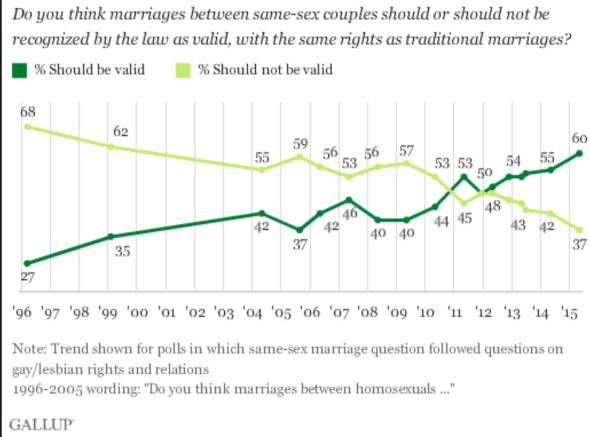
Within the past decade, the United States reached a tipping point on social issues. On gay rights, the nation went from strong opposition to same-sex marriage to overwhelming support for the new reality that was blessed in 2013 and 2014 by the U.S. Supreme Court. The younger generation — Democrat, Republican and those disgusted with both parties — is almost unanimously in favor of social change that affects women (“no means no”), gays (“marriage equality”) and the environment (climate change is real, not a Chinese-inspired hoax). This rapid shift has proven to be disconcerting to many older people, particularly men, who cling to (no, not their guns and bibles) their now-unpopular views. They want to say no to social change. Trump says they’re right. And he says that he’s their voice.
#3: We’ve seen a partisan reversal on globalization

For decades, Democrats were the protectionists and Republicans were the free-traders. Democrats, influenced by labor unions and environmentalists, resisted trade liberalization as bad for workers and the environment. Republicans embraced globalism and immigration as good for business, good for America, and, ultimately, a net plus for American workers.
Not any more. The Republican Party, radically altered by a massive influx of middle-aged white men displaced by a global economy for which they no longer have the requisite skill set, has become the party of protectionism and economic nationalism. They see immigrants as a threat to American jobs and American values.
Democrats and independents are now more open to international economic liberalization than the Republican Party, the traditional home of the U.S. business community. Trump is the big winner in this new reality. His “America First” backers crushed the internationalist Republicans like Jeb Bush in the Republican primaries and are challenging Democratic dominance in the nation’s economically distressed industrial heartland.
#4: People now get political information from self-selected partisan sources

We live in parallel information universes. Left-of-center Americans rely on a mix of CNN, NPR, MSNBC and the New York Times for their political and government news. Most of those news outlets present news from a predictably liberal mindset. Right-of-center Americans overwhelming rely on Fox News and local radio for their information. Fox and the Rush/Hannity/Coulter axis is not just conservative, it is almost anarchic in its desire to tear down institutions of the “elites” and the “establishment” while advocating for the grievances of whites who feel they are innocent victims of racial minorities, immigrants, non-Christian religions, China, Japan, Korea, Iran, Israel, Mexico, NATO … you name it.
The result of this Great Information Divide is that facts have become obsolete. The news of the left may be biased, but it is rooted in objective fact. Nonpartisan fact-checking websites can tell you how often politicians tell you the truth or lie to you. The news of the right has increasingly become resistant to globally accepted facts (evolution, climate change) and has allowed the virus of “fake news,” often generated in countries like Russia and Macedonia, to infiltrate the political mainstream. As Trump campaign manager Kellyanne Conway said after Fox News retracted a false story that Hillary Clinton would soon be indicted, “The damage was done.”
Social media has exacerbated the divide. Citizens follow information sources on Twitter and Facebook that confirm their preconceptions of reality. This has become the first post-fact-check presidential election. Trump, with his finger on the “tweet” button of his smartphone and a knack for creating viral content, is the perfect politician for this moment in history.
Late demographic shifts scramble election: Trump gains among Midwestern men, wealthy Latinos; Clinton soars among unmarried white women, upper-middle-class whites
Posted: November 3, 2016 Filed under: The Index, U.S. politics | Tags: 2016 presidential race, American politics, Barack Obama, Bernie Sanders, Donald Trump, Elections, Hillary Clinton, Reuters 1 Comment Is the election over yet?
A lot has happened in the five months since Hillary Clinton and Donald Trump wrapped up their parties’ nominations after divisive primary battles. Trump has been entangled in a series of scandals of sexual, financial and prevaricatory natures. Clinton has been entangled in a series of scandals related to email servers, Russian-hacked emails and some guy named Weiner. Trump has been caught in a scandal about his foundation’s spending. Clinton has been caught in a scandal about her foundation’s fundraising.
I don’t believe in the media fiction of faux fairness through equal-opportunity faux scandal coverage. I’m just trying to make a point: A lot has happened in the general election campaign, but the relative popularity of the two candidates with the American public has changed very little. Since June 5, Trump has gained 3.3 percentage points on Chinton nationally, according to Reuters polling.

A slight Trump trend nationally, but big shifts among demographic blocs.
But within the slight national shifts to Trump, there have been significant demographic shifts that have altered the election on the ground in the 50 states. And that is what the election is about: a collection of contests for the electoral votes of 50 states, one territory (the District of Columbia) and five congressional districts in Maine and Nebraska.
Since June, I have been analyzing the partisan presidential preference of 100 demographic subgroups – 34 “battleground” groups and 33 favorable to either Democrat Clinton or Republican Trump — using polling data from Reuters. And there has been significant movement among the swing groups. Both ways. Trump has strongly improved his standing among most traditional Republican groups, like Southern whites and wealthier Latinos. Clinton has consolidated and expanded her support among almost all subgroups of women and has extended her leads among higher-income and highly educated voters, reflecting historic shifts among those once-Republican groups. On the flip side, Trump has gained significant ground among less-educated whites and white Catholics, resulting in a narrowing of Clinton’s once-daunting advantage in Pennsylvania, Wisconsin and Minnesota, and turning Ohio and Iowa into prime Trump targets.

Clinton maintains an overall edge, but Trump has made gains among some traditional Democratic blocs.
Going into the final days of the election, Clinton leads in 16 of the battleground groups I identified, Trump leads in 14, and one is tied. (Three others – veterans, families of veterans, and Mormon women – have polling sample sizes too small to analyze.)
The momentum at the end is with Trump. Trump is gaining ground with 19 of these 31 battleground groups, while Clinton has improved her standing with 10 of them. Two subgroups have not moved perceptibly over the past five months.
Among my battleground demographics, Trump has gained the most ground in the Great Plains, among Latinos earning >$100K (where he has cut a 50 point Clinton lead in half), divorced white voters, Midwestern men, white Catholics and Southern white men with college degrees. The GOP nominee’s gains among less-educated Northern white men continues a realignment that was evident in the 2012 presidential results, when Barack Obama lost ground with these voters, costing him the state of Indiana and narrowing his victory margins in Ohio, Pennsylvania, Michigan and Wisconsin.
Clinton has gained the most ground among unmarried white women, wealthy and upper-middle-class whites (white voters earning more than $150,000, whites earning between $75,000 and $100,000 a year), Midwestern white women, and white voters under the age of 40. (Bernie Sanders supporters have settled on Hillary.)
As you can see from these trends, the Midwest has become a curious electoral stew, as white men have moved strongly toward Trump while white women have shifted just as strongly toward Clinton. It underscores just how divisive the 2016 election has become.
My analysis of the Electoral College is that Clinton has a decisive edge based on the current numbers because of her continuing strength in suburban areas and among high-income and highly educated voters. That is particularly important to Clinton because these voters are concentrated in swing states that are essential for Trump to carry if he is hoping to reach the 270 Electoral Votes needed to win.
Trump’s only hope for a come-from-behind victory would be a sharp increase in his support among independent-minded voters with high incomes and college diplomas. Clinton could cement an Electoral College landslide if she gains ground among less-educated women or highly educated whites in a swath of the country stretching from North Carolina to Arizona.
Here are the “innards” of my analysis. First, you can look at which groups are the most pro-Trump or pro-Clinton. Then you can analyze the battleground groups by trendline: from those trending Trump to those trending Clinton.
I welcome your feedback on this project.

Stronger Together
Battleground voting blocs: Clinton 16, Trump 14, Tied 1
Great Plains TRUMP +28 … SWING between Clinton -39 and Clinton -20
White divorced TRUMP +17 … SWING Clinton-23
White southern women with college degree TRUMP +15 SWING Clinton-10
White Catholic women TRUMP +13 … SWING Clinton-20
Midwestern white men TRUMP +13 … SWING Clinton -22
White southerners with college degree TRUMP +12 SWING Clinton-9.9
Southern white men with college degree TRUMP +12 SWING Clinton-14
White Catholic TRUMP +11 … SWING Clinton -20
White Catholic men TRUMP +9 … SWING Clinton-22
Whites 50-65 TRUMP +8 … SWING between Clinton-4 and Clinton+5.1
Whites earning between $50-75K TRUMP +6 … SWING Clinton -7
Whites earning between $50-$100K TRUMP +3 … SWING Clinton -10.2
Married voters TRUMP +1.4 … SWING Clinton +4.5
White women, no children at home, TRUMP +0.6 … SWING Clinton -4.3
Whites earning between $75K-$100K Tie … SWING Clinton +17
Voters earning between $50K-100K CLINTON +3.6 … SWING Clinton -9.8
Lean conservative CLINTON +2 … SWING between Clinton+6 and Clinton-2
Homeowners CLINTON +2.7 … SWING Clinton-1
Men CLINTON +3.5 … SWING Clinton -10.8
White men under 30 CLINTON +3.5 … SWING Clinton -8.8
Independent CLINTON +4 … SWING Clinton+7
Midwestern white women CLINTON +5 … SWING Clinton +12
Midwest CLINTON +6.3 … SWING C-5.9 Clinton +1.6
Voters earning $75K+ CLINTON +6.7 … SWING Clinton -13.7
Women CLINTON +9.7 … SWING C-1.6 Clinton +1
Great Lakes CLINTON +16 … SWING C-2 Clinton +13
Whites earning >$150K CLINTON +18 … SWING Clinton +21.2
White single, never married CLINTON +23 … SWING Clinton +17
Whites -40 CLINTON +20.6… SWING between Clinton -4.3 and Clinton +19.4
Latinos earning >$100K CLINTON +24 … SWING Clinton -26.9
Unmarried white women CLINTON +27 … SWING Clinton +19.1
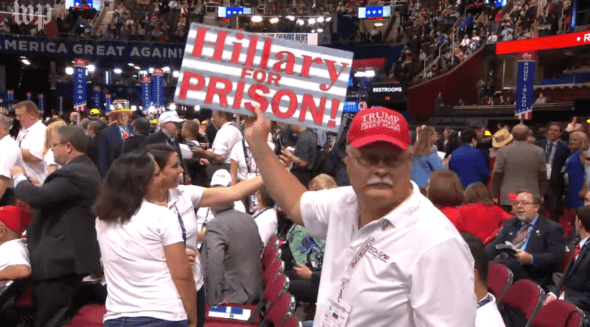
Make America Great Again (Washington Post Twitter photo)
Battleground trendline (from strongest point of each candidate to final numbers): Toward Trump 19, Toward Clinton 10, No Trend 2
Great Plains Trump +28 … SWING between Clinton -39 and Clinton -20
Latinos earning >$100K Clinton +24 … SWING Clinton -26.9
White divorced Trump +17 … SWING Clinton -23
Midwestern white men Trump+13 … SWING Clinton -22
White Catholic men Trump +9 … SWING Clinton -22
White Catholic women Trump+13 … SWING Clinton -20
White Catholic Trump +11 … SWING Clinton -20
Southern white men with college degree Trump +12 SWING Clinton-14
Voters earning $75K+ Clinton +6.7 … SWING Clinton -13.7
Men Clinton +3.5 … SWING Clinton -10.8
Whites earning between $50-$100K Trump +3.0 … SWING Clinton -10.2
White southern women with college degree Trump +15 SWING Clinton -10
White southerners with college degree Trump +12 SWING Clinton -9.9
Voters earning between $50K-100K Clinton +3.6 … SWING Clinton -9.8
White men under 30 Clinton +3.5 … SWING Clinton -8.8
Whites earning between $50-75K Trump+6 … SWING Clinton -7
White women, no children at home Trump +0.6 … SWING Clinton -4.3
Homeowners Clinton +2.7 … SWING Clinton -1
Midwest Clinton +6.3 … SWING between Clinton -5.9 and Clinton +1.6
Women Clinton +9.7 … SWING between Clinton -1.6 and Clinton +1
Whites 50-65 Trump +8 … SWING between Clinton -4 and Clinton +5.1
Lean conservative Trump+2 … SWING between Clinton+6 and Clinton -2
Married voters Trump +1.4 … SWING Clinton +4.5
Great Lakes Clinton +16 … SWING Clinton -2 and Clinton +13
Independent Clinton +4 … SWING Clinton +7
Whites -40 Clinton +20.6… SWING between Clinton -4.3 and Clinton +19.4
Midwestern white women Clinton +5 … SWING Clinton +12
White single, never married Clinton +23 … SWING Clinton +17
Whites earning between $75K-$100K Tie … SWING Clinton +17
Unmarried white women Clinton +27 … SWING Clinton +19.1
Whites earning >$150K Clinton +18 … SWING Clinton +21.2
Previous posts:
>>>A look at 100 key demographic blocs, and how Trump and Clinton are faring among them
>>> The changing South, the educational chasm and Latino backlash: 10 takeaways from a deep analysis of polling data
>>> Who are the undecided voters in 2016? Mormon women, wealthy Latinos, Midwestern white women
Methodology:
The Index analyzes the 2016 presidential election through the voting preferences of 100 different demographic blocs. Thirty-three of them are part of Donald Trump’s Republican base. Thirty-three of them are part of Hillary Clinton’s Democratic base. And 34 of them are battleground groups — keys to both candidates’ paths to the White House.
The information for the feature comes from Reuters’ polling data, which is available, open source, on the internet. I am using Reuters’ rolling five-day averages for most of my analysis. I chose Reuters’ numbers because the global news service makes the information available to anyone. You can check behind me to examine my methodology — or to create new searches of your own.
Day 4 Analysis: Hillary Rodham Reagan
Posted: July 29, 2016 Filed under: U.S. politics | Tags: 2016 presidential race, Afghanistan, Alex Roarty, American politics, Barack Obama, David Duke, David Freddoso, Democratic National Convention, Donald Trump, Doug Elmets, Franklin D. Roosevelt, George W. Bush, Hillary Clinton, Humayun Khan, Iraq, Jeane Kirkpatrick, Jennifer Pierotti Lim, John Allen, Josh Barro, Kareem Abdul-Jabbar, Khizr Khan, Mario Cuomo, Michael Jordan, Mindy Finn, Ramesh Ponnuru, Robert Costa, Roger Ailes, Ronald Reagan, Sean Spicer, Vincent Harris, Wendell Willkie 2 CommentsDid I step into a time machine and wake up in 1984?
“USA. USA. USA.”
“We are the greatest country on this planet,” said retired Marine Corps General John Allen.
American flags waving robustly in the convention hall. Speakers attacking Russian leaders. Sheriffs, veterans, wounded warriors, generals, families of slain cops. God and America.
No, no, this is not 1984. But this is where Ronald Reagan’s optimistic vision of America has taken us.
Never thought i’d be at a Democratic convention where Ronald Reagan is quoted, approvingly. Just happened.
— adam nagourney (@adamnagourney) July 29, 2016
Welcome to 2016, and one political party’s presidential nominee used Reagan as the inspiration at her convention. The other harkened back to the fearful days of the first “America First” movement in the shadow of Hitler’s rise, the walled-off, fair-trade America promised by Senator Smoot and Representative Hawley, and the hot-button racial rhetoric (if we judge by his approving tweets) of David Duke.
This is not an America I expected to be covering … or living in. It’s a world in which the optimistic legacies of Ronald Reagan and Franklin D. Roosevelt and Bill Clinton and George W. Bush unite against the dark knight of the new American order, Donald Trump.
Yes, America is divided. Deeply divided. Its diversity is lauded by some, feared by others. Its rapid era of social change makes some joyful, others angry. Its no-limits gun culture is treasured by some, lamented by others. Its economic collapse of 2007-2008 has left many deeply distrustful of American institutions, from banks to big business to government.
The times have given us a new Republican Party, one that bears little resemblance to the Party of Reagan. As a historian, I wonder whether this is a one-election aberration (like Wendell Wilkie’s outsider takeover of the GOP in 1940) or a fundamental shift in America’s political lines.
The DNC is co-opting Republican tropes while maintaining Democratic ones because there is now only one political party for grown-ups.
— Josh Barro (@jbarro) July 29, 2016
Hearing speaker after speaker at Hillary Clinton’s convention refer to Ronald Reagan, I recalled reading a newspaper editorial early in the Reagan era headlined “Franklin Delano Reagan,” as a nod to Reagan’s frequent invocation of FDR. On the final night of the Democratic National Convention, we could have modified that headline this way: “Hillary Rodham Reagan.”
It’s morning in America. On the other side of the street.
Like Reagan, Clinton is not embracing the policy agenda of the other party. But like Reagan, she is seeking to unite her hard-core party loyalists and disaffected members of the other party. Like Reagan, who gave Democratic hawk Jeane Kirkpatrick a platform at the Republican National Convention in 1984 to reject the changes in the party she long had backed, Clinton found speakers who implored disillusioned Republicans to switch sides.
“This year, I will vote for a Democrat for the first time,” said Doug Elmets, a former Reagan administration staffer from California. Former Virginia GOP activist Jennifer Pierotti Lim tried to convince reluctant Republicans not just to stay home but to actively thwart Trump — “to not only oppose Donald Trump but to support Hillary Clinton.”
It’s about more than disqualifying Trump–it’s about making the Democratic Party acceptable and an easy fit for skittish Rs, independents
— Robert Costa (@costareports) July 29, 2016
Clinton’s acceptance speech was vintage Hillary Clinton, more like a Bill Clinton State of the Union speech with a list of dozens of policy priorities than a poetic paean to a shining city on a hill, as depicted by Reagan or the late New York Governor Mario Cuomo. But its “we’re all in it patriotism” and unabashed Northern Methodist morality made it a rhetorical antidote to Trump’s “only I can solve it” message.
Clinton just mentioned God in her speech. Trump did not in his entire acceptance speech. #justafact
— Vincent Harris (@VincentHarris) July 29, 2016
Leading up to Clinton’s speech were some of the most powerful speakers of the week, who skewered Trump with ridicule and passion, as they also made the case for Clinton.
Kareem Abdul-Jabaar introduced himself to America as fellow basketball superstar Michael Jordan. “I did that,” he said, “because I know Trump wouldn’t know difference.”

Donald Trump “smears the character of Muslims,” said Gold Star dad Khizr Khan of Charlottesville, Virginia.
There was no such levity in the words of Khizr Khan, a proud Muslim American whose son Army Captain Humayun Khan died in a suicide bombing in Iraq in 2004.
“Let me ask you: Have you even read the United States Constitution?” Khizr Khan then brandishes his own copy of the document.
— Alex Roarty (@Alex_Roarty) July 29, 2016
The line about Trump that struck me most: “You have sacrificed nothing.”
— David Freddoso (@freddoso) July 29, 2016
Incredibly moving Khan speech. America’s greatness exemplified. #DemsInPhilly
— Mindy Finn (@mindyfinn) July 29, 2016
Clinton is going to have a tall order surpassing Khizr Khan.
— Ramesh Ponnuru (@RameshPonnuru) July 29, 2016
There was no way Clinton could bring more raw emotion to her speech than Khan. She didn’t try. She delivered a well-written speech effectively, if not effusively. It will be remembered more for its historical import than its historically important phrases.
Still, for the sake of the social media world in the year 2016, one zinger will go viral: “A man you can bait with a tweet is not a man we can trust with nuclear weapons.”
Clinton came into her convention week as a flawed messenger of a divided party. She remains a flawed messenger, but the party has been unified, with the exception of a small band of Bernie boo-birds who will choose a Green Party candidate who this week compared Clinton’s Democrats to Hitler’s Nazis.
To a large swath of America, Clinton will never be acceptable, and Trump will be the lesser of two evils. Or the man who can save America.
wave, fake smile, thumbs up @HillaryClinton @DemConvention #DemsInPhilly
— Sean Spicer (@seanspicer) July 29, 2016
Trump’s campaign released a statement dismissing the speech as “a speech delivered from a fantasy universe, not the world we’re living in today.” Roger Ailes couldn’t have said it better. You’ll hear these talking points a lot in one of America’s two parallel political/media universes.
Beyond the spin is the bottom line. There is always a convention “bounce” in the polls. Trump, despite a poorly organized convention, got a bump as a result of the effective demonization of Clinton over four consecutive evenings. I predict that Clinton will surge in the polls, gaining the ground she lost and then some.
As American conventions give way to the Olympics, Clinton is likely to be in the lead. But the election remains in the hands of the Ronald Reagan optimists. The vision they choose in November will be the face of America in the decade ahead.


Recent Comments