The Interview: Rude, crude, sexist, racist … with a modicum of political propaganda value
Posted: January 28, 2015 Filed under: Dunham's Discourses, Rick in the news | Tags: CCTV, CIA, Dennis Rodman, Dialogue, Hollywood, Kennedy assassination, Kim Jong Un, movies, Netflix, North Korea, racism, Roger Ebert, sexism, Shi Anbin, Stalin, The Interview, The Love Guru, The Manchurian candidate, Tsinghua University 1 Comment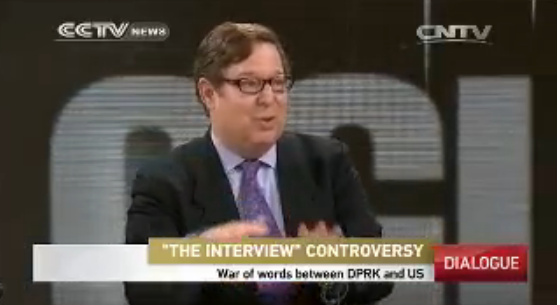
Discussing “The Interview” on CCTV.
Like many a TV pundit in our 24/7 news world, I was asked to comment on the movie “The Interview” before I saw it. My words of purported wisdom aired on CCTV’s “Dialogue” program on Jan. 2.
Now, through the wonders of Netflix, I’ve finally seen the movie that launched a thousand schemes. Here’s what I thought:
It was rude, crude, puerile, tasteless, sexist, racist, unsophisticated … and better than I thought it was going to be.
You can guess that this isn’t my kind of movie. I don’t like potty jokes. The movie’s fixation on the bodily functions of the North Korean dictator, not to mention the human orifices of its protagonist, are suitable for seventh grade boys, not (chronologically) adult moviegoers. As Roger Ebert wrote in his review of the execrable movie “The Love Guru“: “This film could have been written on toilet walls by callow adolescents. Every reference to a human sex organ or process of defecation is not automatically funny simply because it is naughty.”
But “The Interview” offers much more to loathe. Its treatment of every one of its female characters as sex objects is odious. Its replaying of decade-old Hollywood Asian stereotypes is retrograde racism. Oh, the movie also was way too long and self-indulgent.
Those are some of the less objectionable elements of “The Interview.”
I don’t know about you, but I have a fundamental problem with a movie about the assassination of a living leader. It just crosses a line in my mind. Imagine what Americans would say if a Pakistani … or French … or Chinese … or Canadian “comedy” centered on a plot to kill the U.S. president. I don’t care how odious a leader is. You just don’t make a movie about assassinating living characters. (Remember how “The Manchurian Candidate” disappeared for two decades after the Kennedy assassination. And it was fiction.)
One more thing: “The Interview” is completely unbelievable. I am a big believer in “suspension of disbelief” for Hollywood fantasies. I’ll play along with the far-fetched concept that a CIA “babe” convinced two sex-crazed journalists to join an assassination plot. But they lost me when they got to the North Korean palace and kept talking openly about their assassination plans. OK, buddy, if the movie is about this paranoid North Korean dictator, don’t you think that he might just have been bugging your room and listening to your every word? Don’t you think you might be a wee bit careful discussing your murderous plans in loud voices? That may have gone over the heads of the potty-humor gang, but the other 99.9 percent of us are going to have a problem with it.
“The Interview” may be without redeeming social value, but it does have a bit of political propaganda value. The movie was at its best when it skewered the Kim dynasty for its gulags, its decision to focus on nukes, not nutrition, its overblown rhetoric, its paranoia and personal quirks. The transformation of the Kim Jong Un character from personable Dennis Rodman road show buddy to Stalinesque maniac was, from the perspective of political propaganda, quite effective.
I can understand why (alleged) North Korean hackers didn’t want the world to see this depiction of their dear leader. But I still can’t buy a movie that makes the dear leader into the dearly departed leader.
If you want to see the segment of CCTV’s “Dialogue” program in which I discuss “The Interview” with Tsinghua University colleague Shi Anbin, here’s the URL: http://english.cntv.cn/2015/01/03/VIDE1420295520064235.shtml
CCTV Dialogue program on “The Interview”
Ten impossible dreams for 2015, from Louie Gohmert to Chris Christie
Posted: January 5, 2015 Filed under: Dunham's Discourses, Top Ten, U.S. politics | Tags: 2016 presidential race, American politics, Chris Christie, Chuck Schumer, college football, Dallas Cowboys, Dan Snyder, Detroit Lions, George Washington Bridge, Harry Reid, Jerry Jones, Joe Paterno, Louie Gohmert, Man of La Mancha, New York Giants, North Korea, Penn State, Pennsylvania politics, Philadelphia 76ers, Philadelphia Eagles, Rick Perry, Rolling Stone, SEC, Southeast Conference, Stephen Colbert, The Interview, Tom Corbett, U.S. Congress, Washington Generals Leave a comment
Chris Christie and the Joneses: A bro-hug for the ages.
It’s a New Year, and everybody can dream big. In politics, every governor and senator, every Clinton and Bush, can dream of getting elected president next year. In sports, every team can dream of winning the championship. (Well, maybe not the Philadelphia 76ers.) In Hollywood, every crappy moviemaker can dream of hitting the jackpot with a smutty pseudo-farce involving a controversial world figure.
So many dreams. So little time.
To save time, here are 20 quests that, like Don Quixote de la Mancha, are not likely to end in success.

Louie Gohmert practices his sharpshooting in Quantico, Va.
1. House Speaker Louie Gohmert
Not gonna happen. Only on Planet Colbert.
2. Republican presidential frontrunner Rick Perry
Too many Texans — or brothers of Texans … or blood brothers of Cowboys owner Jerry Jones — in the race. Plus there are those precious memories of the 2012 campaign.
3. Super Bowl Champion Philadelphia Eagles
It’s never happened. Why should this upcoming season be any different? (Even though it will be 2016 before we know for sure.)
4. Respected sports owner Dan Snyder
Only one hope for redemption: Replace that racist football team nickname with the Washington Generals to honor the Great American War Machine — and to commemorate the only team to lose thousands of times to the Harlem Globetrotters.
5. Academy Award winning film “The Interview”
Let’s be more realistic: A Razzy for worst movie, worst director, worst actor, worst supporting actor, worst idea for a movie.
6. Popular New Jersey Governor Chris Christie
For a man who got re-elected by an overwhelming majority in a Democratic state, the Joisey guvn’r has managed to alienate almost everybody outside of the Dallas Cowboys owners’ box. Eagles, Giants and Lions fans top the long, long list, followed by George Washington Bridge commuters, Republican conservatives and citizens who believe in civil discourse. At least he isn’t running for anything in the future.
7. Senate Majority Leader Chuck Schumer
The New York Democrat has been waiting and waiting and waiting for Majority Leader Harry Reid to depart the Senate, either voluntarily or not. Then the voters messed everything up by putting the Republicans in the majority.
8. Authoritative magazine Rolling Stone
It gathers no moss, but it gathers lots of other smelly stuff as a result of the UVa rape story debacle. Some click-bait web site could do a Rolling Stone “top ten ways to destroy what’s left of your reputation.”
9. An all-Southeast Conference national championship game
We got the mini-playoff that the for-profit college football conferences wanted and then two non-SEC teams ruined it all. Proving that even the most powerful interests can’t always control everything.
10. Penn State professor Tom Corbett
Pennsylvania’s ex-governor could use a job, but it’s not going to be in Happy Valley, where everybody is mad at him for his ham-fisted role in the Joe Paterno affair. Paterno’s friends and family despise the man — and did whatever they could to defeat him. Paterno’s critics marvel at his incompetence. No Ph.D. here.
Movie night at Tsinghua: All the President’s Men
Posted: April 28, 2014 Filed under: Dunham's Discourses, Global Business Journalism, Journalism Training, U.S. politics | Tags: All the President's Men, American politics, Arthur Bremer, Bay of Pigs, Ben Bradlee, Bob Woodward, Bobby Kennedy, Carl Bernstein, Central High School, Chappaquiddick, China, CIA, CIA scandals, CREEP, Deep Throat, Democratic National Committee, Dustin Hoffman, Edmund Muskie, FBI, Fidel Castro, George McGovern, George Wallace, John F. Kennedy, John Mitchell, Katharine Graham, Kennedy assassination, Mark Felt, National Press Club, Pam Tobey, Pentagon Papers, Richard Nixon, Robert Redford, Teddy Kennedy, Tom Eagleton, Tsinghua University, Vietnam War, Washington Post, Watergate, White House 6 Comments
An exact replica of the Washington Post newsroom was built in Hollywood.
I held my first “movie night” for my Chinese journalism grad students on Sunday night. After considering a few journalism-related classics (you can probably guess which they are), I chose one that highlights the best of journalism: “All the President’s Men.” It’s not just a journalism movie, of course. It’s a great detective story and an all-around outstanding movie with crisp writing, superb acting and tension-inducing directing. “All the President’s Men” is important journalism history. It’s also important American history. But I discovered as I played the video that many of the uniquely American topics (and 1970s cultural norms) contained in the movie were difficult to understand for my Tsinghua University students. So, in addition to playing the movie with English subtitles (do you realize how quickly Dustin Hoffman speaks, with that nasal accent of his?), I occasionally paused the movie for verbal annotations. Here are some of the important points I needed to explain to the students:
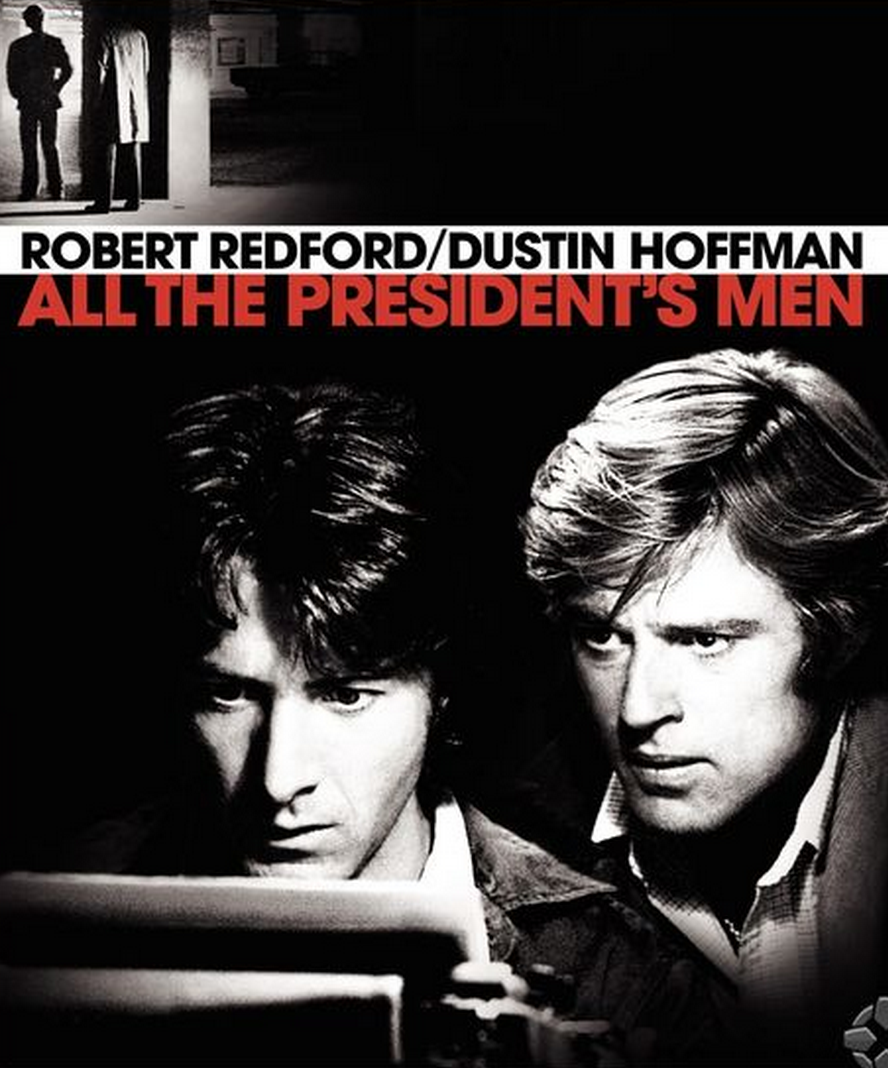
What is that machine those actors are using? And who is Robert Redford?
Newspaper references:
- Why Ben Bradlee and many American journalists curse a lot
- How Ben Bradlee cursed on live national TV when I hosted him as a speaker at a National Press Club luncheon in 2005
- What kind of a boss Ben Bradlee was to my wife Pam Tobey
- Who Deep Throat was and what motivated him to leak
- Where the real Bob Woodward/Mark Felt garage was located
- How the movie’s producers created a replica of the Washington Post’s newsroom in Hollywood for the movie — and the Post newsroom looked exactly the same when my wife Pam began working there in 1984
- Why reporters call the targets of their stories for comment before publishing the story
- Why it was unethical when Carl Bernstein called the secretary in the Miami prosecutor’s office and pretended he was someone he was not
- Why Watergate motivated me (and the entire Woodstein generation) to become reporters
Cultural references:
- Why all of the editors in the Post’s budget meetings were men
- What a manual typewriter is (or was) and why they were all over the newsroom
- Why I took Mrs. Wolin’s typing class at Central High when everybody said that typing was for girls who wanted to become secretaries. (Of course, I wanted to learn to type so I could become a reporter.)
- Who Robert Redford and Dustin Hoffman are
- What the movie “Deep Throat” was about and why Woodward’s editor chose it as a code name for Mark Felt
- What John Mitchell was talking about when he said Katharine Graham would get a certain part of anatomy caught in a wringer
- What a “creep” means and why CREEP became the acronym for the Committee to Re-elect the President
- Why so many people smoked in public spaces
Political references:
- Who John F. Kennedy was and why his photo was in Democratic National Committee headquarters at the Watergate
- The fact that JFK and his brother Bobby were assassinated
- Why the Vietnam War was so unpopular and why American society was torn apart by war, riots and civil rights struggles
- What the Pentagon Papers are
- Richard Nixon’s unique definition of “plumbers”
- Who Daniel Ellsberg is and why he had a psychiatrist
- Who George Wallace and Arthur Bremer were and how Woodward worked with Felt on stories about the Wallace assassination attempt
- Who the anti-Castro Cubans in Miami are
- What the Bay of Pigs is/was
- The long and sordid history of CIA scandals
- Why there is tension between the FBI and the CIA
- Why Nixon hated and feared the Kennedys
- What Chappaquiddick was
- Why George McGovern asked Tom Eagleton to leave the ticket in ’72
- Why Nixon wanted to run against McGovern and not Ted Kennedy or Edmund Muskie
- Why Ed Muskie “cried” in New Hampshire
- What a “Canuck” is
Any suggestions for my next American journalism movie night?
Professor Dunham’s Ten Commandments for journalism ethics in a multimedia world
Posted: April 11, 2014 Filed under: Dunham's Discourses, Journalism Training, Rick's Rules | Tags: BusinessWeek, ethics, journalism ethics, Journalism Training, Multimedia Business Journalism, National Public Radio, Pew Research Center, plagiarism, Society of Professional Journalists, Ten Commandments, TMZ, Tsinghua University 3 Comments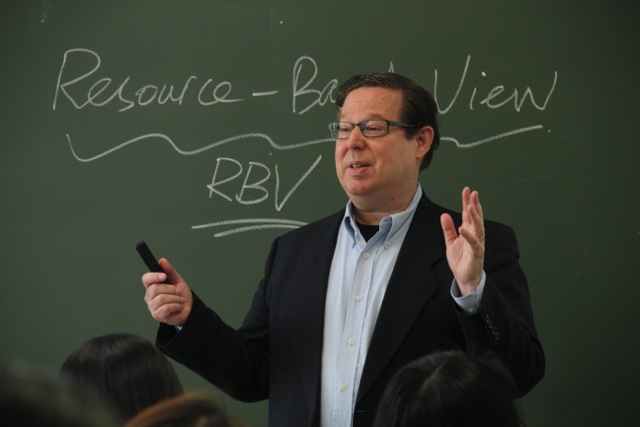
In the classroom at Tsinghua. (Photo by Zhang Sihan)
Journalism ethics are universal. But some ethical issues take on an added dimension on multimedia platforms.
After spending nearly two decades in digital journalism — writing an online column for BusinessWeek, creating two blogs and teaching multimedia journalism — I have boiled down my advice for my Tsinghua University Global Business Journalism students to ten commandments. Here they are:
•1. Thou shalt not steal
- Don’t lift other people’s posts. Or quotations. Or photographs.
- Intellectual property is intellectual property. If you don’t have the right to reproduce a photo or an article – even with attribution – don’t do it!
- Make sure to properly attribute any quotation you pull from another source. Every single time!
- If the original published source of your item turns out to be incorrect, you can be held liable for civil penalties in courts of law if you republish the falsehood.
•2. Thou shalt get it right.
- 24/7 deadlines are no excuse to get it wrong.
- Carefully attribute all facts you cannot confirm.
- Just because somebody else published it on the Internet or sent it out by social media doesn’t make it true.
- Just because somebody told you something doesn’t make it true. As the old journalism saying goes, even if your mother told you, check it out.
- Better to wait a few minutes to confirm or disprove a post than to get it wrong, wrong, wrong.
- As the Pew Research Journalism Project wrote: “Even in a world of expanding voices, accuracy is the foundation upon which everything else is built.”
•3. Thou shalt repent with speed and sincerity.
- If you get something wrong, or link to another source who got it wrong, make sure you correct the mistake. Pronto. Your credibility is on the line.
- Make sure to send corrections to your followers via social media. Falsehoods can go viral and it’s very hard to reel them back in.
- If you made a mistake and others linked to your post, inform them of your mistake. Pronto.
- Apologize.
- Learn from your mistake.
- Because of the instantaneous nature of digital communication, correcting errors is more important – and difficult — than ever.
•4. Thou shalt avoid gratuitous personal attacks.
- Multimedia journalism provides you a basketful of communications options. Don’t use them to be childish, petulant or rude.
- The same rules of fair play apply online as apply in traditional media.
- Don’t mistake “snark” and “attitude” for wit and cleverness.
•5. Thou shalt be fair and balanced.
- It’s not a partisan slogan. It’s our goal as journalists.
- Fairness should never be sacrificed at the altar of an artificial deadline.
- Efforts should be made to contact public figures referred to or criticized in multimedia reports.
- Avoid sensationalism or distortion that is designed to win you “clicks” or “page views.”
- A few tips from the Society of Professional Journalists:
- “Make certain that headlines, news teases and promotional material, photos, video, audio, graphics, sound bites and quotations do not misrepresent. They should not oversimplify or highlight incidents out of context.”
- “Never distort the content of news photos or video.”
•6. Thou shalt not use unnamed sources to attack others.
- It’s a sure sign of a journalism amateur or poseur.
- People have a right to know who your sources are, with rare exceptions.
- People have a right to know your sources’ motives.
- If someone is too cowardly to attach their name to an attack quote, it tells you something about the person.
- As SPJ writes, “The public is entitled to as much information as possible on sources’ reliability.”
•7. Thou shalt live in a glass house.
- Don’t do anything you would criticize someone else for doing.
- Journalists are public figures. Hypocrisy is news, whether the hypocrite is a politician or a reporter.
- From National Public Radio’s Ethics Handbook: •“We hold those who serve and influence the public to a high standard when we report about their actions. We must ask no less of ourselves.”
•8. Thou shalt never give false witness about who you are.
- It is always unethical to pose as someone else to collect information for stories.
- You should identify who you are and for whom you work.
- You should never identify yourself simply as a “citizen,” a “constituent” or a “consumer.”
9. Thou shalt not pay sources for information.
- Or interviews.
- It’s unethical. It separates infotainment sites from journalism sites. Let TMZ.com get the paid-for celebrity scandal scoop. Better to keep your soul.
•10. Thou shalt not be paid off.
- Don’t take money to post, publish or air something.
- Don’t show favoritism toward sponsors, advertisers or donors.
- Disclose any conflicts of interest you or your publication may have.
- Transparency allows your audience to weigh your credibility.
As SPJ’s code of ethics declares, “Professional integrity is the cornerstone of a journalist’s credibility.”
We owe it to the public. And ourselves.
Toxic White House water might have killed three U.S. presidents — Harrison, Polk and Taylor
Posted: April 2, 2014 Filed under: Dunham's Discourses, U.S. politics | Tags: Alexis de Tocqueville, antebellum, Civil War, Dallas, deadly bacteria, enteric fever, Franklin D. Roosevelt, Franklin Pierce, gastroenteritis, George Mifflin Dallas, immigration, indoor plumbing, James Buchanan, James K. Polk, Jane McHugh, Know Nothing Party, Manifest Destiny, Mexican War, Millard Fillmore, New York Times, Philadelphia, Philip A. Mackowiak, pneumonia, Ronald Reagan, San Antonio, septic shock, tainted water, Texas, Tippecanoe, U.S. Congress, U.S. presidents, United States, University of Maryland, University of Pennsylvania, Warren Harding, water, White House, William Henry Harrison, Zachary Taylor 3 CommentsTippecanoe … and Taylor, too?
As a history major, I’ve always struggled for an explanation for the surprisingly bad string of American presidents who served between 1840 and 1860.
This motley crew was politically inept. Think Millard Fillmore. James Buchanan. Franklin Pierce. Zachary Taylor.
The group also had a very high mortality rate. William Henry Harrison died one month after assuming office in March 1841. James Polk (he of Texas annexation and “Manifest Destiny”) died shortly after leaving office. And Zachary Taylor, the old (and I emphasize old) Mexican War hero died less than a year into his term, leaving Americans saddled with Fillmore, who later unsuccessfully sought to return to the presidency as the nominee of the aptly named Know Nothing Party.

He would have become president. Philadelphia’s only vice president, George Mifflin Dallas, one of the subjects of my master’s thesis.
I will claim some academic expertise in this period of history. My master’s thesis at the University of Pennsylvania was on the 1844 Philadelphia economic elite, which included Polk’s vice president, George Mifflin Dallas. The city of Dallas, Texas, is named after this Philadelphian who might — just might — have become the nation’s 12th president if Polk had died a few months earlier, while still in office.
With apologies to Alexis de Tocqueville, the stretch of dysfunctional democracy in America had many causes, including the implacable division between North and South over fundamental social issues, the rise of anti-immigrant sentiment and the triumph of extremism (and mediocrity) on Capitol Hill.
Sound familiar to your 2014 ears?
Historians have written lots about the political debacle in ante-bellum America. But they haven’t written as much about the health debacle in the White House. That’s why the story that appeared in the April 1 edition of the New York Times (it’s no April Fool’s joke) is so important.
The piece outlined speculation about the cause of William Henry Harrison’s death. Conventional wisdom has held (for 173 years) that old Tippecanoe, the oldest man to be sworn in as president until Ronald Reagan, died of pneumonia after catching cold while delivering the longest inaugural address in American history. (I think it may have equalled all four of Franklin D. Roosevelt’s speeches combined. He had nothing to fear but pneumonia itself.)
But it turns out that pneumonia may not have caused Harrison’s death. The Times article casts a credible finger of blame at the potentially toxic supply of drinking water consumed by American presidents during the time before indoor plumbing:
In those days the nation’s capital had no sewer system. Until 1850, some sewage simply flowed onto public grounds a short distance from the White House, where it stagnated and formed a marsh; the White House water supply was just seven blocks downstream of a depository for “night soil,” hauled there each day at government expense.
That field of human excrement would have been a breeding ground for two deadly bacteria, Salmonella typhi and S. paratyphi, the causes of typhoid and paratyphoid fever — also known as enteric fever, for their devastating effect on the gastrointestinal system.
According to the Times piece, Harrison’s eventual case of pneumonia is consistent with enteric fever and may just have been one of the manifestations of acute poisoning.
“As he lay dying, Harrison had a sinking pulse and cold, blue extremities, two classic manifestations of septic shock,” Jane McHugh and Philip A. Mackowiak wrote in the Times. “Given the character and course of his fatal illness, his untimely death is best explained by enteric fever.”
Harrison was the first of three U.S. presidents to die in office (or shortly after leaving office) within a span of only nine years. I’d say that’s reason for some serious “cold case” sleuthing.
Mackowiak, a scholar-in-residence at the University of Maryland and author of “Diagnosing Giants: Solving the Medical Mysteries of Thirteen Patients Who Changed the World,” took up the challenge, joined by San Antonio writer McHugh.
They made a strong case for tainted water as being the cause of Harrison’s death, and suggested that Polk and Taylor may have been its victims, too. They noted that the 11th and 12th presidents “developed severe gastroenteritis while living in the White House. Taylor died, while Polk recovered, only to be killed by what is thought to have been cholera a mere three months after leaving office.”
There’s further evidence to suspect that Mackowiak and McHugh are onto something. The president’s quarters on the second floor of the White House did not get running water until 1853 — Fillmore is given credit by some history books for this major technological advance. After Millard’s move, no president contracted gastroenteritis or died of natural causes. (We’ll leave the mysterious 1923 death of Warren Harding to another blog post.)
So we can’t blame the failure of Fillmore, Pierce and Buchanan on tainted water. Just tainted politics.
Communicating from China: My five lifelines to the world
Posted: March 28, 2014 Filed under: Dunham's Discourses | Tags: Africa, China, email, Facebook, Iran, National Press Club, Pakistan, Skype, Texas, Thailand, Twitter, University of Pennsylvania, WeChat, Y2K 2 Comments
Facebook is my #1 communications tool.
One of the realities of living in China is that I must communicate differently with friends and family.
No more drinks at the National Press Club. Cell phone calls and individual emails are an inefficient way to communicate with a large number of people.
So how have my communications methods evolved? Here are my five most frequently used sources — dominated by social media.
1. Facebook.
It is my lifeline. It is how I share my life experiences and travelogue through words and images. It reaches a large audience instantaneously. And it is my primary method of chatting with friends in America and Europe. The only problem is that Facebook is blocked by the Chinese government, so it is necessary to climb the Great Firewall of China to use it. That occasionally means some unplanned days of Facebook blackout.
2. WeChat.
I had never heard of WeChat when I arrived in China. I knew that Weibo was the Chinese combination of Facebook and Twitter. But I quickly learned (taught by my students) that WeChat is far superior. Almost nobody uses email in China. WeChat is the preferred means of communicating. Its “moments” feature allows you to post updates and photos like Facebook. And group chats allow me to communicate instantaneously with everyone in my class — or with a group of friends heading to dinner. It’s great. And there’s nothing in the U.S. quite like it. Yet.
3. Twitter.
I hadn’t realized just how much drivel gets posted on Twitter until I left the United States. So many American political reporters post so many unimportant updates. So many politicians have nothing to say. So many words (140 characters at a time). So little value. When I came to China, I spent a month “unfollowing” people who offered little insight and added some of the best tweeters in China. Now, once again, Twitter has value to me. But it is no longer my number one social media source, like it was when I was a reporter in search of breaking news, 24/7.
4. Skype.
In the past week, I have Skyped with people in Africa, Iran, Pakistan, Malaysia, Thailand, Texas and France. It is the most cost-effective way for me to do my job as an academic. The quality is usually decent, though, as with everything in China, technology is hit or miss. But Skype allows me to see Pam regularly and to communicate with friends from America to Europe to Asia. I also spend less on long-distance calls today than I did as a college student at the University of Pennsylvania. Thank you, Skype.
5. Email.
My students don’t use email. My colleagues rarely use email. Email is a very “Y2K” thing. But I still use it. It’s the best way to send documents or memos. And it’s the best way to have lengthy exchanges. It’s the only “old-fashioned” way I communicate.
Funny thing: None of these five methods of communication had been invented when I started my career as a journalist. My, oh my, how technology has changed our world.
Viewing the American media through fresh eyes
Posted: January 17, 2014 Filed under: Dunham's Discourses | Tags: cable news, CNN, Fox News, MSNBC, multimedia journalism, New York Times, Tsinghua University, Wall Street Journal, Washington Post 2 CommentsFor at least a decade, I was a 24/7 news addict.
Then I went to China and went cold turkey. Surprisingly, there were no withdrawal pains. Indeed, I actually enjoyed life more and had a lot more time for useful pursuits without the pain of my addiction to CNN, MSNBC, Fox and Twitter.
So what happens when I return from Tsinghua University for winter break?
A short relapse.
One day of CNN was enough to cure me permanently. Here are a few thoughts on the disastrous state of U.S. cable news and the rays of hope for the rest of the U.S. media:
Back to vacation. With the TV turned off.
What every tourist should know before visiting China
Posted: January 3, 2014 Filed under: Discovering China, Dunham's Discourses | Tags: Beijing, Beijing pollution, Beijing subway, Biking in Beijing, China, Chinese food, National Museum, Summer Palace, the Forbidden City, tourism, traffic 2 Comments
- Check your cultural assumptions with your luggage. Life is different here. Don’t view life in China through the prism of your American or European experiences.
- Beijing is crowded and massive. Don’t be intimidated by the volume of traffic, the human gridlock or the seeming chaos on the streets and in the subways. You’ll get used to it.
- Don’t be afraid to jostle people. There is no sense of personal space here. Don’t take it personally if somebody elbows you or pushes you.
- There is no “walk right, pass left” etiquette here. People walk, bike or drive every which way. Cars DO NOT stop for pedestrians. Bikes DO NOT yield to pedestrians. In fact, nobody yields to anybody.
- Be decisive. Indecisive people get run over by bikes or cars or other pedestrians.
- Don’t get upset when people spit on the street at any time in any place. Spit happens in China.
- Do not expect Western-style toilets. Get used to holes in the ground. Don’t complain about it. Get used to it.
- If there is not a price listed on an item in a market, you are expected to bargain. At tourist-oriented markets (such as the Silk Market), the original prices might be ten times what is reasonable. Don’t be afraid to walk away. Even if you are interested in buying something. Negotiate aggressively. If you don’t want to negotiate, go to a regular store.
Food and drink

Be careful of street food, despite its enticing aroma.
- Don’t drink the water. Use bottled water, even for brushing your teeth.
- Be smart when it comes to street food. Some of it is delicious, but some of it is cooked in oil that is, simply put, poisonous. Unless a Beijinger vouches for a vendor, think twice before trying it. I’m afraid I speak from experience (some bad “stinky tofu”).
- Don’t be afraid to sample the rich variety of tasty regional cooking. Experiment beyond your comfort zone. Try things.
- Don’t expect Chinese food to be the same as American Chinese food. It’s better. Most of all, it’s different.
- Your drinks may be warm or hot when served at restaurants. This includes water, milk and juices. Chinese meals maintain a balance. Cold drinks can throw a hot meal off-balance. If you want cold water (or beer) make sure to order it “bing.”
Getting around
- Fewer people speak English than you might expect. It’s not like traveling in Europe. Younger people are more likely to understand English than older people. Some younger people may want to practice their English on you. Enjoy that – unless they’re trying to sell you something.
- Stay calm. If things go wrong, it won’t do any good to raise your voice. If people don’t understand you, it won’t help you to get agitated.
- Go to the most popular tourist attractions during the week. Earlier is better for places like the Forbidden City, the Summer Palace and the National Museum. They can get very crowded by midday, particularly on weekends or holidays.
- Use the subway. Because of surface traffic gridlock, the subway usually is the fastest way to get from Point A to Point B in Beijing. It is clean, efficient and cheap, in addition to being crowded. Relax and enjoy it.
- If you are taking a taxi, make sure somebody writes down your destination in advance IN CHINESE. Do not assume that you will be able to communicate with a cab driver by trying to pronounce a location in Mandarin. You’re probably mispronouncing it, or worse, saying something embarrassing that you don’t mean to say.
- Try to find a good street map in English (or at least in Pinyin).
- Use Google Maps online to get an idea of where you’re going and a sense of how far it is from the nearest subway stop.
- Make sure you have your passport with you when checking in to hotels or on plane or train journeys. Carry a photocopy of your passport ID page and your visa with you at all times.
Technology
- Get ready for slow, unreliable Internet and spotty WiFi. Do not expect that you will have working Internet 24/7. Internet and WiFi can stop working at any time.
- If you want to use Facebook or Twitter or YouTube or other blocked sites, you will need to have working VPN service before you arrive in China. (Email me if you need information on VPNs.) You also will need a VPN to access the New York Times, Bloomberg and some other news site.
- Bring an electrical converter or a couple of converters designed for use in China. (Not Hong Kong.)
- Bring a multiple-USB recharger for your electronic devices such as cameras and smartphones. You will need an electrical converter for this, along with one for your laptop.
- It may be very expensive to use your U.S. smartphone for calls and data. Check in advance before you leave the U.S. You can always disable the data and use it via WiFi. That’s what I do, which allows me to use email, social media and the Internet for free. I also use my U.S. cell phone for text messages with friends and family in the U.S. (at a cost of 50 cents per text sent and 5 cents per text received).
What to pack
- Dress in layers. Be ready for wind gusts.
- Bring disposable 3M anti-pollution masks. They aren’t very expensive and they can make your life more enjoyable on dangerously polluted days. Don’t be self-conscious about using masks. It’s for your own health.
- Bring toilet paper, napkins, tissues and hand sanitizer. You often will not find these products in public places.
- Make sure you have plenty of prescription medicine and vitamins. It will be hard to find, if you need it, and it may be expensive and questionable in quality.
- Make sure you bring extra medication to combat stomach ailments and flu-liked symptoms such as Pepto Bismol, cold medicine, DayQuil and NyQuil.
- Check in with your credit card companies and banks before you leave to let them know you will be making purchases in China.
Feel free to offer suggestions to make this guide more useful. I will update it with your ideas.
Enjoy China!
How living in China has made me a better person
Posted: December 28, 2013 Filed under: Dunham's Discourses | Tags: Beijing, Beijing pollution, Beijing subway, China, Hearst Newspapers, Houston Chronicle, Joe Biden, Naomi Tumarkin, National Press Club, Pollution, Tsinghua University 2 Comments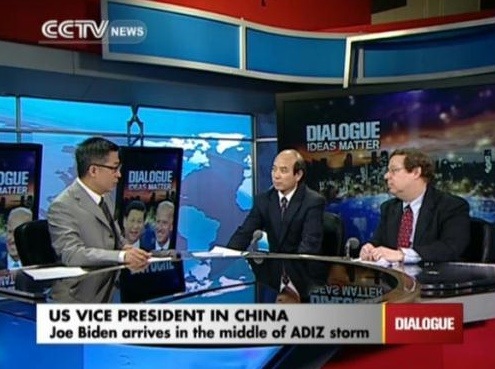
Appearance #7 on CCTV. I’m a big fan of the “Dialogue” program.
My grandmother Naomi and I had a 4-decade-long debate over human nature. Having survived Stalin’s Russia, McCarthy’s America, the Depression and deprivation, she passionately insisted that people don’t change as they age, they only become more like they are (or were). I, on the other hand, a child of the Baby Boom who had evolved from the transistor radio to the smart phone, argued that people can grow or change, for better or for worse.
Our dialogue did not end until Grandmom Naomi’s death three years ago just a few years shy of 100.
I now want to claim victory — at least from personal experience — although I can still hear her arguing with me for being naive and idealistic.
My first semester at Tsinghua University in Beijing has given me plenty of time to contemplate life. After all, I am living alone for the first time in 30 years in a campus apartment, the only English speaker in my building. I chucked my job at the Houston Chronicle for a great leap into the unknown in a country I had never visited.
As I await my graduate students’ final multimedia journalism projects, I can reflect on how living in China has changed me. And it has. Mostly, I hope, for the better.
The biggest change in me is that I have become more accepting of the vagaries of life. In China, you are either patient or you go mad. Internet, WiFi, hot water, heat, electricity: none can be taken for granted at any moment. If you are brave enough to travel on surface roads, you have to expect unexpected delays. You have to let go of the things you can’t control. That’s a big change for me.
You also have to be decisive … or die. (As Joe Biden would say, “literally” die.) Bicyclists pedal every which way. Near misses with another bike … or a pedestrian … or a car … are everyday occurrences. If you don’t push your way out of the crowded subway car, you miss your stop. Don’t think. Act. All in all, I like that philosophy.

I have learned so much from students in China. Here I am in Xi’an with Lu LAN and Jane Sasseen.
At the same time, I feel I have become a lot less materialistic. Americans like to collect things. I like to collect things. Everyone who knows me knows how many things I have collected. In China, I live in a spartan apartment with nothing on the walls, a pot, a pan and enough clothing for ten days. I feel oddly liberated. I realize that I don’t need “things” to make me happy. I need to do things that make me happy. And I have discovered that spending time with friends makes me a lot happier than spending time with “things.”
My professional makeover — new occupation in a new land — also has allowed me to evolve into a different kind of leader. As president of the National Press Club and Washington bureau chief for the Houston Chronicle and Hearst Newspapers, I led by example and governed by consensus. That wasn’t always the formula for success — or effective management — I learned. Too many times, people mistook collegiality for weakness.
Starting over in China, I realized the importance of being a strong, focused, disciplined leader. No more “player-coach.” I hope I have earned the right to be an authority figure both from my knowledge of my subject and my post at the university. Whatever I do in years to come, my time at Tsinghua will have shaped me as a leader.
I’ve also become much more of an environmentalist. Not in the sense of political activism. But in the sense of appreciating clean air, clean water and cooking oil that doesn’t make you sick. It’s a bit spooky to travel around your (new) hometown wearing an anti-particulate mask by 3M. It’s disconcerting to have a thin layer of toxic dust on your bicycle seat in the morning. This is what can happen to the world if we don’t do more to reduce carbon emissions and create green technology — now.
And that brings me to my final thought about the future. My journalism students have made me even more optimistic about the future. After all, they are preparing to enter a business with an uncertain future in a nation where the future of journalism is quite uncertain. But they are some of the smartest young people I’ve ever worked with, and they have a breadth of knowledge and a drive to do well (and do good) that makes me think that they can change the world.
I hope so.
They already have changed me.


Recent Comments